Film Transcript / Subtitles
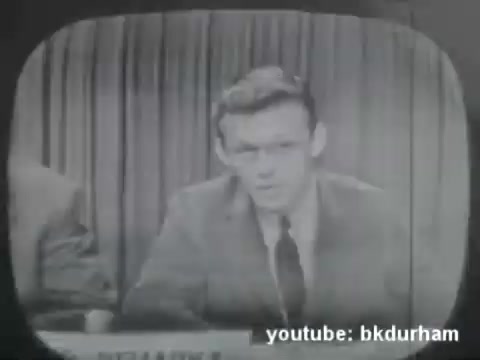
Good morning, I'm John Shakespeare, your moderator on Words and Music this morning.
In the past few months we have endeavored to bring you a series of discussion and debates,
ranging on everything from social problems to parent and youth relationships.
We show the outlook and opinion of our young Christians
so they might present to you their suggestions, their beliefs
on how to make Christianity a truly practical thing, a living thing in people's lives.
We feel that our young people are quite qualified because of their backgrounds, their activities, their leadership
in the various churches and the council of churches.
And so once again this morning we have brought them to you with a theme,
What does my faith mean to me?
Faith, that's such an important thing in people's lives, isn't it?
And here with us also to help guide us and give us a maturity and a spiritual insight on problems
is a man who has portrayed a judge on several of our youth programs so convincingly
that people were wondering if he actually wasn't a judge rather than the very fine Methodist minister he is,
the Reverend Carl Baharca.
Good morning.
Thank you, John, for those kind words.
How are you this morning, Carl?
Fine, fine.
Well, now I would like to introduce our panels to you.
We have two panels here and I will introduce both of them to you.
The first one will participate first.
On my right is Sandy Wilson.
Morning, John.
Morning, how are you?
Fine.
Carolyn Rohrbar.
Morning, John.
Fred Slater.
How are you, Fred?
And on my left, we're starting with Russ Avery.
Morning, John.
Mary Jane Brooks.
Good morning.
We missed a lot.
Excuse me.
And Judy Myers.
How are you, Judy?
Good morning, John.
Well, Sandy, I think we should start with you this morning.
You seem to be especially eager and on the edge of your chair over there.
Thank you.
Sandy, would you tell us what your faith means to you?
Well, John, I think that I have sort of learned to apply my faith in a practical sort of way.
You see, in the morning when I wake up, I feel that if I can start the day by asking God to just be with me throughout the day, that somehow disappointments that come up or tasks that need to be done, somehow he gives me the strength to do all this.
And it sort of lends a mellowing to the start of the day and it carries out throughout the day.
Well, this is wonderful.
Carolyn, does your faith differ from this or do you go along with Sandy on your views on what faith means in your life personally?
I agree with Sandy.
It's a great help to know that there is someone who is with you and who is helping you.
And if you have a problem to solve or a decision to make during the day, it's a great help to know that there's someone on your side who has a definite set of rules that will help you make your decision.
John?
Yes, Sandy?
Pardon me for breaking in, but I'd like to ask a question here. Supposing someone doesn't have this faith. I mean, supposing they're going along the merry old way. Well, how would someone get this faith? Carolyn or Fred?
Right. Would you care to answer that? Well, I'll go ahead here. This faith is, you can only get it through Jesus Christ. It's something that you must accept. And, well, I cannot really explain it, but the faith itself, but it is something that, as faith is, it's something that isn't concrete. But you can all agree with it.
Now, would you agree with that, just as the listener on this particular panel, at this point, I would like to interject the idea that, is it something that's abstract? Is it, Russ says, it's not concrete. Now, I would disagree with that, wouldn't you, Sandy?
Yes, very definitely. I think that faith is something that's concrete, that's something that's with you every time. Maybe it's a feeling that Christ is with you, but I would say very definitely it is concrete.
And part of the life of the believing Christian. It's a very concrete feeling.
Mm-hmm. Yes. I think that all of these students here have had an opportunity to deal with a very touching or ticklish human relation problem. And the faith ought to be practical at that point. How does it help you deal with a little hostility in your life?
Yes, Carolyn, can you answer? Well, if you meet someone who is very hostile to you or has some characteristics that you don't like, if you have the faith and if you are following the examples that have been set before, you will do your best to try and be nice to this person and find the good points in his personality. A very good book that shows all the ways of doing this thing is the Norman Vincent Peale book that just sets out...
Well, Sandy, I see that you've got your hand up over there. Do you have something you want to say?
This might be true, but I don't always find it so easy to say, well, now because I'm a Christian, everything's going to be fine and I can accept this person. I don't always find it so easy. I think it's...
It's a little hard to practice this faith at times. It is, very hard.
Well, now, I'd like to ask Fred a question. Fred, you're a San Diego Stater and a basketball player. You're about 6'4". I'd like to ask you now, how does faith help you on the basketball court when you're losing? Does it help you be a better player or does it help you become a better sportsman or does it give you strength? How does faith figure in in athletics, for instance, and things along this line?
Well, my faith is a big help on the basketball court because say that the team is losing and there's...
You have that problem of always, oh, in basketball, you have the personal contact there and you're getting mad at the other person. But if you think and just ask God to be with you, to have him help you practice your Christian life on the basketball court, it's really a great help.
It gives you this added bit of strength that you just seem to need on the court. Do you think that, what part does prayer play in faith? Who would care to answer that? Does prayer have a big meaning in this business of faith? Yes, Carolyn.
Well, my opinion of prayer is just simply talking with God and you can pray any time you want. And if you're just walking down the street and you see something that's going to hurt you, you can say, you can pray to God that he'll either keep it from hurting you or you will be able to resist the hurt.
They hurt. You can pray any time you want.
I see some two hands on this. There must be a little disagreement here. Sandy?
No, I wasn't going to disagree. I was just going to say that I think Carolyn has hit on the key to prayer. It's talking with God.
You wouldn't go up to your friend on the street and pull out this long sheet of paper and say, well, now, these are the things I've done. These are the things I'm sorry I did to you. I don't think we do that.
And it's the same principle when you're talking to God. You don't take out a little written prayer and say, well, now, this is what I've done and I'm sorry and I'll try to do better next time. It's something that you, you talk with God and you talk from your heart with God.
Fred, you also had something.
Well, I was just going to add into that that prayer is our communication with God. It's our one way of really speaking to him and getting close to him.
Reverend Baharke, I wonder if you would kind of sum up here what our young people have said so nicely this morning.
I really enjoyed this and I got a lot of help out of this, actually, because here is a practical application of faith.
And it has to be practical because if this faith isn't going to help us in our real-life situations, it isn't worth having, really.
And I like the answers and I say that this one thing is, one item that I would like to emphasize is that faith has very practical uses in the very definite living that we have to do day in and day out.
That's my conclusion.
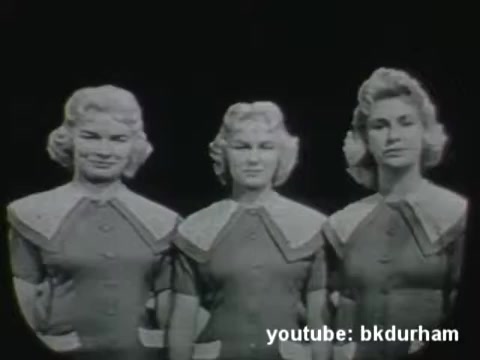
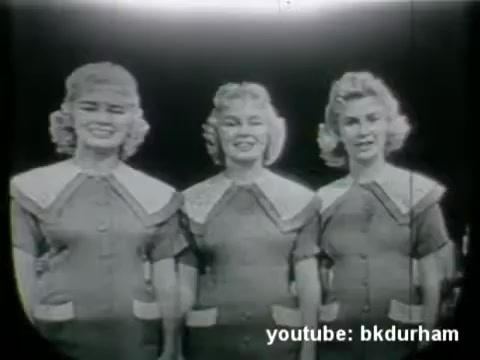
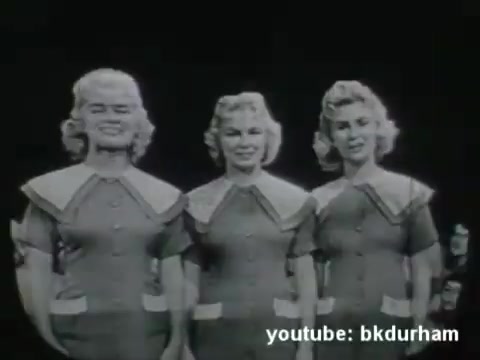
Wonderful. We're back in just one short minute, but right now it's time for our own Gay Bondlin Trio to sing one of their favorite Negro spirituals.
The Gay Bondlin Trio, very wonderful, aren't they? And now we're back with our second panel of eager experts to discuss this question of what does their faith mean to them?
And I would like to introduce them again to you, starting on my left, Russ Avery, and next to Russ is Judy Myers, and right next to me is Mary Jane Brooks.
Are you ready to go, panel?
Yeah.
All right, now, Russ, supposing we start with you. You're an eager beaver, too.
So, supposing you tell us what your faith means to you?
Well, I follow someone along the same lines, Sandy and John and Fred and Carolyn.
It's something that gives me an inward strength when I need it. It's not something that's tangible, really, except to you personally.
It's something that's hard to explain, but it's something that's there when you need it. It's a strength that you can use and you need.
It's just there when you need it, no matter where you're at or what you're doing.
So, faith to you, Russ, then, is something that you can count on in the moments in the crisis that you have to have something, that faith is a strength behind you.
That's it pretty well, John.
Well, now, Judy, can you give us possibly a different meaning of faith or a different conception of faith as applied to your life?
Well, John, faith is something that is true that gives strength, but I find that as long as you can question your faith and grow from the questions you have about your faith, your faith grows deeper and you grow spiritually that way.
And that's my conception of faith, something that's deep. There's always something more to learn about it.
This, John, things all very well and good. I'm wondering now, we can go on in theory and expound, but how about in the everyday adventures that we undertake and encounters when you have an individual who will be directly aggressive against you?
Now, you are working for a purpose, and when somebody encounters you, this can happen in school, this can happen in your activity endeavors, can happen in various businesses and what have you, but taking it more or less on our own age level, what will we do as applying this faith practically, I'm wondering?
Well, Mary Jane, you have to learn, first you have to realize why the person dislikes you or is definitely aggressive to you. There's always a basic reason behind it, and I think usually if you can realize that, you can come to forgive the person and maybe even eventually become their friend by helping them through that crisis.
Well, so you're a high school student, and I'd like to ask you a question about faith. You have a real good conception of it here. For instance, should you think of faith in terms of helping you to get out of tight jams?
For instance, say you put off writing a term paper to the last moment, and you've got to have this paper in or you fail the course. What does your faith tell you about this? Does it help you out here, or should you rely on faith in a case like this?
I've done it before, John.
Honest experience is the best.
And I'll tell you the truth, it is the temptation to maybe copy somebody else's, maybe borrow one and copy it, but I find that you usually just get in and dig that much harder and maybe stay up all night writing it rather than copy it. I guess you'd call it cheating.
And really, if you have a deep foundation in your faith, you just can't do it and feel right about it.
So that your faith just helps you out here and helps you overcome this.
Judy, how do you feel about this? Do you think that you should rely on faith when you've put off something at the very last moment?
Well, it's not exactly something to rely on, but I'll say this much. When you've got an exam coming up, and you haven't studied for it, and you think, well, maybe you're going to fail it.
Well, praying to God isn't necessarily going to help you pass it, but praying to God is going to give you the strength to take it if you do fail it. That's what your faith is for.
May I ask a question here? Now, if you don't pass this test, you have possibly prayed for guidance. We get to the end and we see it all coming and what have you, and so we think maybe there's somebody else that can take over from here on and out.
Now, if something does occur, takes its natural course, perhaps, let's say, and you do flunk the test, now are you saying this is God's will? This is something that he meant to happen for a purpose?
I'm wondering what the attitudes might be on that.
Well, you know, they say that God will help somebody that helps himself, and when you get along this line, well, I don't really feel that you're helping yourself on account that you probably haven't been studying, you haven't been working, and it's really your fault, it's not God's fault that you've failed this, you haven't been working, you've been lazy, maybe you decided you'd sooner go to the show and study for a test, and it's your fault, it's not God's, and I can't, I don't feel that you can blame him for something that you've done.
You haven't done yourself.
So you should take the blame upon your shoulders.
That's right.
Well, we have time for one more question here, and I think this is very good. How do you think that faith helps people overcome feelings of inadequacy and inferiority complexes and things along this line? How do you think that faith gives you something concrete to work on here? Judy, would you answer this?
Well, gee, John, through your faith, often you come into contact with people that are, well, maybe I shouldn't say it exactly this way, that are in a worse state than you are about your feelings of inadequacy, and lots of times if you can help somebody else, it helps you, and it helps you overcome your inadequacy.
Mary Jane, how do you feel about this?
Well, I went back once before about thinking away from oneself, and it seems that I have realized that I have limitations and inadequacies, and my leaps and bounds, and they're all before me, but however, I find great solace in very often thinking about the many things that I have been given and that I do have.
And I think this is very important in retaining my values of type.
Reverend Barak, would you care to sum up here very shortly for us on this?
Oh, in just a second. I would say that the concluding comment I could make about this is that faith is basically an attitude, John.
Faith is an attitude toward life, and as this attitude establishes itself in our lives, we get a different approach toward living.
It's a successful approach, it's a positive approach, and it helps us to meet all of our situations and experiences creatively.
Wonderful. Now to the choralette musical group which we'll be singing, May Now Thy Spirit.
We have with us now a very fine representative of the City of San Diego, the Vice Mayor, Mr. Williams. How are you, Mr. Williams?
Good morning, John.
It's good to have you with us. The reason that Mr. Williams is here is because of a Youth Achievement Award, but I would like now to talk to Mr. Williams for just a brief moment about the City of San Diego and its interest in youth, which I know is great.
So, Mr. Williams, would you tell us something about the youth programs and youth activities that the City is sponsoring right now?
John, the City Council, of course, is always trying to cope with this very situation that, well, we haven't the facilities, really, around San Diego, that take care of the youngsters and give them a place to really get out and enjoy themselves.
When we know that we have this problem, we're trying to cope with it. As a matter of fact, John, just the other day, the other day, last week now, time's going by so rapidly.
The City Council did appropriate the funds for the improvement of a large recreational area out in Ocean Beach, and it's an area that has long been without any real form of recreation area or activity.
I'm amazed. I used to be a youth worker with recreation myself, and I'm amazed that the facilities that San Diego seems to have, it just seems that every playground I see, that there's some sort of activity going on.
Is this true as a whole all over the City?
Well, at the playgrounds that we do have and do operate now, I think the activities are pretty well managed, but unfortunately we haven't enough playgrounds, and that's what we're trying to build up.
Additional youth areas where young people can go and enjoy themselves under the right kind of guidance.
I have a young man here. I'd like you to meet Mr. Williams, who is to be presented the Youth Achievement Award, Jim Terrence.
Good morning, Mr. Williams. Good morning, John. How are you?
Good morning, Jim. How are you? Jim, I'd like to say, first of all, is taking a vacation on this program.
Before this, he's been the moderator, the guy who has been really working and putting all the labor, so this is a vacation for Jim.
Well, you're too kind. And because of the work that he's put in on this, we're going to present this award.
Jim, where are you going to school now? Well, I'm a junior out of San Diego State College.
I may graduate someday if I keep working at it.
You've got big plans as far as the summer goes. Would you care to tell us about them?
Well, just briefly, August 15th, a friend of mine and I sail for Europe from Hoboken, New Jersey, as a matter of fact.
What are your plans for Europe? Why are you going over?
We've studied about so many things, and here's an opportunity to see them firsthand and to really appreciate their value.
Well, that's great. What is your course of study, Jim?
Well, I'm majoring in psychology. Of course, I'm planning to enter the ministry, and I feel that this will help me a great deal in the coming emphasis on counseling in future years.
Jim, are you doing anything out on San Diego State's campus in the way of religion and activities out there?
Yes. The Presbyterian Church, of which I'm a member, has the Westminster Club there, facilities for lounging, studying.
We have our own portion of the Westminster Church there. And so they have a Westminster Club also, which I'm a member of.
Well, that's great. How soon do you expect to be leaving for Europe on your trip there?
Well, we're frantically saving the money now, and I think by August 15th we should be on the boat.
Jim, just one second. Would you tell us, I think it's amazing, he has told me his schedule, and I think that it's just one of the greatest I've ever heard about.
You work at Convair during the night, is this right?
Yes. And you go to school during the day?
Yes. And you forget about sleeping, is that right?
It limits your sleeping greatly, and then on weekends I choose a television program.
Well, that's really great.
Busy schedule.
I want to present the award to him now, Mr. Williams.
Yes, John, I'm certainly very pleased to have the opportunity of representing the San Diego Council of Churches,
and presenting to you this, the highest award, Youth Achievement Recognition by the San Diego County of Churches Council of Churches to James Tarrant.
The Council of Churches is proud to honor you as a youth worthy of commendation, and to present this award on the Council Television Program Words and Music.
Jim, I certainly want to congratulate you on behalf of the Council of Churches and also the City of San Diego.
We're very proud of our young people who are so recognized.
Thank you very much, Mr. Williams. Thank you, John.
Congratulations, Jim, and thank you very much for the good work you've done, and thank you, Mr. Williams, also, for coming down and presenting Jim with this award.
And now we go to a tenor solo by Arthur Bunch.