Apollo 11 "Color TV Earth Station"

Shotlist & Visual Analysis
The film still captures a moment from a promotional segment showcasing the first mobile color TV earth station, likely featuring a distant view or screen display with muted color tones. The camera angle is likely a wide shot, emphasizing the technological setup and broadcasting capabilities of Western Union International and General Electric during the historic Apollo 11 splashdown.
00:00:00.000 — The film still captures a moment from a promotional segment showcasing the first mobile color TV earth station, likely featuring a distant view or screen display with muted color tones. The camera angle is likely a wide shot, emphasizing the technological setup and broadcasting capabilities of Western Union International and General Electric during the historic Apollo 11 splashdown.

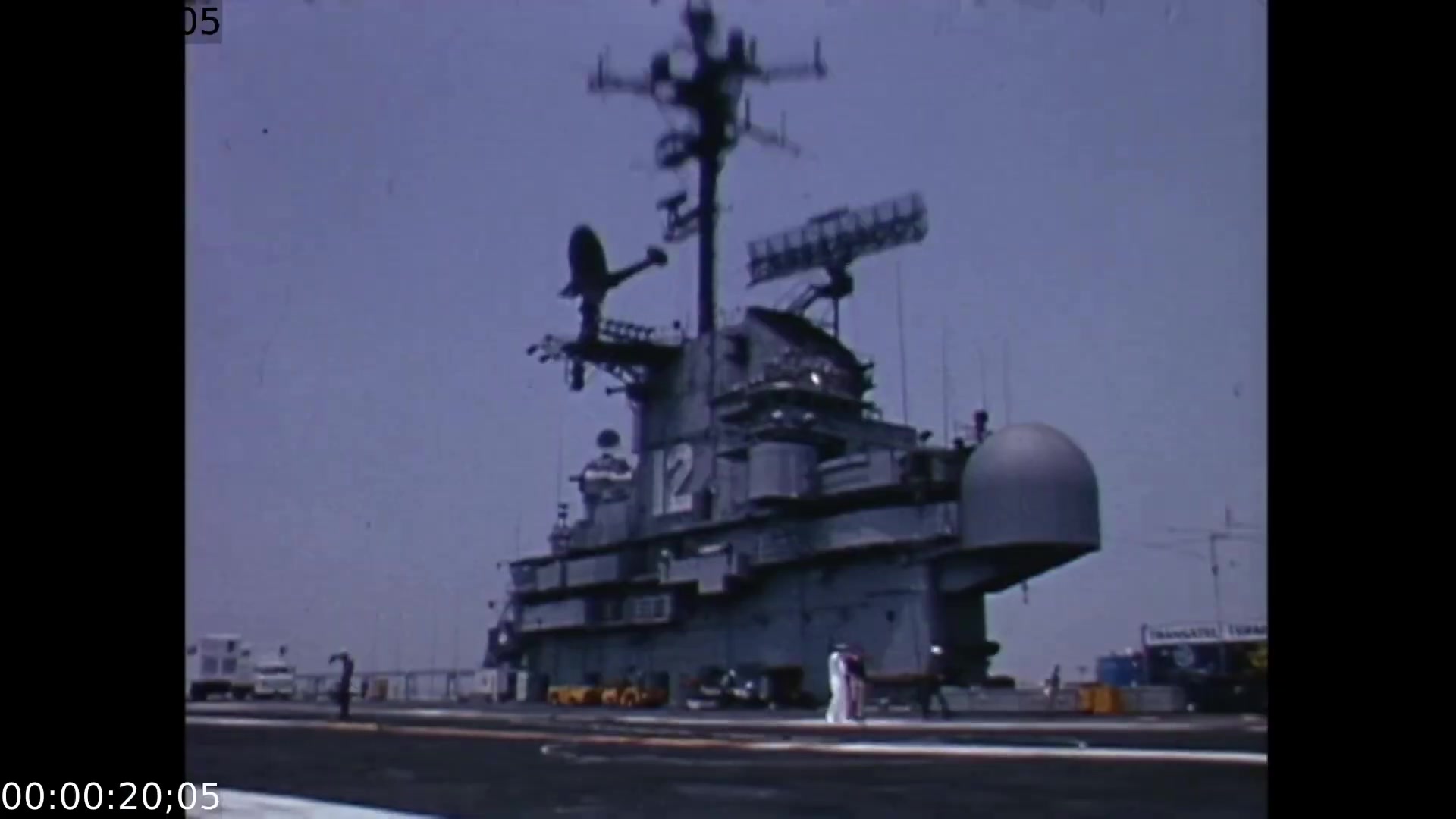
The film still features a large, industrial mobile color TV earth station prominently displayed on a naval vessel, with antennas and equipment atop the structure under a clear blue sky. The camera angle captures the ship's impressive scale as it looms over figures in white suits moving on the deck, highlighting the technological advancements of the time.
00:00:20.187 — The film still features a large, industrial mobile color TV earth station prominently displayed on a naval vessel, with antennas and equipment atop the structure under a clear blue sky. The camera angle captures the ship's impressive scale as it looms over figures in white suits moving on the deck, highlighting the technological advancements of the time.

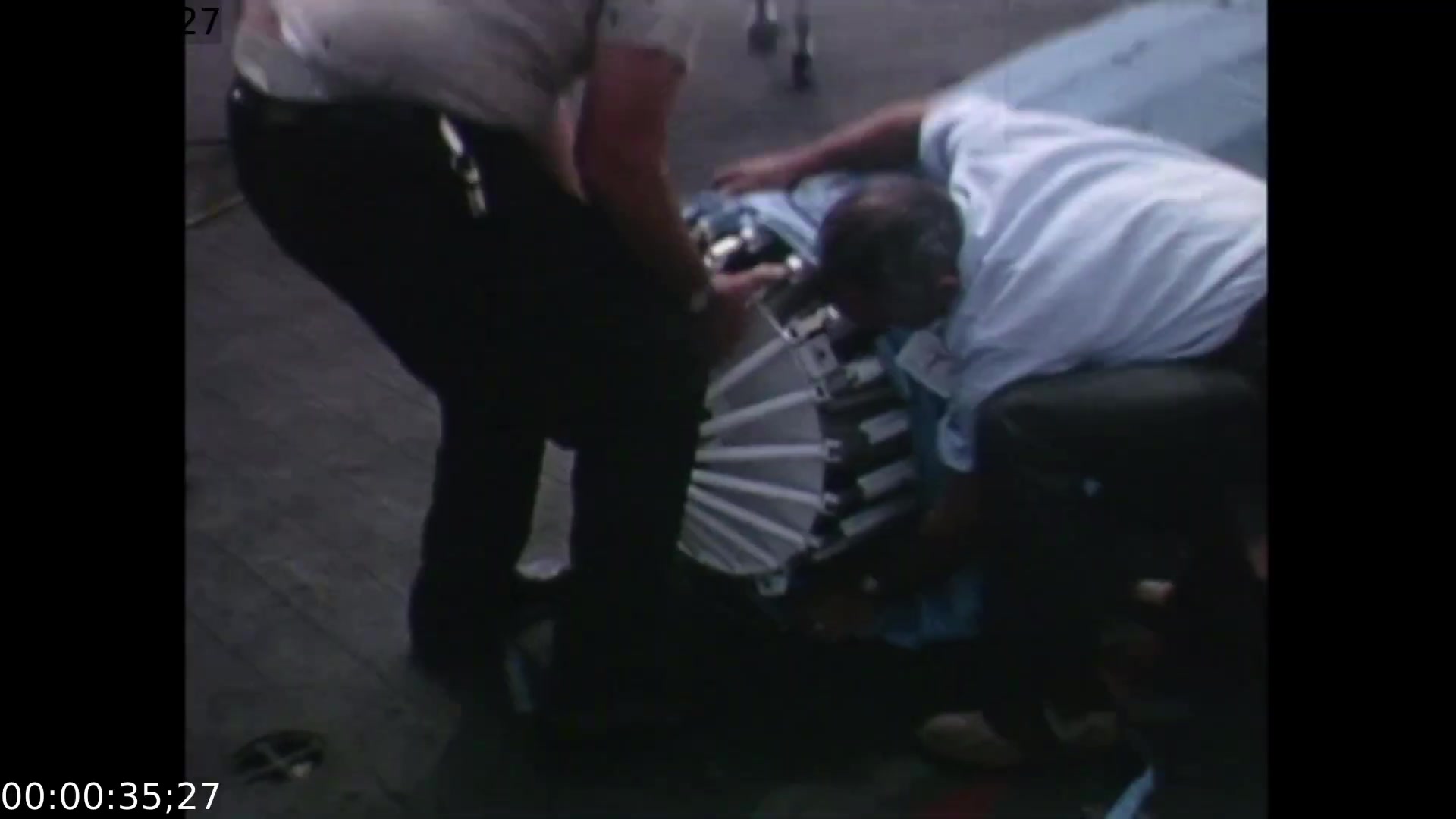
The film still depicts two men bent over a piece of equipment on a deck, suggesting an intense technical setup or repair. The close-up camera angle highlights their focused interactions with the machinery as they prepare for the live telecast of the Apollo 11 splashdown, emphasizing the urgency and collaborative effort behind the broadcast.
00:00:35.936 — The film still depicts two men bent over a piece of equipment on a deck, suggesting an intense technical setup or repair. The close-up camera angle highlights their focused interactions with the machinery as they prepare for the live telecast of the Apollo 11 splashdown, emphasizing the urgency and collaborative effort behind the broadcast.

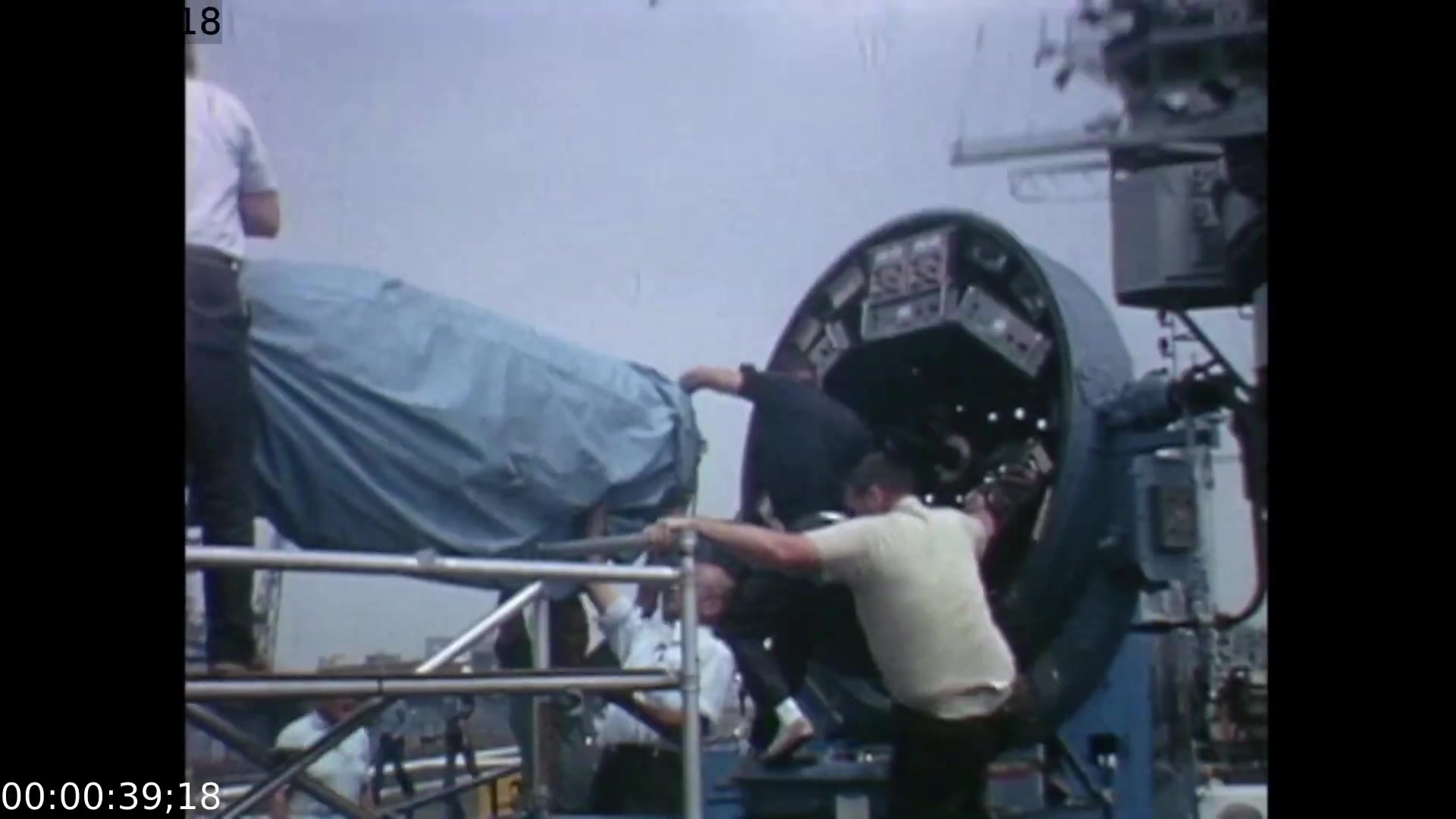
The film still features technicians working on a large, covered piece of equipment, likely a mobile color TV transmission unit, against a backdrop of a cloudy sky. The camera angle captures the dynamic action of crew members as they focus on assembling the gear needed to facilitate live telecasts of the Apollo 11 splashdown and recovery on July 24, 1969.
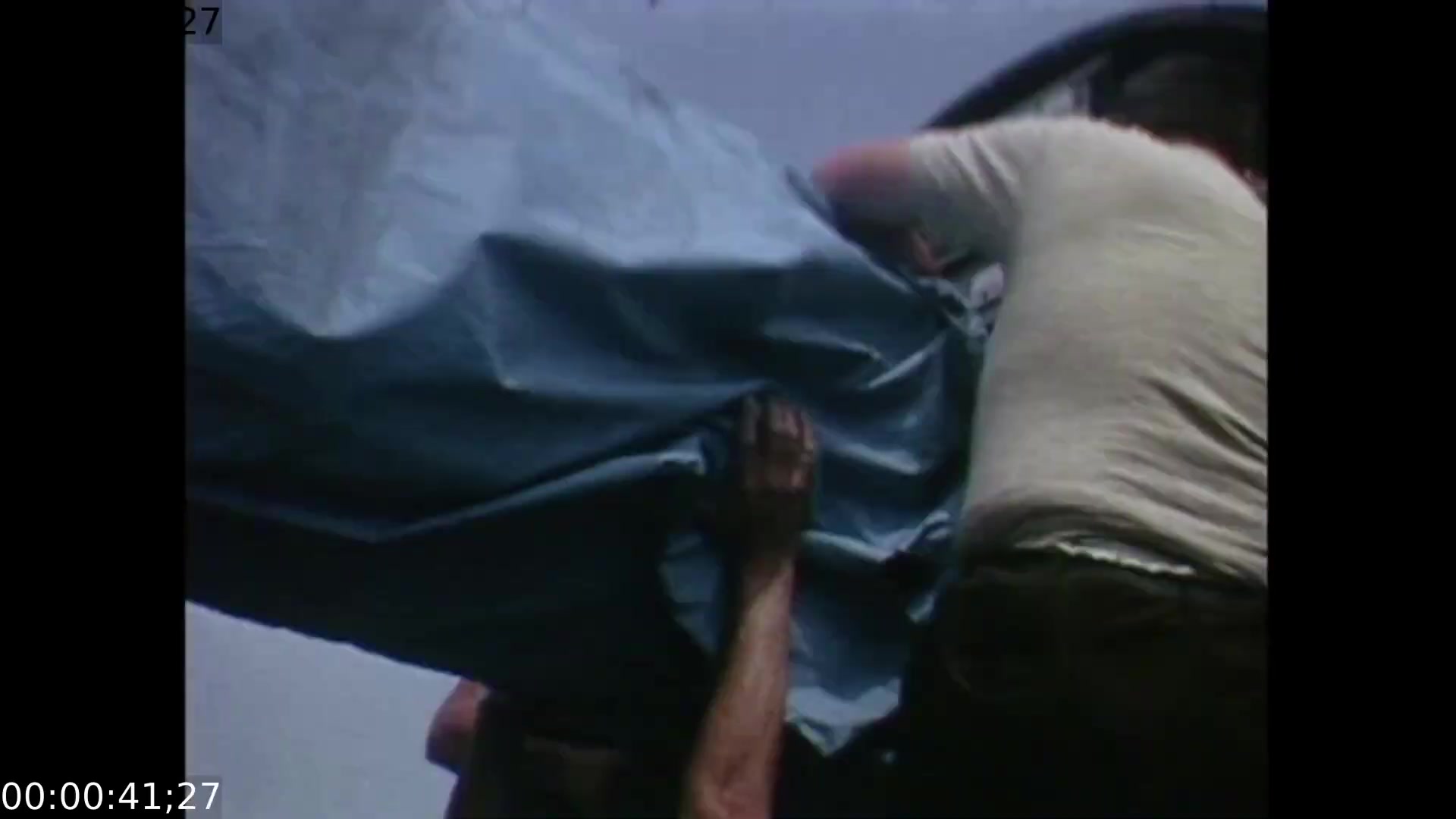
00:00:39.640 — The film still features technicians working on a large, covered piece of equipment, likely a mobile color TV transmission unit, against a backdrop of a cloudy sky. The camera angle captures the dynamic action of crew members as they focus on assembling the gear needed to facilitate live telecasts of the Apollo 11 splashdown and recovery on July 24, 1969.

The film still showcases a group of technicians focused on assembling equipment, with hands and upper bodies prominently featured as they maneuver a large blue tarp or cover. The camera angle is slightly elevated, capturing the urgency and collaborative effort involved in setting up the mobile color TV earth station for the Apollo 11 splashdown coverage.
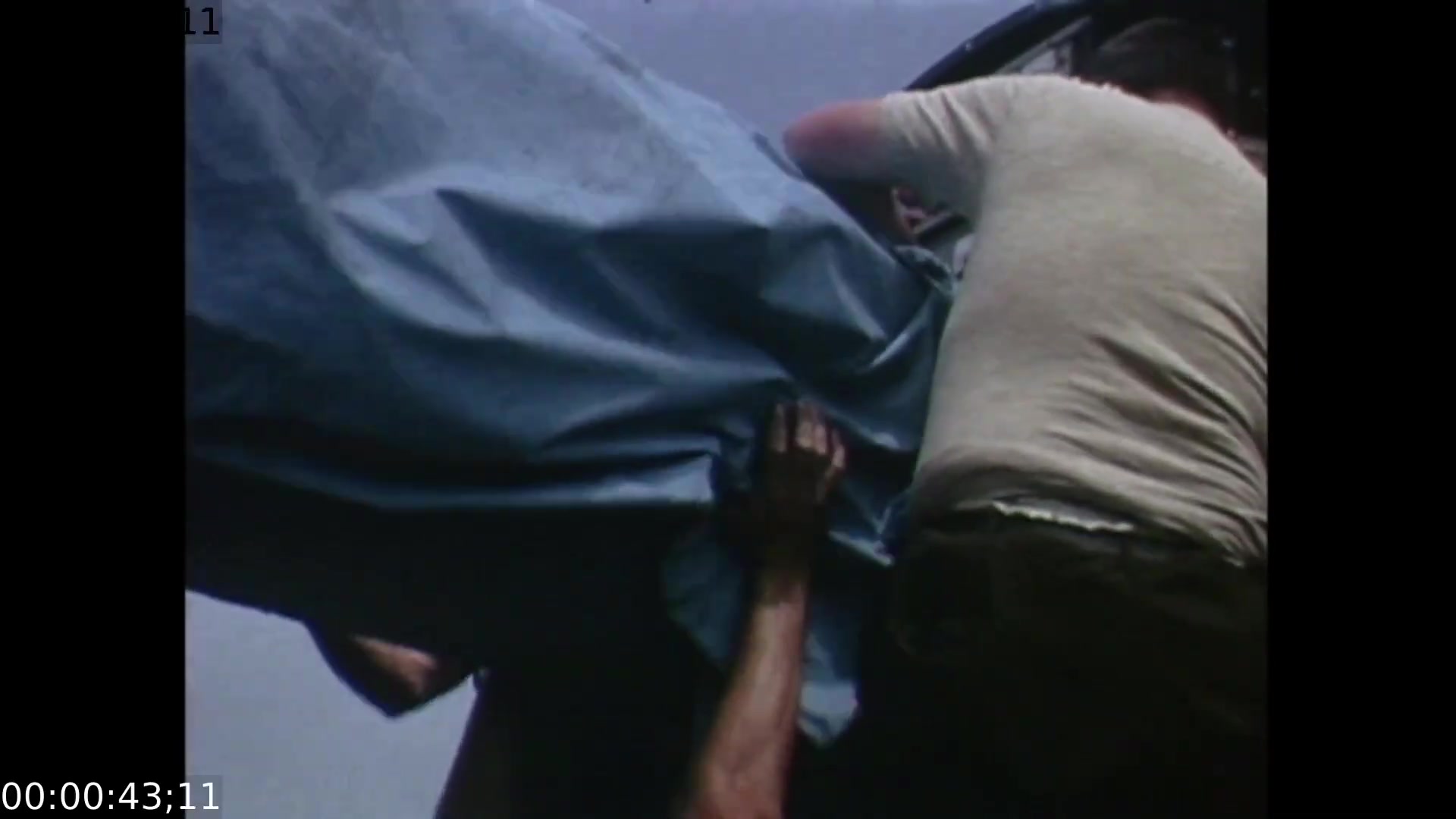
00:00:41.942 — The film still showcases a group of technicians focused on assembling equipment, with hands and upper bodies prominently featured as they maneuver a large blue tarp or cover. The camera angle is slightly elevated, capturing the urgency and collaborative effort involved in setting up the mobile color TV earth station for the Apollo 11 splashdown coverage.

The film still features two individuals engaged in the process of securing a large, blue tarp, likely related to the Apollo 11 splashdown event. The camera angle is close-up, focusing on the hands and physical effort involved, emphasizing the urgency and teamwork required in this moment.
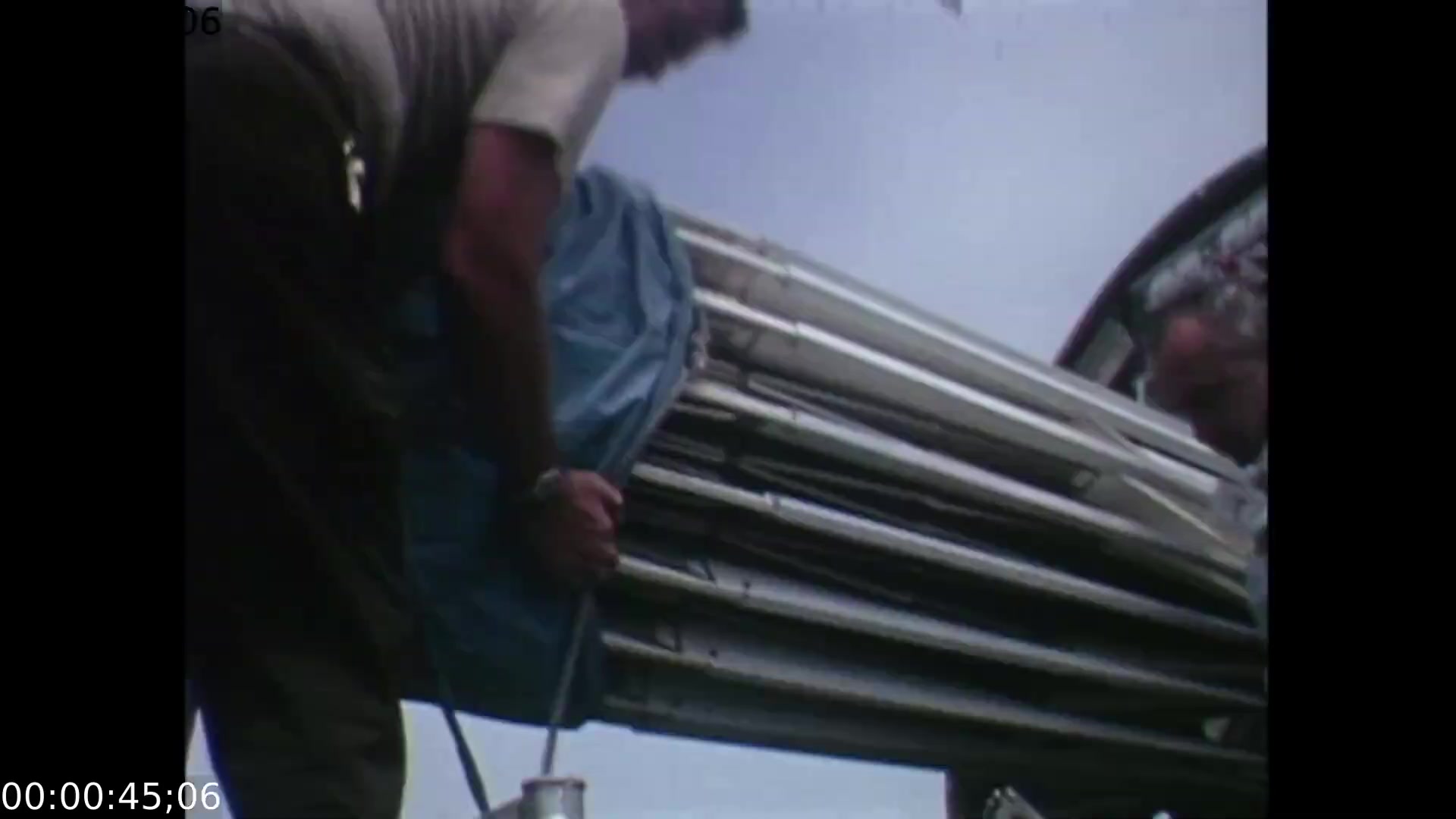
00:00:43.443 — The film still features two individuals engaged in the process of securing a large, blue tarp, likely related to the Apollo 11 splashdown event. The camera angle is close-up, focusing on the hands and physical effort involved, emphasizing the urgency and teamwork required in this moment.

The film still shows two technicians in the process of assembling equipment for the mobile color TV earth station, focused on a large, folded contraption covered with a blue tarp. The camera angle is positioned low, capturing the workers from a slight upward perspective against a backdrop of a partly cloudy sky, emphasizing their task and the scale of the equipment.
00:00:45.245 — The film still shows two technicians in the process of assembling equipment for the mobile color TV earth station, focused on a large, folded contraption covered with a blue tarp. The camera angle is positioned low, capturing the workers from a slight upward perspective against a backdrop of a partly cloudy sky, emphasizing their task and the scale of the equipment.

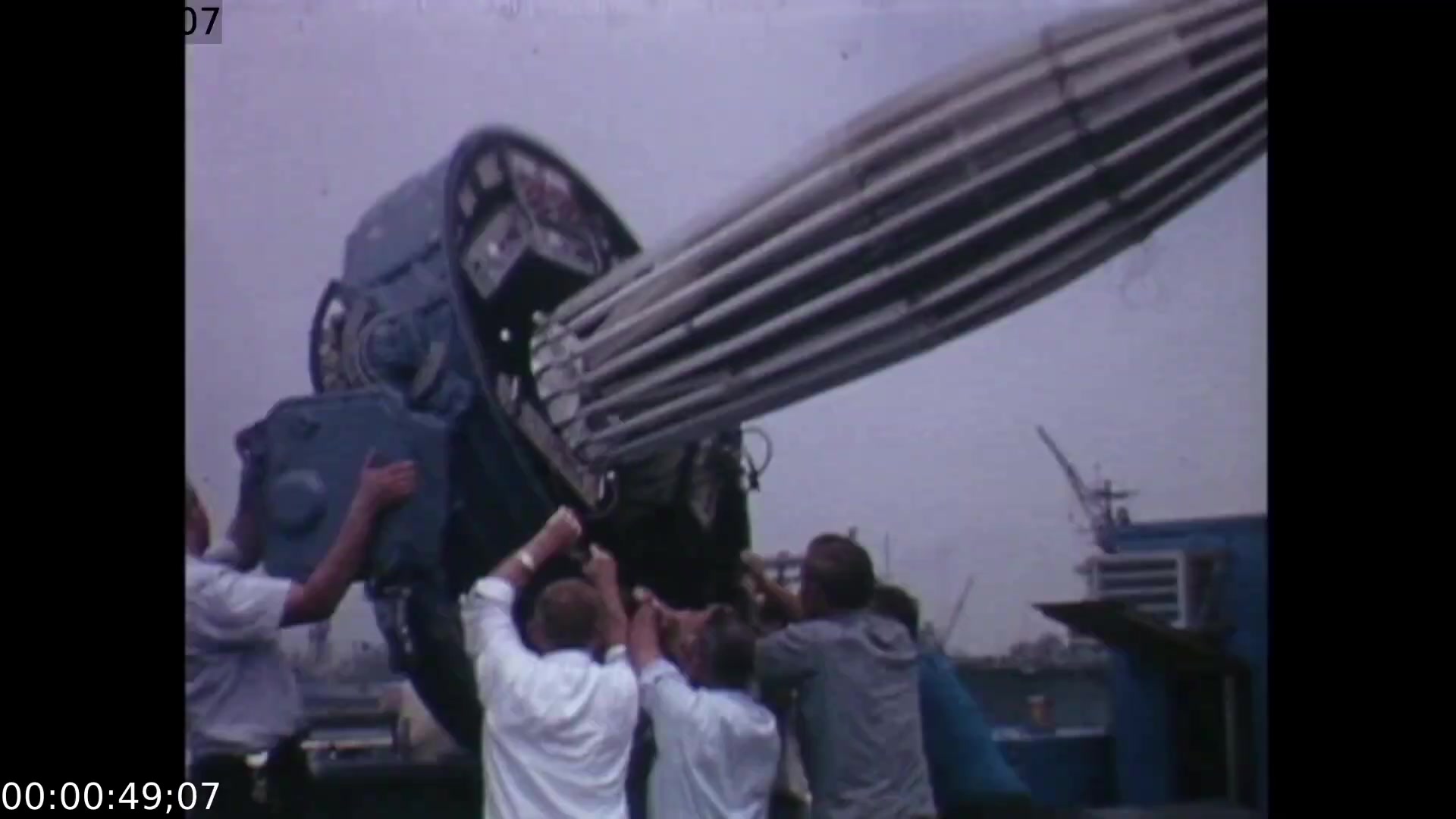
The film still captures a group of technicians collaborating to set up the large, intricately designed mobile color TV earth station against an industrial backdrop, likely managing equipment essential for broadcasting. The camera angle emphasizes their teamwork and the scale of the technology involved in transmitting the historic Apollo 11 splashdown.
00:00:49.283 — The film still captures a group of technicians collaborating to set up the large, intricately designed mobile color TV earth station against an industrial backdrop, likely managing equipment essential for broadcasting. The camera angle emphasizes their teamwork and the scale of the technology involved in transmitting the historic Apollo 11 splashdown.

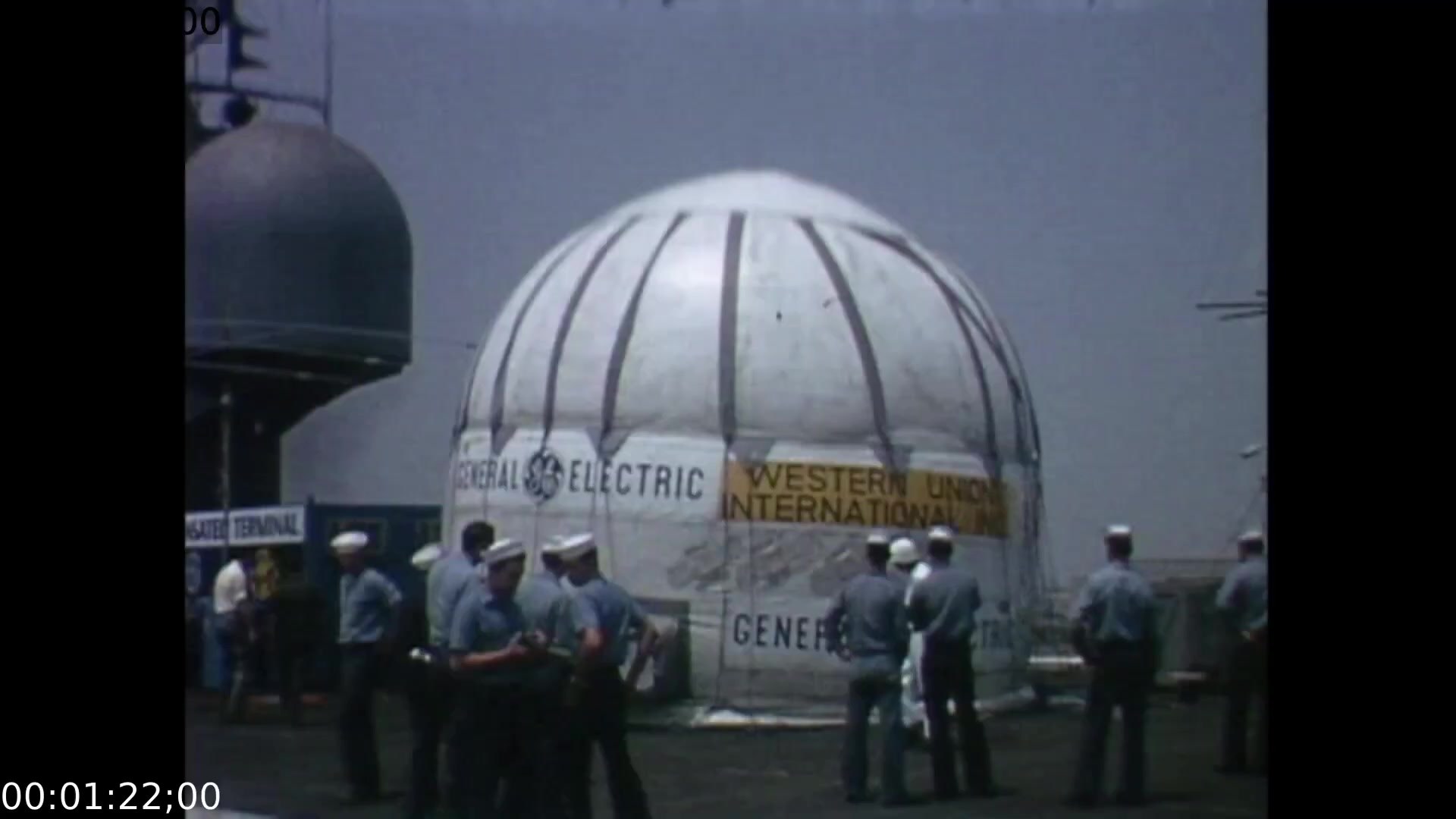
The still captures a group of personnel, likely from the mission or media crew, gathered in front of a large, dome-shaped structure branded with 'Western Union International' and 'General Electric.' The camera angle appears to be positioned at eye level, showcasing the collaboration between the two companies and the atmosphere surrounding the historic Apollo 11 splashdown event.
00:01:22.015 — The still captures a group of personnel, likely from the mission or media crew, gathered in front of a large, dome-shaped structure branded with 'Western Union International' and 'General Electric.' The camera angle appears to be positioned at eye level, showcasing the collaboration between the two companies and the atmosphere surrounding the historic Apollo 11 splashdown event.

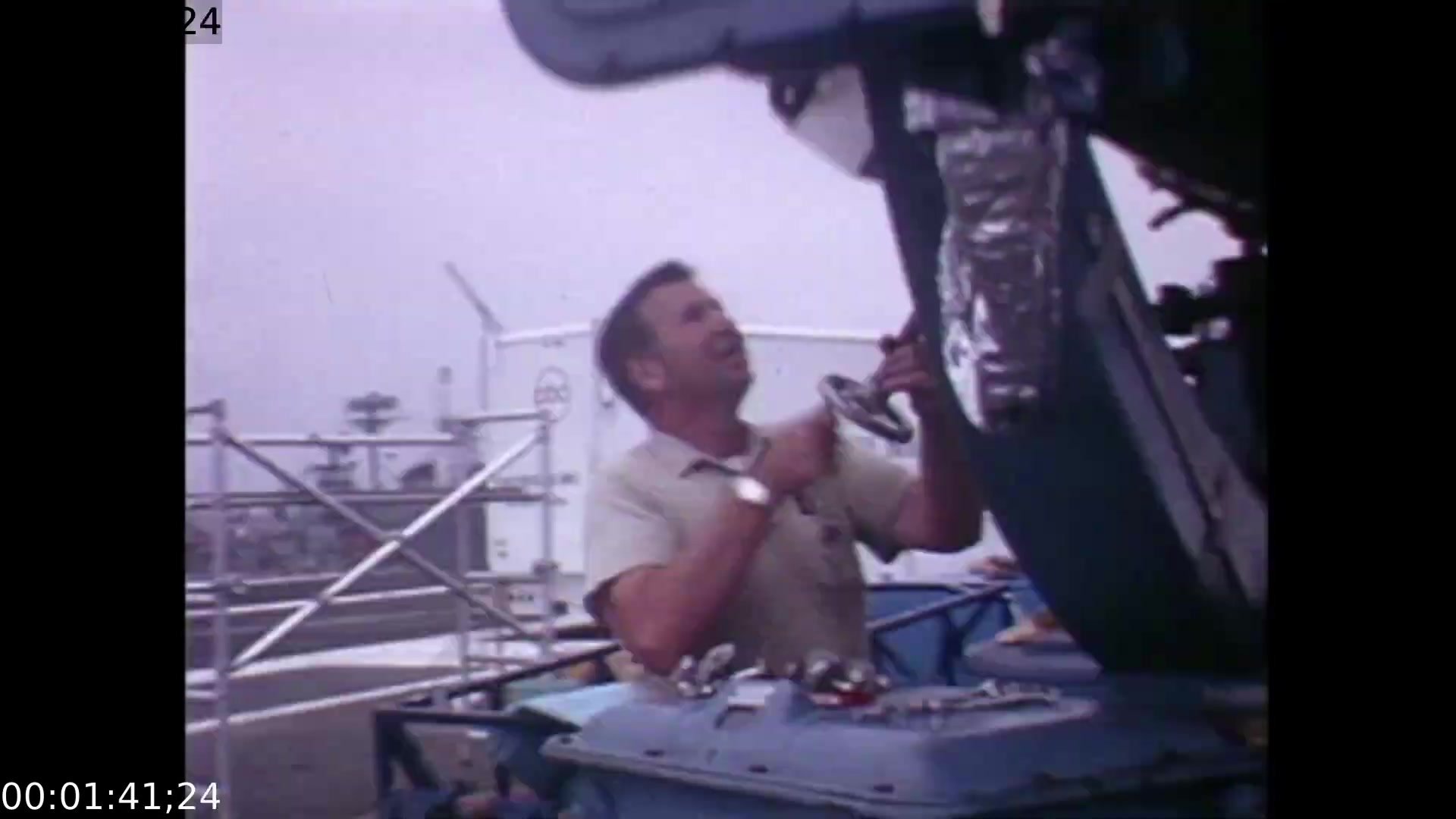
The still features a technician working intently on equipment at a mobile color TV earth station during the Apollo 11 mission. Shot from a low angle, it emphasizes the man's focused expression and highlights the machinery and surrounding scaffolding, capturing the atmosphere of anticipation and technical expertise as the team prepares for the live telecast.

00:01:41.835 — The still features a technician working intently on equipment at a mobile color TV earth station during the Apollo 11 mission. Shot from a low angle, it emphasizes the man's focused expression and highlights the machinery and surrounding scaffolding, capturing the atmosphere of anticipation and technical expertise as the team prepares for the live telecast.

Film Transcript / Subtitles

What will make it possible for you to see the Apollo 11 splashdown and recovery telecast live and in color on July 24th? You're looking at the most important part of it, the antenna of the world's first and only mobile color TV earth station. Built and operated for Western Union International by the Space System Center of General Electric, this new small earth station is a marvel of engineering technology. Here you see the unit being assembled on the deck of the primary recovery vessel, the aircraft carrier USS Hornet. The key to the unit's portability is its antenna that folds and unfolds like an umbrella so that it can be transported anywhere in the world for on the spot live TV news transmission. This unit, by the way, is just a miniature of the many permanent earth stations now operating around the world using satellite communications. Once the antenna is assembled, it's carefully protected by a plastic air pressurized radome so that it can operate in any weather. But it's what happens under this plastic bubble that really counts. From television cameras aboard the carrier, color TV signals are fed into a special transmitter. These signals are in turn aimed by the antenna unit in a pencil-thin beam to a tiny satellite hovering more than 22,000 miles in outer space. From the satellite, the signals are bounced back to earth where they're picked up and relayed to the TV stations around the world. Sound complicated? Yes. But the first such system was created by Western Union International and General Electric to make sure that you see all the Apollo recovery broadcasts. July 24th, the day the earth takes a deep breath and you'll see it all live and in color from the decks of the USS Hornet.