Bell System Film - Drop Wire Runs Part 1 (a)
Shotlist & Visual Analysis
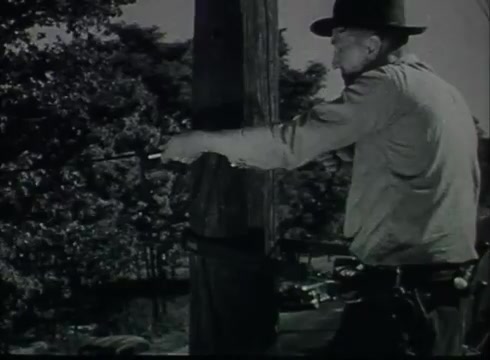
00:00:39.573 — The still features a technician working on a telephone pole, likely engaged in the process of connecting or handling drop wires. He is dressed in period-appropriate work attire, including a hat, indicating his role as a lineman. The surrounding trees suggest an outdoor environment typical of a local telephone installation. This scene is part of a Bell System film from the late 1940s to early 1950s, focusing on the technical aspects of telephone wire installation from central offices to customers.
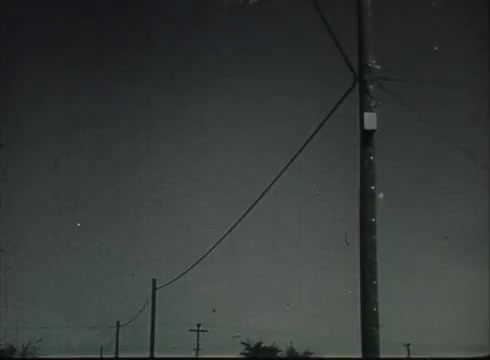
00:01:30.290 — The still from 'Bell System Film - Drop Wire Runs Part 1 (a)' shows a telephone pole with wires extending towards the viewer, symbolizing the infrastructure that delivers telephone service. The background features a gradient sky, emphasizing the pole and wires as key elements. This image reflects the late 1940s to early 1950s context of telephone installation and the connection between central offices and customers.
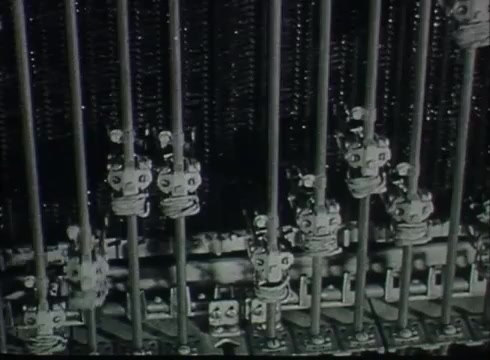
00:01:38.999 — The still from 'Bell System Film - Drop Wire Runs Part 1 (a)' depicts a close-up view of a mechanical circuit switchboard commonly used in Central Offices. It shows a series of metal rods and connectors, indicative of the technology utilized to manage telephone connections in the late 1940s to early 1950s. The intricate arrangement highlights the complexity of telephone infrastructure during that period, as it functions to route calls from the telephone poles to customer lines.
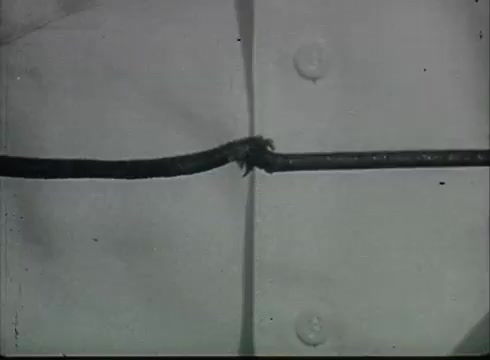
00:02:28.649 — The still from 'Bell System Film - Drop Wire Runs Part 1 (a)' shows two lengths of telephone wire making contact with each other, possibly indicating a repair or connection point. The image highlights a close-up of the wires, emphasizing their condition and the technique used to join them. The context suggests it's part of a tutorial on telephone service infrastructure from the late 1940s to early 1950s, focusing on practical aspects of installation.
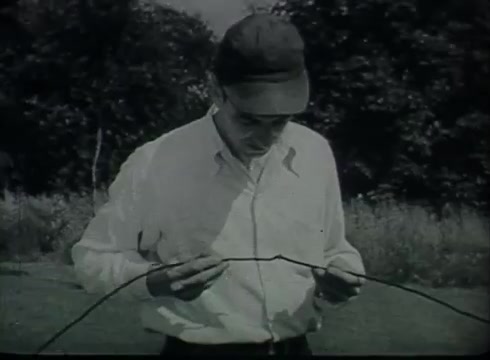
00:02:31.685 — The still from 'Bell System Film - Drop Wire Runs Part 1 (a)' depicts a male technician wearing a cap and a white shirt, inspecting a length of drop wire. He stands outdoors, surrounded by greenery, indicating a practical demonstration of telephone wire installation. The film illustrates the process of connecting telephone lines from utility poles to customer premises, typical of the informational style used in the late 1940s to early 1950s.
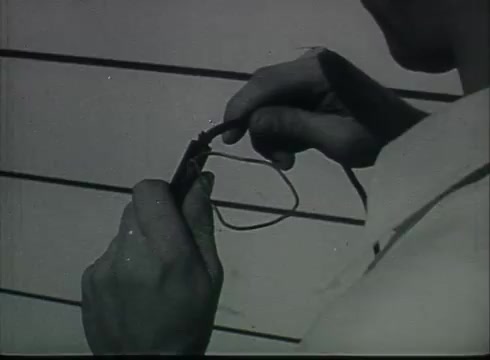
00:02:38.358 — The still from the Bell System film 'Drop Wire Runs Part 1 (a)' depicts a close-up of a person’s hands as they handle a telephone wire. The image focuses on the technique of connecting or preparing the wire, likely showcasing the steps involved in the installation process. The historical context suggests this film serves an educational purpose, illustrating telecommunications practices from the late 1940s to early 1950s.
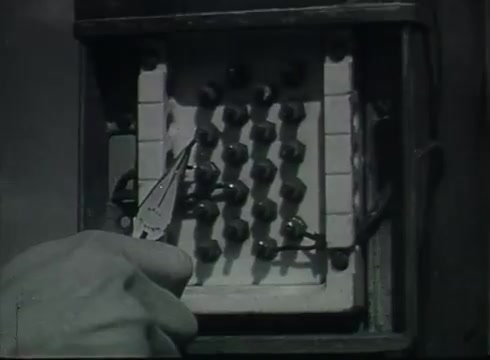
00:02:50.504 — The still shows a close-up of a utility box, likely part of a telephone system, with a hand using pliers to manipulate connections. The box features multiple terminals and is set in a muted, monochrome style typical of the late 1940s to early 1950s. This moment illustrates the technical process of connecting drop wires from overhead poles to customer lines, emphasizing the practical aspects of telephone installation.
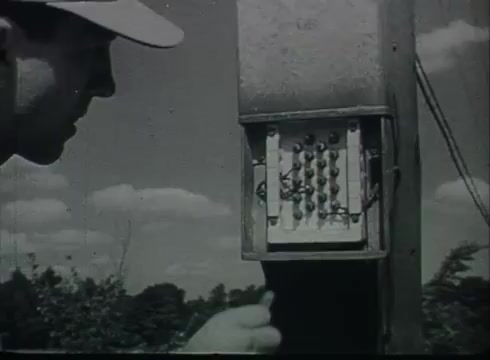
00:02:53.673 — The still depicts a technician working on a telephone junction box mounted on a utility pole. He is wearing a cap and is focused on the internal wiring of the box, which contains multiple connections. The setting features a clear sky with some clouds in the background, indicating a daytime scene. This image illustrates the process of connecting telephone wires from the central office to the customer, highlighting the hands-on nature of telephone service installation in the late 1940s to early 1950s.
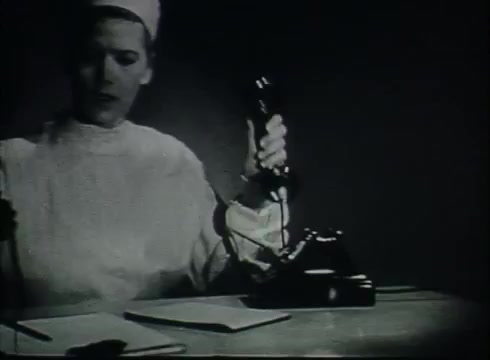
00:03:04.918 — The still features a woman, likely a telephone operator, wearing a white uniform and a cap, seated at a desk. She is holding a black telephone receiver with one hand while looking down at some notes on the table. The image captures a moment of communication, emphasizing the operational aspect of telephone service during the late 1940s or early 1950s, likely illustrating the connection process between the Central Office and customers. The overall aesthetic reflects the film's educational focus on telephone infrastructure.
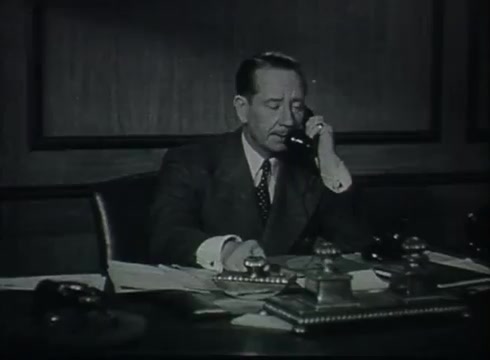
00:03:08.055 — The still depicts a middle-aged man in a suit seated at a desk, actively engaged in a telephone conversation. He appears focused, with papers and office supplies scattered on the desk. The setting suggests a professional environment, likely in a telecommunications context given the film's subject matter. The lighting is subdued, characteristic of the era, contributing to a serious atmosphere suitable for a corporate setting.
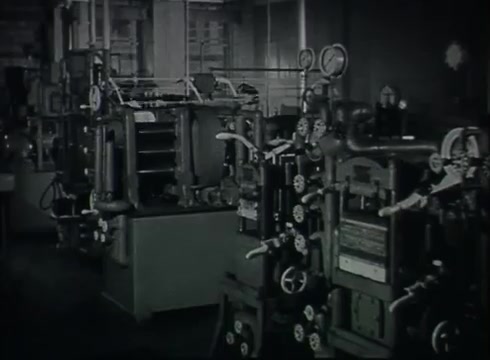
00:03:45.025 — The still from 'Bell System Film - Drop Wire Runs Part 1 (a)' depicts a Central Office environment from the late 1940s to early 1950s. The image shows various machines and equipment, including panels with gauges, levers, and valves, all housed within a well-lit industrial space. This setting highlights the technological processes involved in telephone service delivery, illustrating the complexity of the infrastructure supporting communication networks during that era.
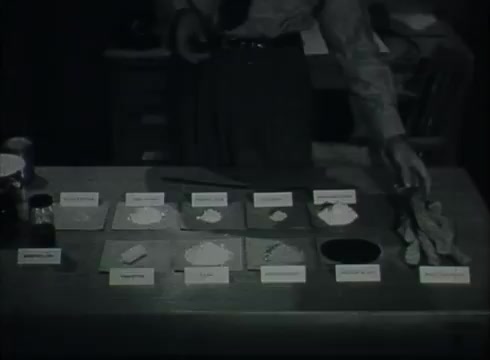
00:04:30.103 — The still features a table displaying labeled samples of various materials related to telephone wire installation, such as insulation and connectors. A person, likely a technician or instructor, is positioning one of the materials, indicating a practical demonstration. The setting appears to be a Central Office environment, typical of the late 1940s to early 1950s, emphasizing hands-on training in telecommunications.
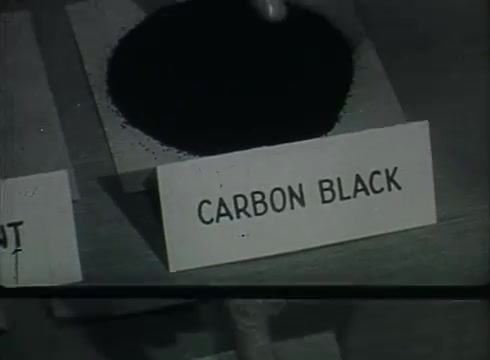
00:04:39.513 — The still features a close-up of a black powder labeled 'CARBON BLACK.' It appears to be displayed on a table, likely as part of a demonstration or educational segment within the Bell System film. This film, created in the late 1940s or early 1950s, is focused on the processes involved in telephone wire installation, possibly highlighting materials used in telephone infrastructure.
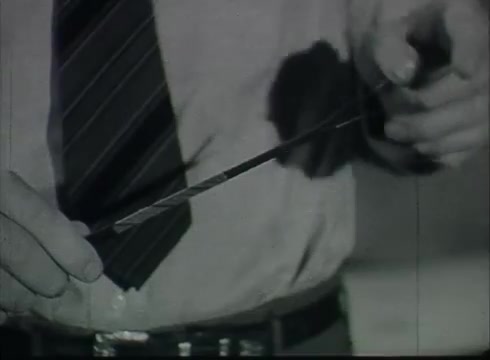
00:05:12.946 — The still captures a person, dressed in a collared shirt and tie, demonstrating a piece of telephone wire, possibly indicating its construction or application. The image likely focuses on the process of connecting drop wires from telephone poles to customer premises, a key topic in the Bell System film from the late 1940s or early 1950s. The hand positioning suggests a hands-on instructional element, characteristic of technical training visuals from that era. The film aims to educate viewers about telecommunications infrastructure.
00:05:19.452 — The still features a man in a collared shirt and tie, speaking while holding a small tool or instrument, likely related to telephone installation. He stands in front of a simple background, indicative of an educational or instructional setting typical of the late 1940s to early 1950s. The film focuses on the processes involved in connecting telephone wires from poles to customers, highlighting practical aspects of telecommunications technology.
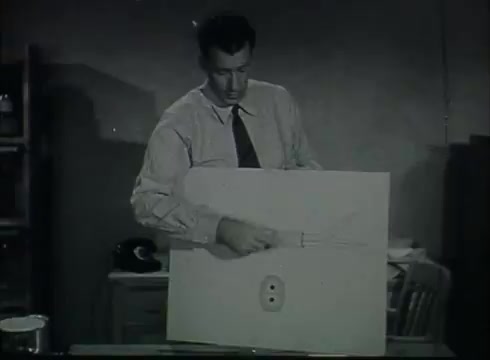
00:05:35.902 — The still features a man dressed in a light-colored shirt and tie, demonstrating a telephone installation process. He is holding a model or illustration on a board, likely depicting the connection between telephone wire and a wall outlet or similar fixture. The setting appears to be an office or workshop, reflecting the educational nature of the film. This scene is part of a Bell System film from the late 1940s to early 1950s, designed to explain telephone wire installations to viewers.
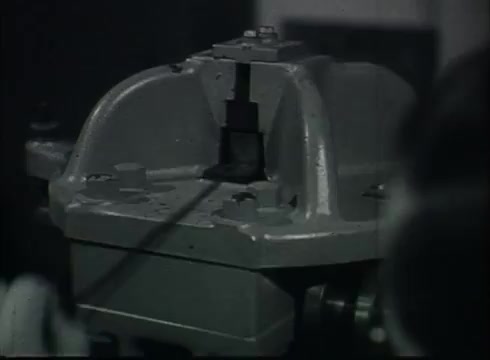
00:06:19.412 — The still depicts a piece of industrial equipment used in the process of preparing telephone wire, likely within a Central Office setting. The focus is on a metallic apparatus that appears to be a clamp or machine component, holding a length of wire, showcasing the mechanics involved in connecting telephone lines from poles to customers. The overall style reflects the mid-20th-century aesthetic typical of instructional films from that era.
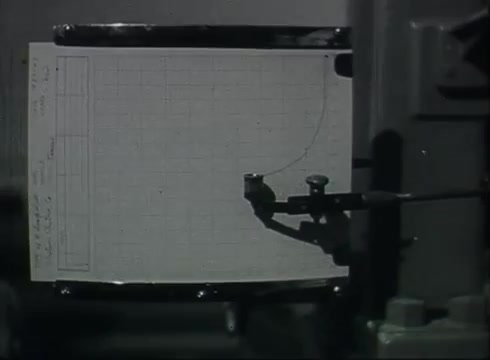
00:06:26.920 — The still features an image of a graphing tool or recording device used in a Central Office setting from the late 1940s or early 1950s. A sheet of graph paper is mounted on the device, showing a curve likely related to telephone wire routing or signal analysis. The setup reflects the technological methods of the era for documenting telecommunications data in the context of the Bell System film addressing drop wire installations.
00:06:37.063 — The still from 'Bell System Film - Drop Wire Runs Part 1 (a)' showcases a technician in a white shirt focused on manipulating equipment within a Central Office setting. The background suggests a technical environment, likely related to telecommunications, illustrating the processes involved in connecting telephone wires from utility poles to customers. The image captures the era's attention to detail and the importance of precise operations in telephone service provision.
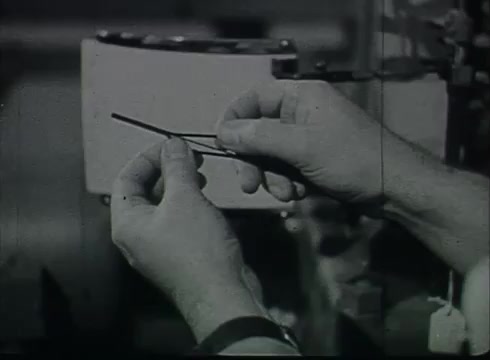
00:06:41.067 — The still from 'Bell System Film - Drop Wire Runs Part 1 (a)' shows a person's hands holding a piece of wire. The background appears to be part of a Central Office environment, indicative of the late 1940s to early 1950s period. The focus on the wire suggests the film's instructional theme, likely detailing the process of connecting telephone wires from utility poles to customer premises.
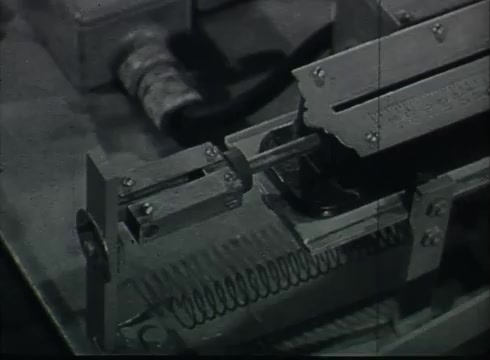
00:06:53.980 — The still from 'Bell System Film - Drop Wire Runs Part 1 (a)' shows a close-up of a mechanical device, likely part of the Central Office equipment used during the late 1940s to early 1950s. It features metal components, including a spring mechanism, indicating its function in telecommunications. The clear focus on machinery highlights the technical processes involved in connecting telephone wire from utility poles to customer premises.
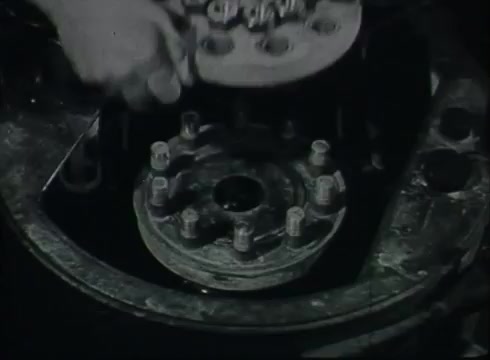
00:07:59.846 — The still shows a close-up of a mechanical device, likely related to the processing or installation of telephone wire. A hand is seen manipulating a component above a circular piece with multiple bolts. This scene captures a moment in the Central Office, illustrating the equipment and tools used in telephone wire management during the late 1940s to early 1950s.
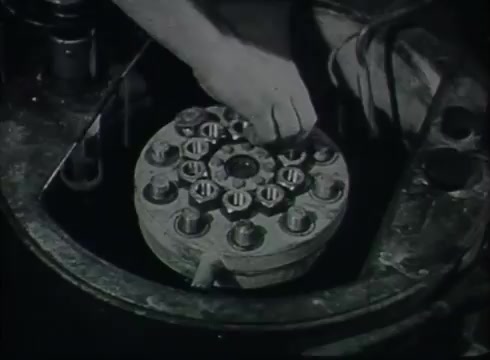
00:08:05.986 — The still depicts a close-up of a hand manipulating a circular component, possibly a terminal or connector, within a Central Office setting. The environment appears industrial and utilitarian, typical of the late 1940s to early 1950s. This scene likely illustrates the process of connecting telephone wires as part of the telecommunication infrastructure, emphasizing the technical aspects of telephone service setup.

00:08:47.327 — The still likely depicts a dense canopy of trees, illustrating the context of outdoor utility work related to telephone line installation. The focus on the foliage suggests the natural environment that technicians must navigate when running drop wires from utility poles to customers. The visual conveys the challenges and considerations involved in telecommunication infrastructure during the late 1940s and early 1950s.
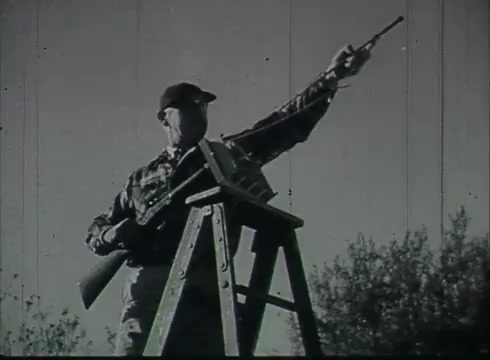
00:08:55.935 — The still from 'Bell System Film - Drop Wire Runs Part 1 (a)' features a man standing on a ladder with a telephone pole in the background. He is wearing a cap and appears to be holding a tool or equipment, possibly for installation or maintenance purposes. The scene likely illustrates a step in the process of connecting telephone wires from poles to customers, typical of the film's instructional content from the late 1940s to early 1950s. The black-and-white imagery evokes the era's documentary style, emphasizing telecommunication work.
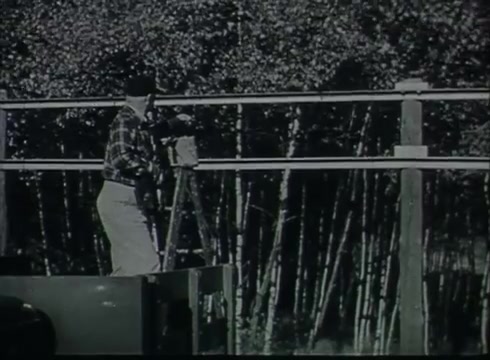
00:09:08.715 — The still depicts a worker in a checkered shirt and hat, positioned on a platform, using a surveying instrument. He appears to be focused on measuring or assessing equipment atop a utility pole. In the background, there are trees, suggesting an outdoor setting typical for telephone line installation. This aligns with the instructional theme of the film, which showcases the process of connecting telephone wires from utility poles to customer premises during the mid-20th century.