Bell System Film - Drop Wire Runs Part 1 (b)

Shotlist & Visual Analysis
The still shows a technician in a plaid shirt, standing on a ladder, working on telephone infrastructure. He is positioned next to a pole where wires are attached, likely demonstrating the installation process for drop wires from a central office to a customer's location. The background features trees, indicating a natural setting typical of many service areas. The image captures a historical moment reflecting early telecommunications practices from the late 1940s to early 1950s.
00:00:00.000 — The still shows a technician in a plaid shirt, standing on a ladder, working on telephone infrastructure. He is positioned next to a pole where wires are attached, likely demonstrating the installation process for drop wires from a central office to a customer's location. The background features trees, indicating a natural setting typical of many service areas. The image captures a historical moment reflecting early telecommunications practices from the late 1940s to early 1950s.

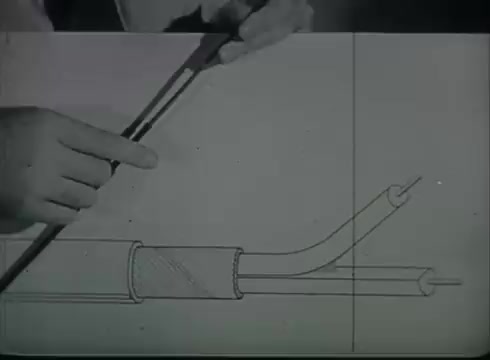
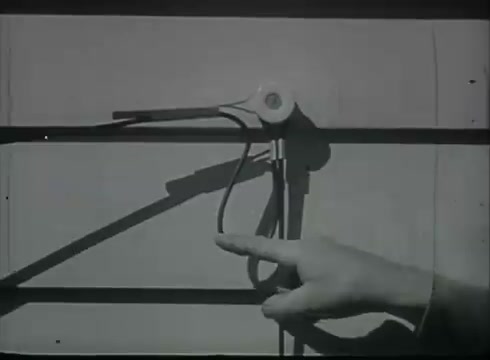
The still depicts a hand pointing at a diagram illustrating the construction of telephone drop wire. The diagram shows a cross-section of the cable, highlighting its different components, including the insulation and the conductors. This visual serves as an educational tool, demonstrating the technical aspects of connecting telephone lines from a utility pole to customer premises. The film likely aims to provide clear, step-by-step guidance on the installation process for telecommunications workers.
00:00:08.508 — The still depicts a hand pointing at a diagram illustrating the construction of telephone drop wire. The diagram shows a cross-section of the cable, highlighting its different components, including the insulation and the conductors. This visual serves as an educational tool, demonstrating the technical aspects of connecting telephone lines from a utility pole to customer premises. The film likely aims to provide clear, step-by-step guidance on the installation process for telecommunications workers.

The still from 'Bell System Film - Drop Wire Runs Part 1 (b)' depicts a technician in a hat working on a utility pole. He is focused on a box attached to the pole, likely connecting or maintaining telephone wires. The surroundings appear rural, with greenery visible in the background. This scene is part of a film illustrating the process of telephone wire setup, highlighting the technical aspects of connecting the service from poles to customers.
00:00:16.383 — The still from 'Bell System Film - Drop Wire Runs Part 1 (b)' depicts a technician in a hat working on a utility pole. He is focused on a box attached to the pole, likely connecting or maintaining telephone wires. The surroundings appear rural, with greenery visible in the background. This scene is part of a film illustrating the process of telephone wire setup, highlighting the technical aspects of connecting the service from poles to customers.

The still shows a suburban scene from the late 1940s to early 1950s, featuring a single-family house with a large lawn. A man stands in the yard, and a utility truck is parked near the curb. The house has awnings over the windows, and there are trees flanking the property. This setting likely represents a typical residential area where telephone drop wire installations are demonstrated, consistent with the educational purpose of the Bell System film.
00:01:14.942 — The still shows a suburban scene from the late 1940s to early 1950s, featuring a single-family house with a large lawn. A man stands in the yard, and a utility truck is parked near the curb. The house has awnings over the windows, and there are trees flanking the property. This setting likely represents a typical residential area where telephone drop wire installations are demonstrated, consistent with the educational purpose of the Bell System film.

The still from 'Bell System Film - Drop Wire Runs Part 1 (b)' shows a hand pointing at a telephone drop wire installation on a building's exterior. The wire is attached to a fixture, likely designed to guide the wire from the pole to the customer, illustrating part of the telephone installation process. The simplicity of the setup reflects the practical techniques used in the late 1940s to early 1950s telecommunications.
00:01:45.739 — The still from 'Bell System Film - Drop Wire Runs Part 1 (b)' shows a hand pointing at a telephone drop wire installation on a building's exterior. The wire is attached to a fixture, likely designed to guide the wire from the pole to the customer, illustrating part of the telephone installation process. The simplicity of the setup reflects the practical techniques used in the late 1940s to early 1950s telecommunications.

The still from 'Bell System Film - Drop Wire Runs Part 1 (b)' depicts a plain building with small windows, surrounded by a grassy area. The structure appears to be part of a Central Office facility, characteristic of late 1940s to early 1950s architecture. A clear sky with scattered clouds provides the backdrop, suggesting a calm day. The setting emphasizes the utilitarian nature of telephone infrastructure as it transitions from the pole to customer connections.
00:02:35.555 — The still from 'Bell System Film - Drop Wire Runs Part 1 (b)' depicts a plain building with small windows, surrounded by a grassy area. The structure appears to be part of a Central Office facility, characteristic of late 1940s to early 1950s architecture. A clear sky with scattered clouds provides the backdrop, suggesting a calm day. The setting emphasizes the utilitarian nature of telephone infrastructure as it transitions from the pole to customer connections.

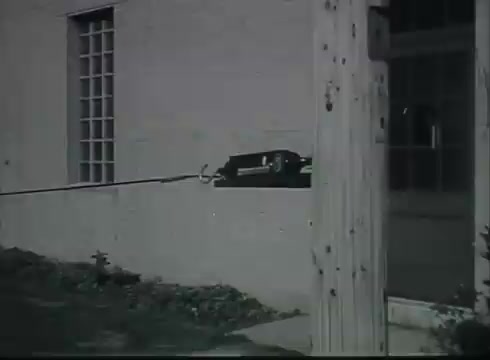
The still shows a section of telephone wire being installed from a pole to a building. The wire is secured to a device, possibly a puller or tool used in the installation process. The background features a simple wall with a window and a wooden pole, indicating an outdoor setting typical of utility installations. This visual underscores the practical steps involved in connecting telephone services.
00:02:43.663 — The still shows a section of telephone wire being installed from a pole to a building. The wire is secured to a device, possibly a puller or tool used in the installation process. The background features a simple wall with a window and a wooden pole, indicating an outdoor setting typical of utility installations. This visual underscores the practical steps involved in connecting telephone services.

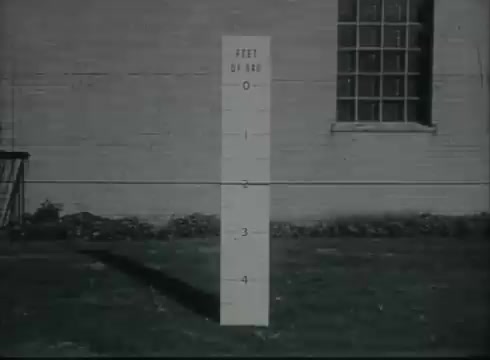
The still features a vertical measurement post marked with increments indicating feet, labeled 'FEET OF WIRE.' The post, set against a wall of a building with a window, serves as a visual reference for demonstrating the distance of telephone wire runs in the Bell System's instructional film from the late 1940s to early 1950s. The focus is likely on teaching about drop wire installations from telephone poles to customers.
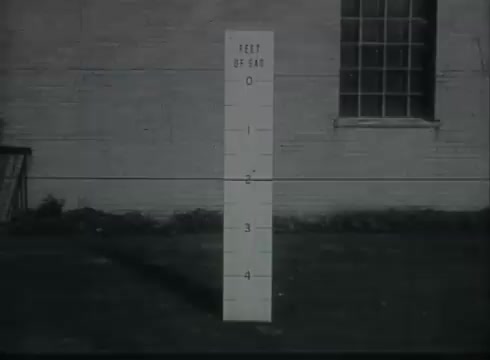
00:02:49.302 — The still features a vertical measurement post marked with increments indicating feet, labeled 'FEET OF WIRE.' The post, set against a wall of a building with a window, serves as a visual reference for demonstrating the distance of telephone wire runs in the Bell System's instructional film from the late 1940s to early 1950s. The focus is likely on teaching about drop wire installations from telephone poles to customers.

The still from 'Bell System Film - Drop Wire Runs Part 1 (b)' depicts a vertical, white measuring post marked in feet, showing increments from 0 to 4 feet. The post is situated in front of a wall with a window, likely in an outdoor setting. This visual aids viewers in understanding height measurements relevant to telephone wire installation from utility poles to customer premises, conveying technical information in a straightforward manner.
00:02:52.172 — The still from 'Bell System Film - Drop Wire Runs Part 1 (b)' depicts a vertical, white measuring post marked in feet, showing increments from 0 to 4 feet. The post is situated in front of a wall with a window, likely in an outdoor setting. This visual aids viewers in understanding height measurements relevant to telephone wire installation from utility poles to customer premises, conveying technical information in a straightforward manner.

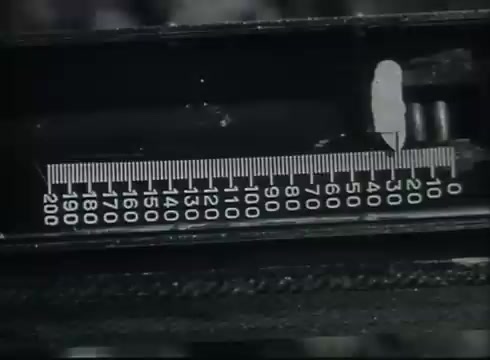
The still from 'Bell System Film - Drop Wire Runs Part 1 (b)' shows a close-up of a measuring device, likely used for telecommunication purposes. The scale is marked with numbers ranging from 0 to 200, indicating a precise measurement tool. This shot emphasizes the detailed technical aspects involved in telephone wire installation and maintenance, illustrating important steps in connecting service from the central office to the customer.
00:02:56.009 — The still from 'Bell System Film - Drop Wire Runs Part 1 (b)' shows a close-up of a measuring device, likely used for telecommunication purposes. The scale is marked with numbers ranging from 0 to 200, indicating a precise measurement tool. This shot emphasizes the detailed technical aspects involved in telephone wire installation and maintenance, illustrating important steps in connecting service from the central office to the customer.

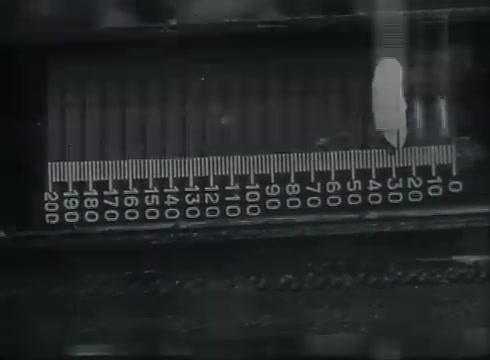
The still depicts a close-up of a measurement scale, likely used in a Central Office setting. The scale is marked with increments, possibly indicating wire lengths or measurements relevant to telephone installation. This part of the Bell System film emphasizes the precision required in the process of connecting telephone wires from utility poles to customers, showcasing the technical aspects of telecommunications infrastructure during the late 1940s to early 1950s.
00:02:57.344 — The still depicts a close-up of a measurement scale, likely used in a Central Office setting. The scale is marked with increments, possibly indicating wire lengths or measurements relevant to telephone installation. This part of the Bell System film emphasizes the precision required in the process of connecting telephone wires from utility poles to customers, showcasing the technical aspects of telecommunications infrastructure during the late 1940s to early 1950s.

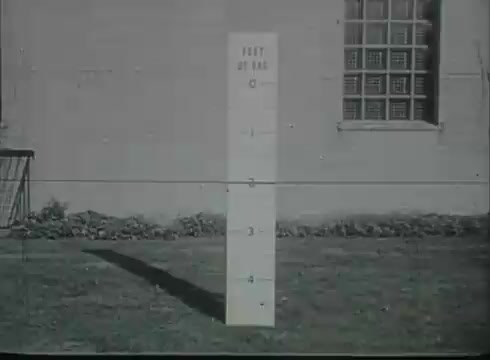
The still shows a marked pole in a grassy area, indicating measurements in feet, likely used for reference in the installation or maintenance of telephone wires. The background features a building with a window, and the overall scene is presented in a monochrome aesthetic typical of late 1940s to early 1950s films. The image is straightforward, focusing on the measurement criteria related to telephone drop wire installation.
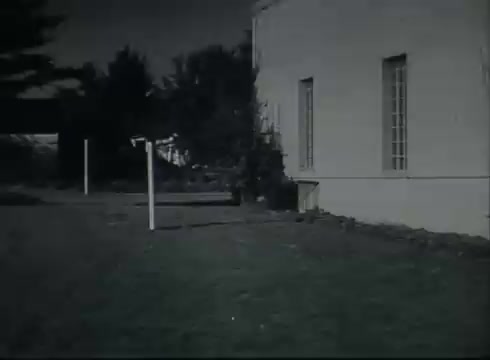
00:03:00.180 — The still shows a marked pole in a grassy area, indicating measurements in feet, likely used for reference in the installation or maintenance of telephone wires. The background features a building with a window, and the overall scene is presented in a monochrome aesthetic typical of late 1940s to early 1950s films. The image is straightforward, focusing on the measurement criteria related to telephone drop wire installation.

The still from 'Bell System Film - Drop Wire Runs Part 1 (b)' shows an exterior scene focused on a building, likely a Central Office. In the foreground, there are utility poles or posts indicating points for telephone wire connections. The environment appears to be grass and possibly shrubbery, suggesting a suburban setting. The film likely illustrates the steps involved in connecting telephone wires from the poles to residential or business customers. The overall tone reflects the technical and instructional nature of the film, typical of the late 1940s to early 1950s.
00:03:05.685 — The still from 'Bell System Film - Drop Wire Runs Part 1 (b)' shows an exterior scene focused on a building, likely a Central Office. In the foreground, there are utility poles or posts indicating points for telephone wire connections. The environment appears to be grass and possibly shrubbery, suggesting a suburban setting. The film likely illustrates the steps involved in connecting telephone wires from the poles to residential or business customers. The overall tone reflects the technical and instructional nature of the film, typical of the late 1940s to early 1950s.

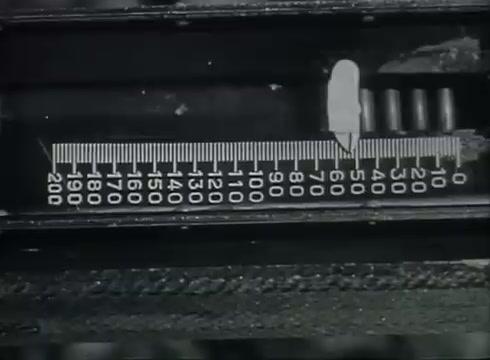
The still features a close-up of a measuring device, likely used in the installation or testing of telephone wires. The device displays a ruler-like scale numbered up to 200, indicating measurements for proper wire placement or management. This imagery reflects the technical processes involved in delivering telephone service from poles to customers as outlined in the Bell System film.
00:03:10.724 — The still features a close-up of a measuring device, likely used in the installation or testing of telephone wires. The device displays a ruler-like scale numbered up to 200, indicating measurements for proper wire placement or management. This imagery reflects the technical processes involved in delivering telephone service from poles to customers as outlined in the Bell System film.

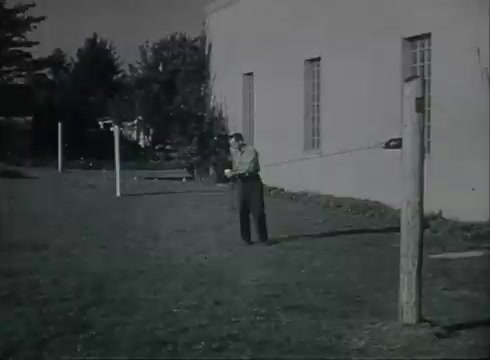
The still depicts a scene from the Bell System film 'Drop Wire Runs Part 1 (b),' illustrating the process of installing telephone wire. A man stands in an open area near a utility pole, possibly preparing to connect or adjust the wire. The background features a building and a few other poles, emphasizing a rural or suburban setting. The visual focuses on the practical steps involved in bringing telephone service from a central office to the customer.
00:03:14.728 — The still depicts a scene from the Bell System film 'Drop Wire Runs Part 1 (b),' illustrating the process of installing telephone wire. A man stands in an open area near a utility pole, possibly preparing to connect or adjust the wire. The background features a building and a few other poles, emphasizing a rural or suburban setting. The visual focuses on the practical steps involved in bringing telephone service from a central office to the customer.

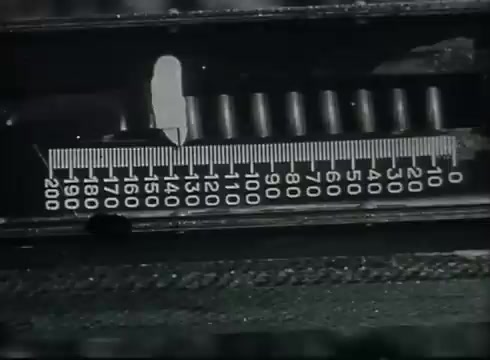
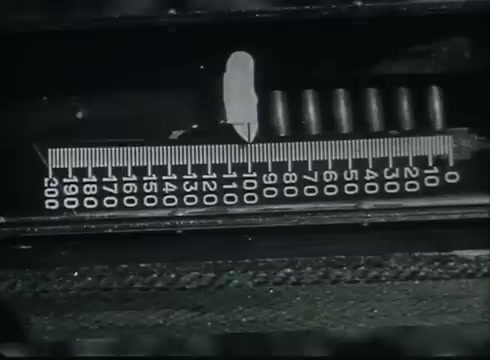
The still shows a close-up of a measuring device, likely used in the installation or maintenance of telephone wires. The scale is marked in increments, indicating measurements from 0 to 200. This type of footage is typical in training films from the late 1940s to early 1950s, illustrating the technical aspects of connecting telephone lines from poles to customer premises.
00:03:25.572 — The still shows a close-up of a measuring device, likely used in the installation or maintenance of telephone wires. The scale is marked in increments, indicating measurements from 0 to 200. This type of footage is typical in training films from the late 1940s to early 1950s, illustrating the technical aspects of connecting telephone lines from poles to customer premises.

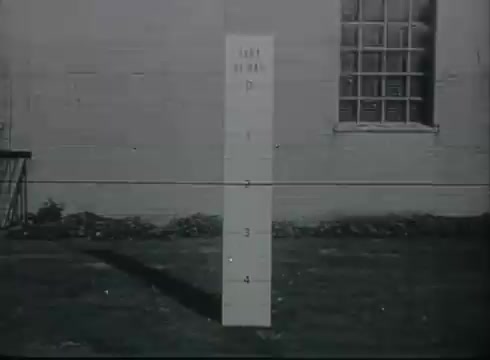
The still from the Bell System film shows a vertical sign or post marked with numerical indicators on a grassy area next to a building. The white post serves as a reference point with measurements (marked from 1 to 4) that may relate to telephone drop wire installation. In the background, there is a window and some equipment likely related to telephone service, emphasizing the technical context of connecting telephone lines from the central office to customers. The film focuses on instructional elements relevant to telephone line installation practices of the late 1940s to early 1950s.
00:03:31.044 — The still from the Bell System film shows a vertical sign or post marked with numerical indicators on a grassy area next to a building. The white post serves as a reference point with measurements (marked from 1 to 4) that may relate to telephone drop wire installation. In the background, there is a window and some equipment likely related to telephone service, emphasizing the technical context of connecting telephone lines from the central office to customers. The film focuses on instructional elements relevant to telephone line installation practices of the late 1940s to early 1950s.

The still features a close-up of a measurement gauge, likely used in the context of installing or maintaining telephone wires. The gauge displays a scale marked in units (possibly inches or feet), showing a white marker pointing to a specific measurement. This detail emphasizes the precision needed in telephone wire installation, reflecting the technical aspects covered in the Bell System film on drop wire runs.
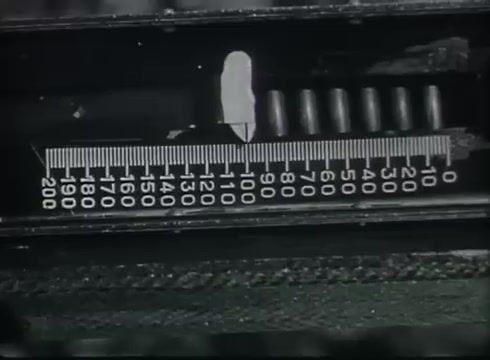
00:03:37.784 — The still features a close-up of a measurement gauge, likely used in the context of installing or maintaining telephone wires. The gauge displays a scale marked in units (possibly inches or feet), showing a white marker pointing to a specific measurement. This detail emphasizes the precision needed in telephone wire installation, reflecting the technical aspects covered in the Bell System film on drop wire runs.

The still features a close-up of a measurement tool or gauge, likely used to read precise distances or measurements related to telephone wire installation. The scale is marked in units, with clear divisions indicating measurements from 0 to 200. This would be relevant in the context of the film, which focuses on the technical aspects of installing drop wires from telephone poles to customer premises. The precision shown in the measurement aligns with the film's educational intent to explain the process methodically.
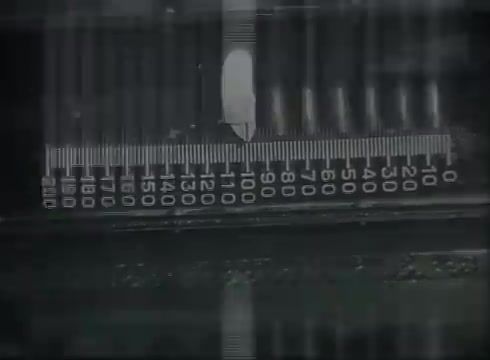
00:03:44.091 — The still features a close-up of a measurement tool or gauge, likely used to read precise distances or measurements related to telephone wire installation. The scale is marked in units, with clear divisions indicating measurements from 0 to 200. This would be relevant in the context of the film, which focuses on the technical aspects of installing drop wires from telephone poles to customer premises. The precision shown in the measurement aligns with the film's educational intent to explain the process methodically.

The still features a close-up of a measuring tool, likely a ruler or scale, with clearly marked increments. The image is presented in a monochrome style typical of 16mm films from the late 1940s or early 1950s. This specific segment likely illustrates a step in the process of measuring or laying telephone wire, emphasizing precision critical in connecting telephone lines from utility poles to customer premises within the context of Bell System operations.
00:03:44.725 — The still features a close-up of a measuring tool, likely a ruler or scale, with clearly marked increments. The image is presented in a monochrome style typical of 16mm films from the late 1940s or early 1950s. This specific segment likely illustrates a step in the process of measuring or laying telephone wire, emphasizing precision critical in connecting telephone lines from utility poles to customer premises within the context of Bell System operations.

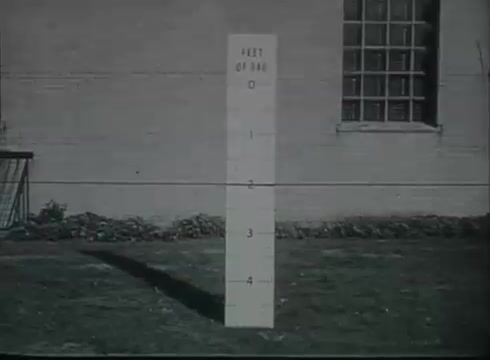
The still features a measuring post marked in feet, indicating heights from 0 to 4 feet, placed on a grassy area next to a building. This visual context is likely used to demonstrate the proper height for telephone drop wire installation, a key element in connecting the telephone line from utility poles to customers' locations. The film's educational aim is to provide clear guidelines for technicians working with telephone infrastructure.
00:03:46.026 — The still features a measuring post marked in feet, indicating heights from 0 to 4 feet, placed on a grassy area next to a building. This visual context is likely used to demonstrate the proper height for telephone drop wire installation, a key element in connecting the telephone line from utility poles to customers' locations. The film's educational aim is to provide clear guidelines for technicians working with telephone infrastructure.

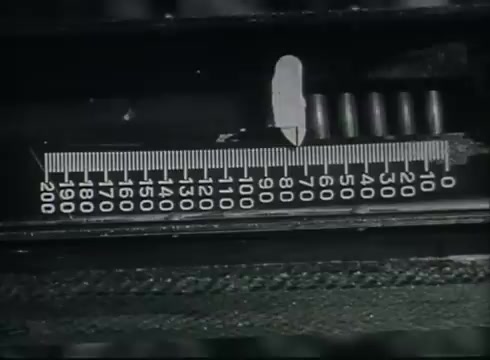
The still likely features a close-up of a measuring device or gauge, with a graduated scale ranging from 0 to 200. The context suggests it is part of a tutorial on the technical aspects of telephone wire installation, likely indicating measurements relevant to drop wire runs. The film is instructional, focusing on the methods and equipment used in the telephone infrastructure of the late 1940s to early 1950s.
00:03:53.700 — The still likely features a close-up of a measuring device or gauge, with a graduated scale ranging from 0 to 200. The context suggests it is part of a tutorial on the technical aspects of telephone wire installation, likely indicating measurements relevant to drop wire runs. The film is instructional, focusing on the methods and equipment used in the telephone infrastructure of the late 1940s to early 1950s.

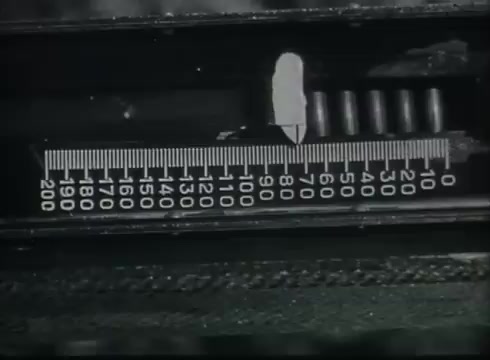
The still shows a close-up of a measuring device, likely used in the context of managing or installing telephone wires. It features a marked scale, indicating measurements, which may be related to wire lengths or installation parameters. The design suggests a technical focus typical of instructional materials from the late 1940s to early 1950s, aimed at demonstrating the steps involved in connecting telephone wires from utility poles to customer premises.
00:03:55.368 — The still shows a close-up of a measuring device, likely used in the context of managing or installing telephone wires. It features a marked scale, indicating measurements, which may be related to wire lengths or installation parameters. The design suggests a technical focus typical of instructional materials from the late 1940s to early 1950s, aimed at demonstrating the steps involved in connecting telephone wires from utility poles to customer premises.

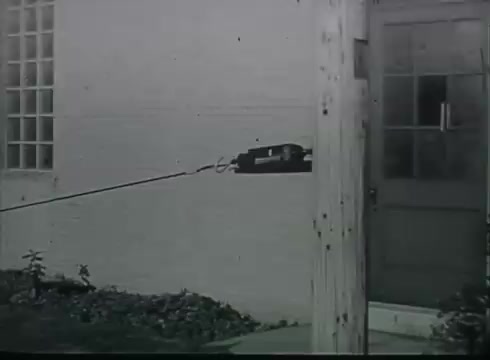
The still from the Bell System film depicts a telephone wire running from a utility pole to a building. It shows the wire extending toward a door, likely indicating the connection point for telephone service. The setting is utilitarian, reflecting the era of the late 1940s to early 1950s, focusing on the practical aspects of telecommunications infrastructure. The image captures a moment in the step-by-step process of connecting telephone service to customers.
00:03:57.537 — The still from the Bell System film depicts a telephone wire running from a utility pole to a building. It shows the wire extending toward a door, likely indicating the connection point for telephone service. The setting is utilitarian, reflecting the era of the late 1940s to early 1950s, focusing on the practical aspects of telecommunications infrastructure. The image captures a moment in the step-by-step process of connecting telephone service to customers.

The still showcases a suburban house, likely from the late 1940s or early 1950s, with distinctive architectural features such as double-hung windows, a chimney, and neatly manicured landscaping. Power lines can be seen running overhead, illustrating the connection to the telephone service being discussed. The film likely serves to educate viewers on the process of delivering telephone wires from utility poles to residential homes. The black-and-white format adds a period-appropriate quality to the imagery, reflecting the era's style.
00:04:13.220 — The still showcases a suburban house, likely from the late 1940s or early 1950s, with distinctive architectural features such as double-hung windows, a chimney, and neatly manicured landscaping. Power lines can be seen running overhead, illustrating the connection to the telephone service being discussed. The film likely serves to educate viewers on the process of delivering telephone wires from utility poles to residential homes. The black-and-white format adds a period-appropriate quality to the imagery, reflecting the era's style.

The still from 'Bell System Film - Drop Wire Runs Part 1 (b)' shows a telephone utility pole with several wires running down to a nearby house. The scene is set in a suburban area, with the house positioned prominently in the background. The pole is central to the composition, showcasing how telephone wiring connects from the pole to the customer’s premises. The film captures the infrastructure involved in telephone communication during the late 1940s to early 1950s, highlighting the practical aspects of wire installation. The overall tone is instructional, aimed at demonstrating telephone service delivery.
00:04:17.090 — The still from 'Bell System Film - Drop Wire Runs Part 1 (b)' shows a telephone utility pole with several wires running down to a nearby house. The scene is set in a suburban area, with the house positioned prominently in the background. The pole is central to the composition, showcasing how telephone wiring connects from the pole to the customer’s premises. The film captures the infrastructure involved in telephone communication during the late 1940s to early 1950s, highlighting the practical aspects of wire installation. The overall tone is instructional, aimed at demonstrating telephone service delivery.

The still from 'Bell System Film - Drop Wire Runs Part 1 (b)' showcases a Central Office building under a cloudy sky. It likely represents the infrastructure involved in telephone service, highlighting the connection process from telephone poles to customer locations. The scene sets a technical and instructional tone, typical of educational films from the late 1940s and early 1950s, illustrating telecommunications methods of that era.

00:04:22.262 — The still from 'Bell System Film - Drop Wire Runs Part 1 (b)' showcases a Central Office building under a cloudy sky. It likely represents the infrastructure involved in telephone service, highlighting the connection process from telephone poles to customer locations. The scene sets a technical and instructional tone, typical of educational films from the late 1940s and early 1950s, illustrating telecommunications methods of that era.

The still captures a scene from a late 1940s to early 1950s Bell System film. It features a Standard Oil service station, identifiable by its signage. The black-and-white image shows a car wash area and several parked cars. Utility poles with overhead wires are visible, reflecting the context of telephone wire installation. The composition emphasizes the intersection of infrastructure and customer service during that era.
00:04:26.433 — The still captures a scene from a late 1940s to early 1950s Bell System film. It features a Standard Oil service station, identifiable by its signage. The black-and-white image shows a car wash area and several parked cars. Utility poles with overhead wires are visible, reflecting the context of telephone wire installation. The composition emphasizes the intersection of infrastructure and customer service during that era.

The still from 'Bell System Film - Drop Wire Runs Part 1 (b)' depicts a brick building labeled 'A.L. Nelson,' likely a local business or central office. In the foreground, there’s a telephone pole with wires extending overhead, illustrating the connection from the pole to the structure. The scene captures a utilitarian view of telecommunications infrastructure from the late 1940s to early 1950s, focusing on the process of delivering telephone service to consumers.

00:04:30.403 — The still from 'Bell System Film - Drop Wire Runs Part 1 (b)' depicts a brick building labeled 'A.L. Nelson,' likely a local business or central office. In the foreground, there’s a telephone pole with wires extending overhead, illustrating the connection from the pole to the structure. The scene captures a utilitarian view of telecommunications infrastructure from the late 1940s to early 1950s, focusing on the process of delivering telephone service to consumers.

The still from 'Bell System Film - Drop Wire Runs Part 1 (b)' likely shows footage from a Central Office, illustrating the process of connecting telephone wires from utility poles to customers. It captures a historic moment in telecommunications, emphasizing technical details of wire installation. The visual quality reflects the era, possibly showing graininess or contrast typical of late 1940s to early 1950s films.
00:04:35.842 — The still from 'Bell System Film - Drop Wire Runs Part 1 (b)' likely shows footage from a Central Office, illustrating the process of connecting telephone wires from utility poles to customers. It captures a historic moment in telecommunications, emphasizing technical details of wire installation. The visual quality reflects the era, possibly showing graininess or contrast typical of late 1940s to early 1950s films.

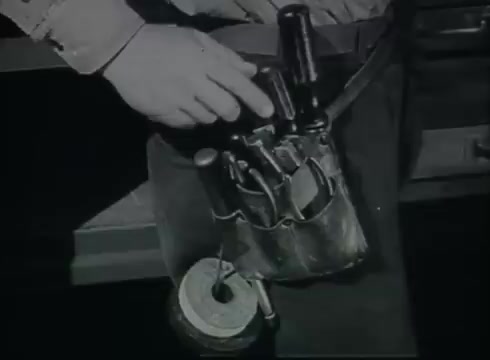
The still depicts a close-up of a technician's tool belt featuring various tools essential for telephone wire installation. A hand is shown interacting with the tools, highlighting their arrangement and functionality. The context relates to the processes and equipment involved in connecting telephone lines from utility poles to customers, as described in the Bell System film from the late 1940s to early 1950s.

00:04:38.645 — The still depicts a close-up of a technician's tool belt featuring various tools essential for telephone wire installation. A hand is shown interacting with the tools, highlighting their arrangement and functionality. The context relates to the processes and equipment involved in connecting telephone lines from utility poles to customers, as described in the Bell System film from the late 1940s to early 1950s.

Film Transcript / Subtitles

Yes, the neoprene jacket is tough, and NP wire will give better service than any drop wire that has been available so far, provided it is properly installed. That's a challenge to good workmanship. And good workmanship doesn't just happen. It's the result of careful attention to small details and particular attention at those points where trouble is most likely to occur. Studies of drop wire failures show that more than a third were preventable, and that about 82% of these preventable troubles occurred in three general areas. Injury to the wire at dead-end detachments accounted for 7% of preventable troubles. Abrasion at the pole, or along the lead between poles, accounted for 25%. Wear caused by the wire rubbing against trees, 50%. There are various ways of preventing abrasion by trees, such as trimming or placing wire guards. But the best way is to select a route where there will be the least possible chance of contact with buildings or future tree growth. It's in this selection of route that judgment plays an important part in providing good service. Now let's look at drop wire failures due to damage at attachments. The greater toughness of the covering of the neoprene wire should help to decrease these troubles. But the neoprene jacket can't do the job alone. Careful workmanship has a lot to do with it. For example, one safeguard against damage is to provide slack wire at the building in a smooth curve. A sharp bend in the wire, sooner or later, is almost certain to result in cracking of the wire covering. Therefore, avoid sharp bends. And be careful to avoid kinks when paying out the drop wire. Another source of drop wire trouble is breakage and other damage caused by excess tension. This tight drop is actually pulling the cable out of line. Make sure that every drop wire is given at least the required amount of sag. That's one of the most important things we can do to increase the service life of the wire. Minimum sags for spans of various lengths have been specified to avoid excess tension. Let's watch a demonstration that shows very clearly how sag affects tension in drop wires. Here, a length of NP wire has been suspended five feet above the ground, between two points, 100 feet apart. A scale has been placed at one end to show the tension existing in the drop. The specified minimum sag for a 100-foot drop from pole to building is two feet. Under these conditions, the scale shows a tension of 27 pounds. But now let's reduce the sag to one foot, which is one-half the required minimum, and see what happens. The tension has increased to 54 pounds, twice the amount it was before. Now, leaving the sag at one foot, let's add weights totaling 22 pounds. This is about the weight that would be added by a one-quarter-inch coating of ice. The tension in the drop wire has now increased to 135 pounds. However, if we lower the drop to two feet, which is the minimum sag specified in the practices, the tension with the additional 22 pounds of ice is reduced to 100 pounds. Now let's go a step farther. What will happen to the tension if we increase the sag from the two-foot minimum and make it three feet? The scale now shows a tension of only 74 pounds. And remember, we still have that 22 pounds of ice on the wire. So you see, the amount of sag that we put in a drop wire varies its tension over a wide range. That's why it's always a good practice to provide more sag than the minimum required whenever there are no clearance problems. That extra sag is good insurance against drop wire failure. Of course, no two drop wire jobs are exactly alike. Slightly different situations call for the continual use of good judgment by the installer and repairman. But this good judgment, plus high-quality materials and tools and methods outlined in system practices, plus good workmanship and careful attention to details are all that's needed to meet any combination of conditions. Remember the trouble spots. Make a careful survey to select a route that will avoid interference from trees, buildings, and foreign objects. Place drop wire clamps properly. Provide slack in the form of a smooth curve. Avoid kinks when paying out the wire. If paid out by hand, any tendency to kink can be avoided by occasionally reversing the coil. Provide at least the minimum required sag, and more if possible. Avoid chances for damage at the pole. Avoid nicks in the conductors. Bring the outer covering to the proper point within the terminal to protect the insulation, and extend the insulation to the required distance from the washer to prevent crosses or short circuits. Observe good housekeeping. These things will help us cut down many of the troubles that result in more than a third of all drop wire failures. Attention to the trouble spots will help us build drop wires that will be a strong link in the chain of equipment and outside plant that makes possible, dependable telephone service to our customers. With respect. Hold on. Hold on. Hold on. Hold on. Hold on. Hold on. Hold on. Hold on. Hold on. Hold on. Hold on. Hold on. Hold on. Hold on. Hold on. Hold on. Hold on.