Collecting Large Bottom Dwelling Organisms
Shotlist & Visual Analysis

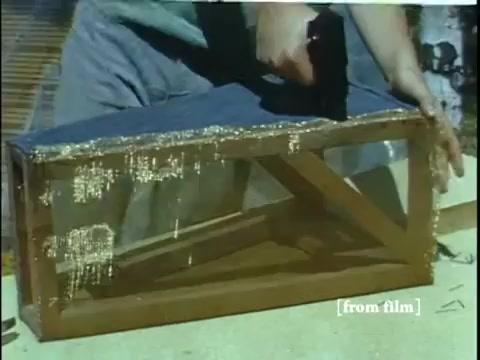
00:00:10.344 — The still from 'Collecting Large Bottom Dwelling Organisms' shows a person constructing a wooden frame, likely a tool or device used for collecting aquatic organisms. The hands are actively engaged in manipulating the wood, with attention to detail on the framing. The surrounding environment suggests an outdoor setting, likely related to the film's theme of biodiversity exploration. The film is characterized by its vibrant Ektachrome color palette typical of the late 1960s.

00:00:27.227 — The still from 'Collecting Large Bottom Dwelling Organisms' depicts a person preparing equipment on a table. The focus is on a shiny, golden-brown box, possibly an aquatic trap, being handled carefully. Tools like a hammer and other supplies are visible, suggesting a hands-on approach to collecting organisms. The scene likely captures a moment of preparation for fieldwork, highlighting the practical aspects of gathering small frogs and other creatures from underwater environments.
00:00:43.410 — The still from 'Collecting Large Bottom Dwelling Organisms' shows a close-up of hands assembling a rectangular container. The container appears to be made of wood and glass, suggesting it's designed for capturing or observing aquatic life. The exterior is shiny, likely from a protective coating. The background is somewhat blurred, hinting at an outdoor setting, while the emphasis is on the craftsmanship involved in preparing the container. This scene is part of a silent educational film focused on collecting small, bottom-dwelling organisms like frogs and other creatures.
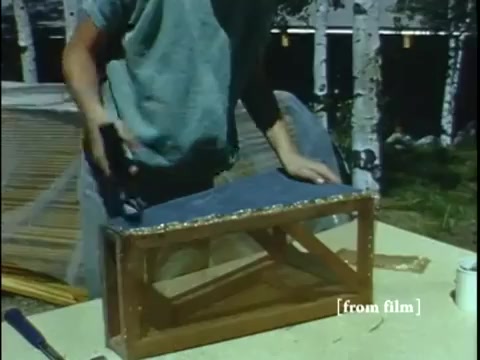
00:00:46.246 — The still from 'Collecting Large Bottom Dwelling Organisms' depicts a person in a blue shirt working on a wooden structure at a table. The structure appears to be a container, possibly for housing small frogs and other creatures, with a mesh top. The setting includes trees in the background, indicating an outdoor environment. The image captures a moment of hands-on crafting, likely related to the preparation for collecting specimens. The film quality suggests a vibrant color palette typical of late 1960s Ektachrome.
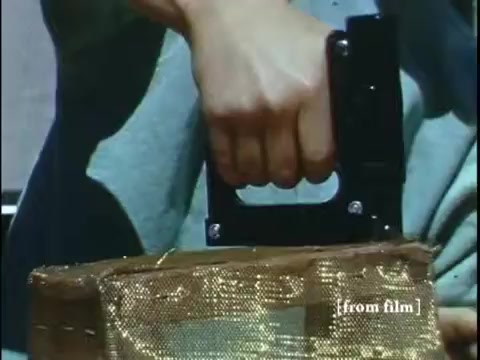
00:01:00.494 — The still from 'Collecting Large Bottom Dwelling Organisms' shows a close-up of a hand holding a device resembling a handheld net or trap, poised above a container that appears to be for collecting specimens. The container is textured and has a mesh-like design, indicating its purpose for gathering small creatures, likely frogs or similar organisms. The vibrant colors typical of Ektachrome film reflect the visual style of the late 1960s. The lack of sound adds a layer of interpretation to the visual focus on the collection process.
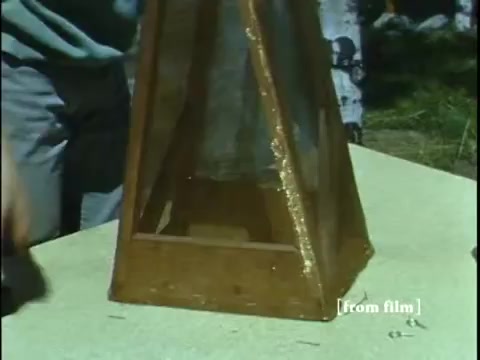
00:01:06.800 — The still features a wooden collecting device, shaped like an inverted pyramid with transparent sides, resting on a table. A person's hand is partially visible, indicating interaction with the device. The setting appears natural, possibly outdoors, suggesting a focus on gathering aquatic life. The image captures a moment from the 1960s film 'Collecting Large Bottom Dwelling Organisms,' which explores the collection of small frogs and other creatures. The color is vibrant, characteristic of Ektachrome film stock.
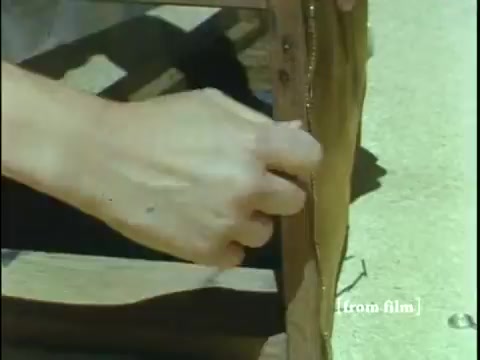
00:01:14.775 — The still from the film 'Collecting Large Bottom Dwelling Organisms' shows a hand manipulating a wooden structure, likely part of a collecting apparatus. The scene evokes a sense of scientific exploration and curiosity, typical of educational films from the late 1960s. The focus on a singular action suggests preparation for the collection of small aquatic organisms, such as frogs and other bottom-dwelling creatures, in a natural setting. The overall aesthetic features the vibrant colors characteristic of Ektachrome film.
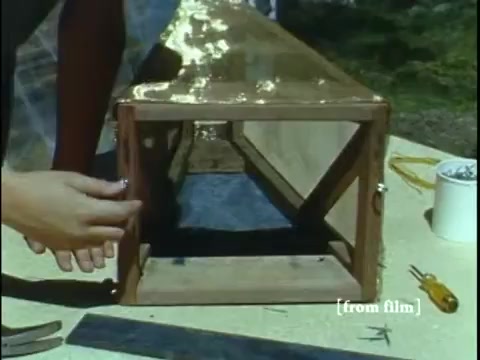
00:01:17.477 — The still from the film 'Collecting Large Bottom Dwelling Organisms' shows a wooden box-like structure being handled by a person. This structure appears to be a makeshift collecting device, likely designed for trapping small frogs and other aquatic creatures. The surface of the box is shiny, reflecting light, with visible woodgrain details. Tools and materials are laid out nearby, indicating preparation for a collection process in a natural setting. The context suggests a focus on educational practices regarding biology and ecology in the late 1960s.
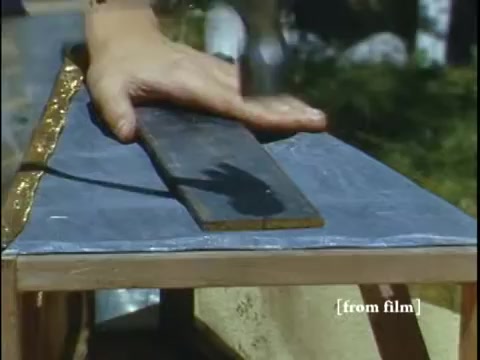
00:01:33.493 — The still from 'Collecting Large Bottom Dwelling Organisms' depicts a hand hammering a wooden plank on a workbench. The setting appears outdoors, with hints of nature visible in the background. This scene likely illustrates preparations for collecting small aquatic creatures, such as frogs, highlighting the hands-on, instructional nature of the film from the late 1960s. The image captures a moment of craftsmanship involved in the process.
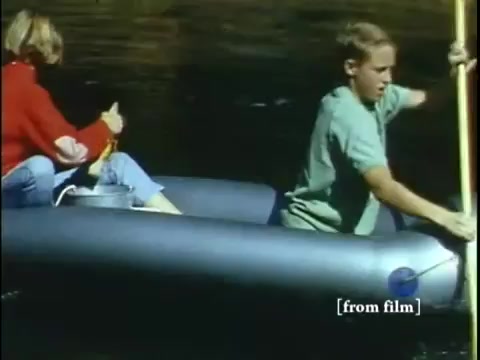
00:01:54.214 — The still features two children on an inflatable raft in a body of water, likely illustrating the process of collecting small bottom-dwelling organisms like frogs. One child is seated and appears to be preparing to collect specimens, while the other is rowing. The scene captures a serene, educational moment from a late 1960s film focusing on nature and exploration. The vibrant colors typical of Ektachrome film enhance the lively atmosphere of the outdoor setting.
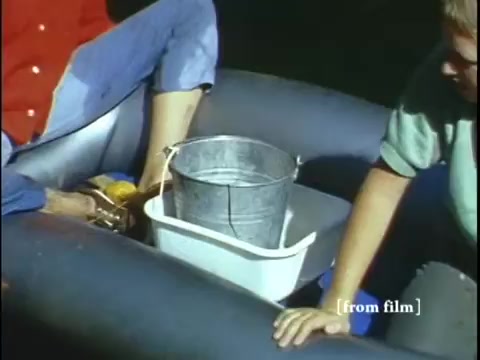
00:02:09.796 — The still from **'Collecting Large Bottom Dwelling Organisms'** depicts two individuals in an inflatable boat. One person is wearing a red shirt and the other a green shirt, both focused on a metal bucket situated in the center. The bucket appears to hold water, possibly for collecting aquatic organisms. The scene suggests an engaging exploration of the natural environment, likely capturing the process of gathering small frogs and other similar creatures typical of the late 1960s filmmaking style. The vibrant Ektachrome colors reflect the film's educational theme.
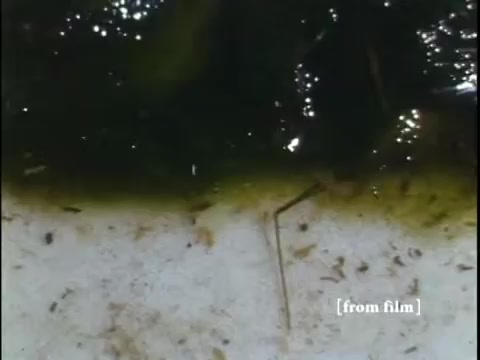
00:02:32.886 — The 16mm still from 'Collecting Large Bottom Dwelling Organisms' depicts a shallow water environment, highlighting a mix of small creatures, likely including frogs and other aquatic organisms. The film, originating from the late 1960s, captures the murky bottom, with light reflections creating a shimmering effect on the surface. The scene suggests a focus on biodiversity in a small ecosystem, though it lacks audio, emphasizing visual observation of these organisms in their natural habitat.
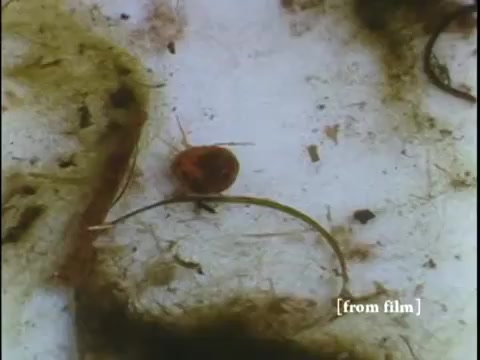
00:02:55.375 — The 16mm still from 'Collecting Large Bottom Dwelling Organisms' features a close-up of a small, brownish creature on a white, mottled surface that appears to be aquatic vegetation or sediment. The creature likely represents one of the bottom-dwelling organisms being studied. The visual context suggests a focus on the diverse life forms found in aquatic environments, emphasizing their habitat and interaction with the surroundings. The film's aesthetic reflects the late 1960s, with vibrant yet natural colors characteristic of Ektachrome.

00:03:08.221 — The still shows a young man and woman crouched by a body of water, engaged in collecting small creatures, likely frogs and other aquatic organisms. The man, wearing a light blue shirt, appears to be handling a container while the woman, in a red sweater, looks on intently. They are surrounded by lush grass, emphasizing a natural setting. The scene captures a moment of exploration and curiosity in the study of wildlife, reflective of the educational themes found in 1960s documentaries.