Come Back, Charleston Blue - promo - Donny Hathaway - blaxploitation
Shotlist & Visual Analysis

00:00:00.000 — The still from 'Come Back, Charleston Blue' features a 16mm film aesthetic, indicative of the era's blaxploitation genre. The film, which stars Godfrey Cambridge and Raymond St. Jacques, centers on the characters Coffin Ed Johnson and Gravedigger Jones as they navigate crime and corruption in Harlem. The context suggests a gritty narrative style, reflecting both the societal issues of the time and the dynamic portrayal of Black culture. The film is known for its exploration of racial themes and urban life, drawing inspiration from Chester Himes' works.

00:00:29.162 — The still from 'Come Back, Charleston Blue' features a character dressed in a habit, indicative of a nun or religious figure, sitting thoughtfully. The backdrop appears to be stylized with abstract shapes and colors typical of the era, reflecting the film's blaxploitation aesthetic. This moment may evoke themes of contemplation or struggle within the context of the film's narrative, which explores social issues and community dynamics. The film itself combines elements of crime, humor, and cultural commentary, set against the vibrant backdrop of 1970s African American cinema.
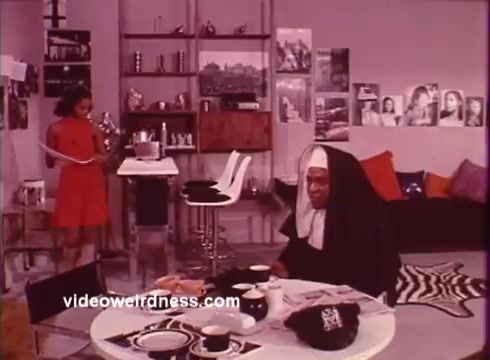
00:00:37.704 — The still from *Come Back, Charleston Blue* features a scene set in a stylish, modern apartment reflecting the blaxploitation aesthetic of the early 1970s. In the foreground, a woman in a red dress stands, possibly conversing or interacting with a seated character. The seated character, dressed in a nun's habit, appears engaged, adding a layer of intrigue to the scene. The decor includes modern furnishings and various art pieces on the walls, capturing the cultural vibe of the time. The film explores themes of justice and community, following the characters Coffin Ed Johnson and Grave Digger Jones as they navigate crime and morality in Harlem.

00:00:46.046 — The still from *Come Back, Charleston Blue* features a woman with voluminous, wavy hair, dressed in a stylish red top. She appears contemplative or introspective, set against a backdrop of a vibrant, retro-styled room with bold patterns and colors. The aesthetic reflects the early 1970s blaxploitation genre, characterized by its unique fashion and cultural themes. The film's context, based on Chester Himes' work, explores complex African American narratives, and this still captures the film's emphasis on character emotions and stylish presentation.

00:00:47.614 — The still from 'Come Back, Charleston Blue' features a vibrant domestic scene, likely set in an apartment. The design elements suggest a 1970s aesthetic, characterized by bold patterns and colors. A figure appears to be in motion, possibly engaging with another character seated at a table adorned with various objects. This scene reflects the film's blend of drama and comedy within the blaxploitation genre, emphasizing character dynamics and the cultural context of the era. The film focuses on themes of community, crime, and resilience, aligning with Chester Himes' explorations of urban life.
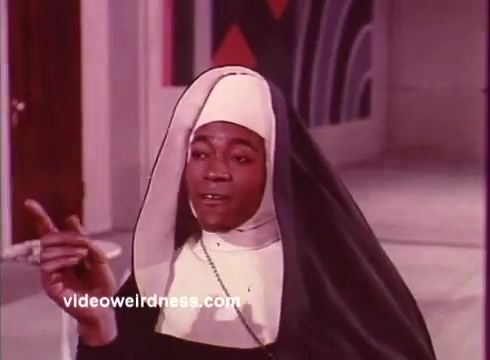
00:01:03.030 — In this still from 'Come Back, Charleston Blue,' we see a character dressed as a nun, suggesting a blend of religious and comedic elements typical of the film's blaxploitation genre. The vibrant color palette and stylized background reflect the film's unique aesthetic, while the character's expressive gesture suggests a humorous or lively moment. The scene likely highlights themes of identity and society, consistent with the film's exploration of urban life and social issues, rooted in Chester Himes' work.
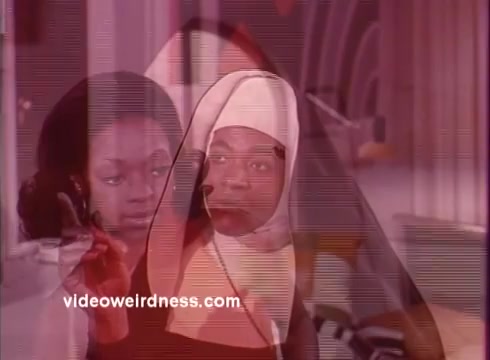
00:01:04.464 — The still from 'Come Back, Charleston Blue' features a layered visual effect, highlighting two women: one in a habit (suggestive of a nun) and another appearing to engage with her, possibly on the phone. The image carries a vintage aesthetic characteristic of the 1970s blaxploitation genre. This particular film, a sequel to 'Cotton Comes to Harlem,' is known for its social commentary and unique characters like Coffin Ed Johnson. The color palette and visual distortion suggest a stylized approach common in promotional materials of the era, reflecting the film's cultural significance and artistic style.
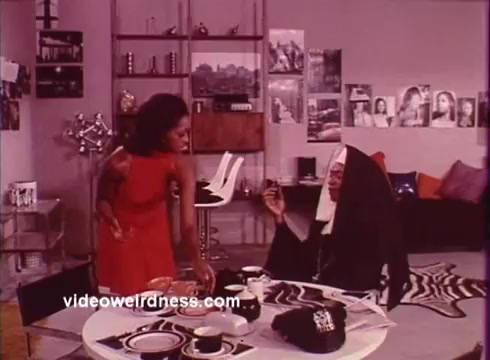
00:01:06.900 — The still from 'Come Back, Charleston Blue' captures a scene in a stylish, mid-century modern interior. A woman in a bright red dress appears to be serving or interacting with an older figure dressed as a nun, who is seated at a table adorned with black and white dishware. The backdrop features a mix of contemporary décor and collage-style wall art, setting a vibrant yet casual tone typical of the blaxploitation era. The film continues the adventures of Coffin Ed Johnson and Gravedigger Jones, highlighting themes of community and resilience within an engaging narrative.

00:01:20.981 — The still from 'Come Back, Charleston Blue' portrays a somber, confined space, likely reflecting a thematic element of the film. The dimly lit setting features a metal surface and apparent floor texture, hinting at a significant or tense moment in the narrative. This atmospheric imagery aligns with the broader themes of blaxploitation films, which often confront social issues within a stylized framework. The film, a sequel to 'Cotton Comes to Harlem,' continues the story of characters Coffin Ed Johnson and Gravedigger Jones, intertwining crime, humor, and social commentary.

00:01:24.585 — The still from *Come Back, Charleston Blue* features a dimly lit scene focused on a character standing in an underground setting. The character appears to be in a crouched position, creating a sense of tension. The colors in the scene suggest a gritty atmosphere typical of blaxploitation films, with shadows enhancing the mysterious vibe. This sequel continues the story of Coffin Ed Johnson and Gravedigger Jones, highlighting themes of crime and perseverance within the African American community. The film captures the essence of urban struggles through its characters and narrative.

00:01:26.553 — The still from *Come Back, Charleston Blue* depicts a dramatic downward view of a figure on a staircase, likely implying a tense moment. The film, part of the blaxploitation genre, continues the stories of Coffin Ed Johnson and Gravedigger Jones, two iconic characters created by Chester Himes. The atmospheric lighting and framing contribute to the gritty and intense aesthetic characteristic of this era of cinema. This scene likely encapsulates the film's themes of social struggle and urban life.
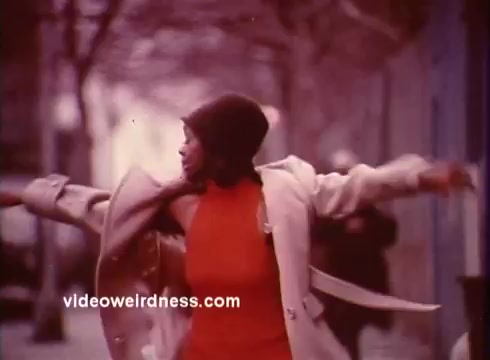
00:01:35.228 — The still from 'Come Back, Charleston Blue' captures a vibrant moment with a woman in a striking red dress and cream coat, exuding confidence and freedom as she twirls in an urban setting. The background is blurred, suggesting motion, emphasizing her dynamic presence against a cityscape. This scene reflects the film's themes of resilience and cultural identity within the blaxploitation genre, connecting to the broader narrative of African American experiences in the early 1970s. The film, featuring characters Coffin Ed Johnson and Gravedigger Jones, weaves together elements of crime, humor, and social commentary.

00:01:36.897 — The still from 'Come Back, Charleston Blue' captures a dynamic moment featuring a woman in mid-motion, conveying a sense of urgency or excitement. She appears to be dressed warmly, with a light-colored coat and a vibrant red scarf that adds a pop of color to the frame. The film, released in 1972, is part of the blaxploitation genre and follows the adventures of characters Coffin Ed Johnson and Gravedigger Jones in a narrative that reflects both the cultural and social themes of the era. The shot's composition and the woman's expression suggest a lively and perhaps dramatic scene typical of the film's tone.

00:01:38.198 — This still from *Come Back, Charleston Blue* captures a moment of urban life in the early 1970s, typical of the blaxploitation genre. The scene features a woman in a stylish coat, hinting at the fashion of the time. The soft color tone and background suggest a street setting, possibly invoking a sense of movement or urgency. The film follows characters Coffin Ed Johnson and Grave Digger Jones as they navigate themes of crime and societal challenges. This still reflects the film's exploration of African American culture and community, aligned with the narratives found in Chester Himes' works. The use of fashion and setting establishes both character and context within the broader themes of the film.

00:01:39.399 — The still from 'Come Back, Charleston Blue' features a nun walking past colorful storefronts, capturing the vibrant street life depicted in blaxploitation films. This scene reflects the film’s setting and themes, showcasing the cultural richness and social issues of the time. The film, a sequel to 'Cotton Comes to Harlem,' continues the story of detectives Coffin Ed Johnson and Gravedigger Jones, who navigate the complexities of crime and community in Harlem.

00:01:41.001 — The still from *Come Back, Charleston Blue* captures a dramatic moment, featuring a woman in a striking red outfit running in an urban setting. Her expression conveys urgency, suggesting she may be escaping a threat or in a hurry. The scene encapsulates the vibrant style characteristic of the blaxploitation genre, with its focus on intense emotions and action. The film, part of a series featuring characters Coffin Ed Johnson and Gravedigger Jones, explores themes of crime and justice within the African American community.
00:01:43.770 — The 16mm still from *Come Back, Charleston Blue* depicts a scene with a figure running, likely in a moment of urgency or action. The color palette has a vintage, somewhat muted quality typical of films from the 1970s, contributing to the blaxploitation aesthetic. This film continues the narrative of Coffin Ed Johnson and Gravedigger Jones, characters inspired by Chester Himes' works, highlighting themes of crime and community in Harlem. The context of the film reflects the cultural dynamics and social issues of its time, using a blend of humor and drama.

00:01:48.442 — The 16mm still from 'Come Back, Charleston Blue' captures a city street scene, likely set in a 1970s urban environment. The image shows a wet pavement, suggesting recent rain, with vintage cars lined along the curb. Buildings feature brick facades, hinting at a bustling neighborhood atmosphere. This scene encapsulates the blaxploitation genre's aesthetic, focusing on urban life and cultural narratives, reflecting the struggles and stories of characters like Coffin Ed Johnson and Gravedigger Jones, who navigate the complexities of their environment.
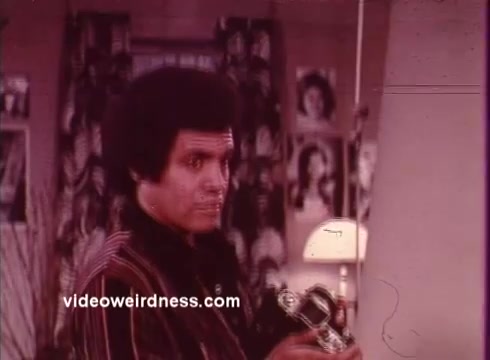
00:02:00.621 — The still from 'Come Back, Charleston Blue' features a character with a distinct afro hairstyle, holding a vintage camera. The setting appears to be a room with patterned wallpaper and a lamp, adding to a retro ambiance. This film, part of the blaxploitation genre, showcases themes of urban life and crime, centered around the characters Coffin Ed Johnson and Gravedigger Jones, portrayed by Godfrey Cambridge and Raymond St. Jacques. The film addresses socio-political issues while providing entertainment through its unique style and storytelling.
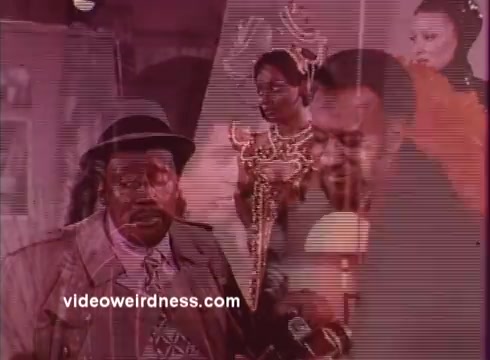
00:02:04.157 — The still from *Come Back, Charleston Blue* features two prominent characters, Coffin Ed Johnson and Gravedigger Jones, portrayed by Godfrey Cambridge and Raymond St. Jacques, respectively. The scene captures a moment filled with tension and emotion. In the background, a figure dressed in a glamorous outfit stands poised, possibly indicating a contrasting theme of beauty against the gritty urban narrative common in blaxploitation films. The visual elements, with a retro aesthetic, hint at the film's era and style, while the overall composition suggests a blend of drama and social commentary reflective of Chester Himes' work. This film is notable for its exploration of race, justice, and the complexities of urban life.
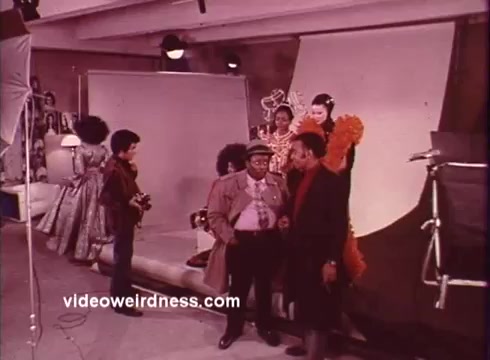
00:02:06.126 — The still from 'Come Back, Charleston Blue' features a bustling scene indicative of the film's vibrant blaxploitation style. In the foreground, two male characters engage in conversation, dressed in stylish attire reflective of the era. Behind them, several women showcase elaborate costumes, adding to the film's artistic flair. The backdrop suggests a photography or film set, with lighting equipment that emphasizes the cinematic context. The overall composition captures the film's themes of community and cultural expression prevalent in the 1970s, alongside the humor and social commentary characteristic of Chester Himes' work.

00:02:35.322 — The 16mm still from 'Come Back, Charleston Blue' features a contemplative moment, likely highlighting themes of introspection and struggle common in blaxploitation films. It showcases a character who is presumably one of the leads, reflecting the film's concentration on the African-American experience during the era. The film continues the story from 'Cotton Comes to Harlem,' deepening the narrative around Coffin Ed Johnson and Gr. The promotional aspect likely aims to emphasize the social commentary and cultural significance embedded within the movie.
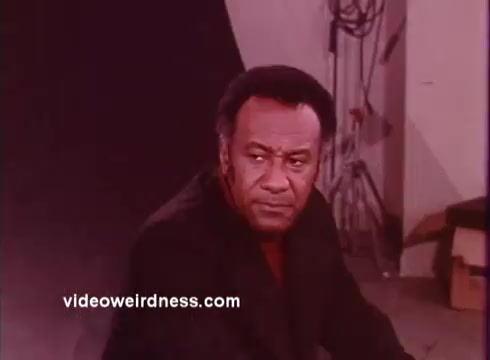
00:02:42.129 — The still from 'Come Back, Charleston Blue' features a serious-looking man in a black outfit, conveying a sense of intensity and intrigue. He appears to be in a studio setting, with studio equipment visible in the background. The film explores themes of crime and justice, centered around the characters Coffin Ed Johnson and Gravedigger Jones, who navigate the complexities of their environment in a gritty urban backdrop. The visual style reflects the blaxploitation genre's emphasis on character depth and social commentary.
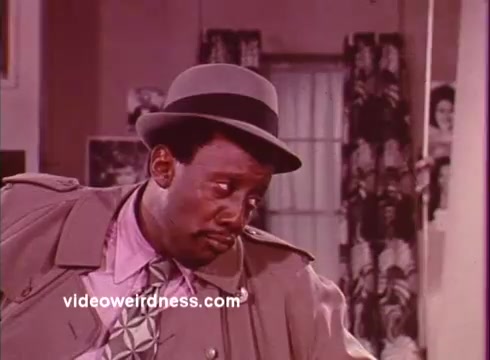
00:02:44.131 — The 16mm still from *Come Back, Charleston Blue* features a character in a classic trench coat and fedora. The overall aesthetic reflects the blaxploitation genre, capturing the unique fashion and mood of the early '70s. The character's expression conveys a mix of intrigue and contemplation, fitting the film's themes of crime and social commentary. The backdrop suggests a domestic setting, which contrasts with the film's action and drama elements. This still embodies the essence of the film, contributing to its cult classic status.

00:02:45.198 — The still from *Come Back, Charleston Blue* features a blend of characters integral to the story, indicative of the film's exploration of crime and society. The visual style reflects the blaxploitation genre, merging gritty realism with vivid character portrayal. The characters Coffin Ed Johnson and Gravedigger Jones, played by Godfrey Cambridge and Raymond St. Jacques, are central to the narrative, navigating the complexities of their urban environment. The image presents a moody ambiance typical of the period, using color and composition to enhance the dramatic tension.
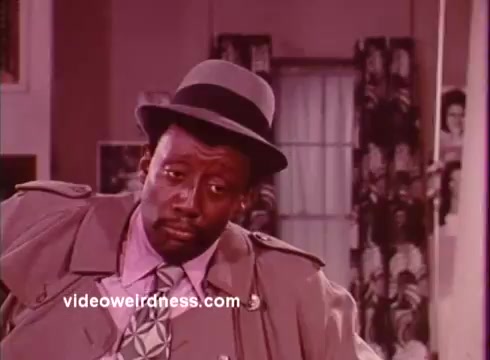
00:02:46.400 — The still from 'Come Back, Charleston Blue' features a character in a stylish, classic blaxploitation attire, highlighted by a trench coat and a distinctive hat. Set in a vibrant 1970s environment, the character's expression conveys a sense of cool confidence, a common trait among the genre's protagonists. The film, which continues the story of Coffin Ed Johnson and Gravedigger Jones, blends crime, humor, and social commentary, reflecting the era's cultural dynamics and cinematic style. The use of color and composition adds to the film's iconic visual appeal.

00:02:54.374 — The still from 'Come Back, Charleston Blue' features a character likely associated with the themes of crime and social commentary prevalent in blaxploitation films. The character displays a mixture of determination and weariness, reflecting the struggles faced in a crime-ridden urban environment. The film, serving as a sequel to 'Cotton Comes to Harlem,' continues the narrative of Coffin Ed Johnson and Gr. as they navigate their roles within the community, marking a significant contribution to the blaxploitation genre inspired by Chester Himes' work.
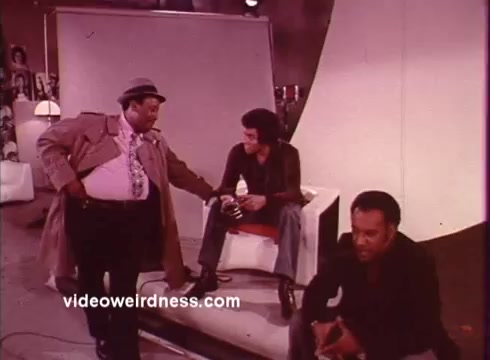
00:02:58.311 — The still from *Come Back, Charleston Blue* features three characters in a stylized, presumably film set environment. One character, dressed in a trench coat and fedora, stands with an assertive posture, while another sits on a white chair, holding a cup. The third character is seated on the ground, looking contemplative. The scene captures the blaxploitation aesthetic, emphasizing urban themes and the camaraderie among characters. The film, connected to Chester Himes' work, explores themes of crime and community, typical of the genre's narrative style.
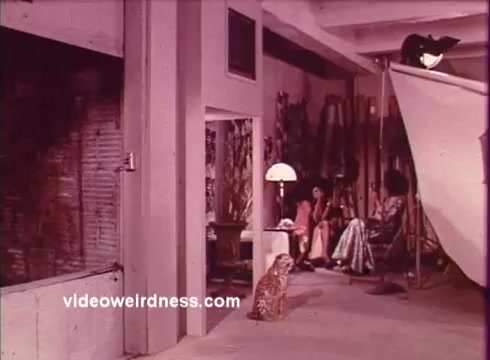
00:03:04.518 — The still from 'Come Back, Charleston Blue' captures a scene set in a spacious interior, showcasing a blend of vintage decor and casual conversation. In the foreground, a large dog sits peacefully, while two women dressed in stylish outfits are seated nearby, engaged in conversation. The setting reflects the film’s 1970s aesthetic, embodying the themes of black culture and community explored throughout the film. The presence of a lighting setup suggests that this may be a promotional or behind-the-scenes moment during production.
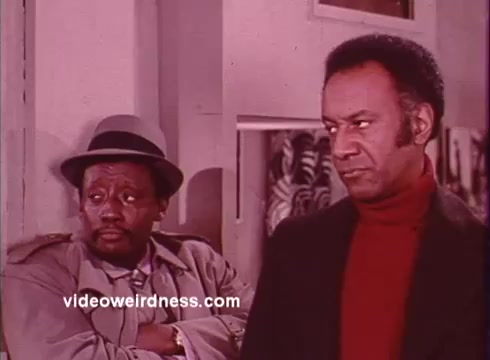
00:03:26.206 — The 16mm still from 'Come Back, Charleston Blue' features two main characters: Coffin Ed Johnson and Gravedigger Jones, portrayed by Godfrey Cambridge and Raymond St. Jacques, respectively. The setting suggests a tense moment, possibly indicating an investigation or confrontation. The characters' expressions reflect a mix of seriousness and contemplation, characteristic of the blaxploitation genre. The film, a sequel to 'Cotton Comes to Harlem,' continues exploring themes of crime and social issues, while incorporating elements of humor and drama. Their attire and the film's color palette convey the 1970s aesthetic typical of that era's cinema.

00:03:30.877 — The still from 'Come Back, Charleston Blue' depicts a dimly lit scene featuring a grid-patterned vent or grate with a light source shining from above. The surrounding area appears to have a rustic or industrial feel, hinting at the gritty atmosphere typical of blaxploitation films. This scene likely contributes to the film's exploration of themes such as crime and social issues, characteristic of the works of Chester Himes. The film follows characters Coffin Ed Johnson and Grave Digger Jones as they navigate the challenges of their environment.

00:03:33.280 — The still from *Come Back, Charleston Blue* depicts a stark interior with wooden beams and a barred window. The image is infused with a pinkish hue, which adds a surreal quality. This visual style reflects the film's blaxploitation roots. The barred window suggests themes of confinement or surveillance, pertinent to the film's narrative involving characters like Coffin Ed Johnson and Gravedigger Jones. The overall composition hints at tension and drama, aligning with the film's exploration of crime and social issues in the 1970s.
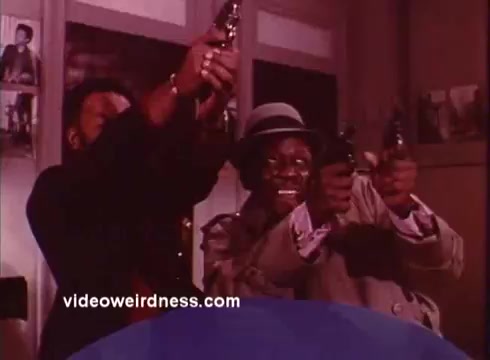
00:03:35.215 — The still from *Come Back, Charleston Blue* features two characters aiming pistols, capturing a tense moment typical of the blaxploitation genre. The setting appears to be an interior space, suggested by the presence of furnishings and wall decor. The characters, representative of the film's protagonists, exude a mix of determination and urgency. This scene emphasizes themes of conflict and resilience, central to the film's narrative, which deals with crime and justice in Harlem. Overall, it reflects the vibrant and gritty style characteristic of 1970s blaxploitation cinema.

00:03:36.016 — The still from 'Come Back, Charleston Blue' features an overhead view, possibly of a set or location used in the film. The warm pink tones dominate the image, suggesting a stylized aesthetic typical of the blaxploitation genre. The opening in the ceiling may indicate a point of tension or drama, common in the narrative's exploration of crime and social issues. The film, starring Godfrey Cambridge and Raymond St. Jacques, continues the story of Coffin Ed Johnson and Gravedigger Jones, characters inspired by Chester Himes' work.
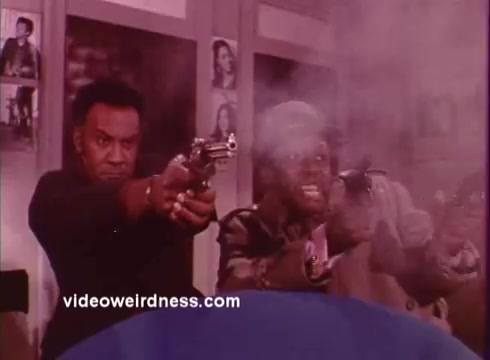
00:03:37.551 — The still from 'Come Back, Charleston Blue' depicts two characters, Coffin Ed Johnson and Gravedigger Jones, engaged in a tense moment. Both men are holding guns, with expressions that suggest urgency or danger. Smoke fills the scene, likely from gunfire, creating a dramatic and intense atmosphere typical of the blaxploitation genre. The background hints at a stylized environment, contributing to the film's dynamic visual narrative. This film explores themes of crime and justice, reflecting the socio-political landscape of its time.

00:03:38.452 — The still from 'Come Back, Charleston Blue' features a dynamic scene likely showcasing a character involved in a dramatic or intense moment. The figure, possibly Coffin Ed Johnson, is depicted in a striking pose, adding to the film's energetic and bold blaxploitation aesthetic. The use of costume and setting hints at the film’s stylized approach, reflecting the 1970s vibe and urban themes from Chester Himes' work. The overall composition conveys a sense of action and emotive storytelling typical of the genre.
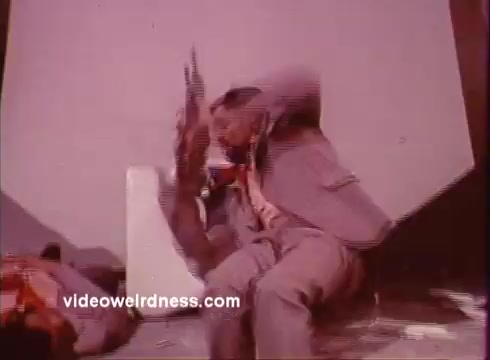
00:03:39.953 — The still from 'Come Back, Charleston Blue' depicts a tense moment, likely involving action or conflict. The scene features a character, likely in a suit, holding a gun in a defensive or aggressive posture. The background suggests a chaotic environment, contributing to the film's blaxploitation themes of crime and justice. Given its connection to Chester Himes' work, it likely highlights the gritty realities faced by characters like Coffin Ed Johnson. The overall tone is dramatic, emphasizing the challenges and struggles within the narrative.
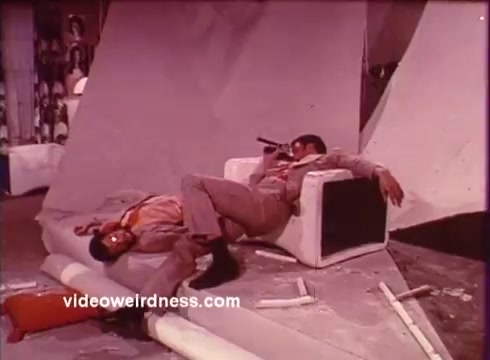
00:03:44.357 — The still from 'Come Back, Charleston Blue' features two characters in a dramatic pose, capturing the essence of the blaxploitation genre. One character reclines lazily on a white chair, holding a microphone, while the other appears to be slumped nearby, suggesting a tense or relaxed moment within a stylized setting. The color palette and composition reflect the film's 1970s aesthetic, emphasizing a blend of humor and social commentary typical of Chester Himes' work. This scene likely highlights themes of camaraderie and the gritty realities faced by the protagonists, Coffin Ed Johnson and Gravedigger Jones, as they navigate their world.
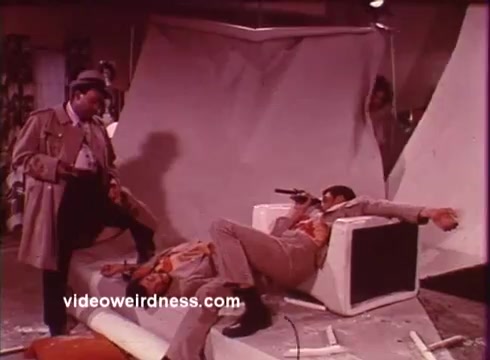
00:03:57.871 — The still from 'Come Back, Charleston Blue' portrays a tense scene typical of the blaxploitation genre. In the foreground, one character is dramatically lying on a sofa, appearing injured or incapacitated, while another stands nearby, possibly in a stylish trench coat, suggesting a sense of urgency or confrontation. The setting is chaotic, with disordered elements like a torn backdrop, enhancing the intense atmosphere of the scene. This imagery reflects the film's themes of crime, survival, and the complex dynamics within the African American community during this era, as inspired by Chester Himes' work.