Drug Abuse: Some comments from the morgue

Shotlist & Visual Analysis
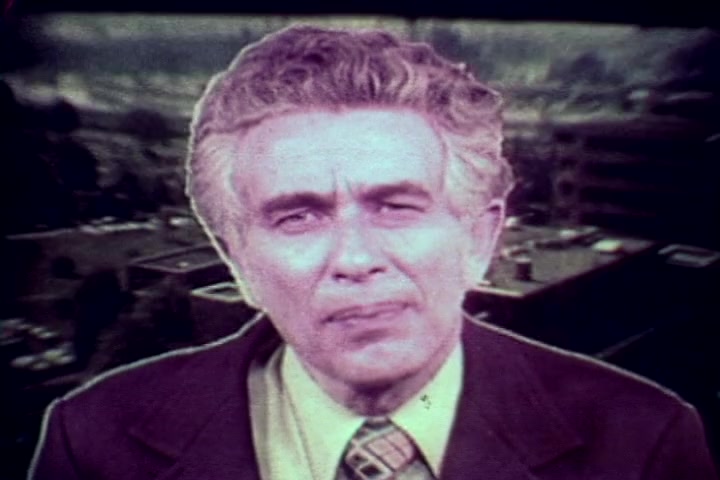
The still from 'Drug Abuse: Some Comments from the Morgue' features Tillman Hahn from the Philadelphia Medical Examiner's office. He appears in a serious manner, addressing the camera. The background depicts a faded urban landscape, suggesting a somber tone. The color palette is muted, typical of 1970s film, emphasizing the film's anti-drug message through Hahn's expression and demeanor. The overall mood is one of concern and gravitas related to the topic of drug abuse.
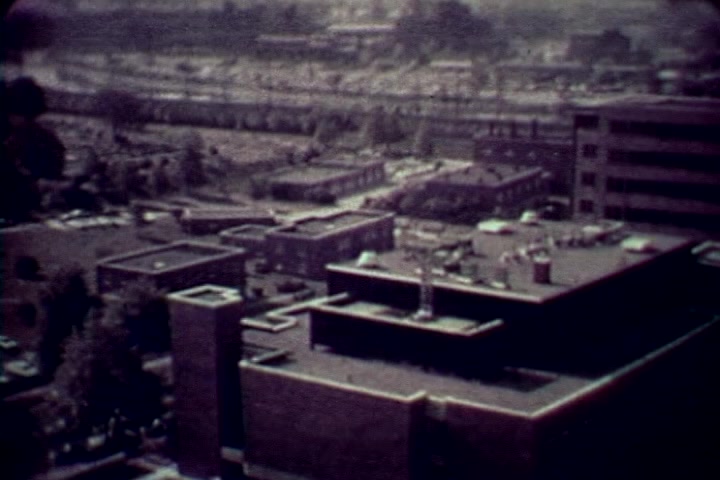
00:01:10.570 — The still from 'Drug Abuse: Some Comments from the Morgue' features Tillman Hahn from the Philadelphia Medical Examiner's office. He appears in a serious manner, addressing the camera. The background depicts a faded urban landscape, suggesting a somber tone. The color palette is muted, typical of 1970s film, emphasizing the film's anti-drug message through Hahn's expression and demeanor. The overall mood is one of concern and gravitas related to the topic of drug abuse.

The still depicts an aerial view of a cityscape, likely Philadelphia, featuring rooftops of various buildings with a focus on urban structures. The surrounding area shows a mix of industrial and residential components with a distant skyline, reflecting the environment of the 1970s. The muted colors suggest the film's aged 16mm quality, contributing to the somber tone typical of anti-drug narratives during that era. The imagery serves as a backdrop to the documentary’s serious themes regarding drug abuse.
00:01:15.742 — The still depicts an aerial view of a cityscape, likely Philadelphia, featuring rooftops of various buildings with a focus on urban structures. The surrounding area shows a mix of industrial and residential components with a distant skyline, reflecting the environment of the 1970s. The muted colors suggest the film's aged 16mm quality, contributing to the somber tone typical of anti-drug narratives during that era. The imagery serves as a backdrop to the documentary’s serious themes regarding drug abuse.

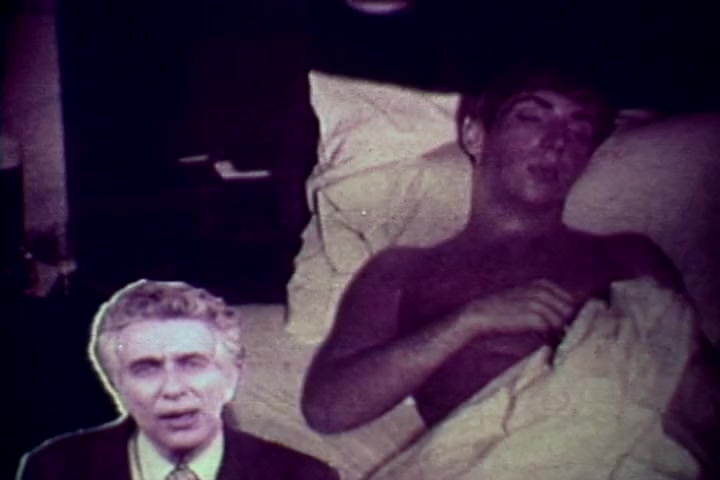
The still features a somber scene from the anti-drug film *Drug Abuse: Some Comments from the Morgue*. At the forefront is Tillman Hahn, speaking directly to the audience, while a young man lies on a bed in a vulnerable state, partially covered by sheets. The overall tone conveys the serious consequences of drug abuse, emphasizing both the human cost and the educational message aimed at deterring substance use. The visual style reflects the era's documentary aesthetics, utilizing stark imagery to provoke thought and awareness.
00:05:45.011 — The still features a somber scene from the anti-drug film *Drug Abuse: Some Comments from the Morgue*. At the forefront is Tillman Hahn, speaking directly to the audience, while a young man lies on a bed in a vulnerable state, partially covered by sheets. The overall tone conveys the serious consequences of drug abuse, emphasizing both the human cost and the educational message aimed at deterring substance use. The visual style reflects the era's documentary aesthetics, utilizing stark imagery to provoke thought and awareness.

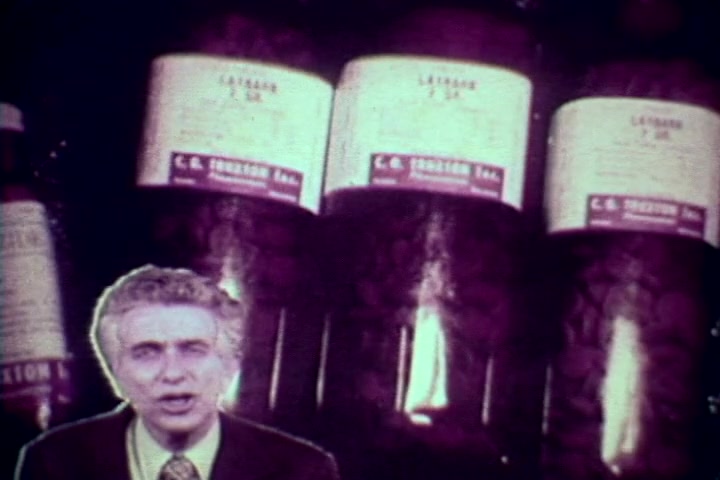
The still features Tillman Hahn speaking directly to the camera, set against a backdrop of large bottles labeled 'LATARG' from C.B. Therapeutics. The contrast of his serious expression with the ominous presence of prescription drugs underscores the film's anti-drug message from the 1970s, likely addressing the dangers of substance abuse. The image has a vintage quality typical of 16mm prints, enhancing its historical context.
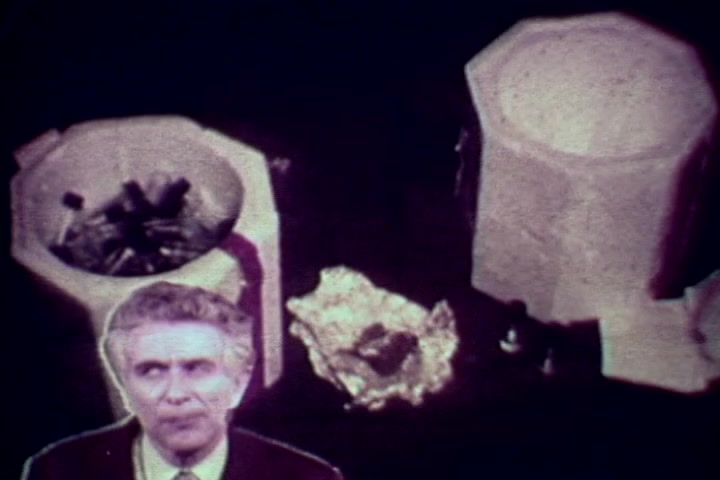
00:06:02.529 — The still features Tillman Hahn speaking directly to the camera, set against a backdrop of large bottles labeled 'LATARG' from C.B. Therapeutics. The contrast of his serious expression with the ominous presence of prescription drugs underscores the film's anti-drug message from the 1970s, likely addressing the dangers of substance abuse. The image has a vintage quality typical of 16mm prints, enhancing its historical context.

The still depicts a scene from the anti-drug film 'Drug Abuse: Some Comments from the Morgue.' In the foreground, a man, likely Tillman Hahn of the Medical Examiner’s office, is speaking, conveying a serious tone. Behind him, there are various drug paraphernalia items, including containers and evidence of substance use, emphasizing the film's grim subject matter regarding the consequences of drug abuse. The image likely aims to educate viewers on the dangers of drugs through stark visuals and testimony.
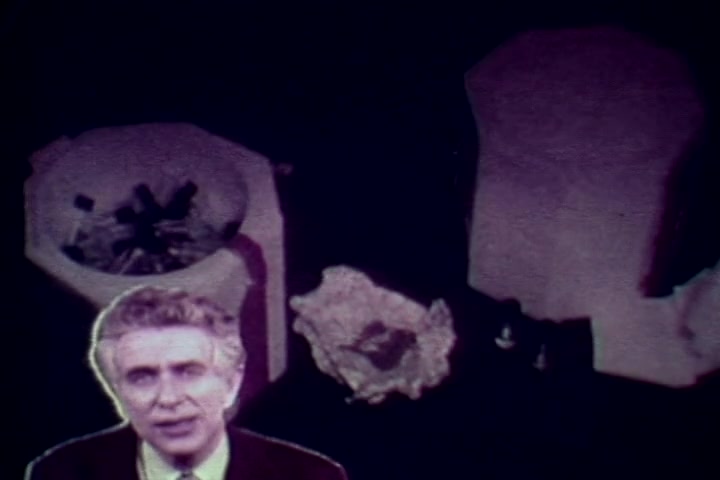
00:07:14.834 — The still depicts a scene from the anti-drug film 'Drug Abuse: Some Comments from the Morgue.' In the foreground, a man, likely Tillman Hahn of the Medical Examiner’s office, is speaking, conveying a serious tone. Behind him, there are various drug paraphernalia items, including containers and evidence of substance use, emphasizing the film's grim subject matter regarding the consequences of drug abuse. The image likely aims to educate viewers on the dangers of drugs through stark visuals and testimony.

The still features Tillman Hahn speaking directly to the camera, likely addressing the audience about the dangers of drug abuse. In the background, there are shadowy, indistinct objects that may represent drug paraphernalia or evidence from drug-related incidents. The color palette suggests a vintage look typical of 1970s films, enhancing the serious tone of the anti-drug message being conveyed.
00:07:35.288 — The still features Tillman Hahn speaking directly to the camera, likely addressing the audience about the dangers of drug abuse. In the background, there are shadowy, indistinct objects that may represent drug paraphernalia or evidence from drug-related incidents. The color palette suggests a vintage look typical of 1970s films, enhancing the serious tone of the anti-drug message being conveyed.

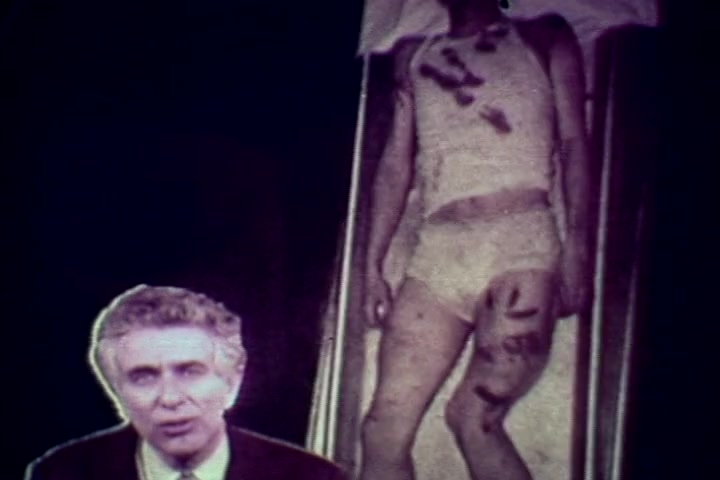
The still from 'Drug Abuse: Some Comments from the Morgue' features Tillman Hahn, who appears in the foreground, speaking directly to the viewer. Behind him is a stark and graphic image of a deceased individual on a morgue gurney, somewhat obscured by an overhead cover. The figure in the image exhibits visible trauma and is dressed in minimal clothing. The overall tone of the still is somber, intended to underline the serious consequences of drug abuse, characteristic of anti-drug messages from the 1970s.
00:07:36.122 — The still from 'Drug Abuse: Some Comments from the Morgue' features Tillman Hahn, who appears in the foreground, speaking directly to the viewer. Behind him is a stark and graphic image of a deceased individual on a morgue gurney, somewhat obscured by an overhead cover. The figure in the image exhibits visible trauma and is dressed in minimal clothing. The overall tone of the still is somber, intended to underline the serious consequences of drug abuse, characteristic of anti-drug messages from the 1970s.

The still from 'Drug Abuse: Some Comments from the Morgue' depicts a body laid out in a morgue, with visible injuries, hinting at the tragic consequences of drug abuse. The lighting is dim, enhancing the somber tone of the scene, characteristic of the film's aim to shock viewers about the realities of substance misuse in the 1970s.
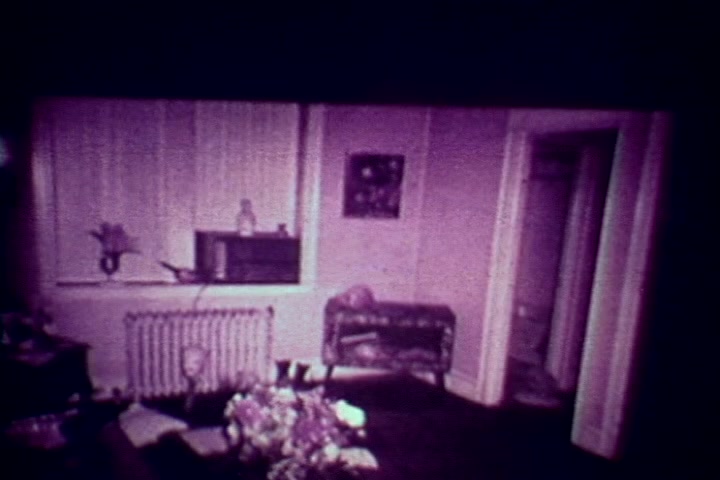
00:07:42.896 — The still from 'Drug Abuse: Some Comments from the Morgue' depicts a body laid out in a morgue, with visible injuries, hinting at the tragic consequences of drug abuse. The lighting is dim, enhancing the somber tone of the scene, characteristic of the film's aim to shock viewers about the realities of substance misuse in the 1970s.

The still from 'Drug Abuse: Some Comments from the Morgue' depicts a dimly lit room with a sparse, almost sterile atmosphere. In the foreground, there's a cluttered floor, possibly with discarded items, suggesting neglect. A radiator and a window with sheer curtains add to the somber tone, while the presence of a faintly visible couch and an open doorway hints at a more intimate, yet abandoned space. The overall aesthetic evokes a sense of desolation, aligning with the film's anti-drug message.
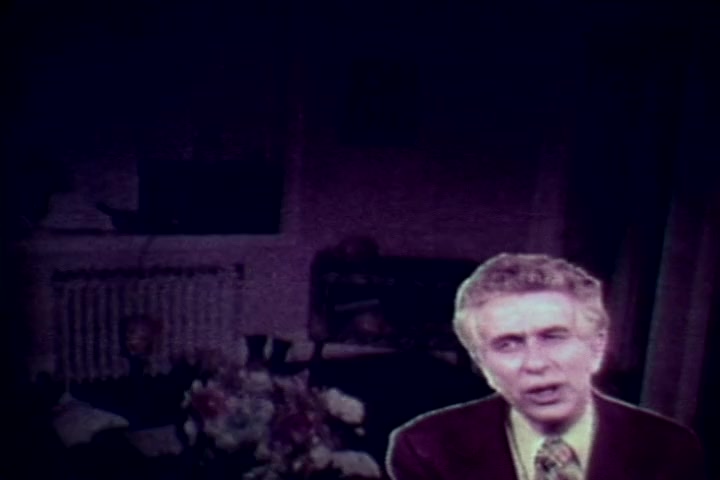
00:07:43.730 — The still from 'Drug Abuse: Some Comments from the Morgue' depicts a dimly lit room with a sparse, almost sterile atmosphere. In the foreground, there's a cluttered floor, possibly with discarded items, suggesting neglect. A radiator and a window with sheer curtains add to the somber tone, while the presence of a faintly visible couch and an open doorway hints at a more intimate, yet abandoned space. The overall aesthetic evokes a sense of desolation, aligning with the film's anti-drug message.

The still from 'Drug Abuse: Some Comments from the Morgue' features Tillman Hahn, identifiable by his distinctive suit and patterned tie, speaking directly to the camera. The background is dimly lit, hinting at a somber atmosphere typical of an anti-drug message. The setting appears to be a morgue or similar space, reinforcing the film's serious theme about the consequences of drug abuse. The overall tone is cautionary, focused on the grim realities associated with drug-related deaths.
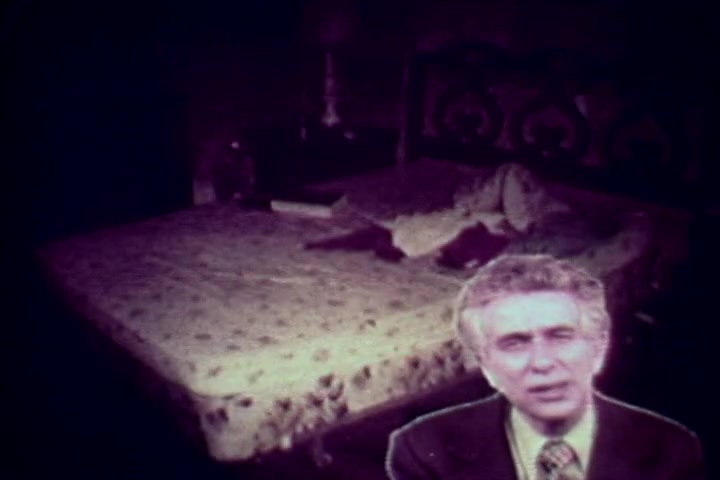
00:08:24.904 — The still from 'Drug Abuse: Some Comments from the Morgue' features Tillman Hahn, identifiable by his distinctive suit and patterned tie, speaking directly to the camera. The background is dimly lit, hinting at a somber atmosphere typical of an anti-drug message. The setting appears to be a morgue or similar space, reinforcing the film's serious theme about the consequences of drug abuse. The overall tone is cautionary, focused on the grim realities associated with drug-related deaths.

The still features a dimly lit bedroom with an unmade bed, partially covered with a blanket. In the foreground, Tillman Hahn from the Medical Examiner's office speaks directly to the camera, providing commentary on the harrowing impacts of drug abuse. The overall mood is somber and reflective, emphasizing the stark realities of addiction as depicted in the 1970s anti-drug film 'Drug Abuse: Some Comments from the Morgue.'
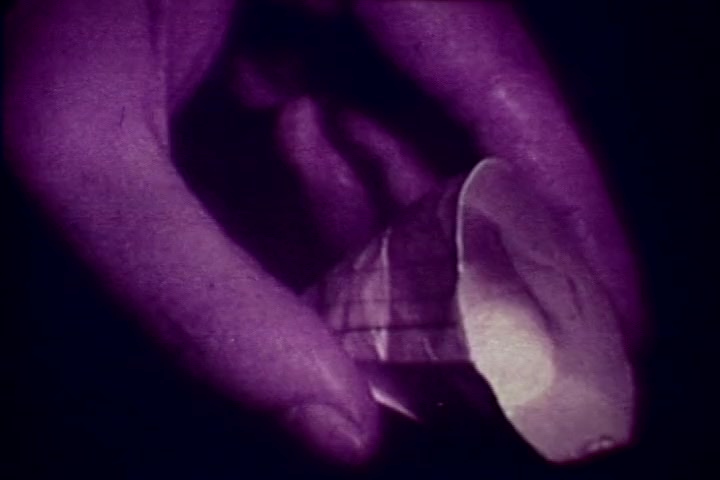
00:08:25.705 — The still features a dimly lit bedroom with an unmade bed, partially covered with a blanket. In the foreground, Tillman Hahn from the Medical Examiner's office speaks directly to the camera, providing commentary on the harrowing impacts of drug abuse. The overall mood is somber and reflective, emphasizing the stark realities of addiction as depicted in the 1970s anti-drug film 'Drug Abuse: Some Comments from the Morgue.'

The still from 'Drug Abuse: Some Comments from the Morgue' depicts a hand holding a small, conical paper container, presumably used for drug consumption. The image has a purple tint, contributing to a somber and unsettling atmosphere, typical of 1970s anti-drug films. This visual likely aims to emphasize themes of addiction and its consequences.
00:08:35.181 — The still from 'Drug Abuse: Some Comments from the Morgue' depicts a hand holding a small, conical paper container, presumably used for drug consumption. The image has a purple tint, contributing to a somber and unsettling atmosphere, typical of 1970s anti-drug films. This visual likely aims to emphasize themes of addiction and its consequences.

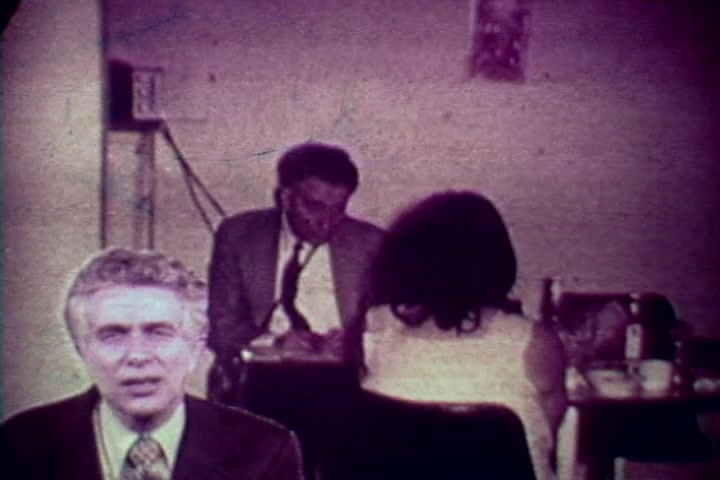
The still from 'Drug Abuse: Some Comments from the Morgue' features a split composition. In the foreground, a man in a suit, likely Tillman Hahn, addresses the camera directly. In the background, two individuals are seated at a table, one writing notes and the other facing away, suggesting a discussion or interview setting. The environment has muted colors typical of 1970s film, enhancing the serious tone of the anti-drug message. The overall mood reflects a sense of somber urgency about the consequences of drug abuse.
00:08:53.266 — The still from 'Drug Abuse: Some Comments from the Morgue' features a split composition. In the foreground, a man in a suit, likely Tillman Hahn, addresses the camera directly. In the background, two individuals are seated at a table, one writing notes and the other facing away, suggesting a discussion or interview setting. The environment has muted colors typical of 1970s film, enhancing the serious tone of the anti-drug message. The overall mood reflects a sense of somber urgency about the consequences of drug abuse.

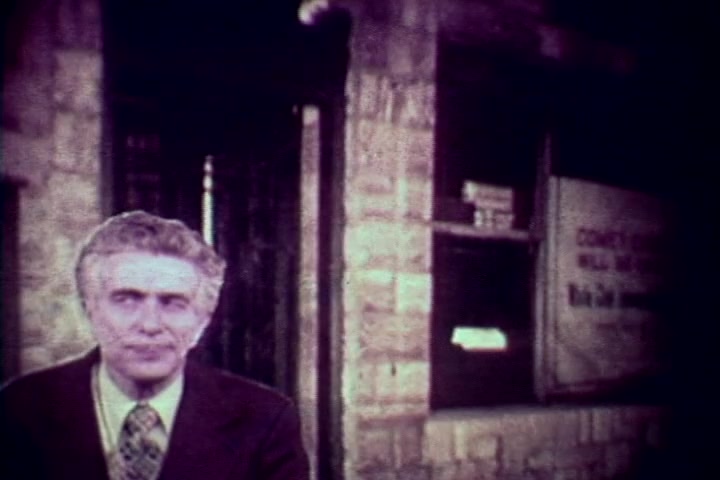
The still shows a somber-looking man, likely Tillman Hahn, in a suit with a tie, standing in front of a weathered brick building. The background includes a door and a window with a partially obscured sign, hinting at a grim context related to drug abuse. The color is muted, characteristic of the 1970s film quality, enhancing the serious tone of the anti-drug message.
00:09:19.325 — The still shows a somber-looking man, likely Tillman Hahn, in a suit with a tie, standing in front of a weathered brick building. The background includes a door and a window with a partially obscured sign, hinting at a grim context related to drug abuse. The color is muted, characteristic of the 1970s film quality, enhancing the serious tone of the anti-drug message.

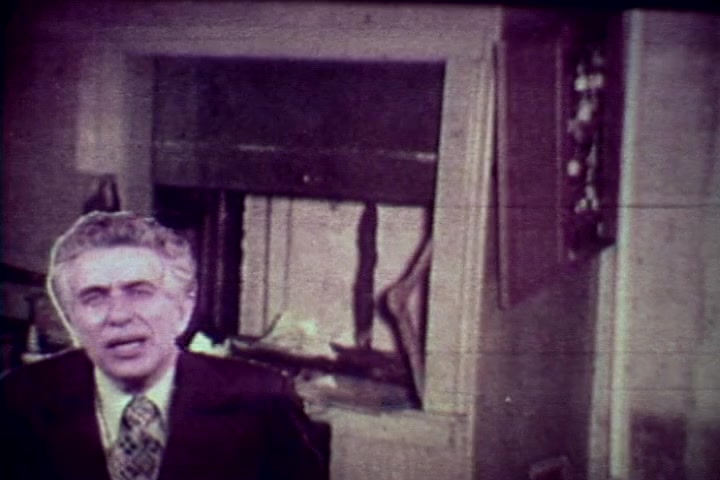
The still features Tillman Hahn, a medical examiner, delivering a serious message about drug abuse. He is positioned in the foreground with a concerned expression, likely discussing the impacts of addiction. In the background, a morgue setting is suggested, hinting at the grim consequences of drug use. The 16mm film grain adds a vintage quality, typical of 1970s anti-drug campaigns. The overall tone is somber and reflective, aimed at conveying a cautionary message.
00:09:54.794 — The still features Tillman Hahn, a medical examiner, delivering a serious message about drug abuse. He is positioned in the foreground with a concerned expression, likely discussing the impacts of addiction. In the background, a morgue setting is suggested, hinting at the grim consequences of drug use. The 16mm film grain adds a vintage quality, typical of 1970s anti-drug campaigns. The overall tone is somber and reflective, aimed at conveying a cautionary message.

The still from 'Drug Abuse: Some Comments from the Morgue' presents a dimly lit, unsettling scene, likely from a morgue environment. It features disorganized clutter, suggesting an atmosphere of neglect and decay, typical of drug-related death. The focus is on shadows and muted colors, evoking a sense of somber reflection on the consequences of drug abuse, consistent with the film's anti-drug message.
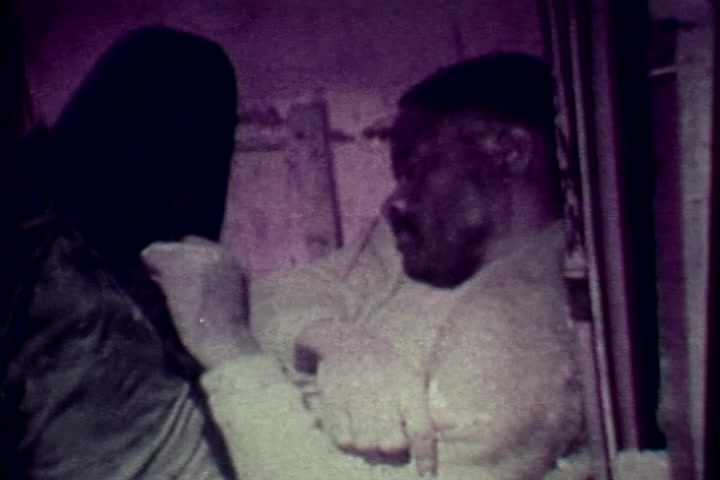
00:10:04.537 — The still from 'Drug Abuse: Some Comments from the Morgue' presents a dimly lit, unsettling scene, likely from a morgue environment. It features disorganized clutter, suggesting an atmosphere of neglect and decay, typical of drug-related death. The focus is on shadows and muted colors, evoking a sense of somber reflection on the consequences of drug abuse, consistent with the film's anti-drug message.

The still from 'Drug Abuse: Some comments from the morgue' depicts a somber scene typical of 1970s anti-drug films. It shows a deceased individual in a morgue setting, underscoring the grave consequences of drug abuse. The color tone leans towards muted and possibly faded hues, reflective of the film's vintage format. This imagery serves to evoke a strong emotional response, emphasizing the tragic reality of drug-related deaths.
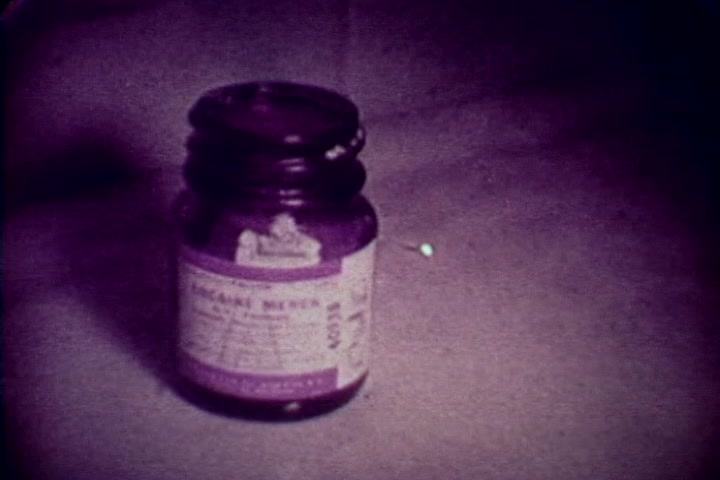
00:10:09.209 — The still from 'Drug Abuse: Some comments from the morgue' depicts a somber scene typical of 1970s anti-drug films. It shows a deceased individual in a morgue setting, underscoring the grave consequences of drug abuse. The color tone leans towards muted and possibly faded hues, reflective of the film's vintage format. This imagery serves to evoke a strong emotional response, emphasizing the tragic reality of drug-related deaths.

The still features a close-up of a purple glass jar, likely a pharmaceutical container. The label includes text indicating its contents, which may relate to drugs or medication. The background appears muted and somewhat subdued, typical of the film's 1970s aesthetic. This image likely serves as a visual reference to substance abuse and its consequences, fitting the film's anti-drug theme.
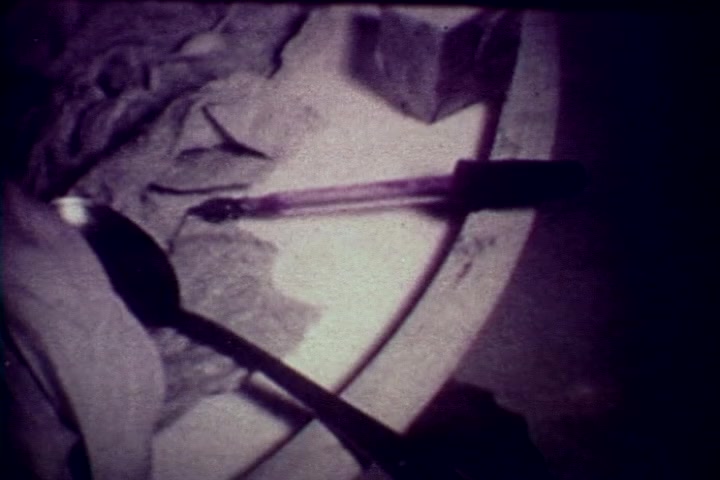
00:11:46.139 — The still features a close-up of a purple glass jar, likely a pharmaceutical container. The label includes text indicating its contents, which may relate to drugs or medication. The background appears muted and somewhat subdued, typical of the film's 1970s aesthetic. This image likely serves as a visual reference to substance abuse and its consequences, fitting the film's anti-drug theme.

The still from 'Drug Abuse: Some Comments from the Morgue' features a close-up of a spoon and a syringe resting on a circular surface. The setting is dimly lit, emphasizing the somber context of drug use. The spoon appears to be stained and possibly used for drug preparation, while the syringe suggests the act of injection. The overall composition conveys a stark message about the dangers of drug abuse, reflecting the film's anti-drug themes from the 1970s.
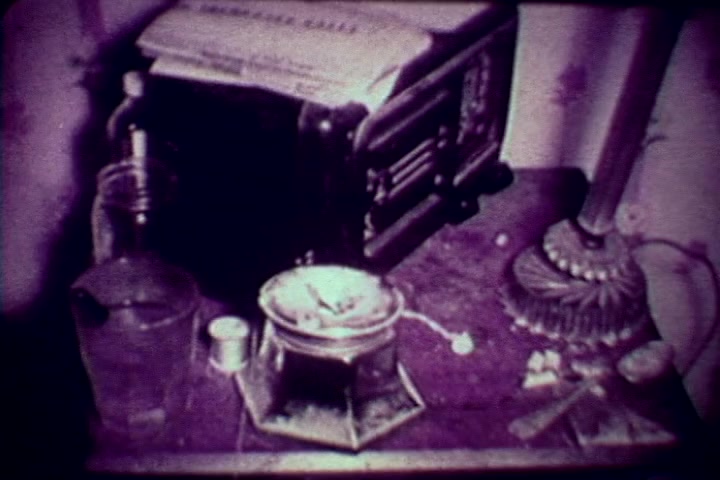
00:13:44.357 — The still from 'Drug Abuse: Some Comments from the Morgue' features a close-up of a spoon and a syringe resting on a circular surface. The setting is dimly lit, emphasizing the somber context of drug use. The spoon appears to be stained and possibly used for drug preparation, while the syringe suggests the act of injection. The overall composition conveys a stark message about the dangers of drug abuse, reflecting the film's anti-drug themes from the 1970s.

The still from 'Drug Abuse: Some Comments from the Morgue' features a cluttered tabletop scene, likely depicting items associated with drug use. A drink glass, a paper-covered object, and metal spoons are visible, suggesting a casual or domestic setting. The overall tone is somber, reflective of the film's anti-drug message from the 1970s. The muted colors and vintage look reinforce the era's aesthetic, emphasizing the gravity of drug abuse.
00:13:49.862 — The still from 'Drug Abuse: Some Comments from the Morgue' features a cluttered tabletop scene, likely depicting items associated with drug use. A drink glass, a paper-covered object, and metal spoons are visible, suggesting a casual or domestic setting. The overall tone is somber, reflective of the film's anti-drug message from the 1970s. The muted colors and vintage look reinforce the era's aesthetic, emphasizing the gravity of drug abuse.

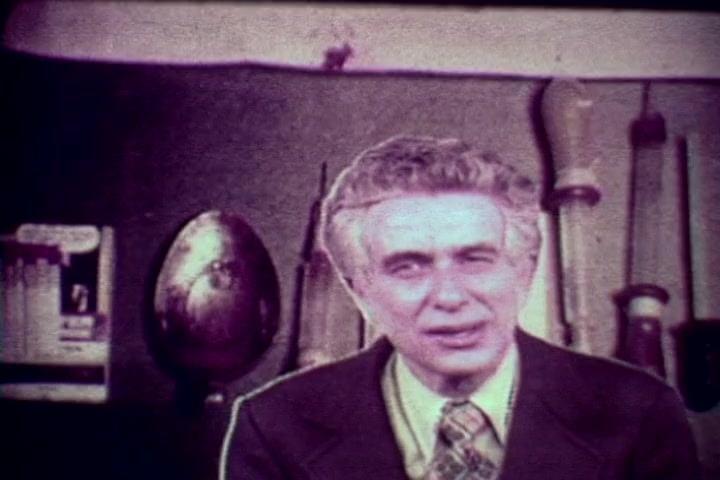
The still from 'Drug Abuse: Some comments from the morgue' features a man, likely Tillman Hahn, speaking directly to the camera. He appears serious and engaging, dressed in a suit with a patterned tie. Behind him, various tools and objects are visible, hinting at a medical or forensic context. The color appears faded, typical of 16mm prints from the 1970s, contributing to the film's historical and educational ambiance relating to the dangers of drug abuse.
00:14:38.044 — The still from 'Drug Abuse: Some comments from the morgue' features a man, likely Tillman Hahn, speaking directly to the camera. He appears serious and engaging, dressed in a suit with a patterned tie. Behind him, various tools and objects are visible, hinting at a medical or forensic context. The color appears faded, typical of 16mm prints from the 1970s, contributing to the film's historical and educational ambiance relating to the dangers of drug abuse.

The still features a seated individual, likely Tillman Hahn, in a suit and tie, speaking directly to the camera. The background is dimly lit, suggesting a serious atmosphere, possibly reflecting themes of mortality and the impact of drug abuse. The image appears somewhat muted, typical of 16mm film, enhancing its somber tone in this anti-drug context from the 1970s.
00:15:03.669 — The still features a seated individual, likely Tillman Hahn, in a suit and tie, speaking directly to the camera. The background is dimly lit, suggesting a serious atmosphere, possibly reflecting themes of mortality and the impact of drug abuse. The image appears somewhat muted, typical of 16mm film, enhancing its somber tone in this anti-drug context from the 1970s.

The still appears to depict a somber scene from the anti-drug film *Drug Abuse: Some Comments from the Morgue*. In the foreground, an individual—likely Tillman Hahn—speaks directly to the camera, dressed in a suit. The background features a shadowy figure and potentially morbid imagery associated with drug abuse, reflective of the film's grave subject matter. The colors are muted, characteristic of 1970s film print, creating a serious tone that underscores the film's anti-drug message.
00:15:04.470 — The still appears to depict a somber scene from the anti-drug film *Drug Abuse: Some Comments from the Morgue*. In the foreground, an individual—likely Tillman Hahn—speaks directly to the camera, dressed in a suit. The background features a shadowy figure and potentially morbid imagery associated with drug abuse, reflective of the film's grave subject matter. The colors are muted, characteristic of 1970s film print, creating a serious tone that underscores the film's anti-drug message.

The still depicts a sink in a stark, subdued environment, characterized by a muted purple tint. Water appears to be flowing from the faucet, suggesting a sense of disarray or neglect. This imagery likely serves to underscore themes of drug abuse and its grim realities, as part of the anti-drug narrative conveyed by the film and its commentary by Tillman Hahn from the Medical Examiner's office. The setting evokes a somber atmosphere, fitting the film's serious subject matter.
00:15:21.020 — The still depicts a sink in a stark, subdued environment, characterized by a muted purple tint. Water appears to be flowing from the faucet, suggesting a sense of disarray or neglect. This imagery likely serves to underscore themes of drug abuse and its grim realities, as part of the anti-drug narrative conveyed by the film and its commentary by Tillman Hahn from the Medical Examiner's office. The setting evokes a somber atmosphere, fitting the film's serious subject matter.

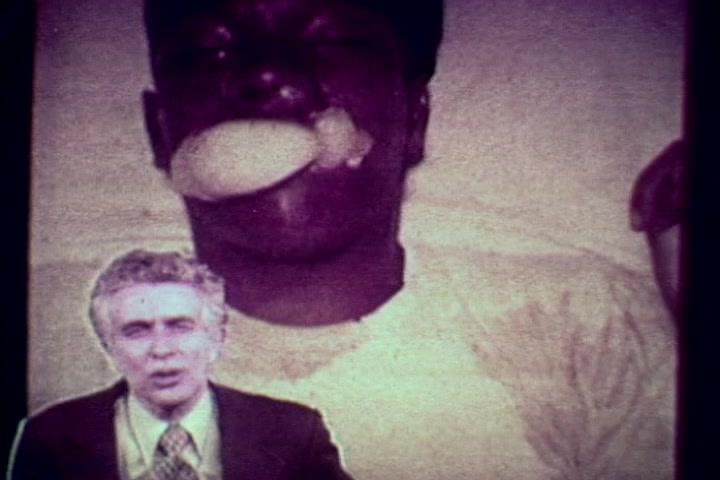
The still from 'Drug Abuse: Some Comments from the Morgue' features a grim scene with a deceased individual, who appears to be in a state of distress, indicated by a substance in their mouth. In the foreground, Tillman Hahn, likely delivering commentary, is shown with a serious expression. The visual style, typical of 1970s anti-drug films, employs stark imagery to highlight the consequences of drug abuse. The overall tone is sobering, aimed at raising awareness about the dangers of drugs.
00:16:34.260 — The still from 'Drug Abuse: Some Comments from the Morgue' features a grim scene with a deceased individual, who appears to be in a state of distress, indicated by a substance in their mouth. In the foreground, Tillman Hahn, likely delivering commentary, is shown with a serious expression. The visual style, typical of 1970s anti-drug films, employs stark imagery to highlight the consequences of drug abuse. The overall tone is sobering, aimed at raising awareness about the dangers of drugs.

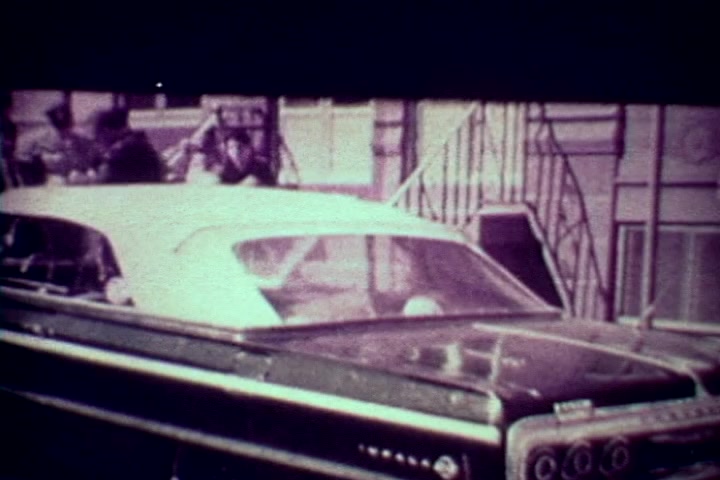
The still from 'Drug Abuse: Some comments from the morgue' features a classic car parked prominently in the foreground, likely from the 1960s. In the background, a group of individuals appears engaged in conversation outside a building, suggesting a neighborhood setting. The overall tone is gritty and reflective of the film's anti-drug message, characterized by its documentary style typical of the 1970s. The image captures a moment in urban life, invoking themes of societal issues related to drug abuse.
00:16:44.036 — The still from 'Drug Abuse: Some comments from the morgue' features a classic car parked prominently in the foreground, likely from the 1960s. In the background, a group of individuals appears engaged in conversation outside a building, suggesting a neighborhood setting. The overall tone is gritty and reflective of the film's anti-drug message, characterized by its documentary style typical of the 1970s. The image captures a moment in urban life, invoking themes of societal issues related to drug abuse.

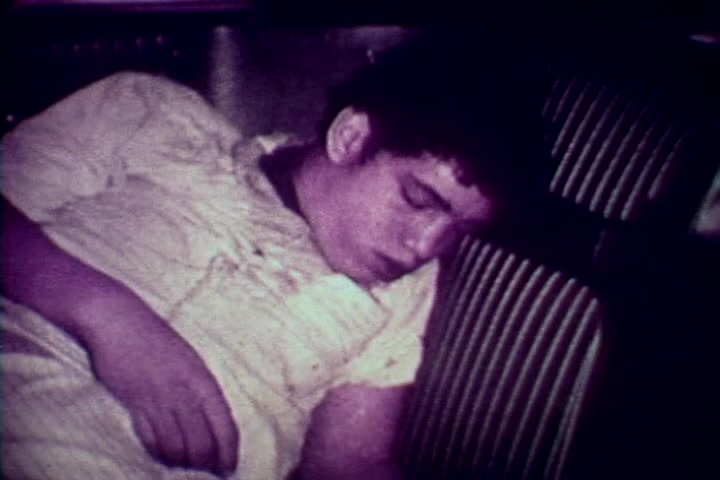
The still features a young man slumped in a seated position, appearing unresponsive. He is dressed in a light-colored shirt, and the setting suggests a somber environment typical of a medical or morgue context. The image captures a stark, distressing moment, emblematic of the film's anti-drug message and the tragic consequences of substance abuse. The muted colors and graininess of the 16mm print reflect the era's documentary style, enhancing the film's serious tone.
00:16:50.209 — The still features a young man slumped in a seated position, appearing unresponsive. He is dressed in a light-colored shirt, and the setting suggests a somber environment typical of a medical or morgue context. The image captures a stark, distressing moment, emblematic of the film's anti-drug message and the tragic consequences of substance abuse. The muted colors and graininess of the 16mm print reflect the era's documentary style, enhancing the film's serious tone.

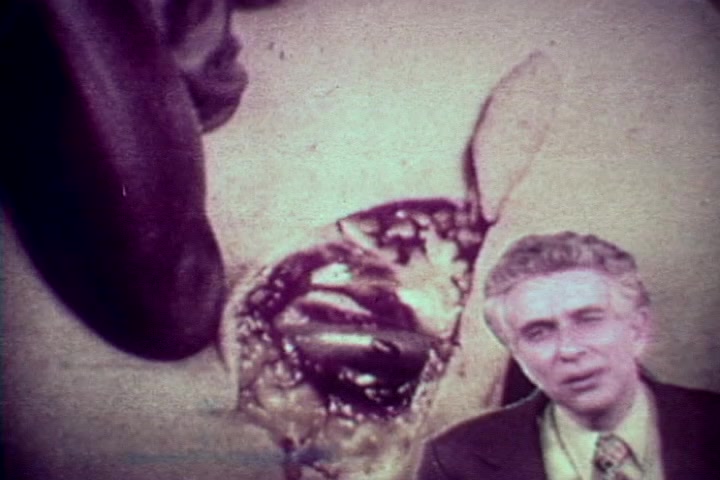
The still from 'Drug Abuse: Some comments from the morgue' features a close-up of a grim and graphic scene, likely depicting the aftermath of drug use. In the foreground, Tillman Hahn from the Medical Examiner's office speaks directly to the camera, providing commentary on the serious consequences of drug abuse. The overlaid imagery suggests the stark realities of drug-related fatalities, aiming to shock viewers and convey the dangers of substance misuse. The overall tone is somber and cautionary, characteristic of anti-drug messaging from the 1970s.
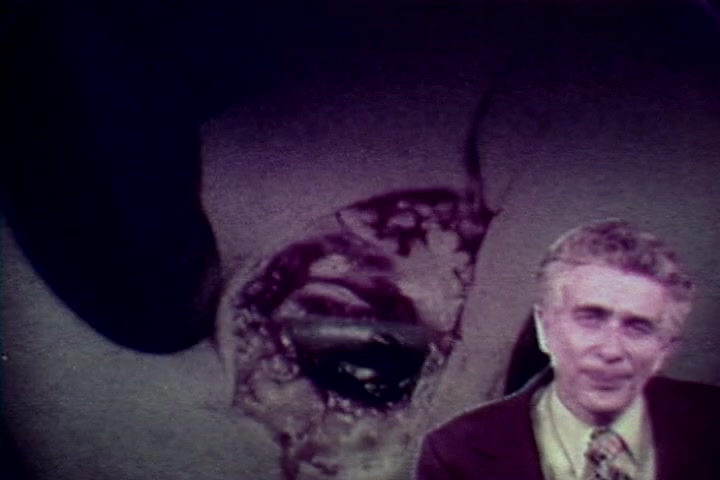
00:17:16.402 — The still from 'Drug Abuse: Some comments from the morgue' features a close-up of a grim and graphic scene, likely depicting the aftermath of drug use. In the foreground, Tillman Hahn from the Medical Examiner's office speaks directly to the camera, providing commentary on the serious consequences of drug abuse. The overlaid imagery suggests the stark realities of drug-related fatalities, aiming to shock viewers and convey the dangers of substance misuse. The overall tone is somber and cautionary, characteristic of anti-drug messaging from the 1970s.

The still from 'Drug Abuse: Some comments from the morgue' features Tillman Hahn from the Medical Examiner's office, positioned against a graphic depiction of drug-related harm. The image starkly contrasts Hahn's formal attire with the disturbing visuals, emphasizing the film's anti-drug message. The setting evokes a somber and educational tone, underscoring the serious consequences of drug abuse.
00:17:38.724 — The still from 'Drug Abuse: Some comments from the morgue' features Tillman Hahn from the Medical Examiner's office, positioned against a graphic depiction of drug-related harm. The image starkly contrasts Hahn's formal attire with the disturbing visuals, emphasizing the film's anti-drug message. The setting evokes a somber and educational tone, underscoring the serious consequences of drug abuse.

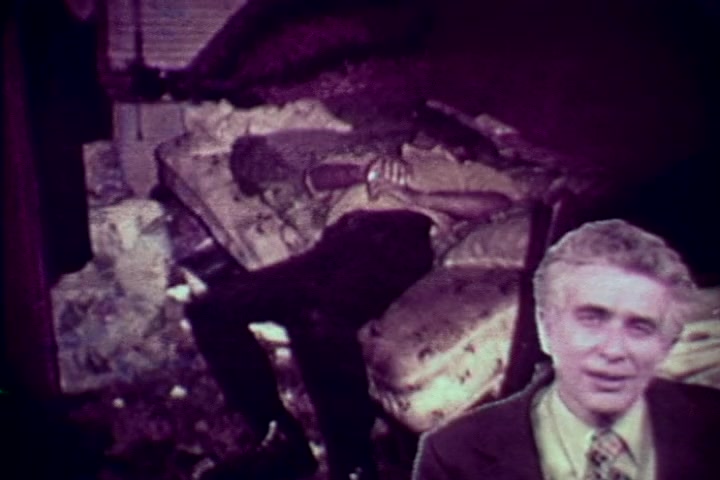
The still from 'Drug Abuse: Some Comments from the Morgue' depicts a somber scene with a deceased individual slumped on a disheveled couch, surrounded by a cluttered room. In the foreground, Tillman Hahn from the Medical Examiner's office appears, likely providing commentary on the implications of drug use. The overall tone is grim, highlighting the stark realities of substance abuse in the 1970s. The film aims to convey a strong anti-drug message through its stark imagery and informative narration.
00:17:39.559 — The still from 'Drug Abuse: Some Comments from the Morgue' depicts a somber scene with a deceased individual slumped on a disheveled couch, surrounded by a cluttered room. In the foreground, Tillman Hahn from the Medical Examiner's office appears, likely providing commentary on the implications of drug use. The overall tone is grim, highlighting the stark realities of substance abuse in the 1970s. The film aims to convey a strong anti-drug message through its stark imagery and informative narration.

The still from 'Drug Abuse: Some Comments from the Morgue' features Tillman Hahn from the Medical Examiner's office, likely addressing the serious consequences of drug abuse. The dimly lit background suggests a somber, grave setting, possibly implying the aftermath of drug-related incidents. Hahn's expression appears serious and earnest, reinforcing the film's anti-drug message from the 1970s. The image captures the stark and unsettling nature of the topic being discussed.
00:18:11.524 — The still from 'Drug Abuse: Some Comments from the Morgue' features Tillman Hahn from the Medical Examiner's office, likely addressing the serious consequences of drug abuse. The dimly lit background suggests a somber, grave setting, possibly implying the aftermath of drug-related incidents. Hahn's expression appears serious and earnest, reinforcing the film's anti-drug message from the 1970s. The image captures the stark and unsettling nature of the topic being discussed.

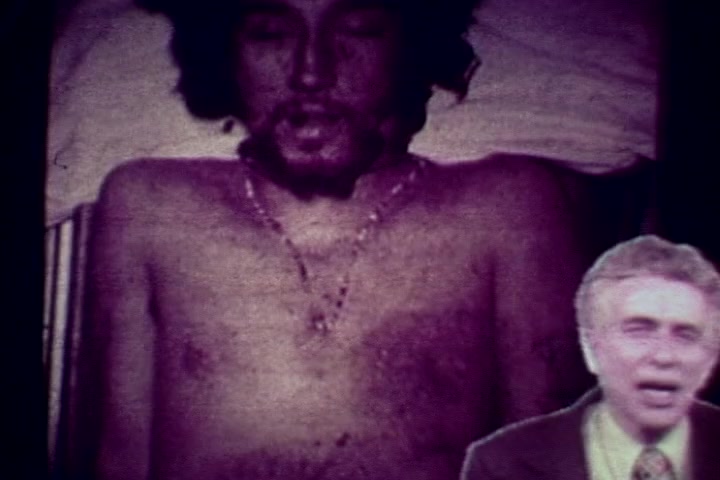
The still features a deceased individual lying on a morgue table, with a bare chest and visible chain necklace, evoking a somber tone. In the foreground, a man appears to be speaking, likely addressing the viewer about the consequences of drug abuse, typical of the film's intended anti-drug message from the 1970s. The color is muted, reflecting the serious nature of the subject matter, characteristic of educational films from that era.
00:19:55.227 — The still features a deceased individual lying on a morgue table, with a bare chest and visible chain necklace, evoking a somber tone. In the foreground, a man appears to be speaking, likely addressing the viewer about the consequences of drug abuse, typical of the film's intended anti-drug message from the 1970s. The color is muted, reflecting the serious nature of the subject matter, characteristic of educational films from that era.

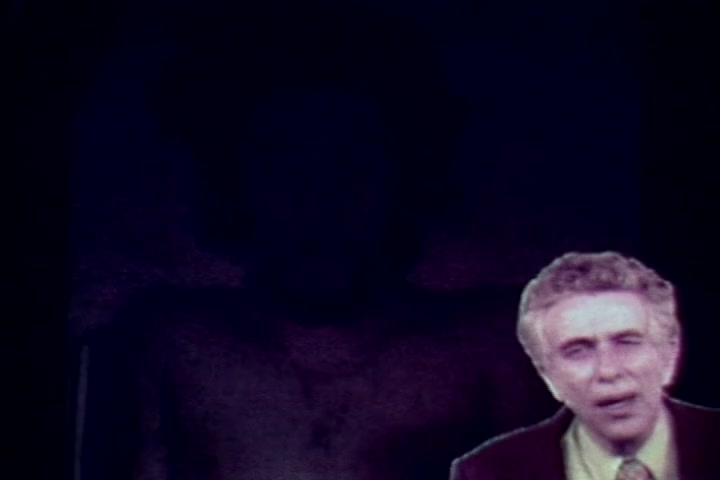
The still from 'Drug Abuse: Some Comments from the Morgue' features a dimly lit backdrop with a vague figure, likely representing a body. In the foreground, Tillman Hahn from the Medical Examiner's office is visibly speaking, appearing concerned as he addresses the audience. The overall tone is somber, reflecting the grim realities of drug abuse explored in the film. The image's graininess is characteristic of 16mm film, typical of that era.
00:20:06.972 — The still from 'Drug Abuse: Some Comments from the Morgue' features a dimly lit backdrop with a vague figure, likely representing a body. In the foreground, Tillman Hahn from the Medical Examiner's office is visibly speaking, appearing concerned as he addresses the audience. The overall tone is somber, reflecting the grim realities of drug abuse explored in the film. The image's graininess is characteristic of 16mm film, typical of that era.

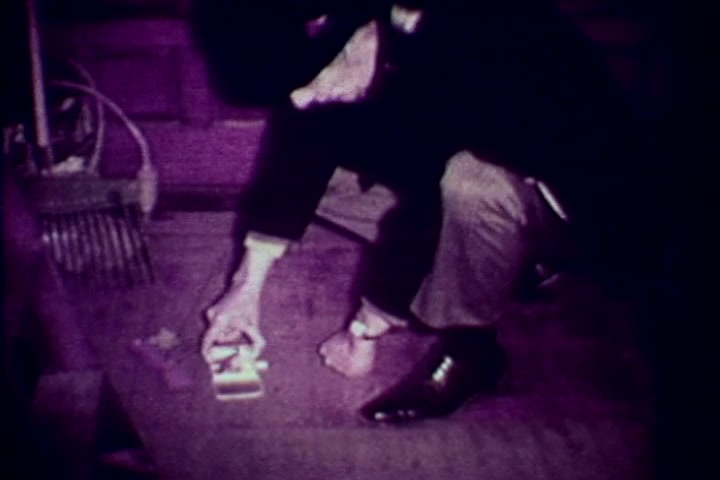
The still captures a somber scene from the anti-drug film 'Drug Abuse: Some comments from the morgue.' It features a figure, likely Tillman Hahn, crouched on the floor, inspecting a small box or container, which suggests a focus on the remnants of drug use. The image is tinged with a purple hue, characteristic of 16mm film from that era, conveying a sense of seriousness regarding the topic of drug abuse. The environment appears stark and clinical, reinforcing the film's grim message about the consequences of drug addiction.
00:20:15.881 — The still captures a somber scene from the anti-drug film 'Drug Abuse: Some comments from the morgue.' It features a figure, likely Tillman Hahn, crouched on the floor, inspecting a small box or container, which suggests a focus on the remnants of drug use. The image is tinged with a purple hue, characteristic of 16mm film from that era, conveying a sense of seriousness regarding the topic of drug abuse. The environment appears stark and clinical, reinforcing the film's grim message about the consequences of drug addiction.

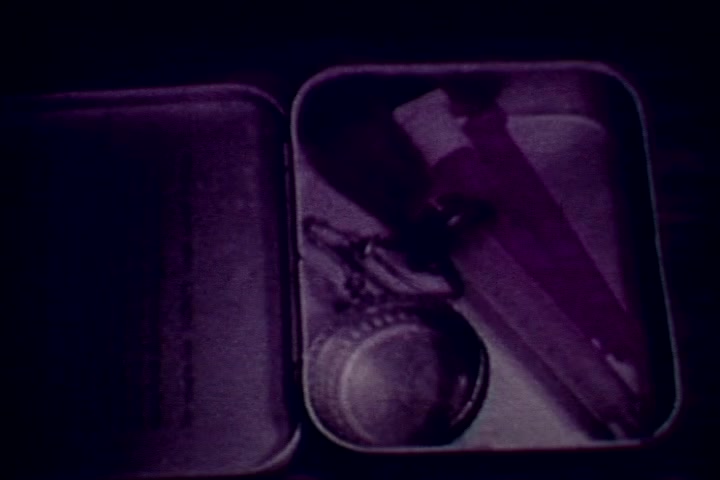
The still features an open tin box containing items associated with drug use, including a syringe and a small circular tin. The image has a purple tint, characteristic of the film's era. This visual reinforces the film's anti-drug message, emphasizing the stark reality of substance abuse.
00:20:25.491 — The still features an open tin box containing items associated with drug use, including a syringe and a small circular tin. The image has a purple tint, characteristic of the film's era. This visual reinforces the film's anti-drug message, emphasizing the stark reality of substance abuse.

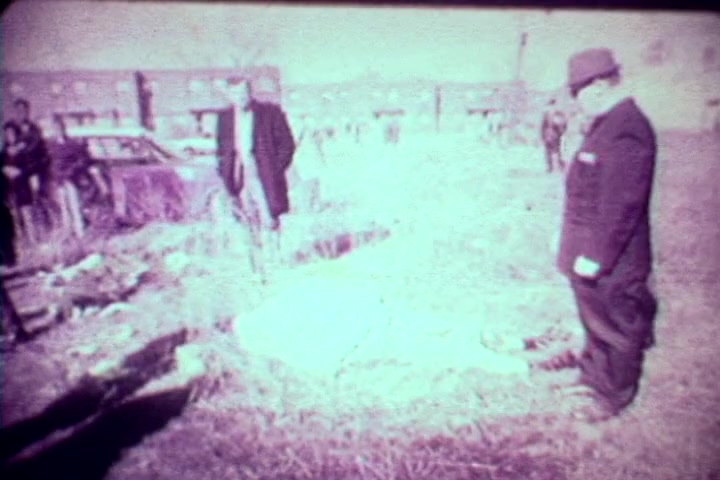
The still captures a somber scene from the 1970s anti-drug film, 'Drug Abuse: Some Comments from the Morgue.' It depicts two men, one in a suit and hat, examining a body on the ground amidst a desolate area. The background features a crowd of onlookers and dilapidated buildings, emphasizing the grim realities of drug abuse. The faded quality of the 16mm print adds to the stark and unsettling atmosphere of the moment.
00:21:14.940 — The still captures a somber scene from the 1970s anti-drug film, 'Drug Abuse: Some Comments from the Morgue.' It depicts two men, one in a suit and hat, examining a body on the ground amidst a desolate area. The background features a crowd of onlookers and dilapidated buildings, emphasizing the grim realities of drug abuse. The faded quality of the 16mm print adds to the stark and unsettling atmosphere of the moment.

The still features Tillman Hahn from the Medical Examiner's office, appearing somber and concerned. He is in the foreground, addressing the camera, while the blurred background suggests a morgue setting, reinforcing the film's grim anti-drug message. The lighting and color give a vintage feel typical of 1970s educational films, emphasizing the serious nature of the topic.
00:23:03.482 — The still features Tillman Hahn from the Medical Examiner's office, appearing somber and concerned. He is in the foreground, addressing the camera, while the blurred background suggests a morgue setting, reinforcing the film's grim anti-drug message. The lighting and color give a vintage feel typical of 1970s educational films, emphasizing the serious nature of the topic.

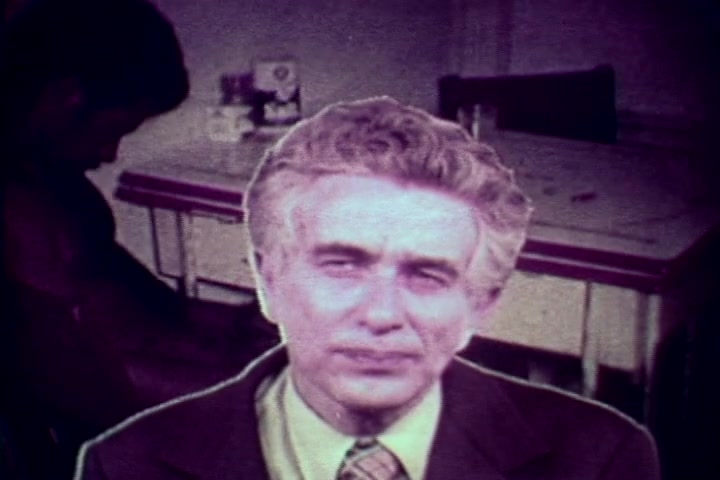
The still features Tillman Hahn, a medical examiner, prominently in the foreground, with a serious expression. The background includes a blurred figure, likely a subject of discussion, and a table with items that suggest a medical or investigative setting. The overall tone is somber, reflecting the film's anti-drug message from the 1970s, conveying the grim realities of drug abuse. The color palette is muted, characteristic of 16mm film, reinforcing the serious subject matter.
00:23:04.316 — The still features Tillman Hahn, a medical examiner, prominently in the foreground, with a serious expression. The background includes a blurred figure, likely a subject of discussion, and a table with items that suggest a medical or investigative setting. The overall tone is somber, reflecting the film's anti-drug message from the 1970s, conveying the grim realities of drug abuse. The color palette is muted, characteristic of 16mm film, reinforcing the serious subject matter.

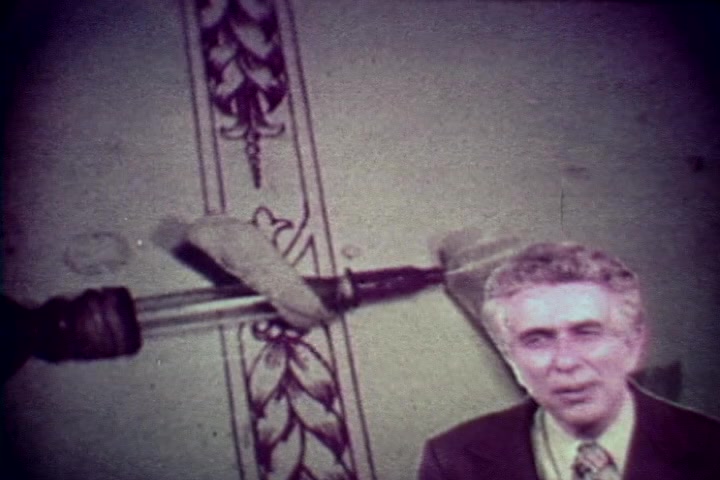
The still from 'Drug Abuse: Some comments from the morgue' features a speaker, likely Tillman Hahn, positioned in front of a backdrop that includes an ominous syringe and a wall decorated with ornate patterns. The overall tone suggests a serious examination of the consequences of drug abuse, aligning with the film's anti-drug message from the 1970s. The aesthetic reflects the era's educational filmmaking style, combining stark imagery with direct commentary.
00:23:37.917 — The still from 'Drug Abuse: Some comments from the morgue' features a speaker, likely Tillman Hahn, positioned in front of a backdrop that includes an ominous syringe and a wall decorated with ornate patterns. The overall tone suggests a serious examination of the consequences of drug abuse, aligning with the film's anti-drug message from the 1970s. The aesthetic reflects the era's educational filmmaking style, combining stark imagery with direct commentary.

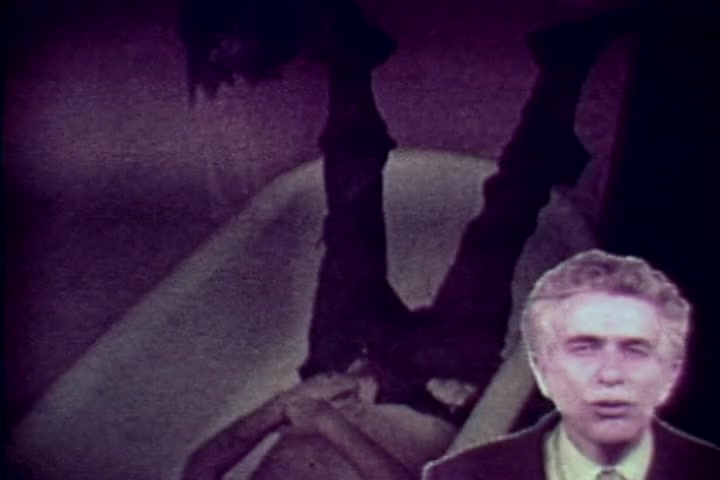
The still from 'Drug Abuse: Some comments from the morgue' features a somber scene where a victim is depicted upside down in a bathtub, suggesting the grim realities of drug abuse. In the foreground, Tillman Hahn, representing the Medical Examiner's office, speaks directly to the camera, likely delivering a cautionary message. The overall tone emphasizes the tragic consequences of drug addiction, aligned with the film's anti-drug message from the 1970s. The visual composition combines a stark, unsettling image with an authoritative voice, creating a powerful commentary on the issue.
00:24:55.160 — The still from 'Drug Abuse: Some comments from the morgue' features a somber scene where a victim is depicted upside down in a bathtub, suggesting the grim realities of drug abuse. In the foreground, Tillman Hahn, representing the Medical Examiner's office, speaks directly to the camera, likely delivering a cautionary message. The overall tone emphasizes the tragic consequences of drug addiction, aligned with the film's anti-drug message from the 1970s. The visual composition combines a stark, unsettling image with an authoritative voice, creating a powerful commentary on the issue.

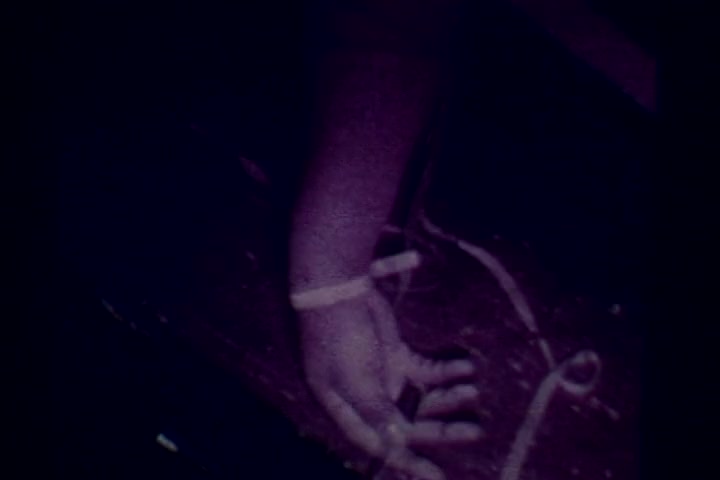
The still from the anti-drug film 'Drug Abuse: Some Comments from the Morgue' shows a close-up of a hand resting on a surface, highlighted in a somber color palette. The image conveys a stark message about the consequences of drug abuse, likely illustrating a scene related to overdose or its aftermath. The context suggests a serious tone aimed at raising awareness about the dangers and repercussions of drug use during the 1970s.
00:25:25.924 — The still from the anti-drug film 'Drug Abuse: Some Comments from the Morgue' shows a close-up of a hand resting on a surface, highlighted in a somber color palette. The image conveys a stark message about the consequences of drug abuse, likely illustrating a scene related to overdose or its aftermath. The context suggests a serious tone aimed at raising awareness about the dangers and repercussions of drug use during the 1970s.

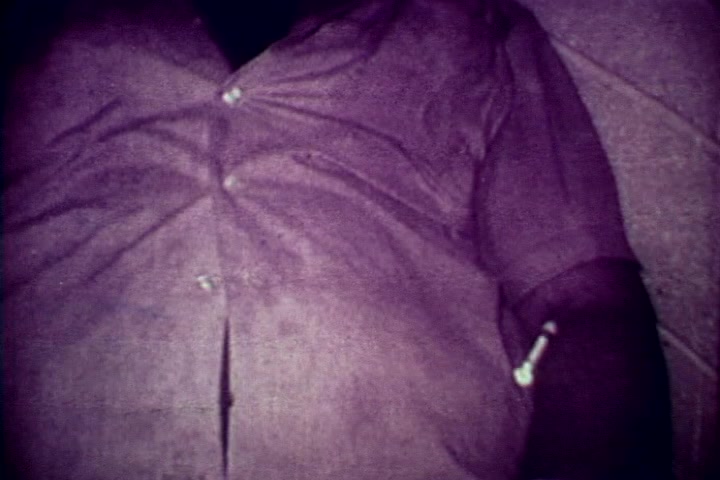
The still depicts a close-up of an individual's arm, resting on a surface. The person is wearing a button-up shirt, partially buttoned, revealing evidence of drug use—specifically, a syringe lying near the forearm. The image has a muted, slightly discolored quality typical of 16mm film, aligning with the film's serious anti-drug message from the 1970s. The context suggests a stark reminder of the consequences of drug abuse.
00:25:31.964 — The still depicts a close-up of an individual's arm, resting on a surface. The person is wearing a button-up shirt, partially buttoned, revealing evidence of drug use—specifically, a syringe lying near the forearm. The image has a muted, slightly discolored quality typical of 16mm film, aligning with the film's serious anti-drug message from the 1970s. The context suggests a stark reminder of the consequences of drug abuse.

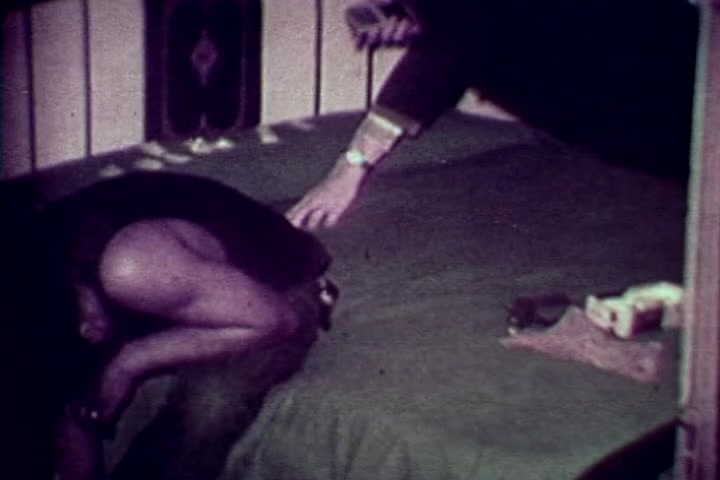
The still from 'Drug Abuse: Some Comments from the Morgue' depicts a somber scene set in a dimly lit room. A figure slumps over on a green bedspread, suggesting a state of distress or impairment, which can be inferred as relating to drug use. A hand, possibly that of an investigator or medical personnel, reaches toward the figure, indicating an intervention or examination. The setting, with its muted colors and sparse decor, enhances the film's serious anti-drug message typical of the 1970s.

00:25:35.267 — The still from 'Drug Abuse: Some Comments from the Morgue' depicts a somber scene set in a dimly lit room. A figure slumps over on a green bedspread, suggesting a state of distress or impairment, which can be inferred as relating to drug use. A hand, possibly that of an investigator or medical personnel, reaches toward the figure, indicating an intervention or examination. The setting, with its muted colors and sparse decor, enhances the film's serious anti-drug message typical of the 1970s.

The still from 'Drug Abuse: Some Comments from the Morgue' captures a dimly lit, serious scene, likely emphasizing the grim realities of drug abuse. It features a depiction of an environment associated with death, potentially suggesting the consequences of substance misuse. The focus appears to be on the stark and unsettling nature of the subject matter, reflecting the film's intended anti-drug message from the 1970s. The overall mood is somber and impactful, aligning with the tragic themes addressed in the documentary.
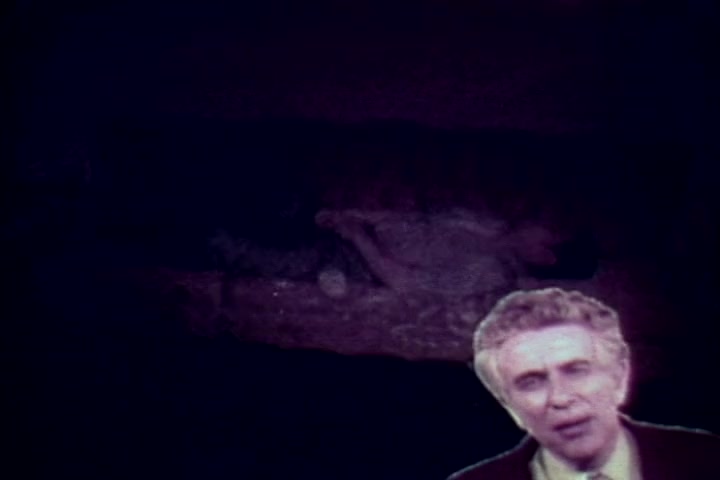
00:25:37.403 — The still from 'Drug Abuse: Some Comments from the Morgue' captures a dimly lit, serious scene, likely emphasizing the grim realities of drug abuse. It features a depiction of an environment associated with death, potentially suggesting the consequences of substance misuse. The focus appears to be on the stark and unsettling nature of the subject matter, reflecting the film's intended anti-drug message from the 1970s. The overall mood is somber and impactful, aligning with the tragic themes addressed in the documentary.

The still from 'Drug Abuse: Some Comments from the Morgue' features a somber scene typical of anti-drug narratives from the 1970s. In the foreground, Tillman Hahn, a representative from the Medical Examiner's office, speaks directly to the camera with a serious expression. Behind him lies a dimly lit, blurred image of a body, emphasizing the grim consequences of drug abuse. The overall tone is cautionary, aiming to provoke reflection on the dangers of addiction.
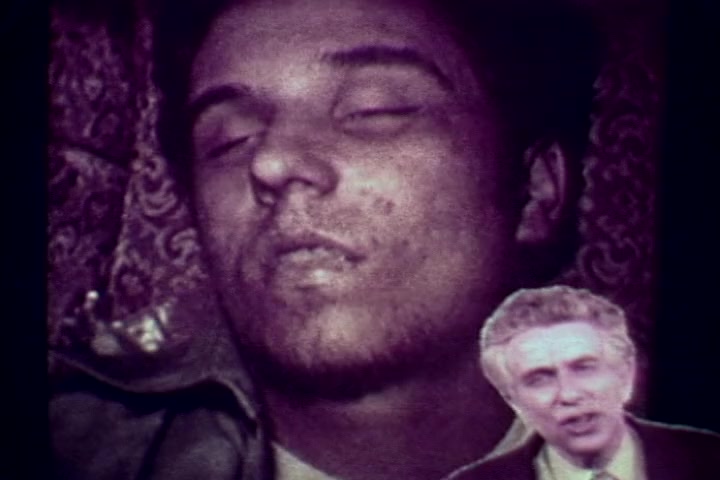
00:26:24.149 — The still from 'Drug Abuse: Some Comments from the Morgue' features a somber scene typical of anti-drug narratives from the 1970s. In the foreground, Tillman Hahn, a representative from the Medical Examiner's office, speaks directly to the camera with a serious expression. Behind him lies a dimly lit, blurred image of a body, emphasizing the grim consequences of drug abuse. The overall tone is cautionary, aiming to provoke reflection on the dangers of addiction.

The still captures a somber scene from the anti-drug film 'Drug Abuse: Some Comments from the Morgue.' It features a deceased young man lying on a patterned surface, with his eyes closed and a grim expression. Overlaid is a smaller image of Tillman Hahn, a narrator from the Medical Examiner's office, providing commentary. The film's stark visuals aim to highlight the tragic consequences of drug abuse, reflecting the serious tone of the 1970s public health messaging.
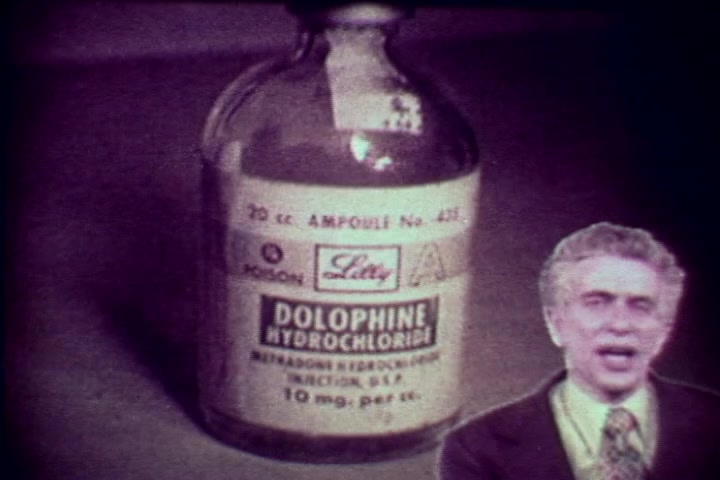
00:26:24.983 — The still captures a somber scene from the anti-drug film 'Drug Abuse: Some Comments from the Morgue.' It features a deceased young man lying on a patterned surface, with his eyes closed and a grim expression. Overlaid is a smaller image of Tillman Hahn, a narrator from the Medical Examiner's office, providing commentary. The film's stark visuals aim to highlight the tragic consequences of drug abuse, reflecting the serious tone of the 1970s public health messaging.

The still features a close-up of a glass ampoule labeled 'DOLPHINE HYDROCHLORIDE,' indicating it contains methadone, a medication often associated with drug treatment. The foreground includes a man, presumably Tillman Hahn, delivering a commentary. The visual style, characteristic of 1970s anti-drug films, emphasizes the seriousness of drug abuse and its consequences. The tone is educational, warning against the dangers associated with drug use.
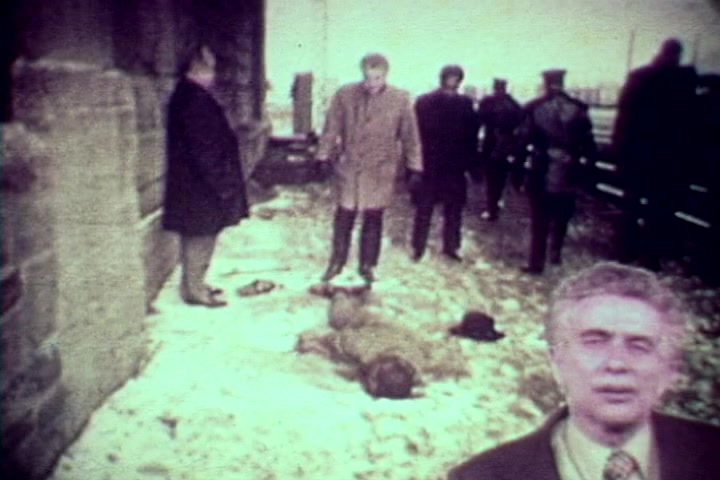
00:26:35.961 — The still features a close-up of a glass ampoule labeled 'DOLPHINE HYDROCHLORIDE,' indicating it contains methadone, a medication often associated with drug treatment. The foreground includes a man, presumably Tillman Hahn, delivering a commentary. The visual style, characteristic of 1970s anti-drug films, emphasizes the seriousness of drug abuse and its consequences. The tone is educational, warning against the dangers associated with drug use.

The still from 'Drug Abuse: Some Comments from the Morgue' features a grim scene outside, with several individuals, including figures in overcoats and police uniforms, gathered around a snowy area. In the foreground, Tillman Hahn, the medical examiner, appears to address the camera. Two lifeless bodies lie on the ground, emphasizing the stark impact of drug abuse. The overall mood is somber, reflecting the film's anti-drug message and the harsh realities of addiction.
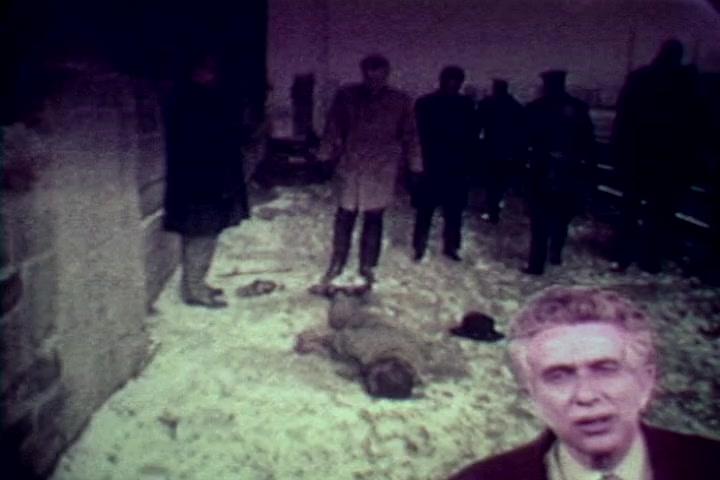
00:26:51.877 — The still from 'Drug Abuse: Some Comments from the Morgue' features a grim scene outside, with several individuals, including figures in overcoats and police uniforms, gathered around a snowy area. In the foreground, Tillman Hahn, the medical examiner, appears to address the camera. Two lifeless bodies lie on the ground, emphasizing the stark impact of drug abuse. The overall mood is somber, reflecting the film's anti-drug message and the harsh realities of addiction.

The still from 'Drug Abuse: Some Comments from the Morgue' depicts a grim scene in a snowy urban environment. In the foreground, a man, likely Tillman Hahn, speaks directly to the camera, conveying a serious message. Behind him, a body lies on the ground, surrounded by several individuals, including law enforcement and bystanders, observing the situation. The overall tone is somber and reflects the film's anti-drug narrative, illustrating the stark realities of drug abuse's impact.
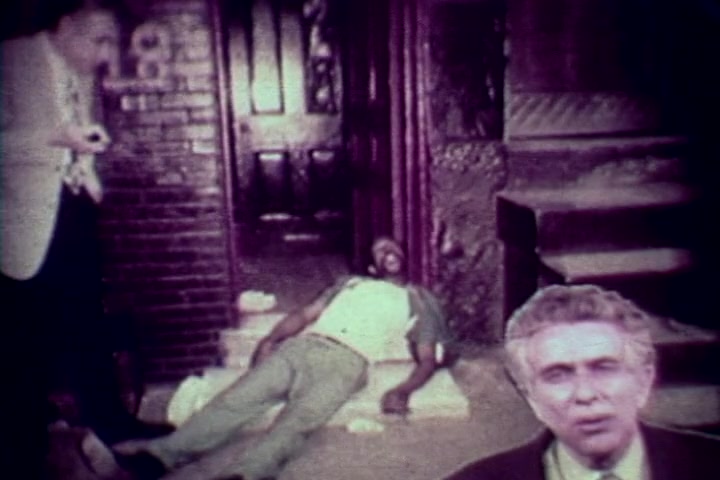
00:27:09.461 — The still from 'Drug Abuse: Some Comments from the Morgue' depicts a grim scene in a snowy urban environment. In the foreground, a man, likely Tillman Hahn, speaks directly to the camera, conveying a serious message. Behind him, a body lies on the ground, surrounded by several individuals, including law enforcement and bystanders, observing the situation. The overall tone is somber and reflects the film's anti-drug narrative, illustrating the stark realities of drug abuse's impact.

The still from 'Drug Abuse: Some comments from the morgue' depicts a grim scene on urban steps. A deceased individual lies on the ground, visibly affected by drug use. In the background, a man in a light-colored suit appears to observe the situation, while Tillman Hahn, a figure from the Medical Examiner's office, addresses the camera. The image captures a stark and somber moment, reflecting the film's anti-drug message in the context of the 1970s.

00:27:10.329 — The still from 'Drug Abuse: Some comments from the morgue' depicts a grim scene on urban steps. A deceased individual lies on the ground, visibly affected by drug use. In the background, a man in a light-colored suit appears to observe the situation, while Tillman Hahn, a figure from the Medical Examiner's office, addresses the camera. The image captures a stark and somber moment, reflecting the film's anti-drug message in the context of the 1970s.

The still likely depicts a dimly lit morgue setting, conveying a somber and serious atmosphere. Given it's from an anti-drug film, it may show elements related to the consequences of drug abuse, possibly emphasizing themes of mortality and loss. The visual quality of a 16mm print might exhibit graininess and subdued colors, enhancing the overall impact of the scene.
00:27:19.505 — The still likely depicts a dimly lit morgue setting, conveying a somber and serious atmosphere. Given it's from an anti-drug film, it may show elements related to the consequences of drug abuse, possibly emphasizing themes of mortality and loss. The visual quality of a 16mm print might exhibit graininess and subdued colors, enhancing the overall impact of the scene.

The still from 'Drug Abuse: Some Comments from the Morgue' depicts a scene that appears to be a street or parking lot, with cars in the background and some individuals walking by. The foreground features overgrown grass and litter, suggesting neglect and a possibly urban environment. The color is muted, characteristic of 16mm film, lending a somber tone. This visual context aligns with the film's anti-drug message, emphasizing the grim realities of drug abuse.
00:27:41.493 — The still from 'Drug Abuse: Some Comments from the Morgue' depicts a scene that appears to be a street or parking lot, with cars in the background and some individuals walking by. The foreground features overgrown grass and litter, suggesting neglect and a possibly urban environment. The color is muted, characteristic of 16mm film, lending a somber tone. This visual context aligns with the film's anti-drug message, emphasizing the grim realities of drug abuse.

The still depicts a close-up of a shoe, partially buried in grass and leaves, set against a muted color palette typical of 1970s film. This frame likely symbolizes the grim realities of drug abuse and its consequences, aligning with the film's anti-drug message. The focus on the shoe emphasizes the human element affected by drug-related incidents, reflecting on mortality and the impact of substance abuse.
00:27:50.769 — The still depicts a close-up of a shoe, partially buried in grass and leaves, set against a muted color palette typical of 1970s film. This frame likely symbolizes the grim realities of drug abuse and its consequences, aligning with the film's anti-drug message. The focus on the shoe emphasizes the human element affected by drug-related incidents, reflecting on mortality and the impact of substance abuse.

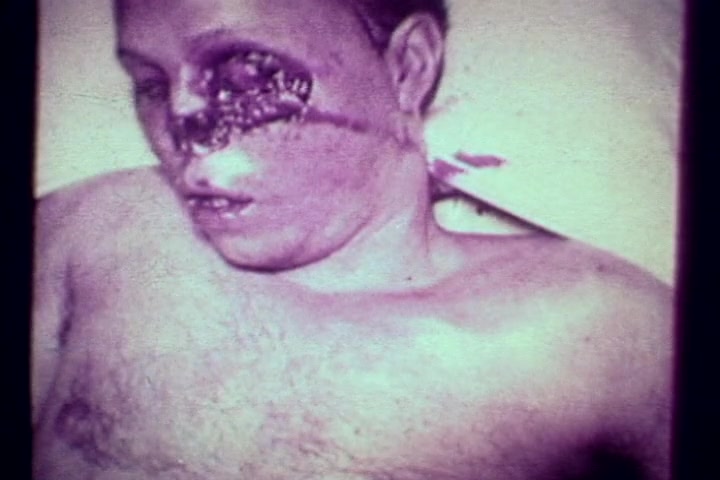
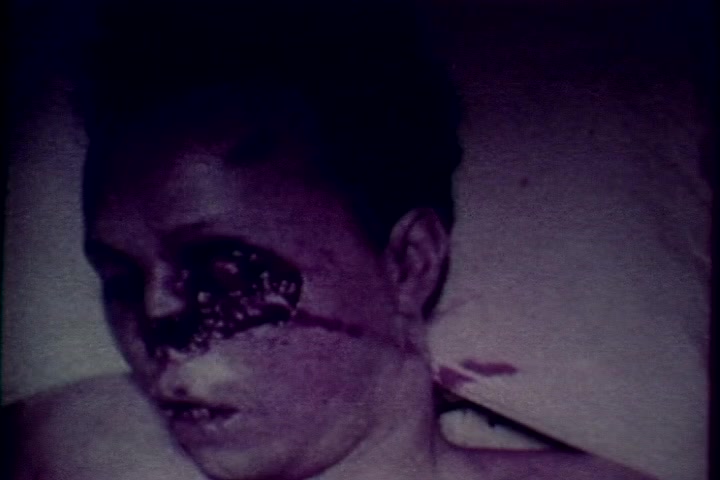
The still from 'Drug Abuse: Some Comments from the Morgue' depicts a deceased male individual lying on a surface. He shows severe facial trauma, particularly around one eye, with noticeable decay. The image presents a stark and graphic illustration of the impacts of drug abuse, highlighting the grim realities associated with substance-related mortality. The overall tone is unsettling and serves as a cautionary reminder against drug use.
00:27:57.009 — The still from 'Drug Abuse: Some Comments from the Morgue' depicts a deceased male individual lying on a surface. He shows severe facial trauma, particularly around one eye, with noticeable decay. The image presents a stark and graphic illustration of the impacts of drug abuse, highlighting the grim realities associated with substance-related mortality. The overall tone is unsettling and serves as a cautionary reminder against drug use.

The still shows a deceased individual with visible facial injuries, likely intended to underscore the grim consequences of drug abuse. The image has a somber, muted color palette typical of 1970s anti-drug films, emphasizing the serious subject matter. This particular scene aims to evoke a strong emotional response, reinforcing the film's cautionary message against drug use.
00:28:04.283 — The still shows a deceased individual with visible facial injuries, likely intended to underscore the grim consequences of drug abuse. The image has a somber, muted color palette typical of 1970s anti-drug films, emphasizing the serious subject matter. This particular scene aims to evoke a strong emotional response, reinforcing the film's cautionary message against drug use.

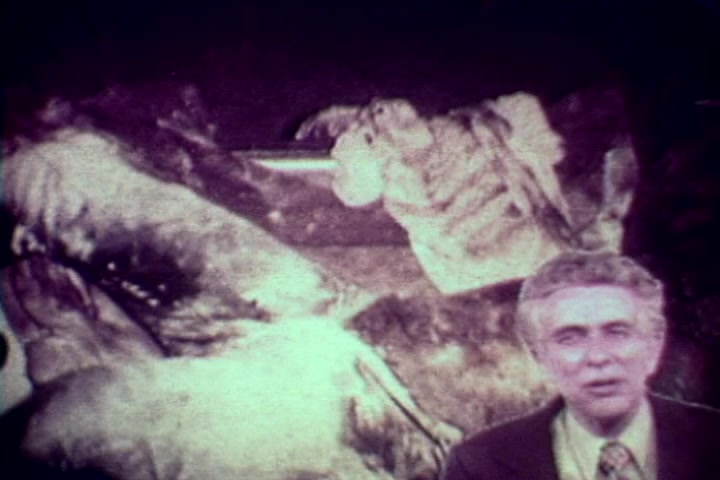
The still from 'Drug Abuse: Some Comments from the Morgue' features Tillman Hahn in the foreground, addressing the audience with a serious demeanor. In the background, there are stark and disturbing images portraying the aftermath of drug abuse, likely intended to convey the grim realities associated with addiction. The overall tone is somber, aiming to highlight the dangers of drug use through visceral imagery. The film's 16mm format contributes to its vintage, gritty aesthetic typical of the 1970s anti-drug movement.
00:28:44.323 — The still from 'Drug Abuse: Some Comments from the Morgue' features Tillman Hahn in the foreground, addressing the audience with a serious demeanor. In the background, there are stark and disturbing images portraying the aftermath of drug abuse, likely intended to convey the grim realities associated with addiction. The overall tone is somber, aiming to highlight the dangers of drug use through visceral imagery. The film's 16mm format contributes to its vintage, gritty aesthetic typical of the 1970s anti-drug movement.

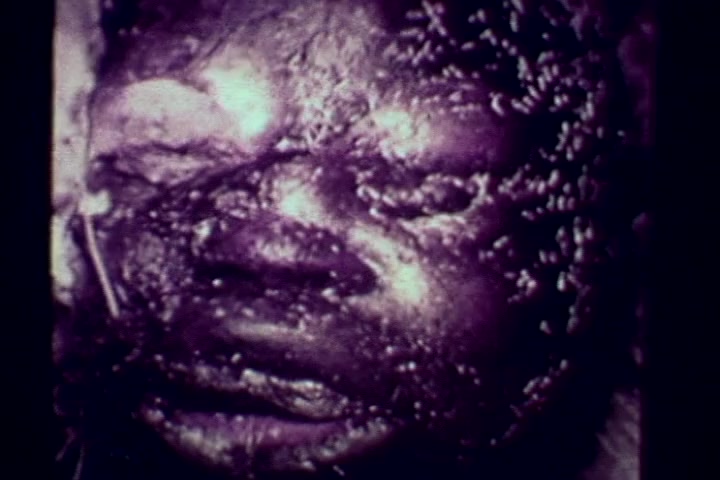
The still depicts a close-up of a deceased individual, showing a face marked by decay and insect activity. The image is stark and disturbing, typical of anti-drug messaging in the 1970s, highlighting the severe consequences of drug abuse. The visual serves to provoke a strong emotional response, warning viewers about the dangers associated with drug use.
00:28:51.730 — The still depicts a close-up of a deceased individual, showing a face marked by decay and insect activity. The image is stark and disturbing, typical of anti-drug messaging in the 1970s, highlighting the severe consequences of drug abuse. The visual serves to provoke a strong emotional response, warning viewers about the dangers associated with drug use.

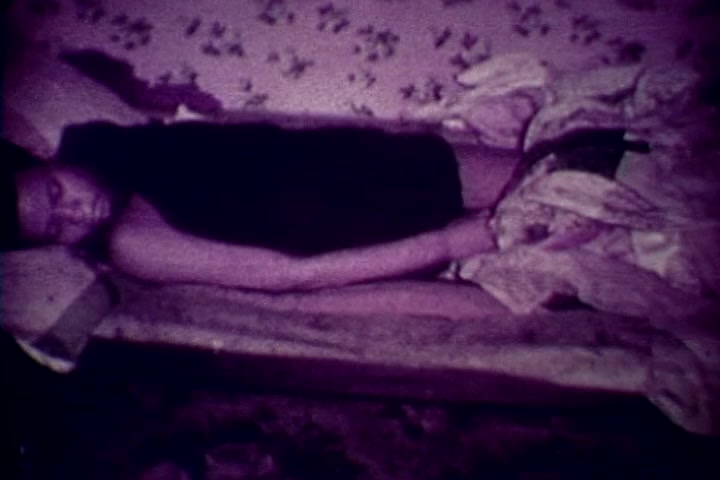
The still features a lifeless figure lying on a makeshift bed, surrounded by crumpled bedding. The scene is dimly lit with a purplish hue, contributing to a somber and unsettling atmosphere. The setting appears to be informal, suggesting a stark reality of drug abuse consequences, likely serving as a powerful visual commentary in the anti-drug film. The focus is on the impact of addiction and mortality, reflective of the film's message.
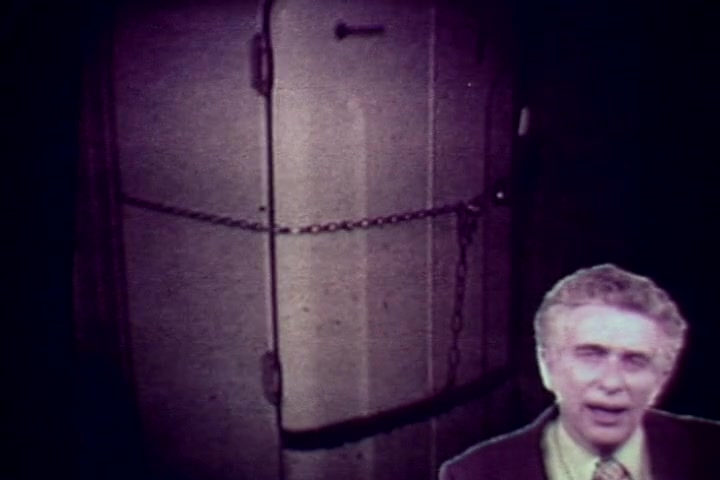
00:28:55.567 — The still features a lifeless figure lying on a makeshift bed, surrounded by crumpled bedding. The scene is dimly lit with a purplish hue, contributing to a somber and unsettling atmosphere. The setting appears to be informal, suggesting a stark reality of drug abuse consequences, likely serving as a powerful visual commentary in the anti-drug film. The focus is on the impact of addiction and mortality, reflective of the film's message.

The still features a dimly lit morgue scene, highlighting a locked, chain-bound refrigerator, which likely serves to store bodies. In the foreground, Tillman Hahn, a representative from the Medical Examiner's office, is speaking directly to the camera. His serious demeanor underscores the grim context of the film, which aims to address the harsh realities and consequences of drug abuse. The overall tone is somber, reflecting the film's anti-drug message from the 1970s.
00:29:09.748 — The still features a dimly lit morgue scene, highlighting a locked, chain-bound refrigerator, which likely serves to store bodies. In the foreground, Tillman Hahn, a representative from the Medical Examiner's office, is speaking directly to the camera. His serious demeanor underscores the grim context of the film, which aims to address the harsh realities and consequences of drug abuse. The overall tone is somber, reflecting the film's anti-drug message from the 1970s.

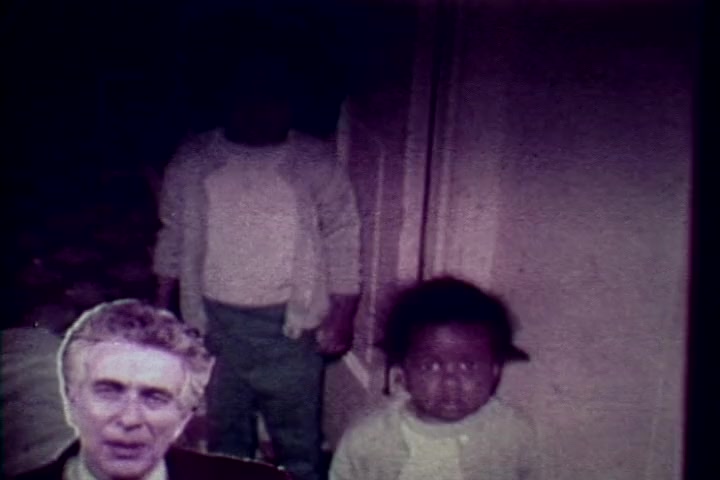
The still from 'Drug Abuse: Some Comments from the Morgue' features a somber scene, highlighting the emotional impact of drug abuse. In the foreground, a serious-looking man appears, likely Tillman Hahn from the Medical Examiner's office, who is discussing the consequences of drug use. In the background, two children are present, one obscured, adding a haunting element to the image. The muted colors and graininess typical of 16mm film emphasize the film's grim message and the toll of substance abuse on families.
00:30:05.203 — The still from 'Drug Abuse: Some Comments from the Morgue' features a somber scene, highlighting the emotional impact of drug abuse. In the foreground, a serious-looking man appears, likely Tillman Hahn from the Medical Examiner's office, who is discussing the consequences of drug use. In the background, two children are present, one obscured, adding a haunting element to the image. The muted colors and graininess typical of 16mm film emphasize the film's grim message and the toll of substance abuse on families.

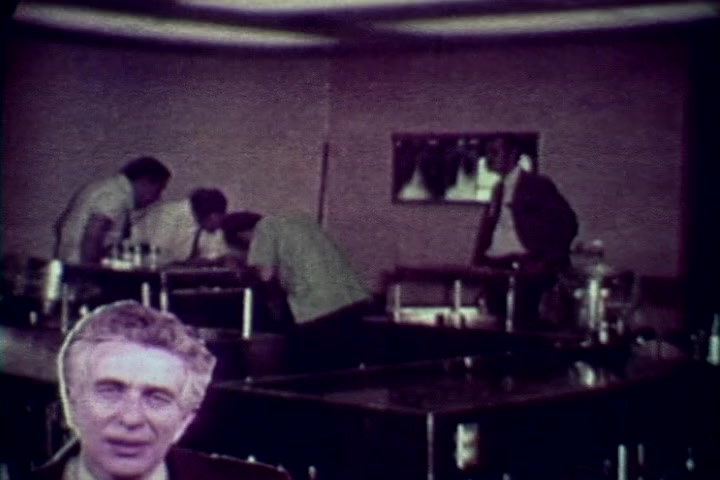
The still depicts a somber scene from the anti-drug film 'Drug Abuse: Some Comments from the Morgue.' In the foreground, a man, likely Tillman Hahn, is prominently featured, commenting on drug-related issues. Behind him, a group of four individuals in lab coats is gathered around a table, possibly examining evidence or conducting an investigation. The environment appears clinical and serious, reflecting the film's focus on the grim realities of drug abuse, likely emphasizing its consequences. The color tones are muted, characteristic of 1970s film quality.

00:30:06.038 — The still depicts a somber scene from the anti-drug film 'Drug Abuse: Some Comments from the Morgue.' In the foreground, a man, likely Tillman Hahn, is prominently featured, commenting on drug-related issues. Behind him, a group of four individuals in lab coats is gathered around a table, possibly examining evidence or conducting an investigation. The environment appears clinical and serious, reflecting the film's focus on the grim realities of drug abuse, likely emphasizing its consequences. The color tones are muted, characteristic of 1970s film quality.

The still appears to be a blank or plain light blue frame from the 16mm anti-drug film 'Drug Abuse: Some Comments from the Morgue.' This type of imagery might be used to convey a somber tone or to serve as a transition within the film, emphasizing the serious subject matter of drug abuse and its consequences.

00:31:43.001 — The still appears to be a blank or plain light blue frame from the 16mm anti-drug film 'Drug Abuse: Some Comments from the Morgue.' This type of imagery might be used to convey a somber tone or to serve as a transition within the film, emphasizing the serious subject matter of drug abuse and its consequences.

Film Transcript / Subtitles

music music music music music music A narcotic addict or a dangerous drug abuser will, in the course of his life, meet other addicts and other abusers. He'll probably meet the police, the district attorney, and a judge or two. If he's lucky, he'll meet a doctor or somebody in the rehabilitation field in order to help him. But he'll never meet me, because when I come into the picture, when I see him or her, they're dead. My name is Tillman Hahn. I'm an investigator for the Medical Examiner's Office of the City of Philadelphia. The Medical Examiner's Office is like the coroner in other cities, and we investigate all sudden, suspicious, and violent deaths. And you've all seen on television, any time the police come across a dead body, one of the first words out of their mouths are, Hey, somebody better call the coroner, or this looks like a case for the medical examiner. Well, I'm the guy they call. And we investigate all sudden, suspicious, unnatural deaths like homicides, suicides, accidents of all kinds, and also those deaths due to or related to narcotics. Now, we are in a verge of an epidemic, so we've been told, with this problem. But I feel that we're closer to a plague, and let me explain that. Eleven years ago, in 1960, the city of Philadelphia had just five deaths for the entire year. In 1970, ten years later, we had 184 deaths. And in 1971, that figure jumped to 274 deaths. And better than 75% were under the age of 30, and close to 50% were under the age of 21. Now, it's not my job to determine why somebody goes on this stuff. This is up to the psychologists and the psychiatrists. It's not my job to treat anybody that's using, because this is up to the doctors, or the people in the rehabilitation field. And lastly, it's not my job to arrest or punish anybody that's caught possessing, using, or selling drugs. Because this is up to the police. This is up to the judges. You see, I can offer no help to the people that I see. And I can offer no hope for the people that I see. Because they're beyond help. And they're beyond hope. Now, I'm sure you've all been made aware of the three types of drugs that are being abused today. The ups, or the stimulants. The downs, or the depressants. And the sideways. The hallucinogens, or mind benders. And you know what they are. And you know what they do. So, I won't go into it. And I'm sure in your travels, you've all seen films put out by the Bureau of Narcotics and Dangerous Drugs. By some of the large drug companies throughout the country. And even some of the larger high schools. These films are on drug abuse. And they're good. And they carry a message. And they are perfectly and technically prepared. The script is excellent. And everybody knows their lines. The music is fitting. And the scenery is great. And as I said, a perfect technical production. These slides that you're going to see, however, were not prepared in any such fashion. These slides are brutal. And some of these slides are sickening. But all of these slides are honest. Because this is what we see when we're called to the scene. This is the way people die in Philadelphia. And in New York. And in Chicago. And in Los Angeles. And all points in between. No heroics. No heroics. No glamour. Not like you see on television or in the movies. But these kids were alone. Deserted by their friends. And scared. This is an apartment in Center City, Philadelphia. Which was shared by two young men in their early 20s. There's nothing unusual about the place. It's fairly well kept. But there are some articles on the chair, which I'll get back to in a minute. One evening, one of the fellows came home from work. And found his companion in bed. At first, he thought he was asleep. And when he tried to rouse him and couldn't, he called the police. And as I said before, when the police find a dead body, we're called. Now, there's no evidence of any injury. And really nothing suspicious about the whole scene. But on the chair in the next room were 3,000 barbiturates and 1,000 other sleeping pills. Now, you know that no doctor prescribes such an amount for any one individual. And certainly no pharmacist filled such a prescription. These were stolen from the drug company warehouse to be sold on the street corners. But this is the way that this young man preferred to be seen in public. He was a transvestite. And we found that people with problems like this very, very often abuse pills. And it leads either to accidental death or suicide. There are enough pills in this one photograph to send a large portion of a city's population or one tremendous trip. There's everything. Up, down, sideways. Every pill imaginable. And believe it or not, we have found collections of this size and even larger coming from one apartment, from one individual who really had a problem. These are LSD caps confiscated by the police as they entered the city of Philadelphia. Now, the medical examiner's office has been unable to trace LSD in the bloodstream. It can't be found. But we do know that this 16-year-old was on a trip when he thought he could fly out of his third-story apartment window. This is another apartment. But in this apartment lived a 21-year-old man, his 20-year-old wife, his 18-year-old brother, and his brother's 18-year-old girlfriend. And one evening, while the husband and wife were out, the young fellow decided to experiment. So he took some white powder and some water and mixed it and drank it and got very, very sick. His girlfriend tried to help him. She held cold towels to his head and forced soda pop down his throat. But he got sicker and sicker. And finally, when she called the police, they found him on the floor next to the bed. And so did we. And this is what he experimented with. Speed. Monster. Meth. Methamphetamine has a variety of names. But it's all for a sane, very stimulating drug. As I was talking to the young lady, trying to get a story, she told me that as he got sicker and sicker, she tried to help him. She tried to talk to him. But she couldn't understand what he said. He just mumbled. But she did manage to ask him how he felt. And she also managed to hear him say, I feel like I'm out of this world. This is a little nightclub that was closed for repairs. And one evening, three enterprising young fellas decided to break in to see what they could take out. So they went up to the roof, chopped a hole in the roof, came on to the third floor. The only way they could get down to the second floor or to the first was by means of a dumb waiter, a little shaft that runs between the floors with a tray on it. But before they did, they all took a shot of speed for that extra strength, that extra courage. Only one of them didn't make it. And his friends left him. And he was found like this by the workmen when they came into work the next morning. We had to break away that whole section in order to remove his body. Not too long ago, a 16-year-old girl and her 15-year-old sister ran away from home. And they came into Philadelphia. And they met two very nice young men from the military. And they stayed at one of the Center City motels. The 16-year-old got herself a job as a go-go dancer in a club across the street. And they were both on speed. One Saturday afternoon before she went to work, she asked her boyfriend for a shot. You know, to help her get over her turn on the stage. And he obliged. About two and a half hours later, she came back and said, That one didn't work so good. Give me a double this time. And he obliged. And when she got sick, both young men took off. We still don't know who or where they are. And when we got there, we found the 16-year-old dead. And her 15-year-old sister also very sick. But fortunately, we were able to send the sister to a hospital where she was treated and sent back home to her family. And I understand she's trying to make a life for herself. This is a service station in northeast Philadelphia. The door to the men's room had been locked for two or three days. And finally, the elder decided to force it open. And he found this 23-year-old on the floor. Alongside him was a handful of red devils, or secanol caps, and a bottle of cocaine. Now, cocaine is listed as a narcotic by the Bureau of Narcotics and Dangerous Drugs. However, it has just the opposite effect. It's a very stimulating, exciting drug. The problem that we find with cocaine is that the down is very heavy. When a person is coming down from cocaine, in most cases, he crashes and gets very, very depressed. And we've had several cases of young people being arrested for the use of cocaine, put in a cell, and a couple hours later are found hanging, by one means or another, because of the severe depression. Five young people last year were on their way to attend a peace rally. And before they left, they decided they needed some extra vitality. So one of the fellas got out of the car, met his connection, and bought a spoon, a spoon of cocaine. And he ducked into the men's room to try it, before everybody else did. And he fell out. And you know what? He didn't buy cocaine. He bought tetracane. Oh, he thought he was buying cocaine, but he saw something else that killed him instantly. The needle is still in his pocket. You know what this is. It's the works, the fixings, for a junkie, a hophead, a user, a stuffer, a monkey driver. Oh, it's got a lot of names. All means the same. You have a belt, which is used as a tourniquet to bring up the vein. An eye dropper and syringe, a needle, which make up the syringe. And a bottle cap, which is used as a cooker. Here's some more of the same, with a spoon as the cooker. But look at the filthy conditions under which this stuff is prepared. You know, a user doesn't walk into a clean drugstore, walk up to the counter and say, may I have some heroin, please? And expect to get a carefully compounded, chemically pure product. A user buys it from somebody who bought it from somebody, who bought it from somebody, who bought it from somebody. And in doing analysis of this stuff that's supposed to be skag or heroin, the police chemical lab and our own labs have come up with everything from pure quinine, pure sugar, salt, bicarbonate of soda, ground-up chalk, talcum powder, and this stuff is put into people's veins. This equipment was taken from a walking shooting gallery. Why, he had all these syringes loaded, ready for action. And all a user had to do was stop him on the street, duck into a hallway or an alley, pay his bread, get his fix, and walk away. And the deal is over. If he could walk away. And some of the sidelights that we find with heroin, the gun, which is used to get money to make a purchase, the empty bags, and some of you may remember this game that was popular a couple years ago. It's called Instant Insanity. Something else we see. Salt. Now, a lot of users believe that the best way to stop a fellow from ODing is to inject salt into his veins. Well, I would imagine in a hospital accident ward under sterile conditions, they do use a saline solution. That's chemically pure salt and sterile water. And it does combat shock. I doubt very, very seriously if store-bought salt will do the same trick. This 16-year-old fellow came home from school, locked himself in the bathroom, and when he didn't come out, after about an hour, an hour and a half, his mother became worried and forced to open the door. You know, we find that the bathroom or the bedroom is the most common place for somebody to get a fix because it's usually the most private. Now, heroin is a narcotic, and a narcotic is a depressant, and any depressant slows down the body functions. When the lungs do not work at their full strength and capacity, fluid forms, and when death occurs, this fluid is forced out of the mouth or the nose in a foamy white material. It was a beautiful, sunny Saturday morning when this 16-year-old was found in the back of his mother's car. Now, in doing the investigation, we talked to his family and his friends and his teachers, and they all told us the same thing. Never used a needle before, they said. Oh, he might have popped a couple of pills. He might have gone on a couple of trips. He might have even sniffed glue, but he never used a spike. Well, we looked at the vein in his arm, and we found only one single needle mark, just one hit. There's no scarring. There's no dead tissue. So we were inclined to believe his family and his friends and his teachers could have been his very first shot, but not so. This cat, this fellow was spending $100 a day, $100 a day, seven days a week, to buy heroin. Now, he was a pusher and he was a musician, and he made very, very good money, but you can see that the money didn't go to buy a place to live, put clothes on his back, or put food in his belly. It went to feed a habit. And there he is with a belt still around his arm and the needle put away for safekeeping. There's a young fellow that called his girlfriend. He told her he'd be over in about an hour to take her to a ball game. And when he didn't show up, she became worried and called his uncle who broke into the house. His parents were away. But here's a young fellow that should be out whining his girlfriend, dining his girlfriend, going to parties, games, having a great time. Instead, he's on the bed, he's cold, he's stiff, and he's dead, and the cause is not far away. Another young fellow, found by his father this time in the bathroom. Another young fellow in the prime of life, with his best friend by his side. You know, it was a bitterly cold morning, about five o'clock, when a police car was cruising down the street, and it saw the car at the left, standing at the curb with the motor running, and a young fellow behind the wheel, and the doors open. Now, from the house on the sidewalk, the police saw two other fellows dragging the body of this third fellow out. The police stopped, called for them to halt, and the two guys just dropped the body and ran. Well, they were later caught, and we found out that this 18-year-old had died from heroin, and his friends were going to put him in the car and take him out to a wooded section in the park and dump his body near the river. When we examined him, he wasn't shot, he wasn't stabbed, he wasn't beaten. There's no injury at all, really, except a couple of scrape marks on his belly, but he does have a very fresh needle mark. And when we walked into the house, nothing seemed wrong until we moved the lawnmower aside and found a box of lozenges, which didn't contain lozenges at all, but a traveling kit, a home away from home. Two days, two days after this fellow was 17 years old, he joined the Marine Corps. He was sent to Camp Lejeune, North Carolina, for boot camp, and he spent, I guess, about 12 weeks in rough, tough, vigorous training and finally got himself a 72-hour pass and he decided to come home. We found that his plane landed in Philadelphia at a quarter of six on a Friday night. These pictures were taken at 7.30 the same night. He was met at the airport and taken to a welcome home party by his friends. and when he wore out his welcome, they tossed him on the fire tower of the building. In this bag is a 21-year-old man. Now, the night before, this man and his brother and his two best friends each chipped in $5 a piece and bought two dime bags of skag. They mixed it up and they all took a fix and they all used the same needle. Now, he was not the first one to use the needle. He was not the last one to use the needle. But he was the one to die. And when he did, his friends and his brother threw him away. Now, I'll tell you something. We really don't know why people die from heroin. In some cases, it's an overdose or an OD and that's when the percentage of heroin that's used is much greater than the body is used to. And death occurs. An overdose. But in most cases, we find that the amount used is no greater than the amount used the time before whether it be that morning or the night before and yet people die. And we're starting to think, at least the doctors are starting to entertain the idea that at one point in time a reaction sets in. A sudden, overwhelming reaction to this stuff sets in and the body just refuses to accept it. Now, this can come at the first or second shot, the tenth or fifteenth, the hundredth or even the thousandth because the oldest addict we have is a fellow 68 years old, the youngest, a boy of 12. This fellow's wife was in the hospital. She had just given birth to their first baby and after spending two or three days she called him up and said, the doctor's telling me I can come home. Why don't you come down and get me? And he said, no, you better take a cab because I have some important things to do around the house. Well, can you imagine how his wife felt as she walked into the apartment with a brand new baby in her arms to see the important business, the terribly important business that kept her husband that kept her husband from him? This young lady was telling me a very interesting story. It seems that her boyfriend had asked her to take him to a place in northeast Philadelphia so that he could meet a friend. And as they approached the section, he said, look, let me out at the corner and drive around the block and I'll be here when you get back. Well, it took her about eight or ten minutes to get around the block and sure enough once she got back there he was standing on the curb with his eyes shut weaving back and forth. She had to help him into the car and he sat down with his head against the back and never said a word, had his eyes closed. She drove him home to her place, helped him out of the car, into the house, up to the second floor apartment, through the apartment and into the bedroom. And all this time he never said a word. He got into the bedroom, and he sat down on the bed and finally said, man, what a high and just toppled right over. Well, instead of calling for help, professional help, a doctor, a nurse, an ambulance, the rescue squad, the police, she called two friends who came over, dumped his body in the bathtub and ran the cold water on his face as if that would help him with his problem. This looks like a very peaceful domestic scene, doesn't it? Young fella taking an afternoon nap with his friend. It looks peaceful and domestic until you look down the side of the bed. You see, people die very quickly with heroin poisoning sometimes. Sometimes so quickly that when we get there, the needle is still in the arm, as in this case. or this case. Or this case. But there's also hepatitis to worry about because there are very few users of the needle that haven't had a bout with serum hepatitis. It's an infection that's caused by a dirty needle. This is Rocco. Rocco was on a four to six bag a day habit for a couple of years and he was getting pretty fed up of being arrested by the police for stealing, for copping, for possessing. And one afternoon he went to visit his brother-in-law. His brother-in-law said, Rocco, I have just the greatest thing in the world for you. It'll take you off heroin right away. Try it. You'll like it. It's called methadone. Well, without medical attention, without medical advice or supervision, Rocco tried it. And we really don't know if Rocco liked it or not. Now methadone is a synthetic narcotic that's used to wean away the use of heroin by addicts because it sort of blocks the effect of heroin. It's being used in a great many cities today and there are some good results. as I said before, addicts travel with other addicts. And when something happens, rather than get involved, rather than have to answer embarrassing questions, his friends will take him somewhere and dump his body like on the, under a bridge near the railroad tracks or the steps of a vacant house or the porch of a vacant building. This fellow was taken six miles from where he got his shot and you can see by his arms that he was no stranger to the needle and you can see by his shoes that he was dragged to where he was finally deposited. But the next victim's friends were just a little more considerate because not only did they take him to the airport area and dump his body there, they took his wheelchair along with him because he was paralyzed and unable to walk for four years. And you can see by his shoes that they're brand new and hardly ever used. But you can see by his face that his friends didn't care what happened to him with the mice and the rats and the dogs out in an open field. Not too long ago, a shooting party was taking place and this 26-year-old died. And again, rather than become involved, his friends took him down in the basement and wrapped him in tarpaulin and poured lime on him. Now, I guess they read somewhere that lime will disintegrate a body. But it didn't. So they hauled him upstairs again and threw him out in the back alley. Maybe this time the trashman would take him. Maybe he'd get up and walk away by himself. I really don't know. But he didn't get up and the neighbors got wind of him and we were called. And this is the way we find them in a good many cases from heroin deaths, deserted by their friends. Not like on television. This happens to be one of the few shots I have of women in this collection. And there's really nothing unusual about it. A young lady found dead in bed with a drinking glass containing a needle by her side and in back of her a locked refrigerator. Now, that's not for Weight Watchers, you understand. This is where she kept her supply from her two little girls. Now, when we were at the scene, we tried to talk to these young ladies and we found that they could smile and giggle and cry and whimper but they couldn't talk. And we found out later that the reason that they couldn't talk was because they had never been spoken to. They had been confined to the little room in the back with very little food, no toilet, and no companionship. But let me assure you they are in much, much better hands today. But as I said when I started, I can offer no help to these people and I can offer no hope to these people because when I see them they're either at the scene of death or in the autopsy room with a morgue. But somebody better help and somebody better offer some hope and a lot of things have to be changed or we're in for a great deal of trouble. Let me add one thing. In all my years of experience I have never heard of anyone being forced down and a needle popped into the vein or a pill popped down under the throat. The decision to take drugs is ultimately an individual decision. There's a tremendous amount of pressure I'll agree but in the final analysis it's a single decision that you and you alone have to make and it's your decision so think about it. you to be in a single decision use power to get and I'll move aizado and you can get a income or a native or a exempt or a redundantly if you could see