Feelings of Depression (1950) | National Film Board of Canada
Shotlist & Visual Analysis

00:00:00.000 — The still from 'Feelings of Depression' (1950) likely captures a moment that emphasizes the emotional weight of the protagonist, John Murray. It may depict him in a contemplative or despondent state, illustrating the film's focus on his struggles with mental health. The setting and composition would reflect post-war societal attitudes towards depression, aiming to educate viewers about the emotional challenges faced by individuals like Murray. This film serves as a historical piece, showcasing early awareness of mental health issues in Canada.

00:00:03.170 — The still from 'Feelings of Depression' (1950) presents a subdued, muted background, evoking a sense of melancholy reflective of the film's themes. As an educational dramatization, it focuses on the emotional struggles of John Murray, a conscientious businessman, highlighting issues related to depression in a post-war context. The film aims to raise awareness about mental health and early emotional awareness, making it a significant piece in the history of educational cinema in Canada.
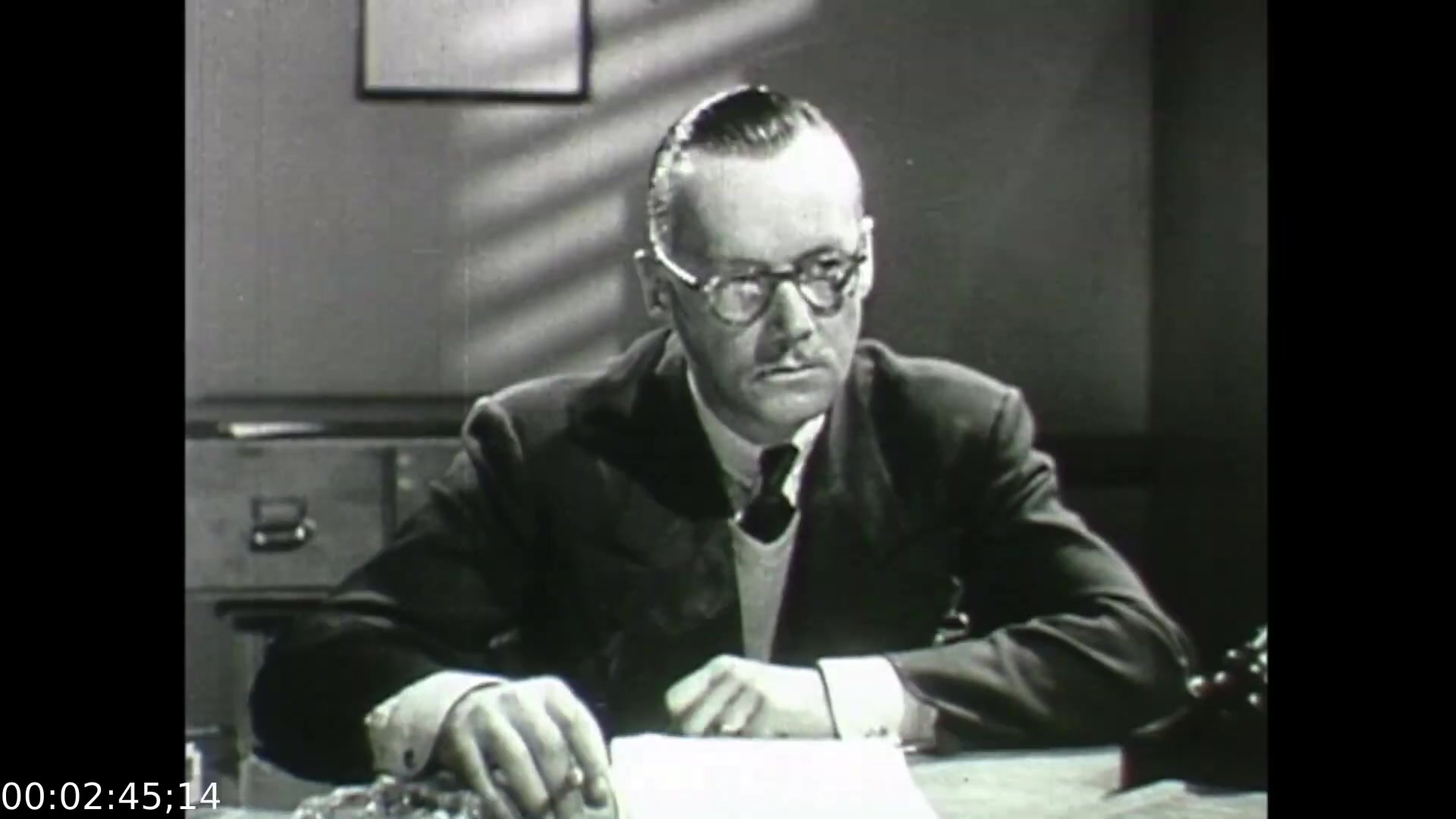
00:02:48.668 — The still from 'Feelings of Depression' (1950) features a somber-looking man, identified as John Murray, sitting at a desk in a dimly lit room. He is dressed in a formal suit and tie, wearing glasses, and appears contemplative or troubled as he gazes down at the document in front of him. The scene captures a moment of introspection, reflecting the film's exploration of mental health struggles and the impact of depression on everyday life. The use of lighting and modest office setting underscores the seriousness of the topic.
00:03:43.056 — The still from 'Feelings of Depression' (1950) depicts a visually abstract representation, likely using blurred and distorted imagery to convey the emotional turmoil experienced by John Murray, the film's protagonist. This stylistic choice reflects the complexities of depression, illustrating a sense of confusion and despair. The monochromatic palette enhances the somber tone, aligning with the film’s educational aim to raise awareness of mental health issues in a historical context.
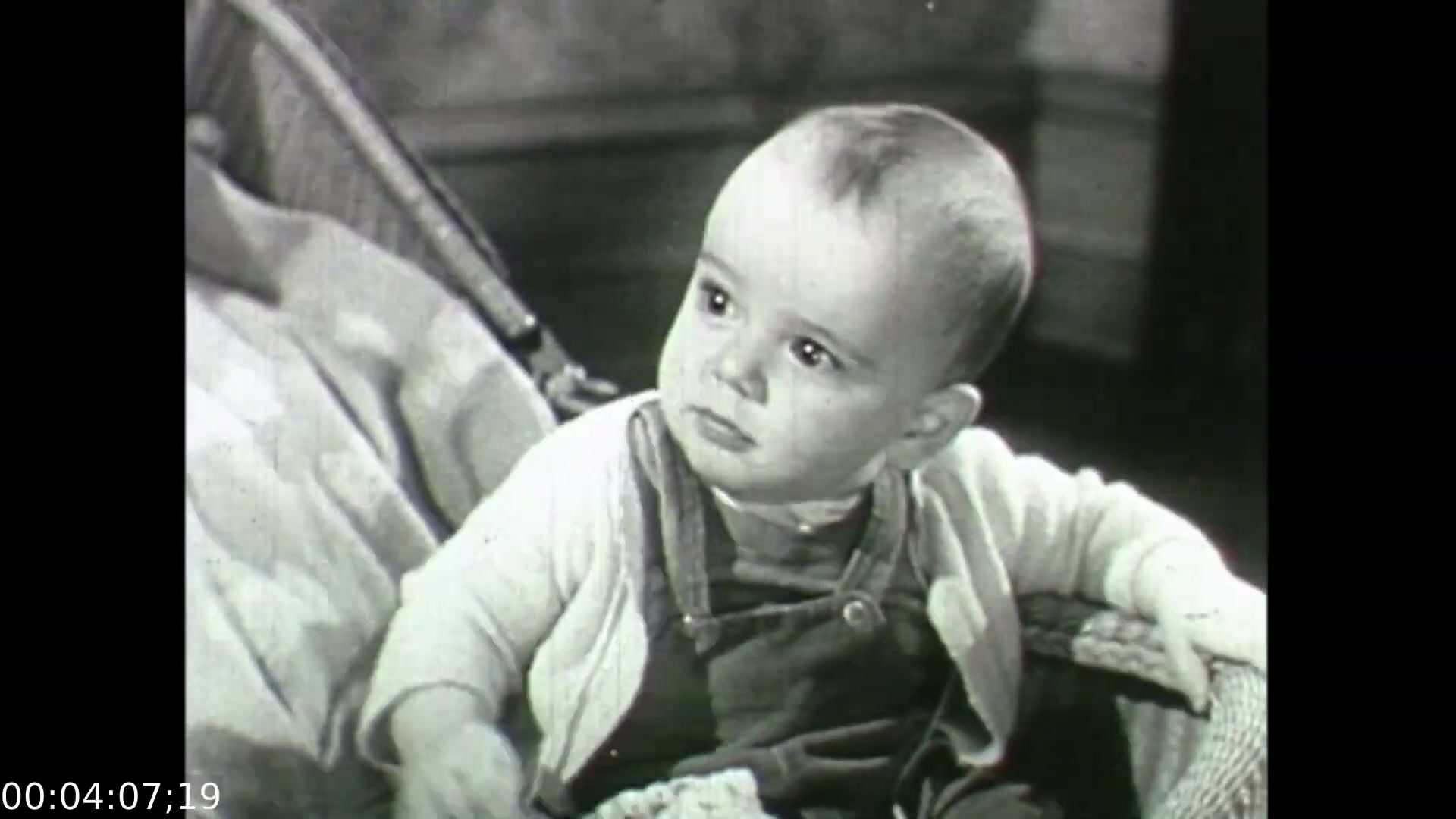
00:04:10.751 — The still from 'Feelings of Depression' (1950) features a baby with a contemplative expression, seated in a wicker chair. The simplicity of the child's clothing and the background hints at the mid-20th century setting. This image symbolizes the innocence and vulnerability associated with childhood, contrasting with the film's focus on adult struggles with depression, particularly through the character of John Murray. The juxtaposition highlights the emotional impacts of mental health across different life stages.
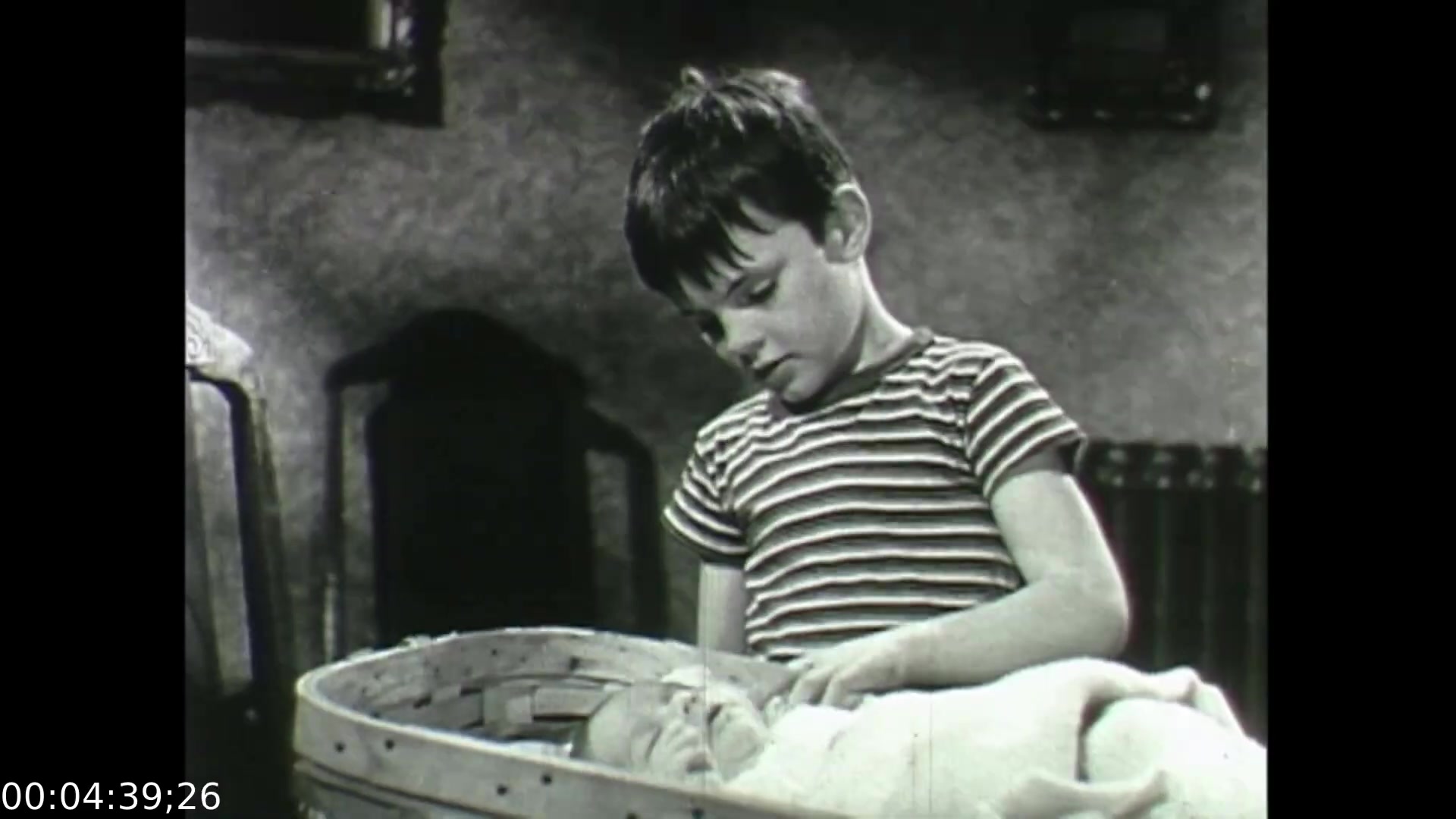
00:04:43.049 — The still from 'Feelings of Depression' depicts a young boy, dressed in a striped shirt, gently looking down at a sleeping baby in a cradle. The scene is set in a modest room, suggesting a familial or domestic environment. The boy's expression conveys a sense of care and contemplation, reflecting the emotional themes explored in the film. This moment could symbolize innocence and the complex feelings surrounding familial responsibilities, paralleling the adult struggles with depression that the film addresses.
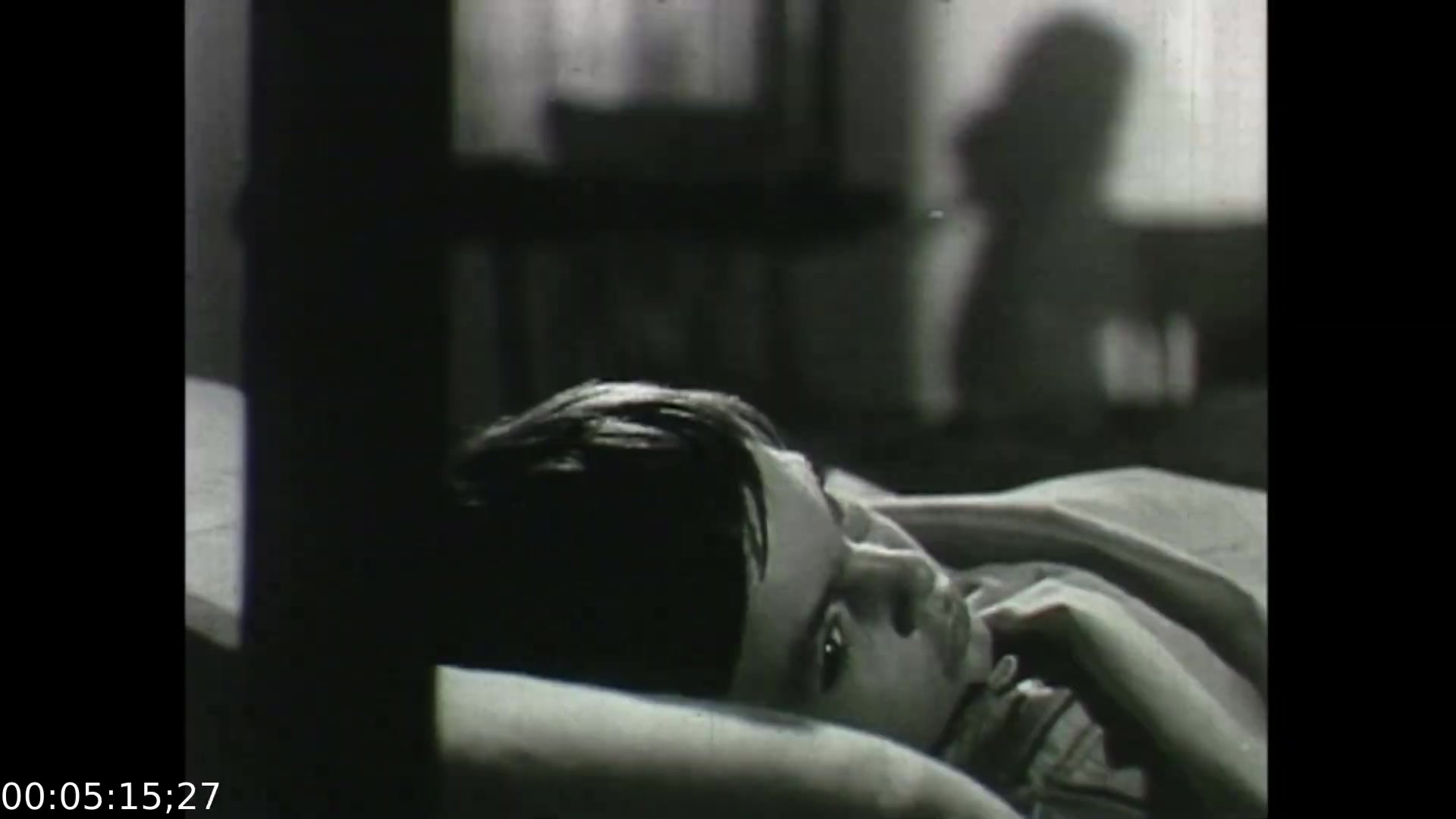
00:05:19.052 — The still from 'Feelings of Depression' features a young boy lying in bed, seemingly deep in thought or distress. The lighting and stark black-and-white imagery enhance the sense of somber contemplation. This moment likely illustrates the internal struggle associated with depression, reflecting themes of emotional turmoil and isolation. The film addresses the impact of mental health on individuals and their families, set against a historical backdrop of limited understanding and resources for mental health issues in the 1950s.
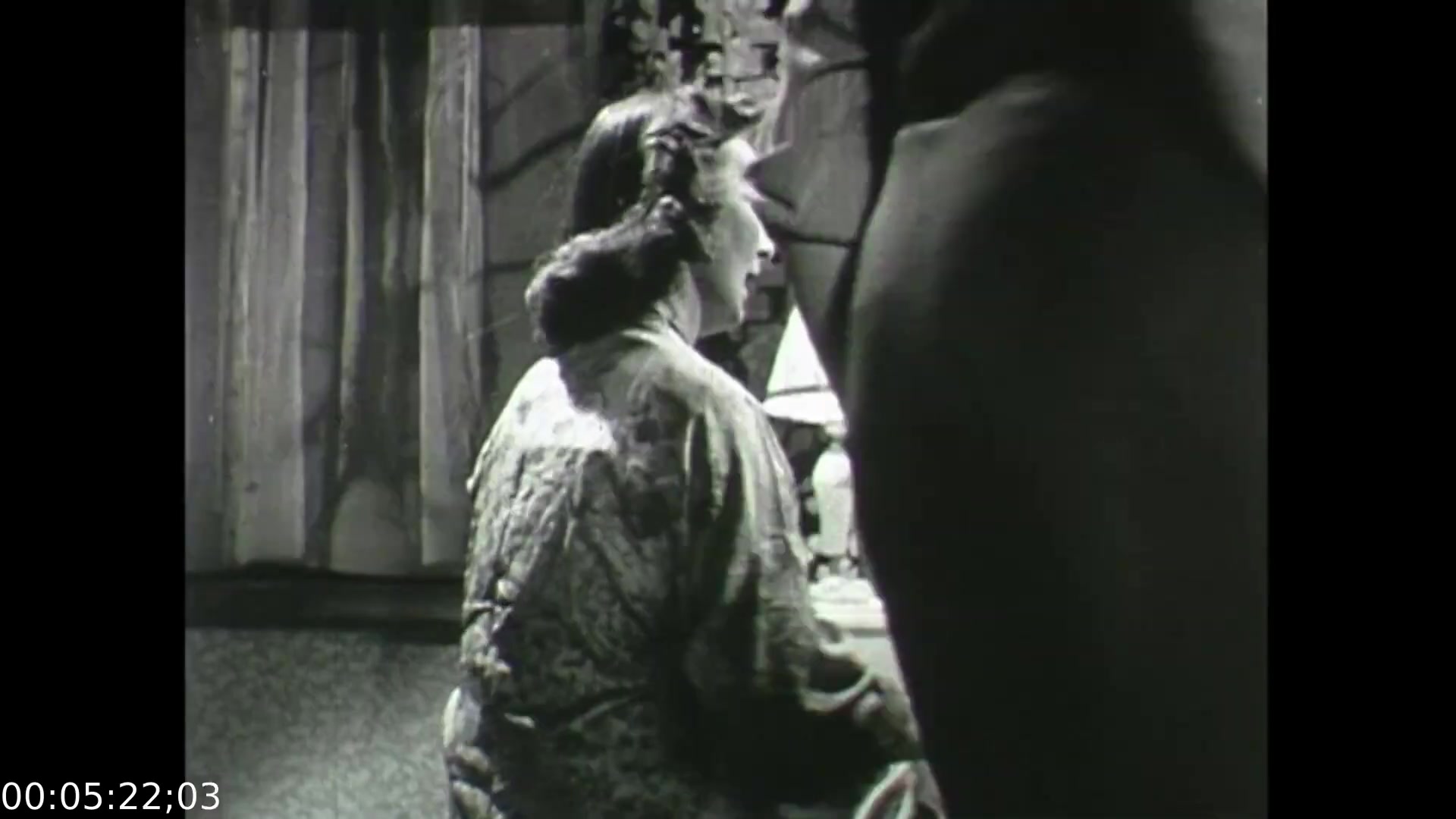
00:05:25.258 — The still from 'Feelings of Depression' depicts a woman turned slightly away from the camera, sitting at a desk with a lamp. The setting has a somber atmosphere, emphasizing the themes of emotional struggle and introspection. Shadows play a significant role, hinting at underlying tension and the gravity of the subject matter. The film aims to educate viewers about the complexities of depression through personal narratives.
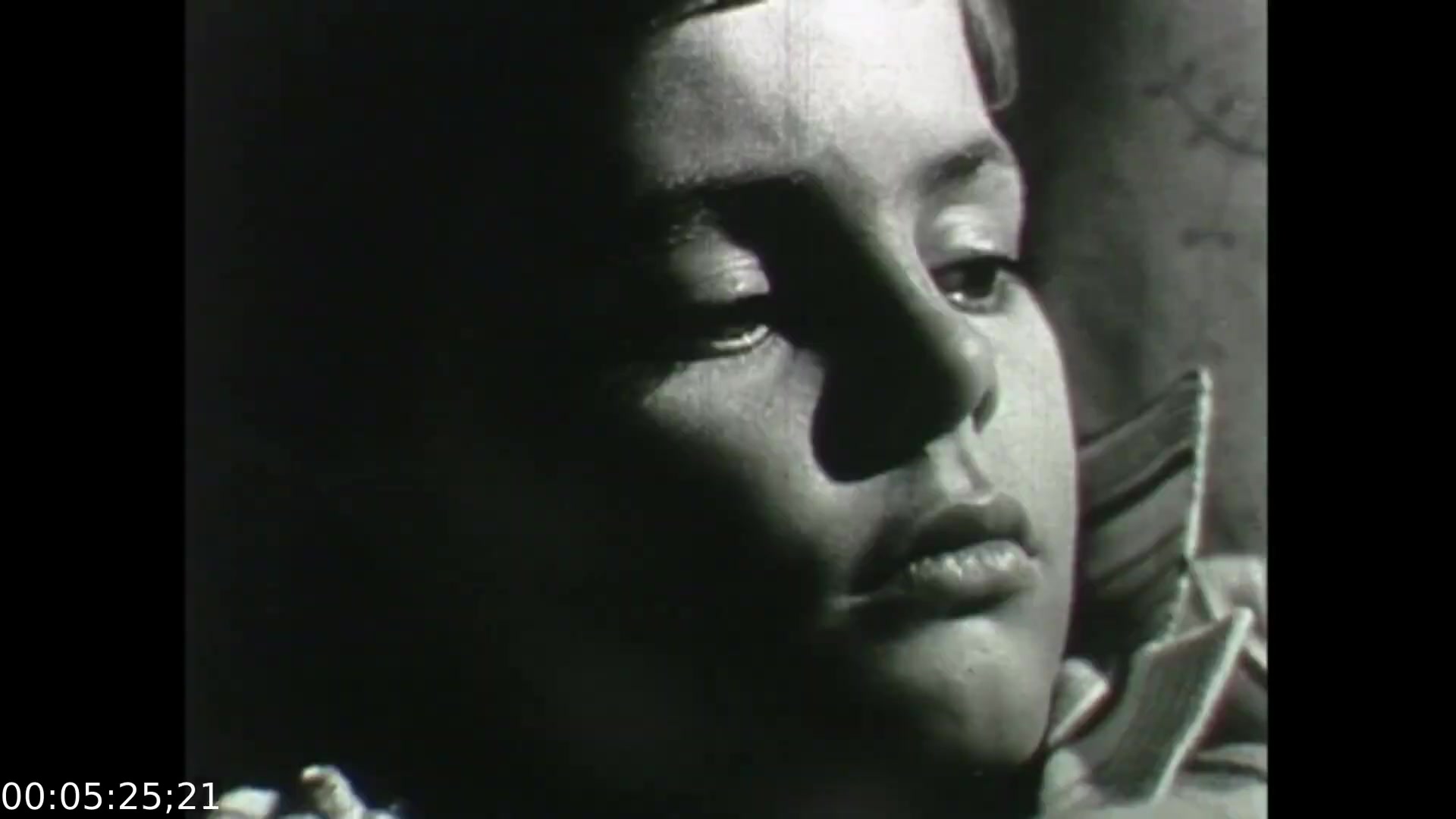
00:05:28.829 — The still from 'Feelings of Depression' presents a close-up of a young boy, evoking a sense of melancholy. His expression is contemplative, with half-closed eyes and a solemn demeanor, suggesting inner turmoil. The black-and-white format enhances the emotional weight of the scene, aligning with the film's exploration of depression through the narrative of John Murray, emphasizing the profound impact of psychological struggles. This moment captures the film’s aim to educate viewers on the complexities of mental health.
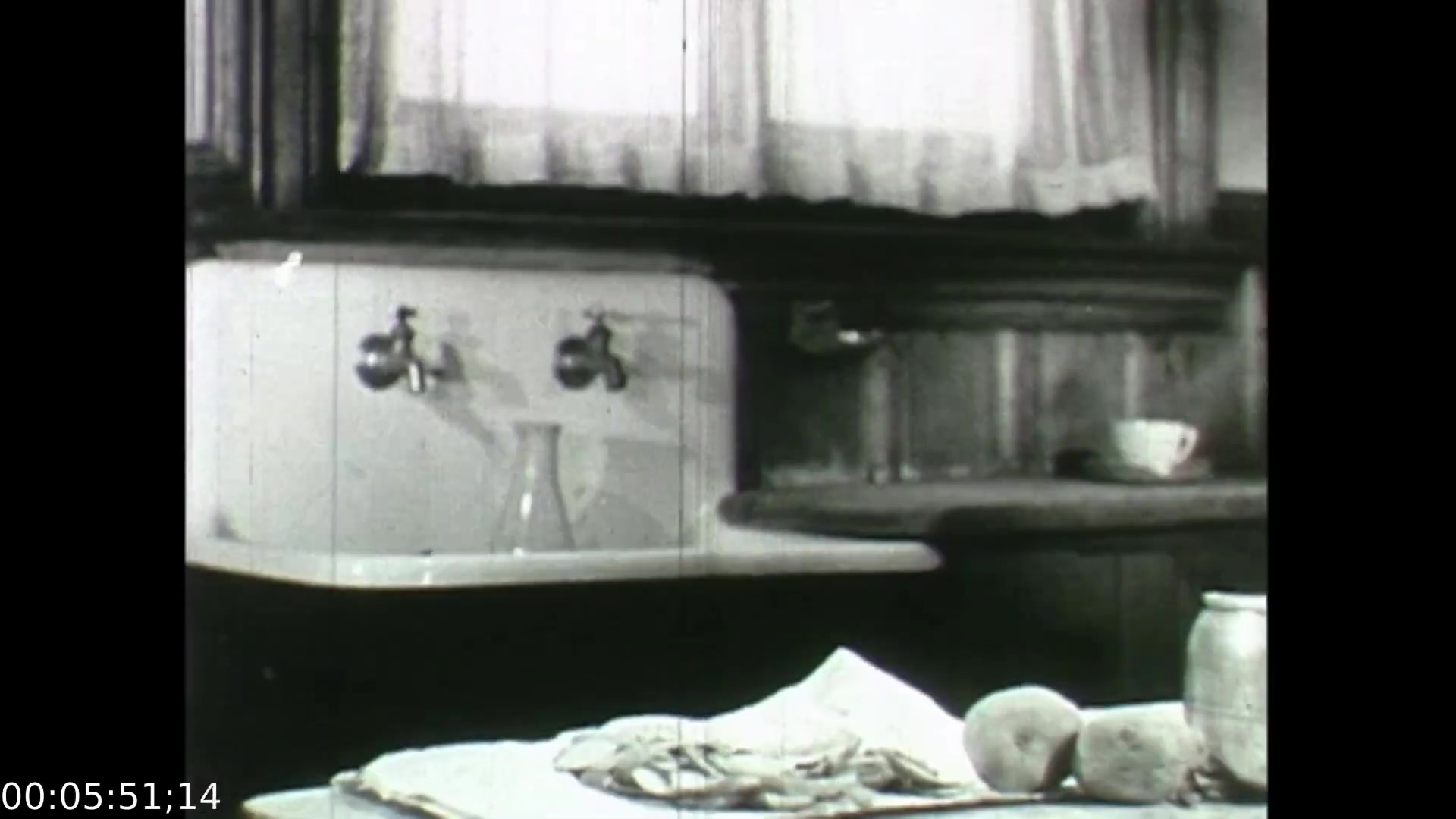
00:05:54.621 — The still from 'Feelings of Depression' captures a domestic kitchen setting, emphasizing simplicity and functionality. A white countertop hosts a variety of items including a jar, a glass container, and fruit, suggesting a sense of everyday life. The muted color palette and vintage aesthetic reflect the era of the film, highlighting the emotional isolation of the protagonist, John Murray. This setting serves as a visual metaphor for the struggle with mental health portrayed in the film, juxtaposing ordinary domesticity with underlying emotional turmoil.
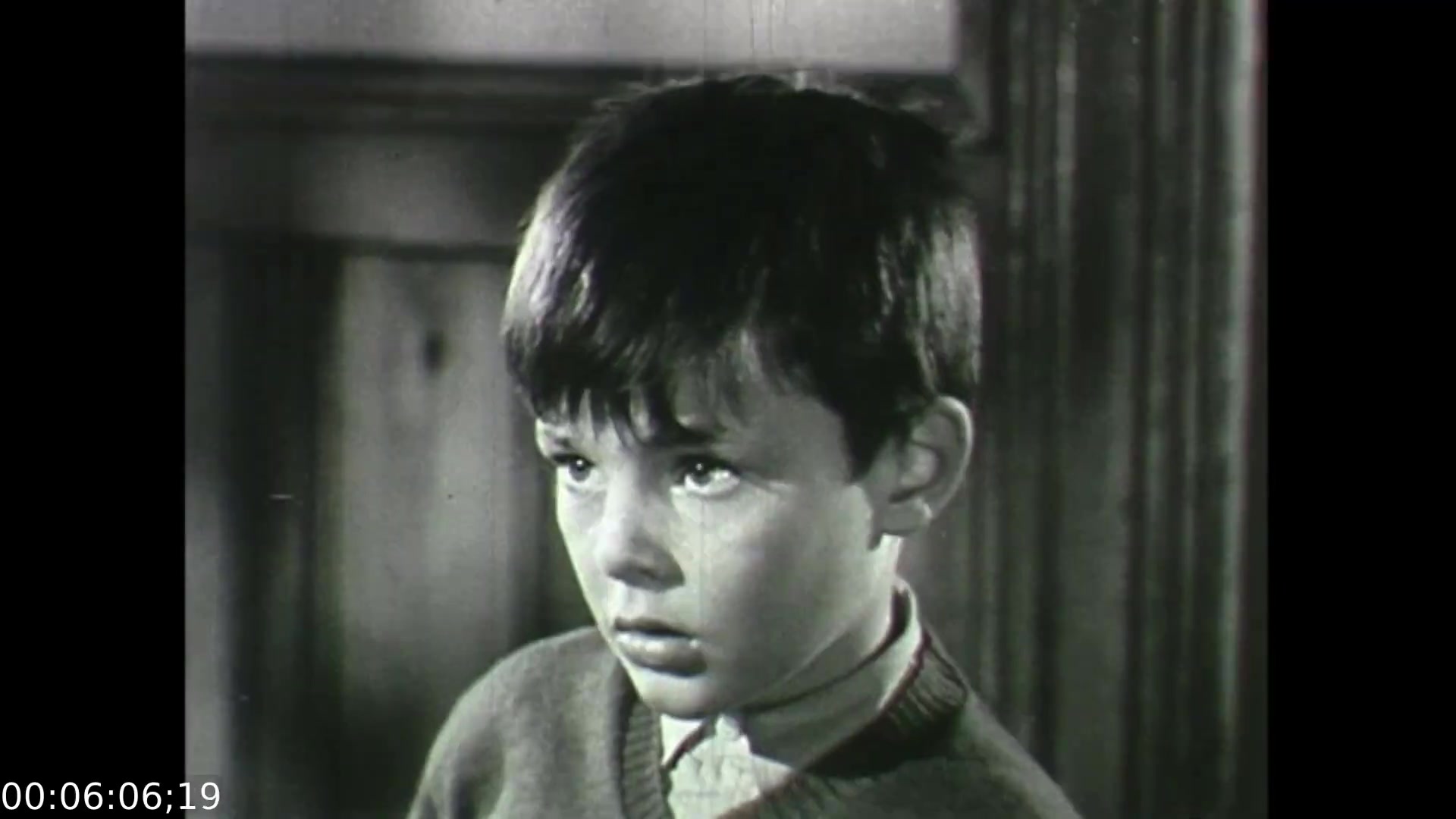
00:06:09.769 — The still from 'Feelings of Depression' (1950) features a young boy with a serious expression, reflecting a sense of concern or confusion. His attire suggests a 1950s setting, and the black-and-white film emphasizes the emotional gravity of the moment. This scene likely illustrates the film's exploration of the impact of mental health struggles on family dynamics, highlighting the boy's emotional response to his surroundings, specifically relating to the challenges faced by his father, John Murray.
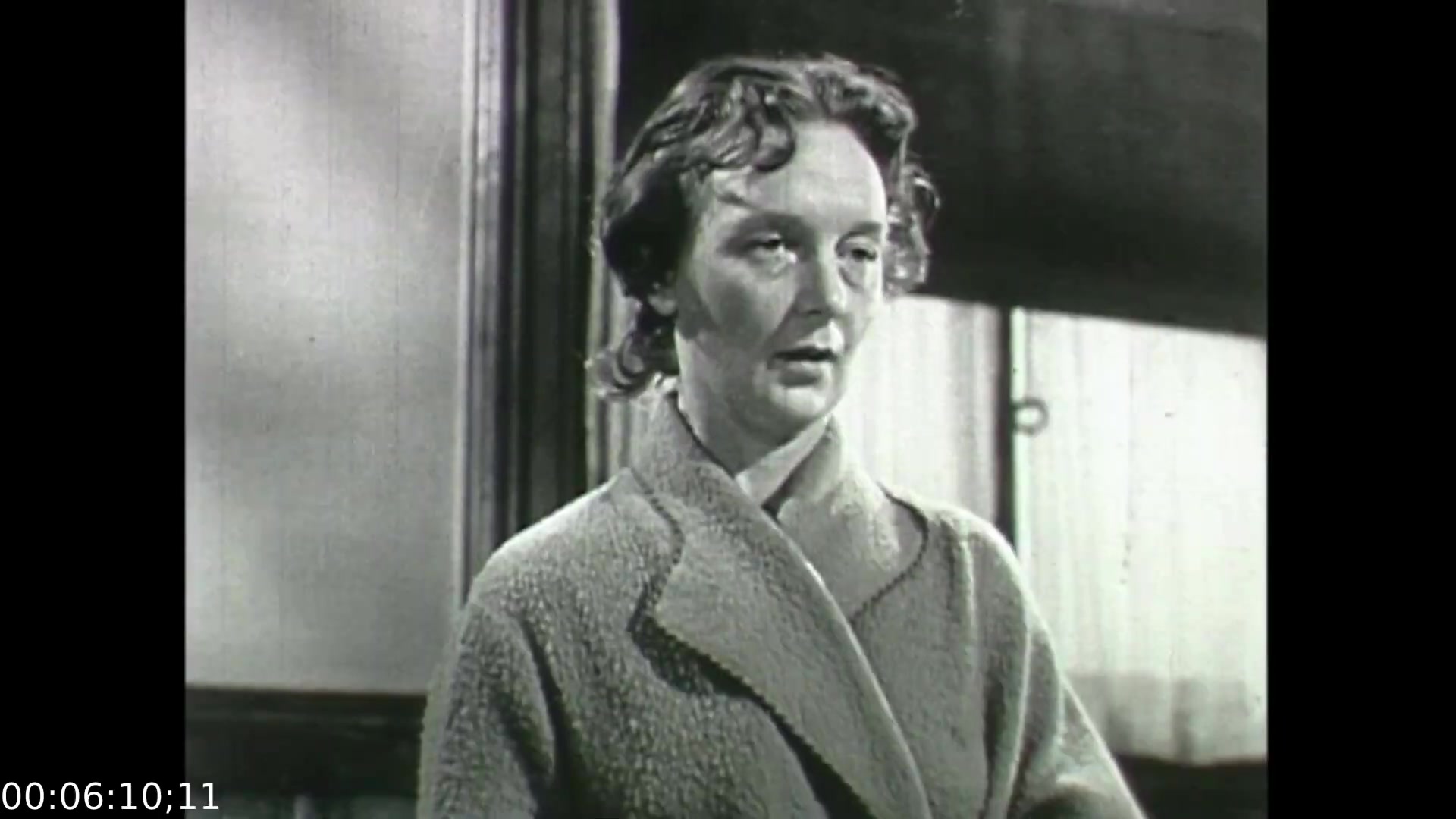
00:06:13.506 — In this still from 'Feelings of Depression' (1950), a woman appears to be in a state of emotional distress. Her facial expression suggests vulnerability and introspection, reflecting the film's exploration of mental health issues. The setting likely indicates a clinical or therapeutic environment, aligning with the film's objective to educate viewers about depression through the narrative of John Murray, a businessman dealing with despondency. The overall mood conveys the seriousness of the subject matter, emphasizing the challenges faced by individuals grappling with mental health.
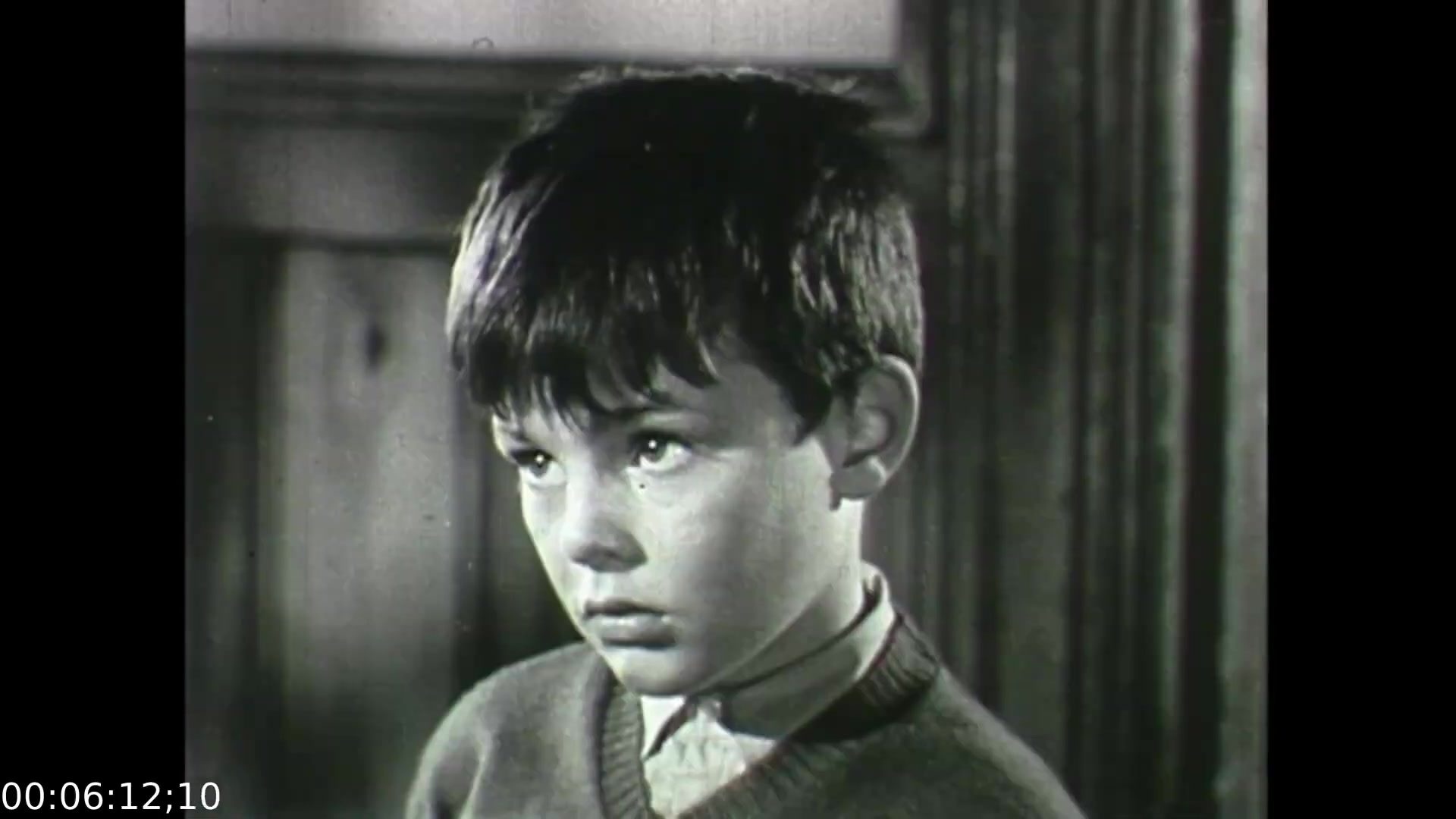
00:06:15.442 — The still from 'Feelings of Depression' presents a young boy with a serious expression, indicating a sense of concern or reflection. His gaze suggests he is involved in a significant moment, possibly related to the themes of the film. The black-and-white format enhances the emotional gravity of the scene, typical of the era's educational dramatizations. This film aims to shed light on mental health, particularly the impacts of depression on individuals and their families.
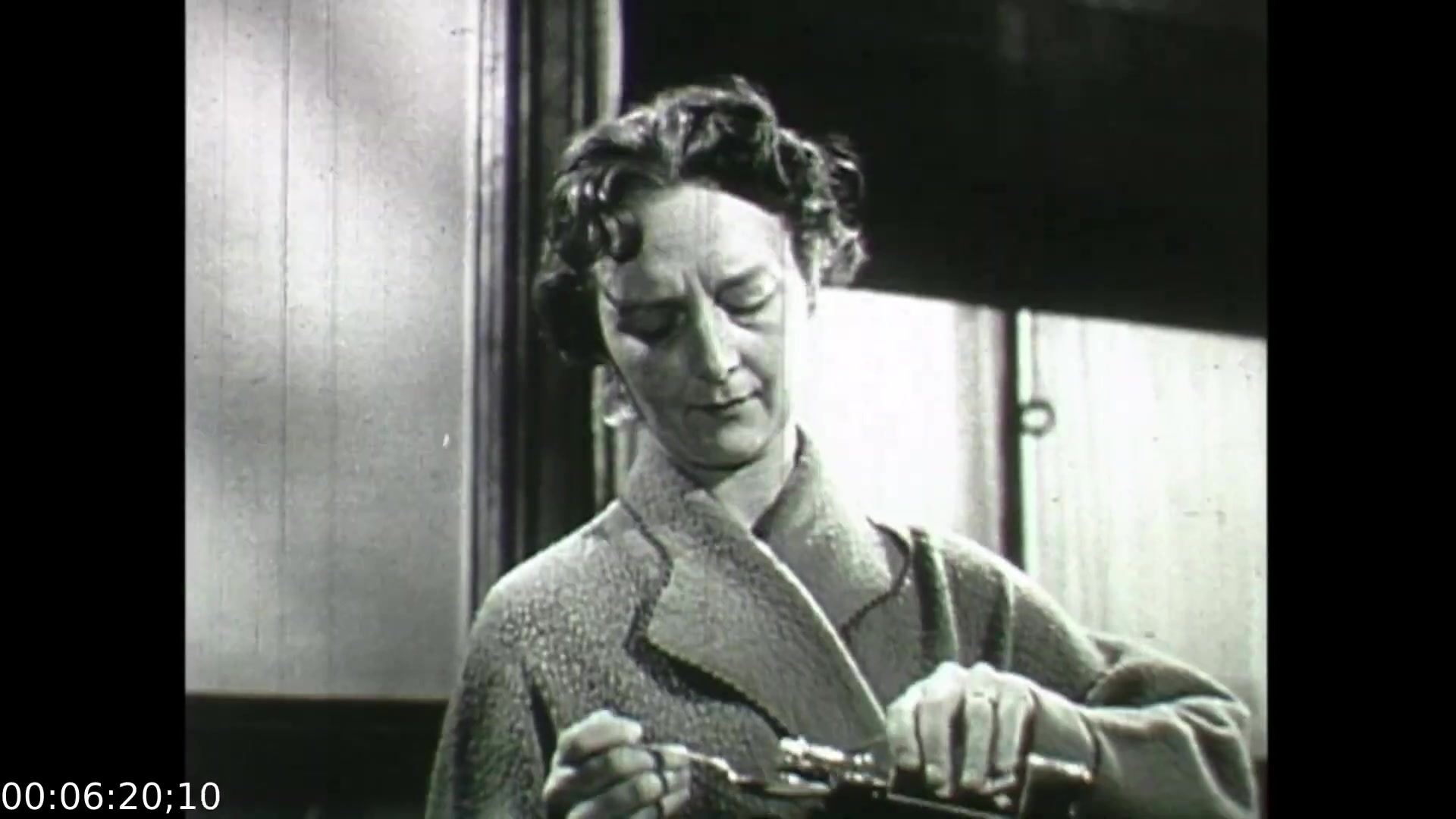
00:06:23.450 — In this still from 'Feelings of Depression' (1950), a woman is depicted focused on a task, likely related to home or caregiving. Her expression suggests introspection or concern, reflecting the emotional undertones of the film, which explores the effects of depression on individuals and their families. The film serves as an educational piece, portraying the societal challenges around mental health in the 1950s.
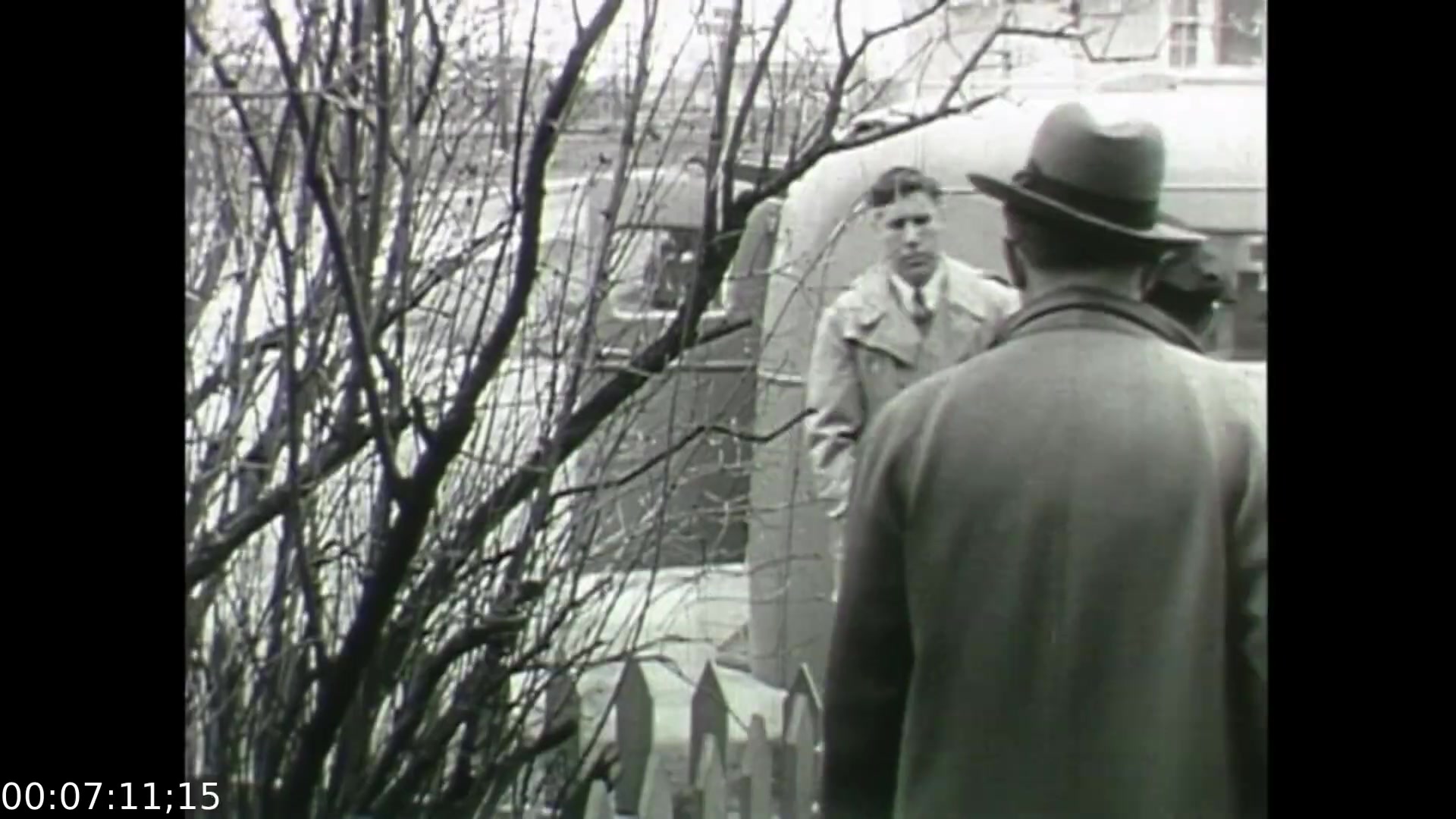
00:07:14.601 — The still from 'Feelings of Depression' depicts a solemn moment between two men, set against a backdrop of bare trees and a picket fence. One man, dressed in a trench coat and hat, faces another in a lighter coat, conveying a sense of tension or concern. The black-and-white aesthetic enhances the film's exploration of emotional struggles, reflecting the somber themes of depression and human connection in post-war society. This scene illustrates the personal interactions within the larger context of mental health issues during the 1950s.
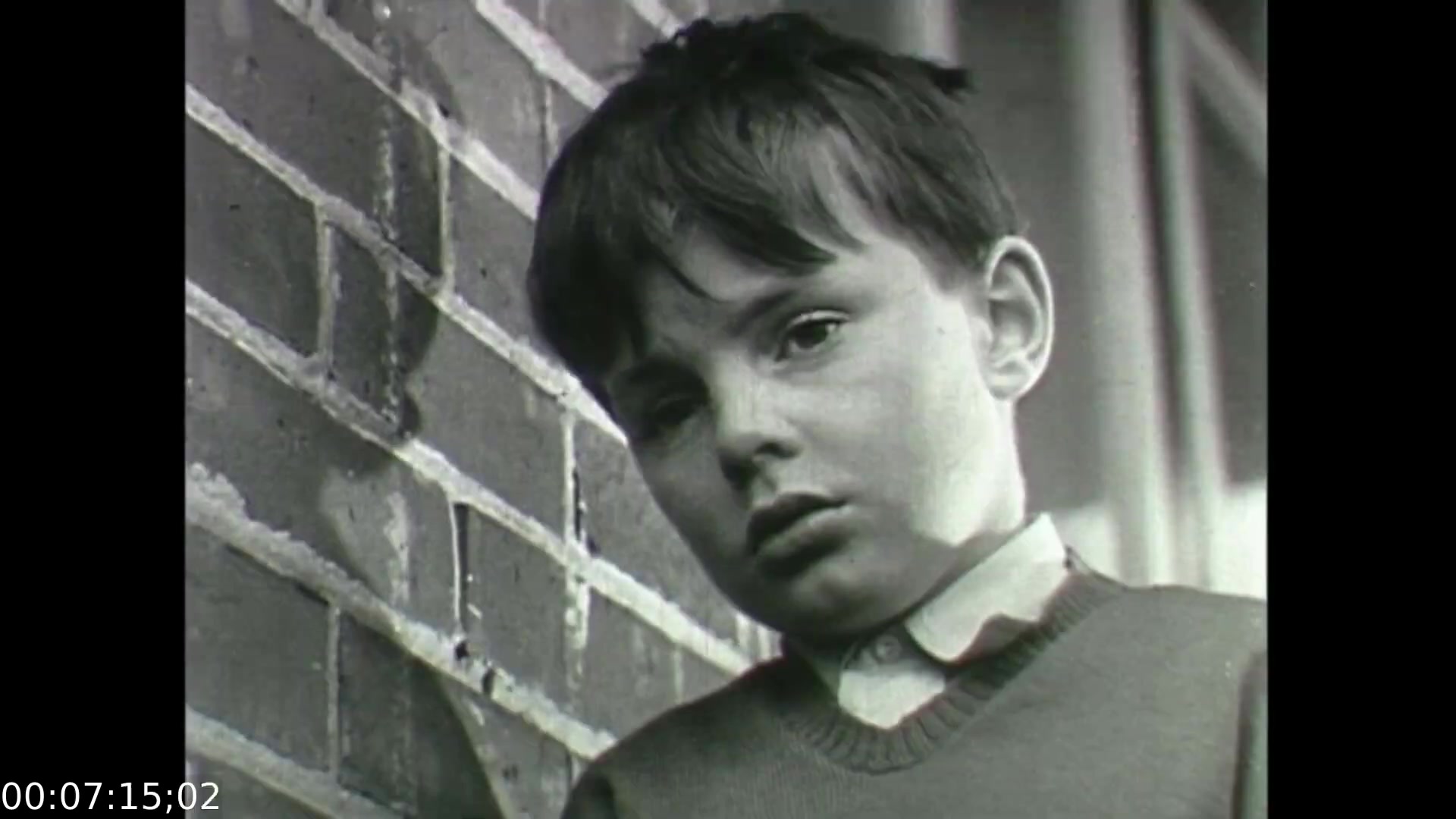
00:07:18.204 — The still from 'Feelings of Depression' features a young boy leaning against a brick wall, portraying a sense of sadness or introspection. His expression is somber, reflecting the themes of emotional struggle and despondency that are central to the film. This educational dramatization, produced in 1950 by the National Film Board of Canada, aims to illuminate the early signs of emotional distress through character studies, in this case, linking the boy's feelings to broader issues of mental health. The film serves as a historical context for understanding depression's impact on individuals and society.
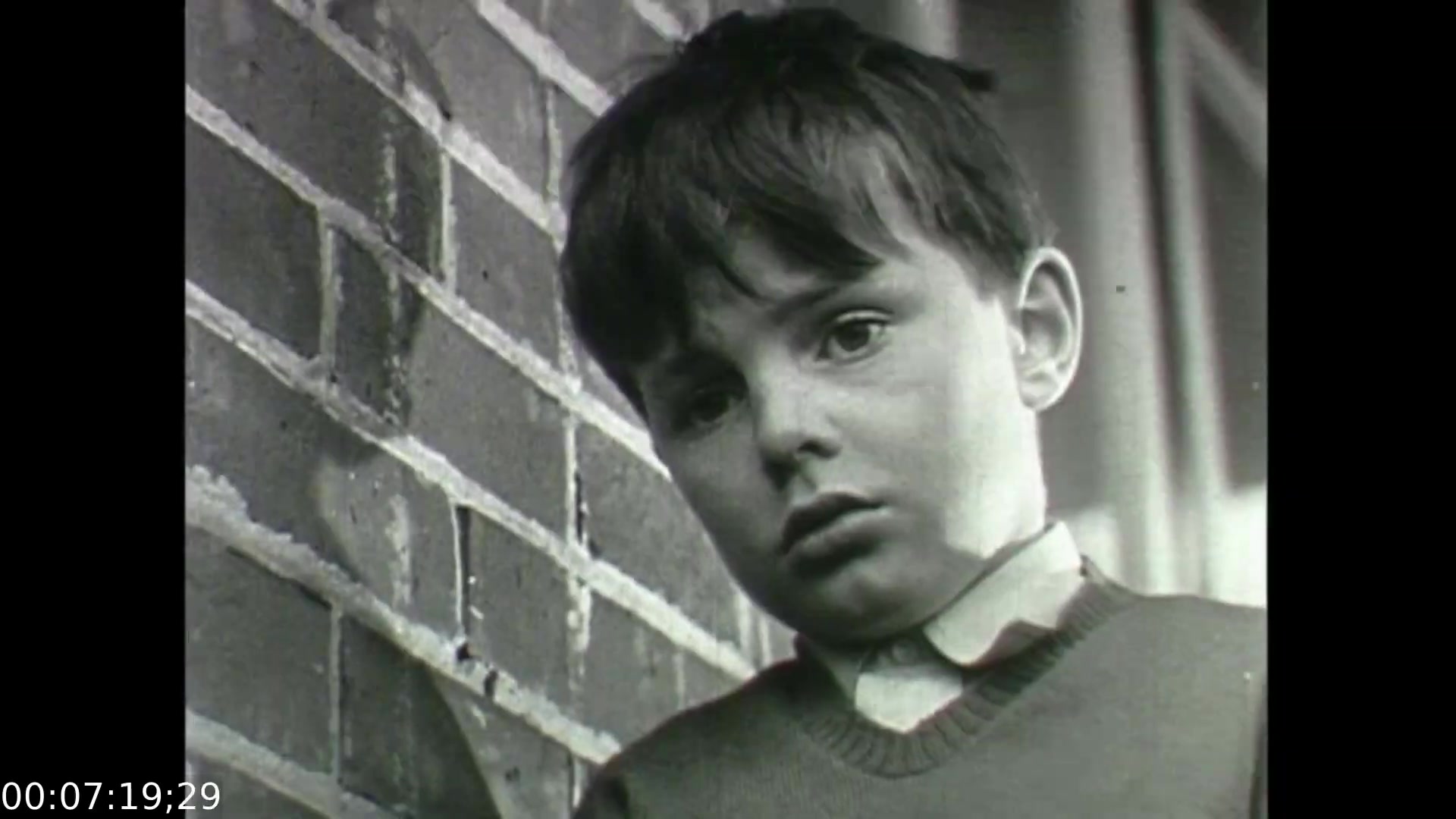
00:07:23.109 — The still from 'Feelings of Depression' depicts a young boy with a somber expression, standing against a brick wall. His downcast gaze and seemingly troubled demeanor reflect themes of emotional distress, aligning with the film's exploration of depression and mental health. This image likely represents the impact of early emotional experiences on individuals, setting the stage for understanding the complexities of adult despondency, as seen in the character of John Murray. The stark black-and-white style emphasizes the gravity of the subject matter.
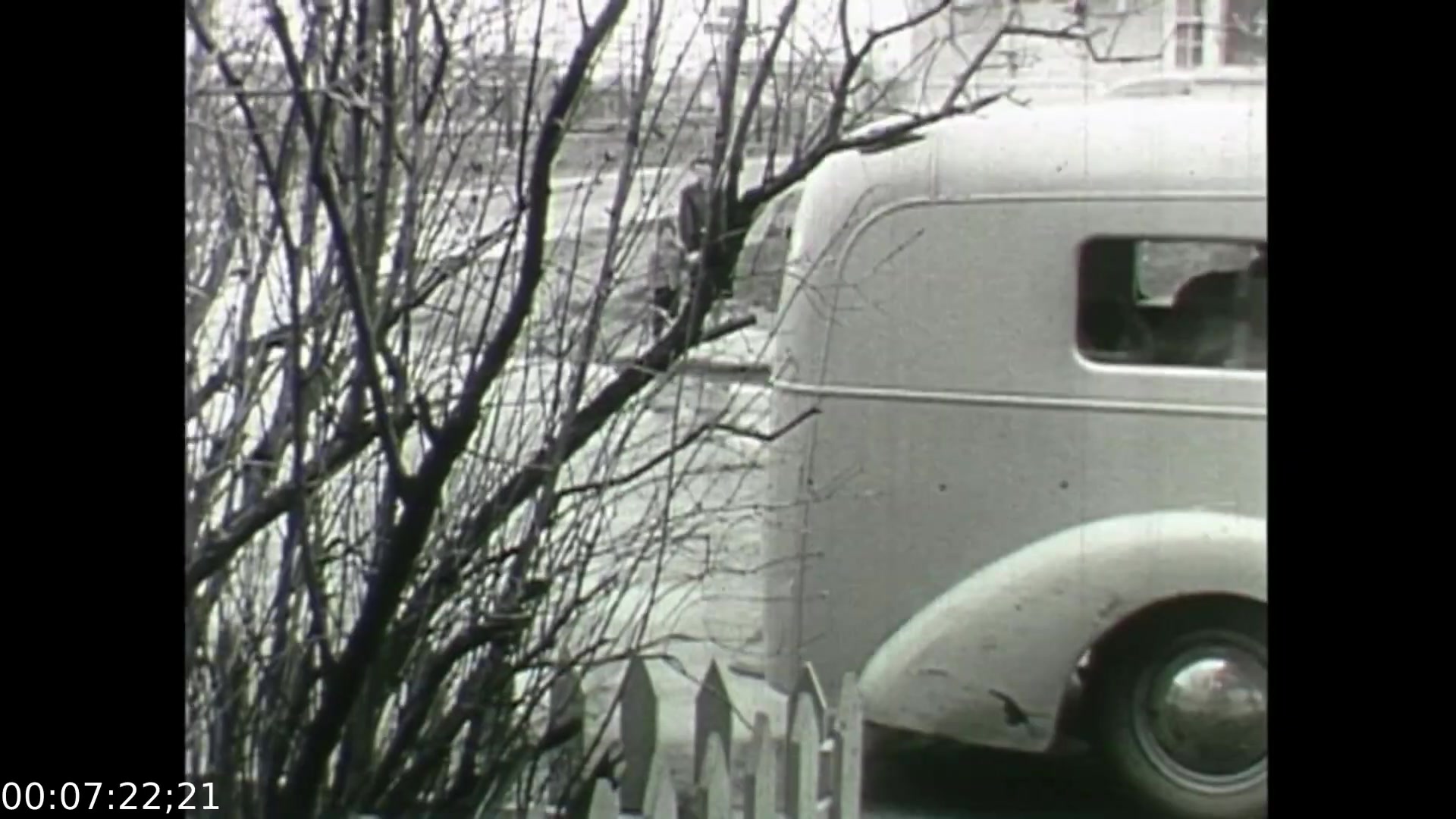
00:07:25.845 — The still from 'Feelings of Depression' (1950) depicts a bleak, wintery scene with bare trees and a vintage automobile. The image is shot in black and white, characteristic of the era, conveying a somber mood. This visual ambiance complements the film's exploration of John Murray's struggles with depression, emphasizing themes of isolation and emotional hardship. The presence of the car and the surrounding environment suggests the context of 1950s suburban life, while the starkness of the trees mirrors Murray's internal despondency.
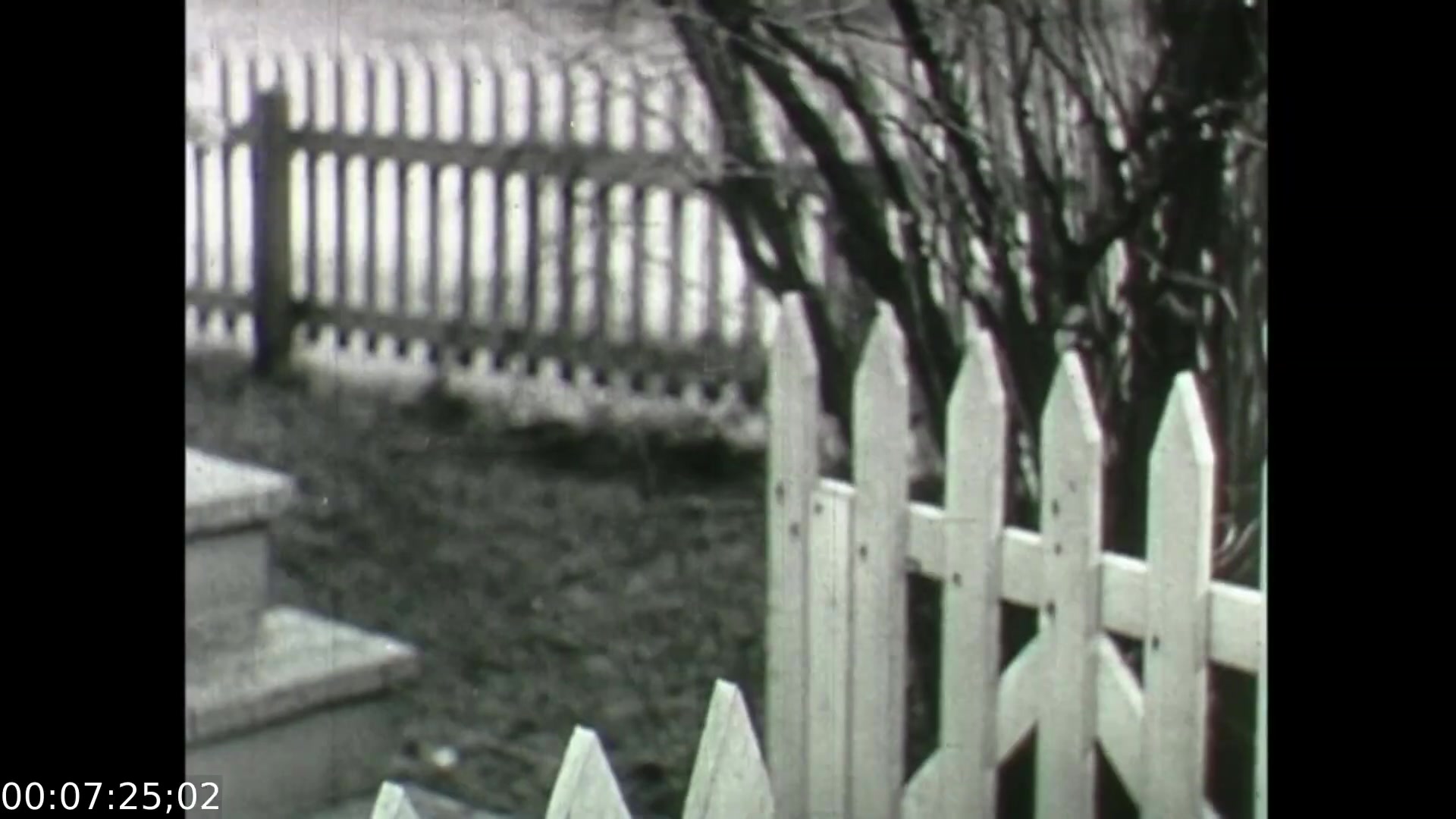
00:07:28.214 — The 16mm still from 'Feelings of Depression' (1950) shows a bleak outdoor scene featuring a white picket fence and barren trees, indicative of an early spring or late winter setting. The fence, symbolizing boundaries, contrasts with the desolate surroundings, reflecting the isolation and emotional struggles of the protagonist, John Murray. The overall composition evokes a sense of despondency, aligning with the film's exploration of mental health issues in a historical context.
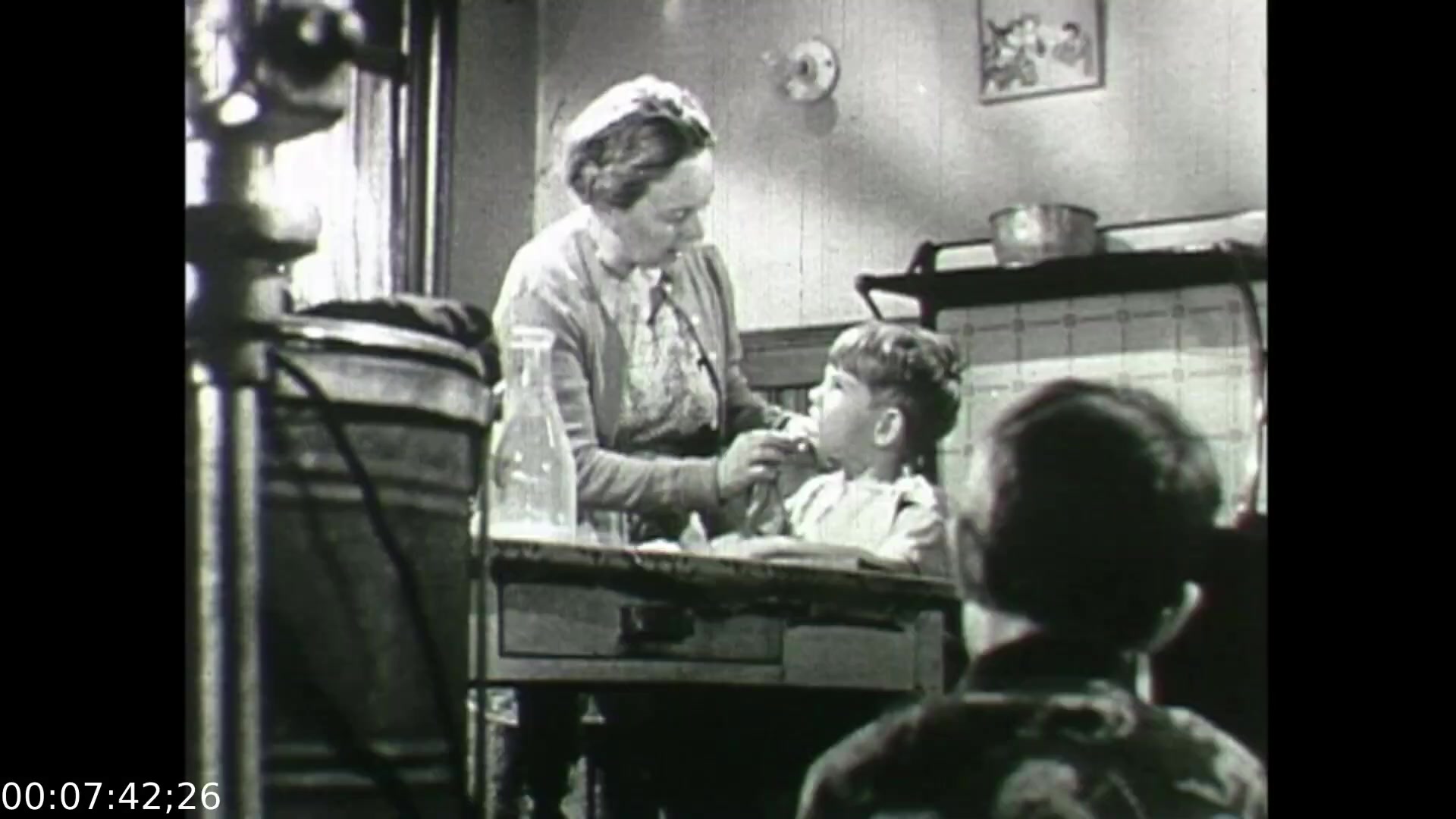
00:07:46.032 — The still from 'Feelings of Depression' (1950) depicts a domestic scene in a kitchen where a woman gently administers care to a young boy, likely conveying warmth and nurturing. This moment reflects themes of family and everyday life, emphasizing the emotional connections that are significant within the context of mental health. The setting suggests a post-war Canadian home, which aligns with the film's exploration of the psychological struggles faced by individuals, like John Murray, and the impact of emotional well-being on family dynamics.
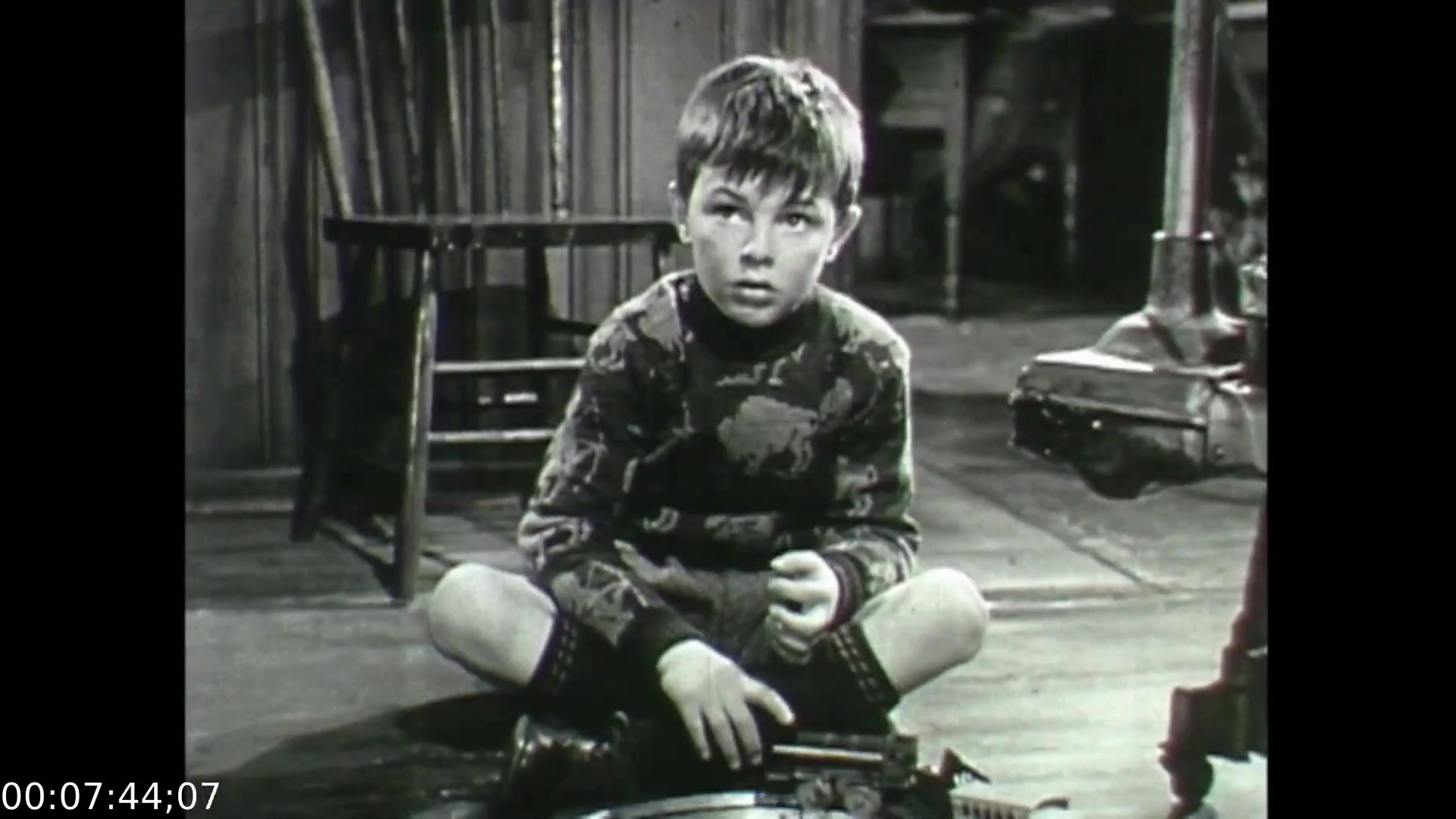
00:07:47.367 — The still from 'Feelings of Depression' depicts a young boy sitting on the floor, clutching a toy gun and looking up with a concerned expression. He is dressed in a patterned sweater and shorts, suggesting a childlike innocence contrasted with his serious demeanor. In the background, a rocking chair and other household items evoke a domestic setting, reinforcing the film's exploration of emotional struggles within a family context. The image captures a moment of vulnerability, reflecting the themes of despondency and the impact of mental health issues.
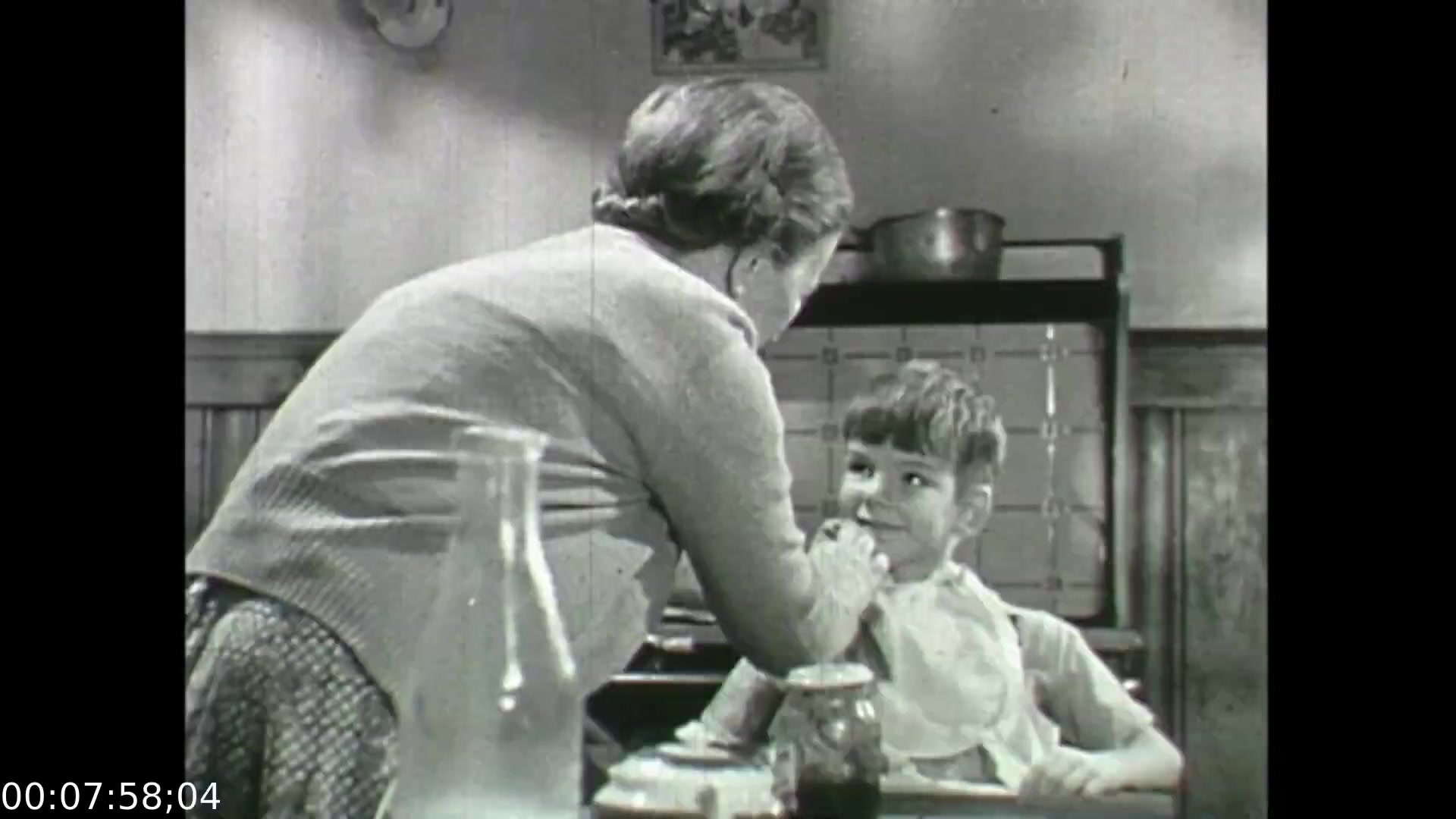
00:08:01.314 — The still from 'Feelings of Depression' (1950) features an intimate moment between an elderly woman and a young boy in a kitchen setting. The woman, leaning toward the boy, appears to be engaging him gently, suggesting a nurturing relationship. The boy, looking up with a slight smile, seems to respond positively. This interaction reflects themes of care and familial support, contrasting with the film's broader exploration of mental health struggles exemplified by the character John Murray. The black-and-white format captures the historical context, emphasizing the societal attitudes toward emotional well-being during that era.
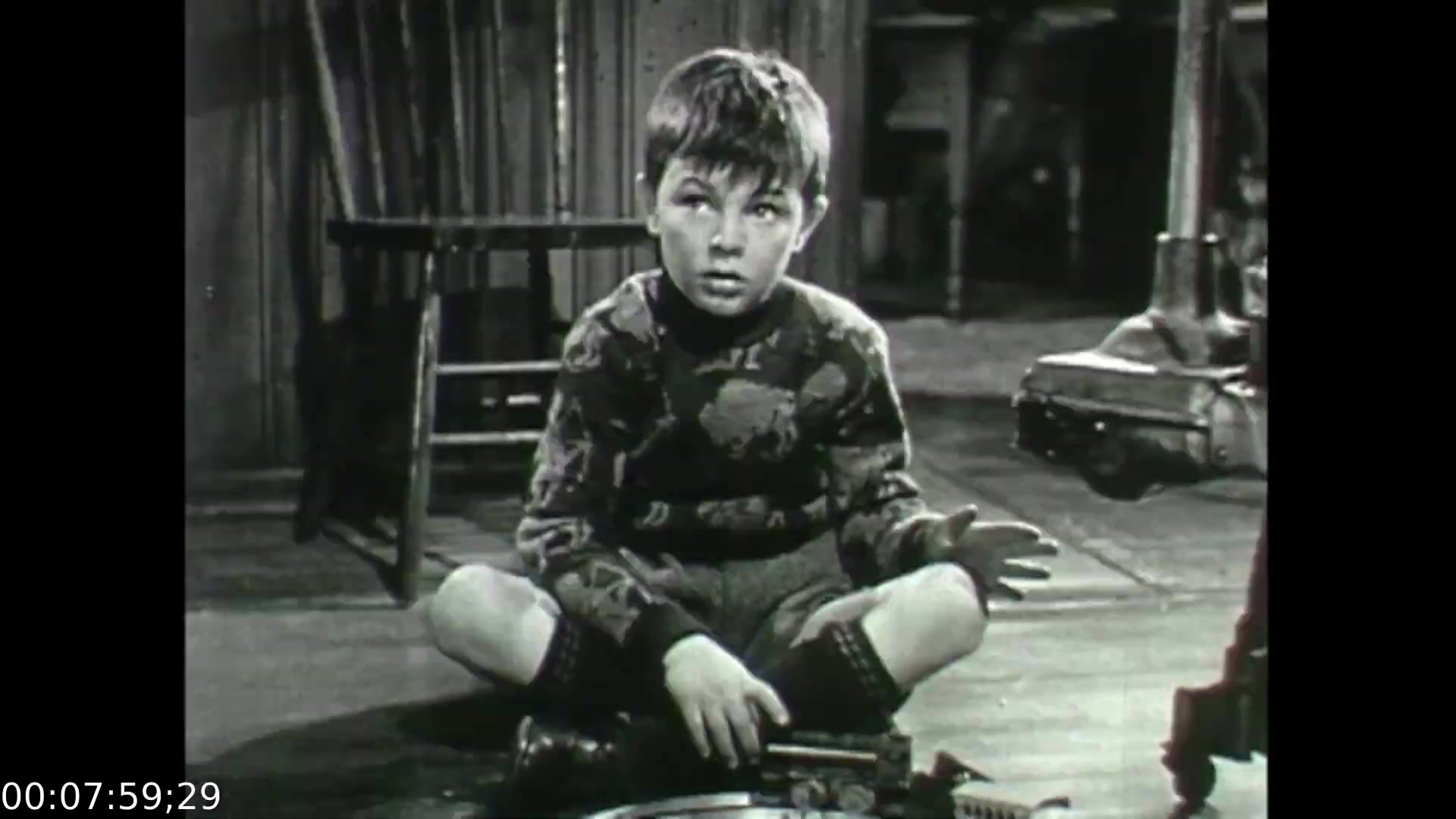
00:08:03.149 — The still features a young boy sitting on the floor, appearing contemplative and engaged in a serious conversation. He is dressed in a patterned sweater and shorts, with a toy or device in his lap. The dimly lit surroundings suggest a homey yet somber atmosphere, complementing the film's exploration of emotional struggles. This scene likely captures a moment reflecting the theme of childhood innocence amidst complex emotions, illustrating the roots of depression as addressed in the film.
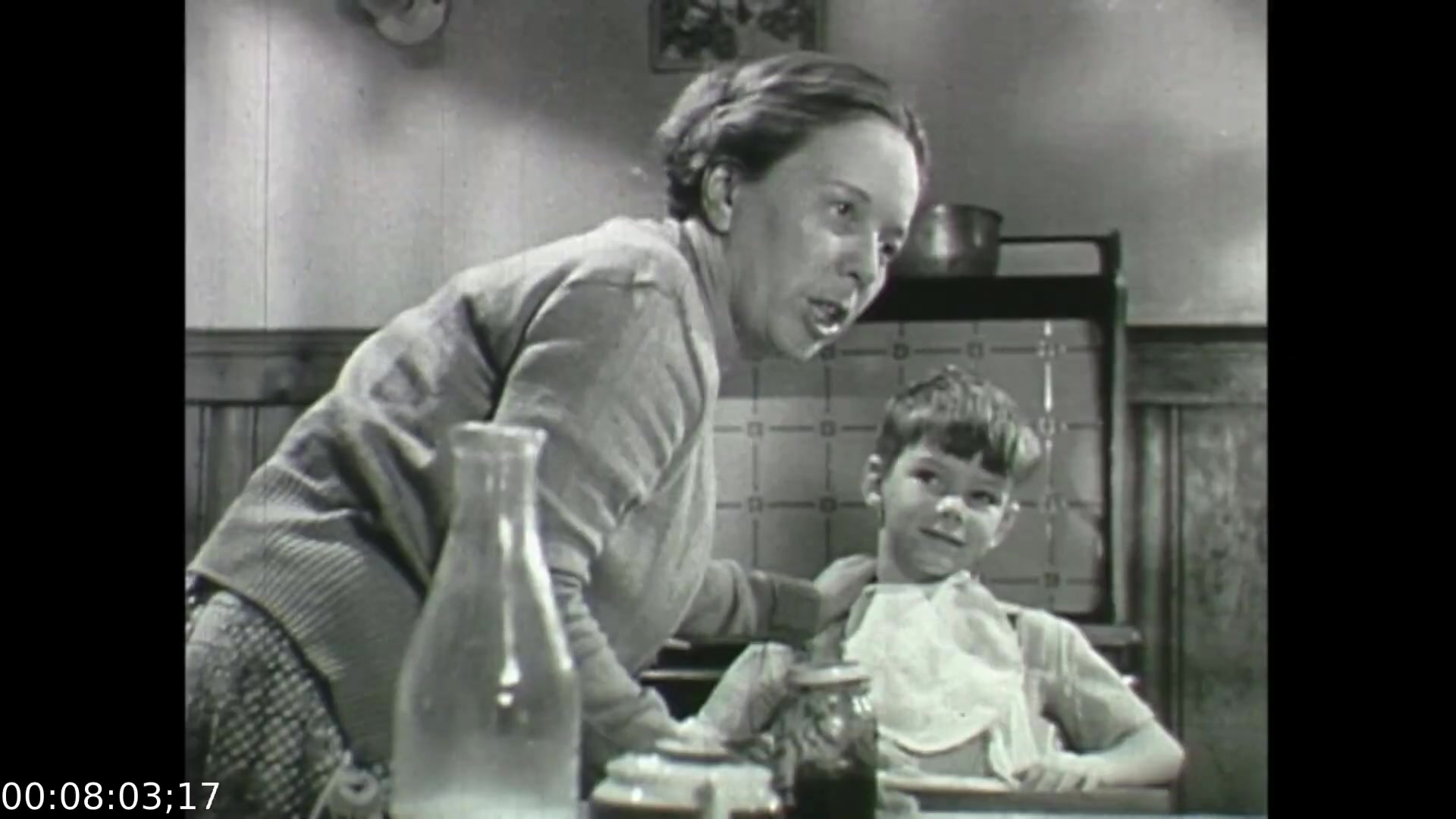
00:08:06.653 — The still from 'Feelings of Depression' (1950) depicts a mother interacting with her young son in a domestic setting. The woman appears engaged, possibly in a conversation or preparing a meal, while the boy, with a slight smile, seems to be enjoying the moment. This scene highlights familial dynamics and the everyday struggles emphasized in the film, which addresses the impact of mental health on family life, particularly through the lens of a father's experiences with depression. The setting adds to the film's exploration of emotional challenges in a historical context.
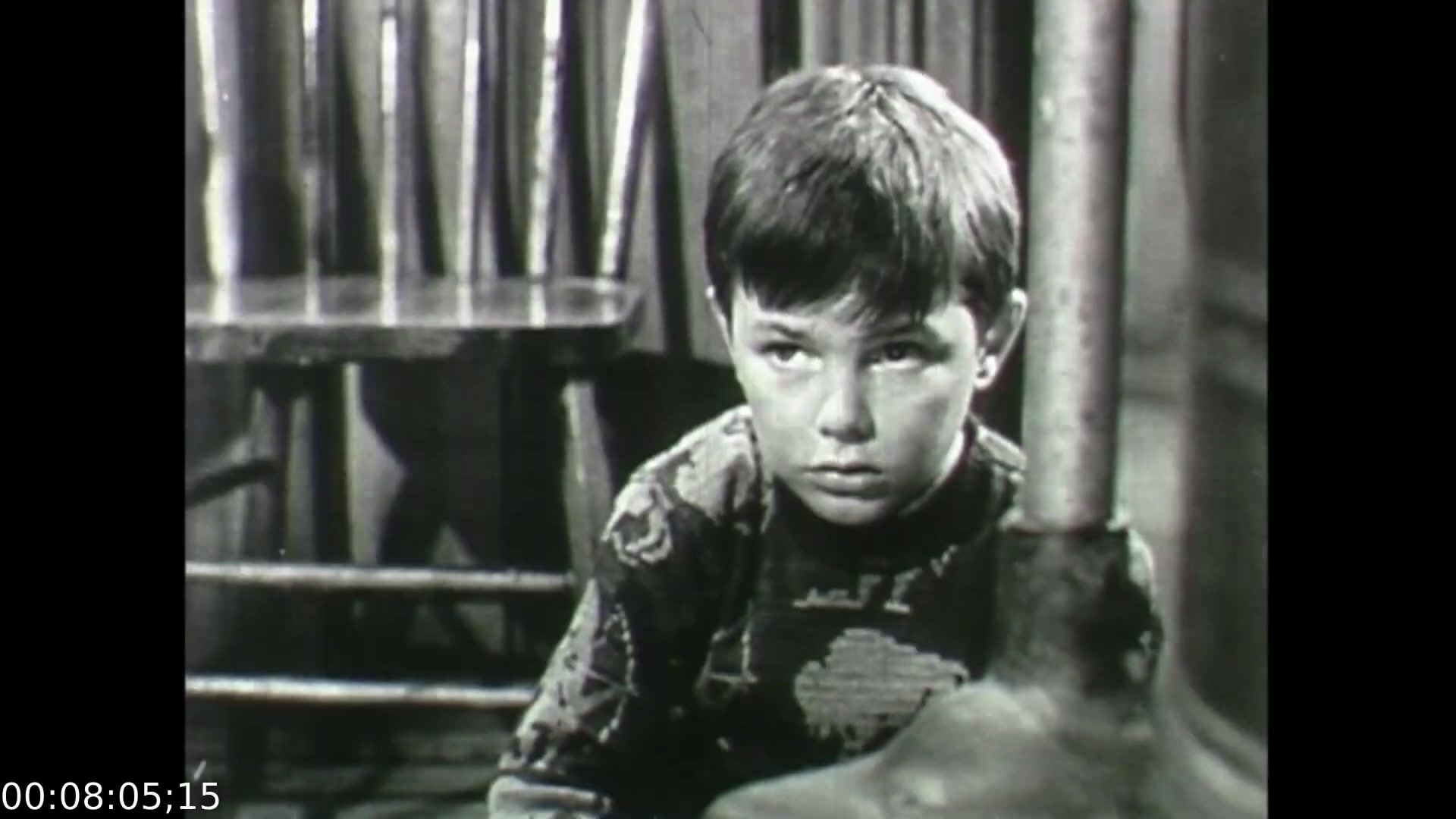
00:08:08.621 — The still from 'Feelings of Depression' (1950) depicts a young boy with a concerned expression, conveying a sense of distress or introspection. The muted tones and simplicity of the setting emphasize the theme of emotional struggle, likely reflecting the impact of familial or societal pressures. This visual element supports the film's narrative about mental health, illustrating how early emotional challenges can manifest in youth. The overall atmosphere is somber, aligning with the film's focus on the complexities of depression.
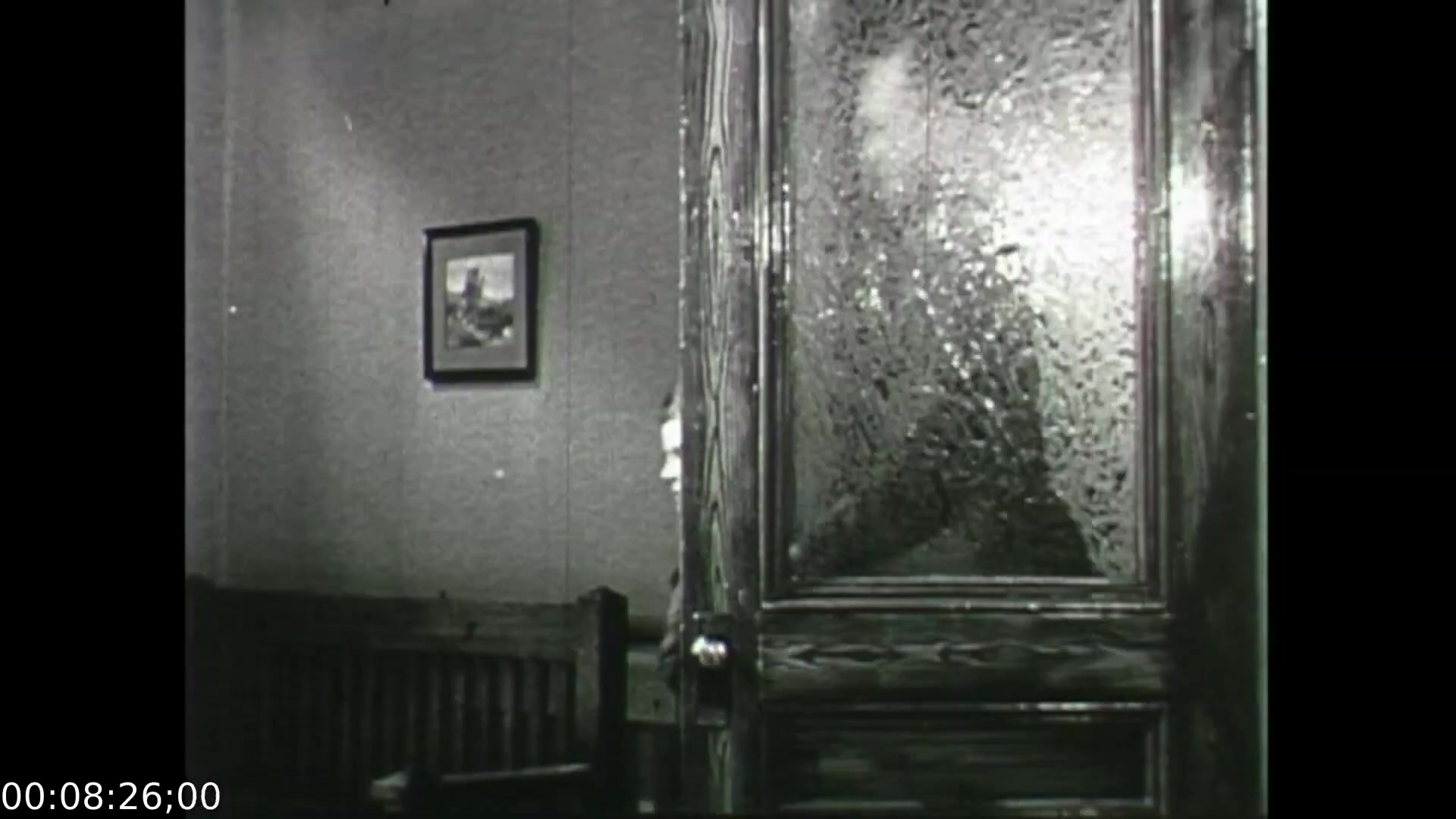
00:08:29.109 — The still from 'Feelings of Depression' portrays a moment of introspection, capturing a glimpse of a door with a textured glass panel. The room appears simple, furnished with a wooden bench and a framed picture on the wall. The focus on the door suggests a threshold between the inner struggles of John Murray and the outside world, symbolizing his battle with despondency. This framing emphasizes isolation and the emotional weight of his experiences, consistent with the film's themes of mental health education in the 1950s.
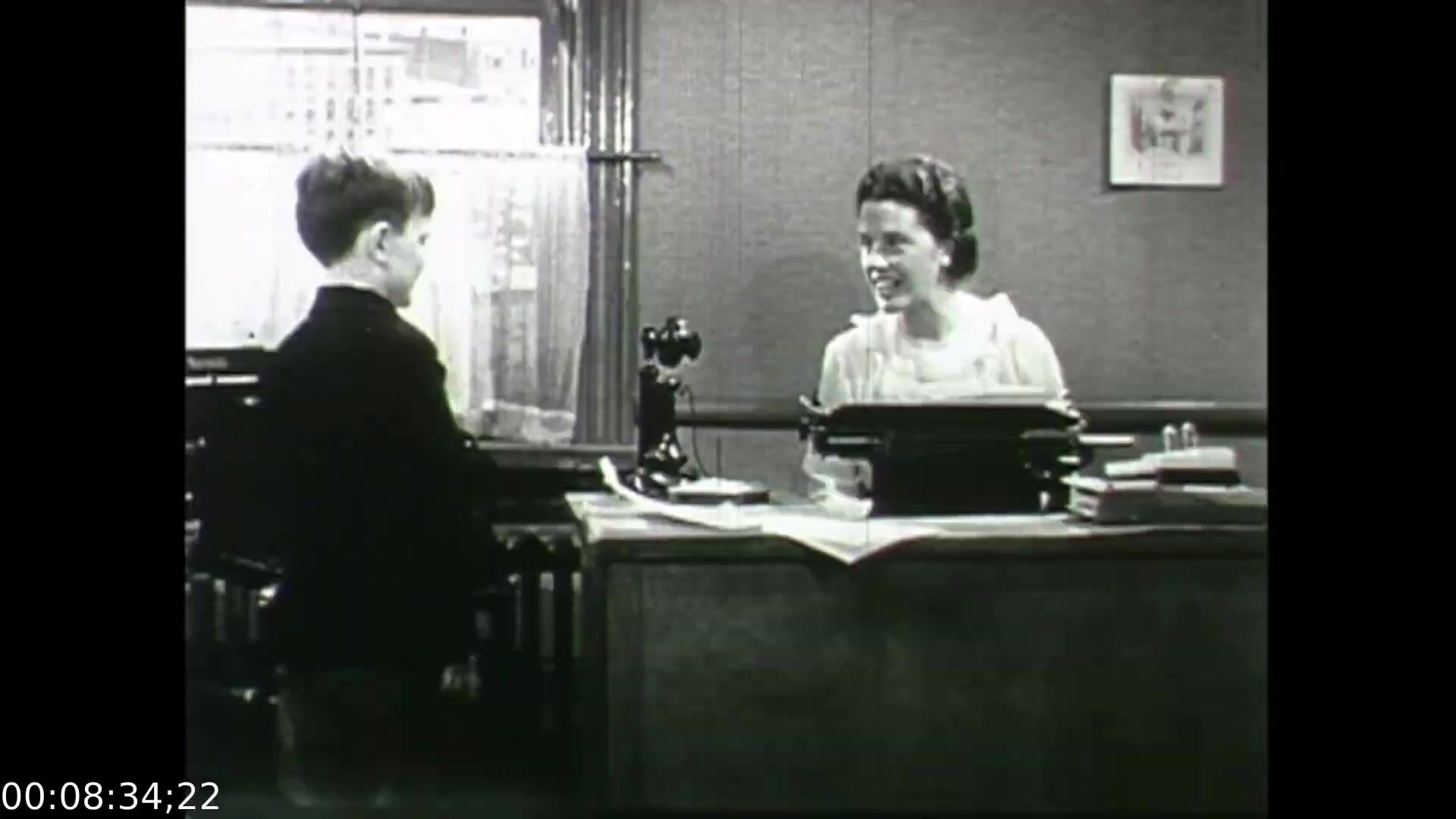
00:08:37.851 — The still depicts a scene from 'Feelings of Depression,' showing a young boy interacting with a woman at a desk, likely a counselor or office worker. The setting is a modest, mid-20th-century office, characterized by a typewriter and a telephone, reflecting the era's aesthetic. The woman appears engaged and friendly, possibly providing support or guidance, while the boy seems attentive, indicating a focus on communication about emotions. This moment highlights the film's intent to address mental health, specifically the themes of emotional struggles and support during the 1950s.
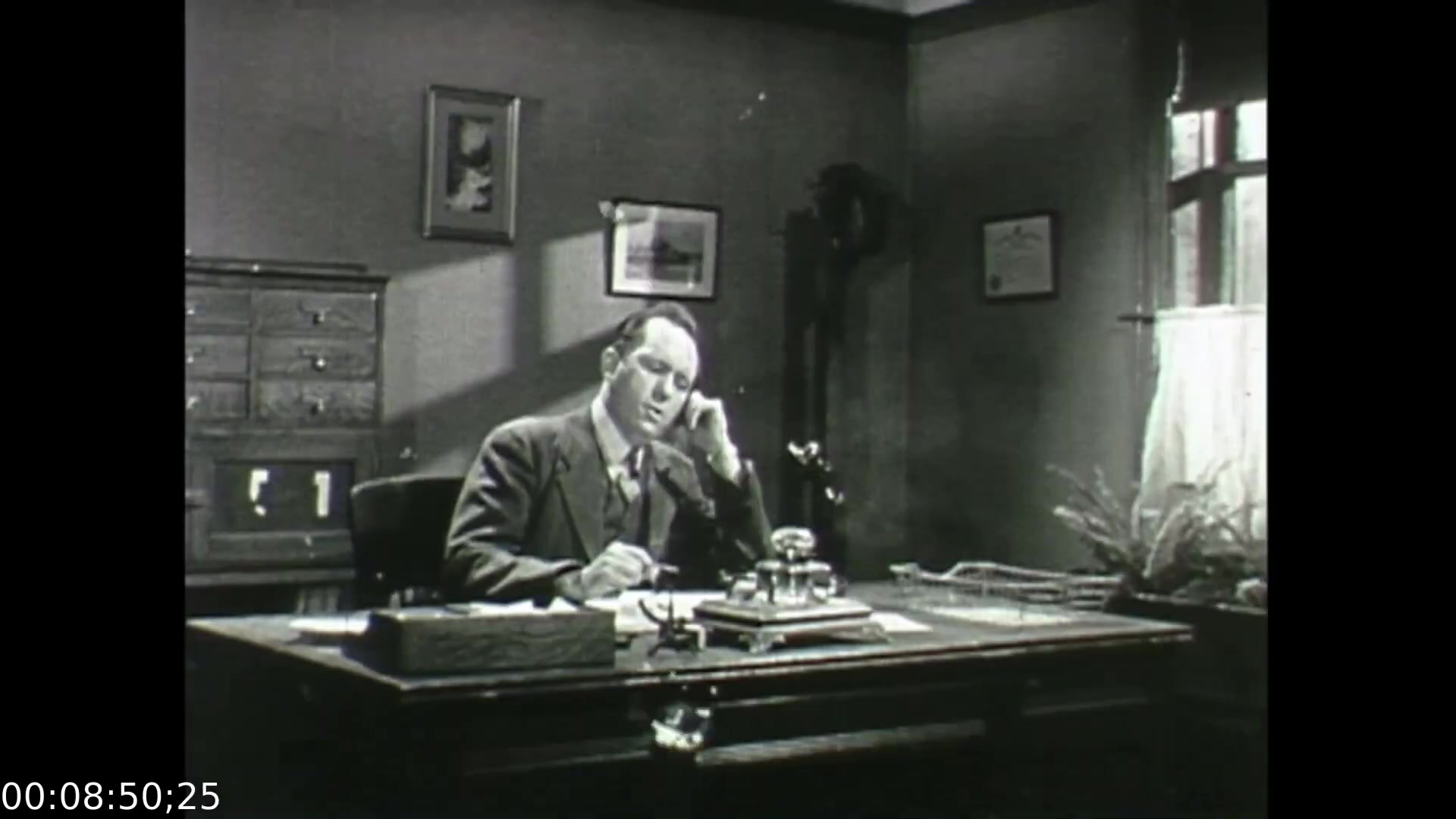
00:08:53.967 — The still from 'Feelings of Depression' (1950) depicts a man, likely John Murray, sitting at his desk in an office setting. He appears contemplative, holding a pen and looking off into the distance, suggesting a moment of introspection or concern. The office is sparsely decorated, with a combination of furniture and artworks that reflect mid-20th-century design. This scene captures the film's focus on the emotional struggles faced by the character, highlighting the themes of mental health and its impact on an individual's life and work.
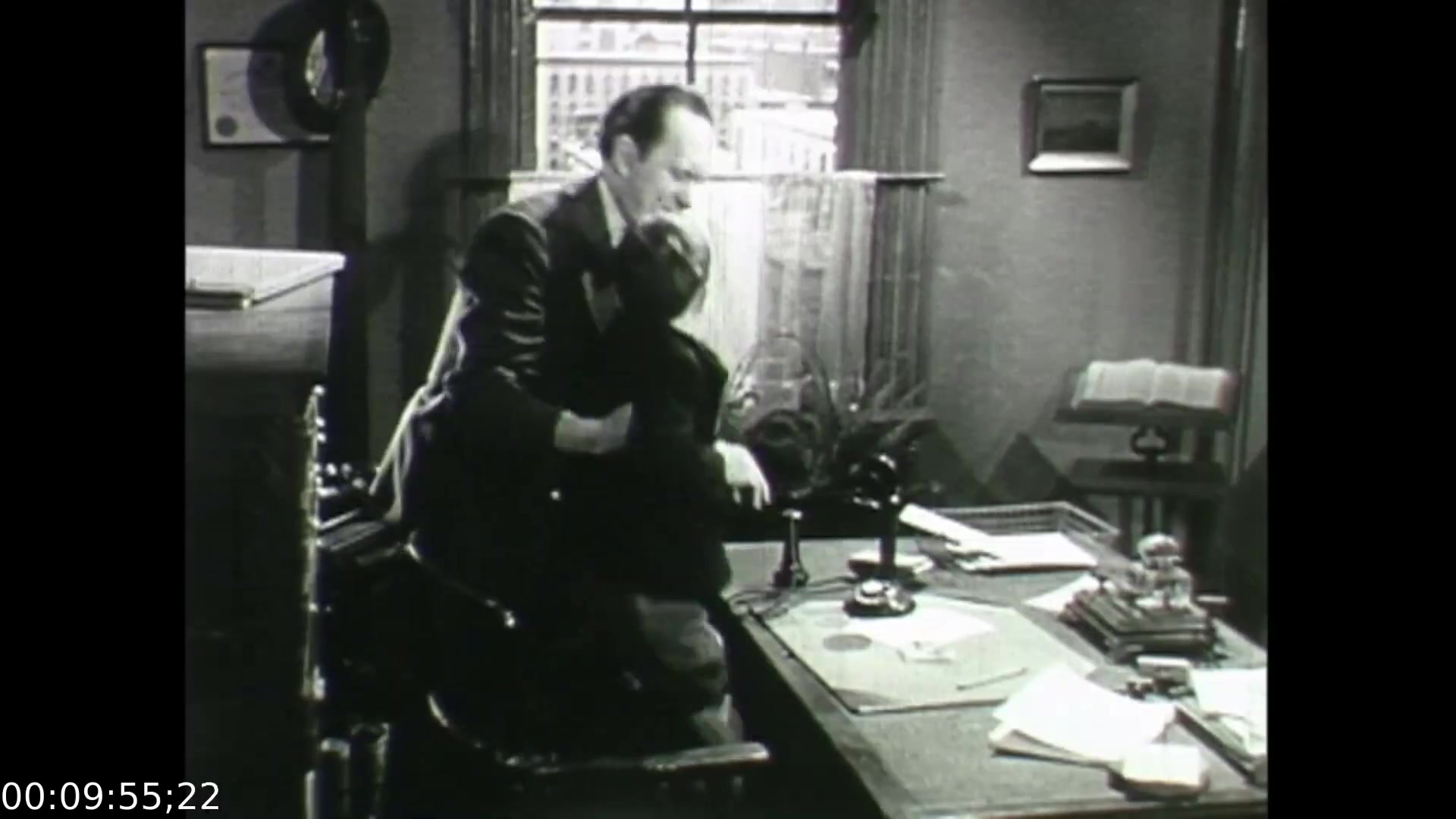
00:09:58.865 — In this still from 'Feelings of Depression' (1950), a man is shown embracing another individual in an office setting, conveying a moment of emotional support. The background features a window with a view of a cityscape, alongside a cluttered desk filled with papers and office supplies, reflecting the stress of the character's life. This scene illustrates themes of struggle and connection amid the challenges of mental health, focusing on the character of John Murray, a businessman grappling with depression.
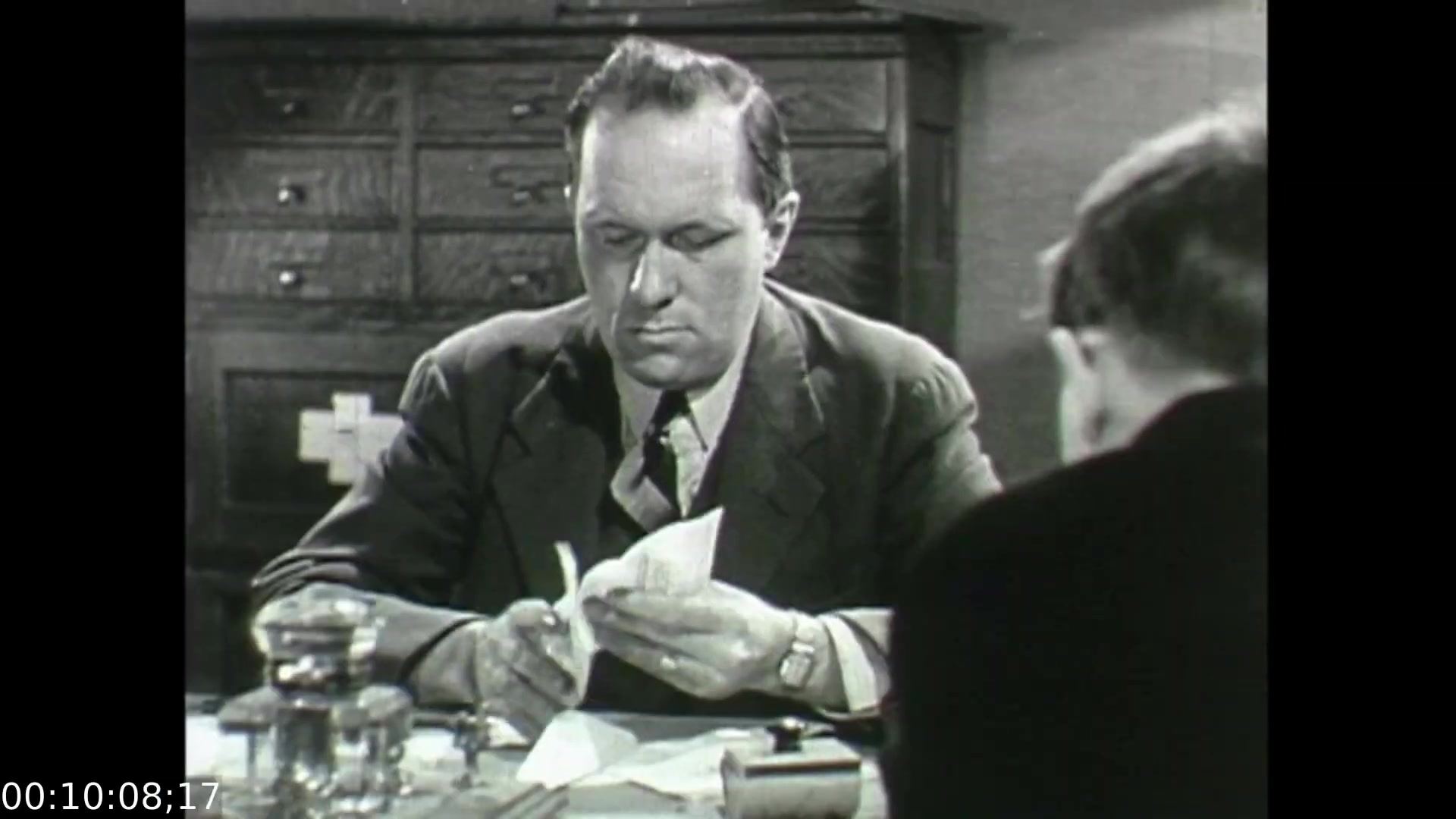
00:10:11.744 — The still from 'Feelings of Depression' (1950) depicts a tense moment in a small, somber office setting. The central figure, a businessman, is shown intently focused on a piece of paper, possibly reflecting his inner turmoil and struggles with depression. His furrowed brow and serious demeanor suggest deep contemplation. In the background, a second figure is partially visible, hinting at a conversation or therapeutic interaction. This scene captures the film's exploration of mental health and the challenges faced by individuals like John Murray during that era.
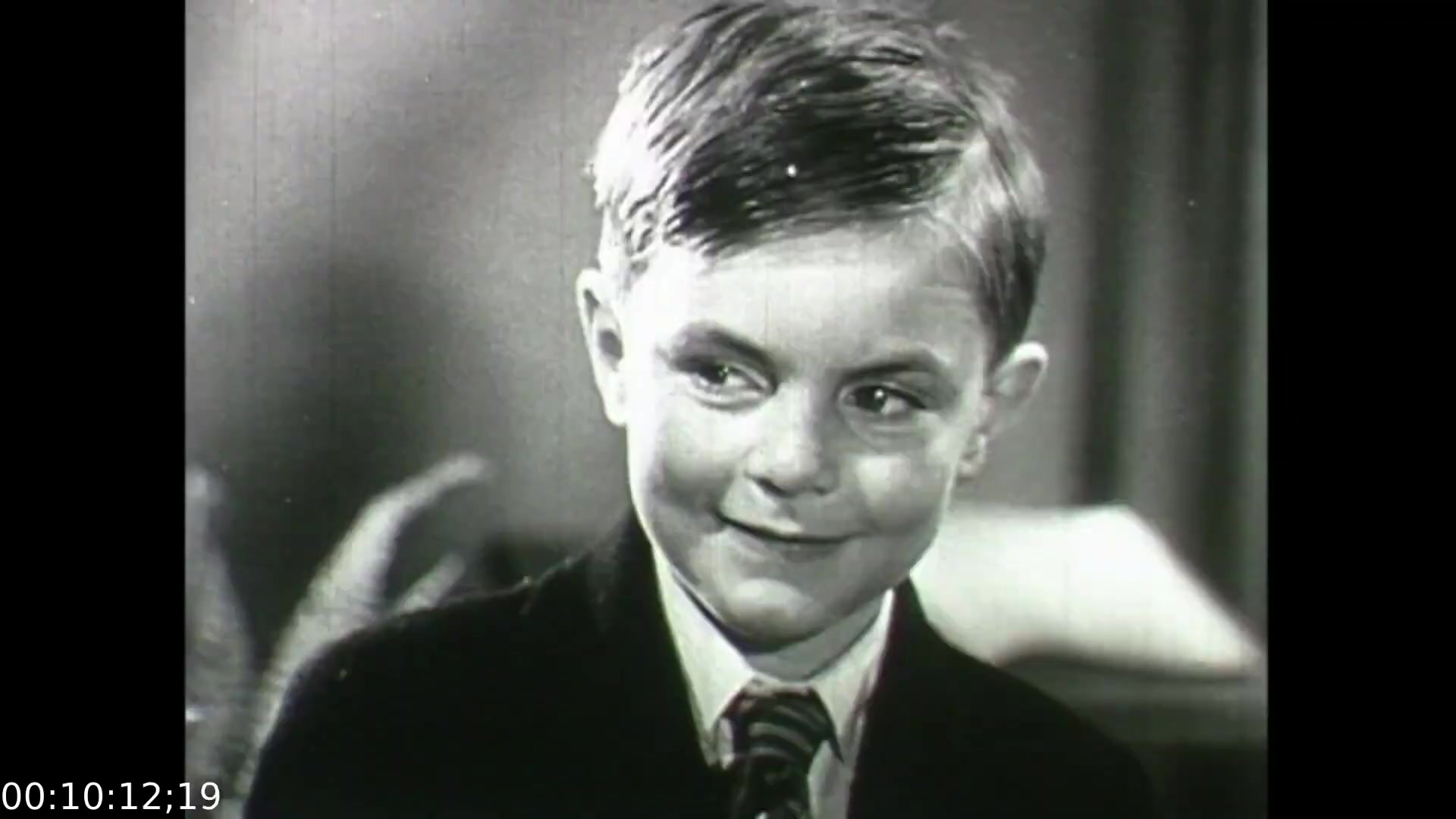
00:10:15.782 — The still features a young boy with a subtle smile, dressed in a suit with a tie. His expression suggests a mix of curiosity and innocence. The context of the film 'Feelings of Depression' emphasizes the emotional struggles faced by individuals, reflecting the impact of mental health issues during the era. This image captures a moment that contrasts the film's serious themes with a youthful perspective, potentially illustrating early familial or social dynamics that may influence mental well-being.

00:10:28.795 — The still from *Feelings of Depression* (1950) depicts a child building an igloo in a snowy backyard. The setting features a wooden fence with visible graffiti and bare trees, suggesting a cold winter environment. The image highlights themes of childhood resilience and playfulness, contrasting against the film's serious exploration of mental health, particularly the struggles faced by the character John Murray. This scene captures a moment of innocence and activity, providing a visual counterpoint to the film's examination of depression.

00:10:52.085 — The still from 'Feelings of Depression' features a snow cave or tunnel, emphasizing a theme of isolation and introspection. The snowy environment symbolizes desolation, reflecting the emotional struggles of the protagonist, John Murray. This scene likely serves to illustrate the heaviness of depression, contrasting with the expectations of a warm, inviting space. The use of monochrome further enhances the somber tone of the film, capturing the bleakness associated with mental health challenges in the 1950s.
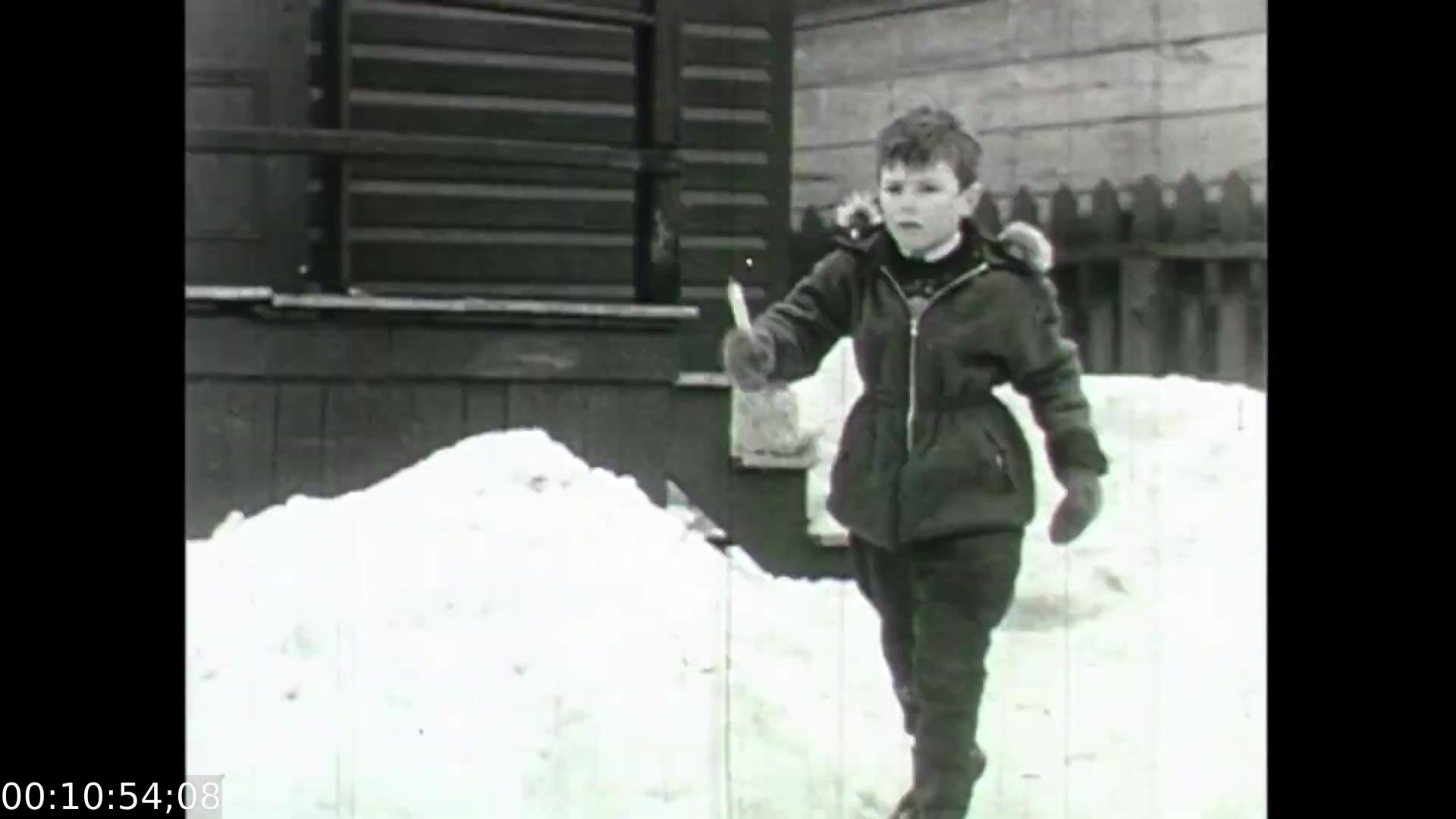
00:10:57.490 — The still from 'Feelings of Depression' (1950) depicts a young boy walking through a snowy environment, wearing a winter jacket and gloves, suggesting a cold climate. He appears to be holding a stick, possibly engaged in play or exploration. The backdrop features a wooden structure, indicative of a modest setting, contributing to the film's exploration of human emotion and everyday life. This scene subtly contrasts with the film's focus on adult struggles, reflecting the innocence of childhood amidst themes of despondency.
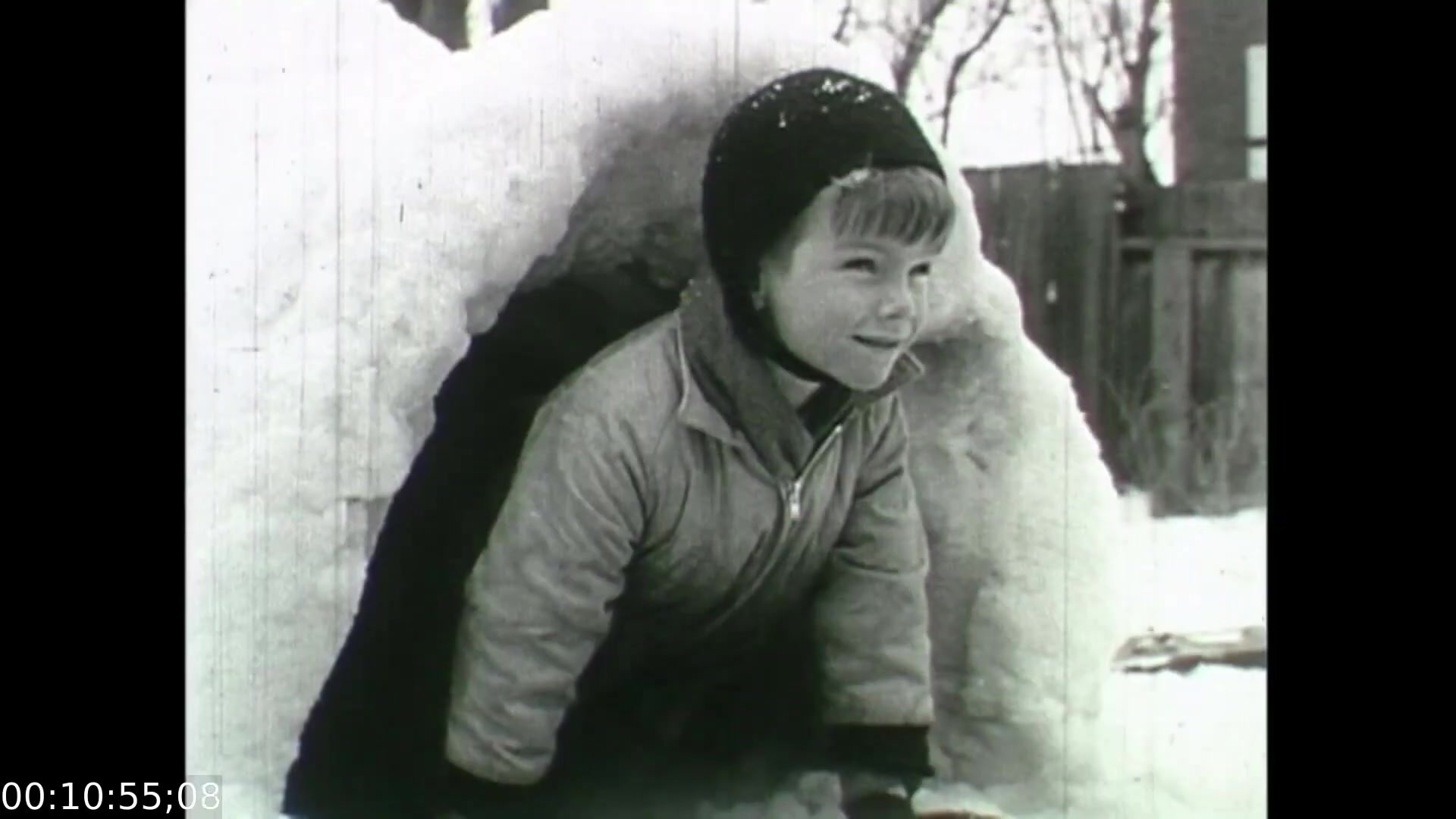
00:10:58.458 — This still from 'Feelings of Depression' shows a young child emerging from a snow fort, smiling. The scene captures a moment of innocence and joy, contrasting the film's serious exploration of mental health issues experienced by adults. This juxtaposition reflects the idea of childhood happiness amidst the complexities of emotions and the struggles depicted in the film. The black and white aesthetic emphasizes the historical context of the 1950s, further highlighting societal perceptions of mental health during that era.
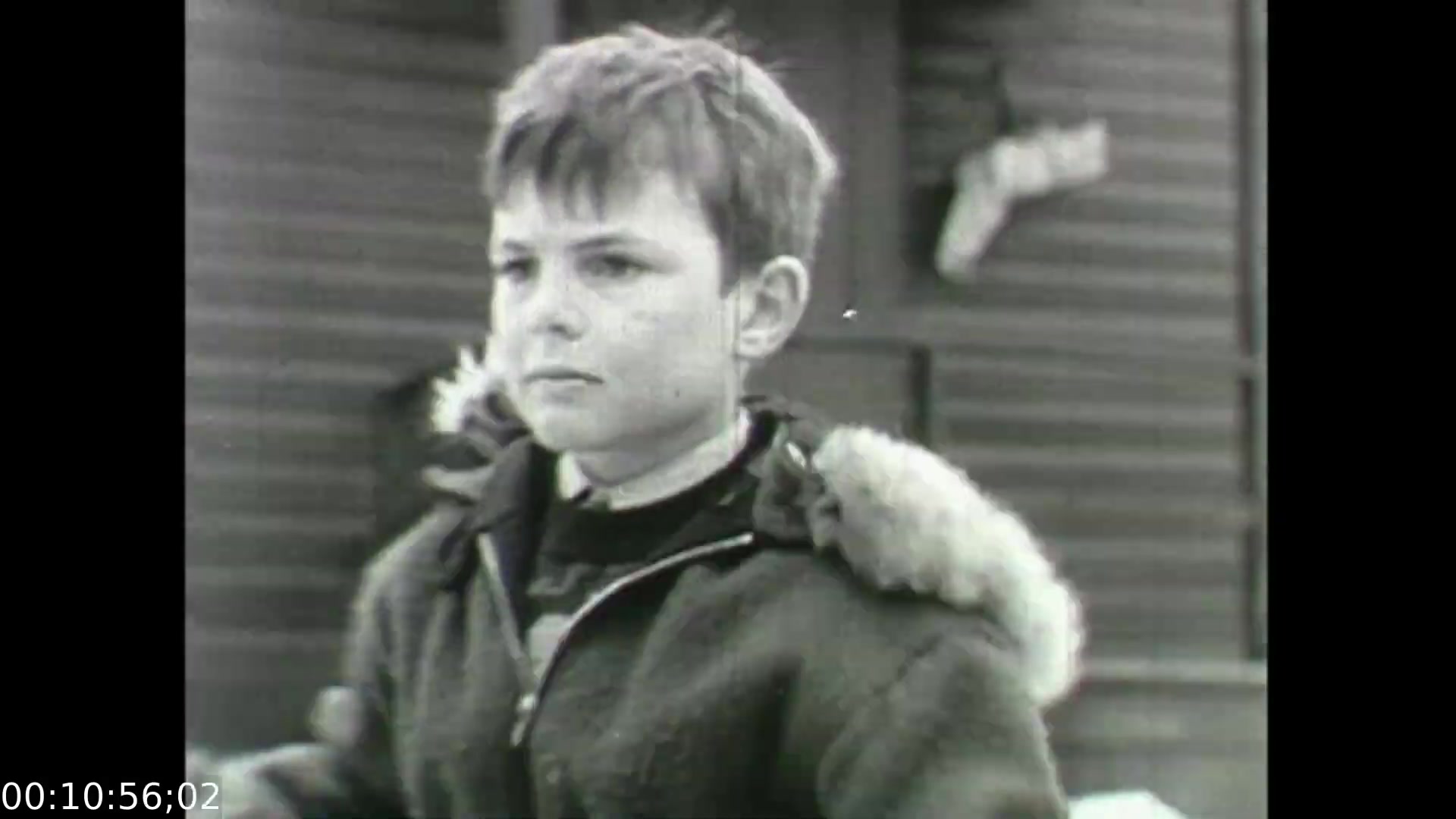
00:10:59.259 — The still from 'Feelings of Depression' (1950) features a young boy wearing a coat with fur lining, gazing pensively toward the camera. The image captures a moment of introspection, reflecting the emotional struggles portrayed in the film. Set against a backdrop of wooden structures, the scene symbolizes the early experiences of despondency that are central to the narrative, illustrating how such feelings can impact individuals from a young age. The film serves as an educational dramatization aimed at raising awareness about mental health issues.
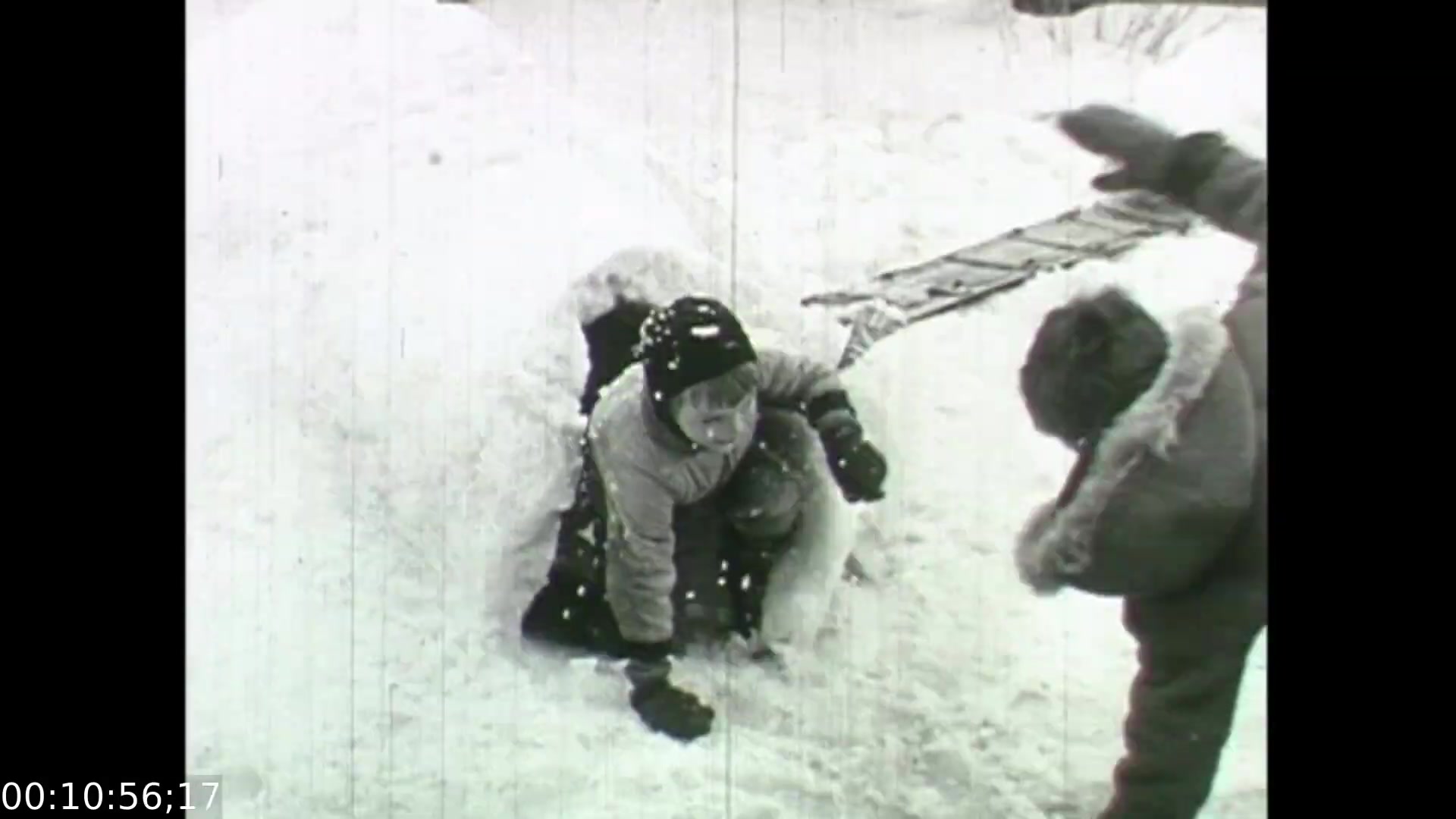
00:10:59.792 — The still from 'Feelings of Depression' depicts a snowy outdoor scene where a child is emerging from a snowbank, indicating playful engagement. Another figure, presumably an adult, reaches out toward the child, possibly assisting or encouraging them. This moment captures the contrast between childhood innocence and the underlying themes of emotional struggle explored in the film, which seeks to address the complexities of mental health through relatable narratives. The visual aesthetic reflects the era's filmmaking style, highlighting both the starkness of winter and the warmth of human interaction.
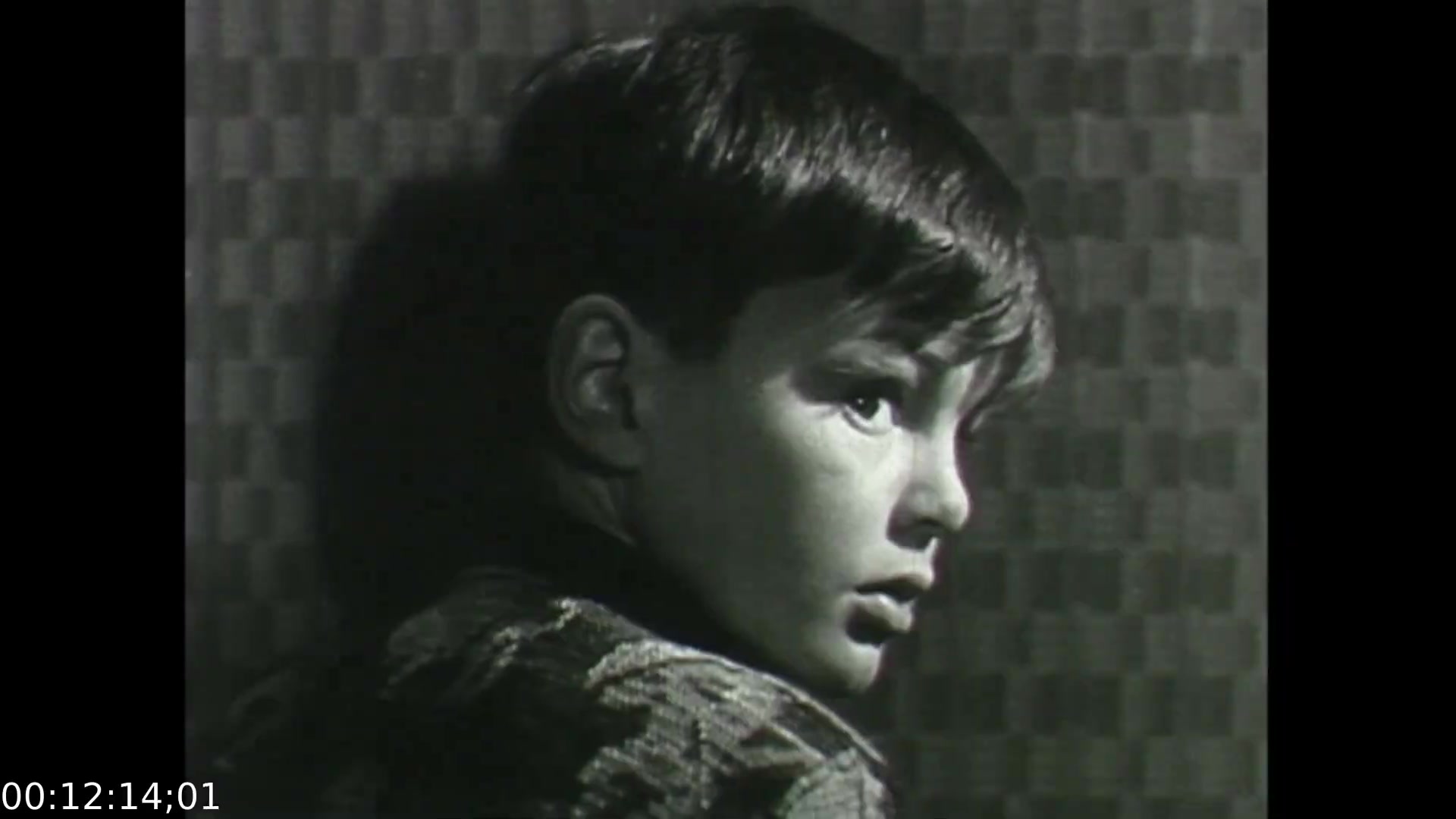
00:12:17.170 — The still from 'Feelings of Depression' (1950) features a young boy in profile, conveying a sense of introspection or sadness. The use of chiaroscuro lighting highlights his facial features, emphasizing the emotional weight of his expression. The textured background adds depth, creating a stark contrast with the boy's somber demeanor. This visual representation aligns with the film's exploration of mental health, illustrating the impact of emotional struggles from an early age.
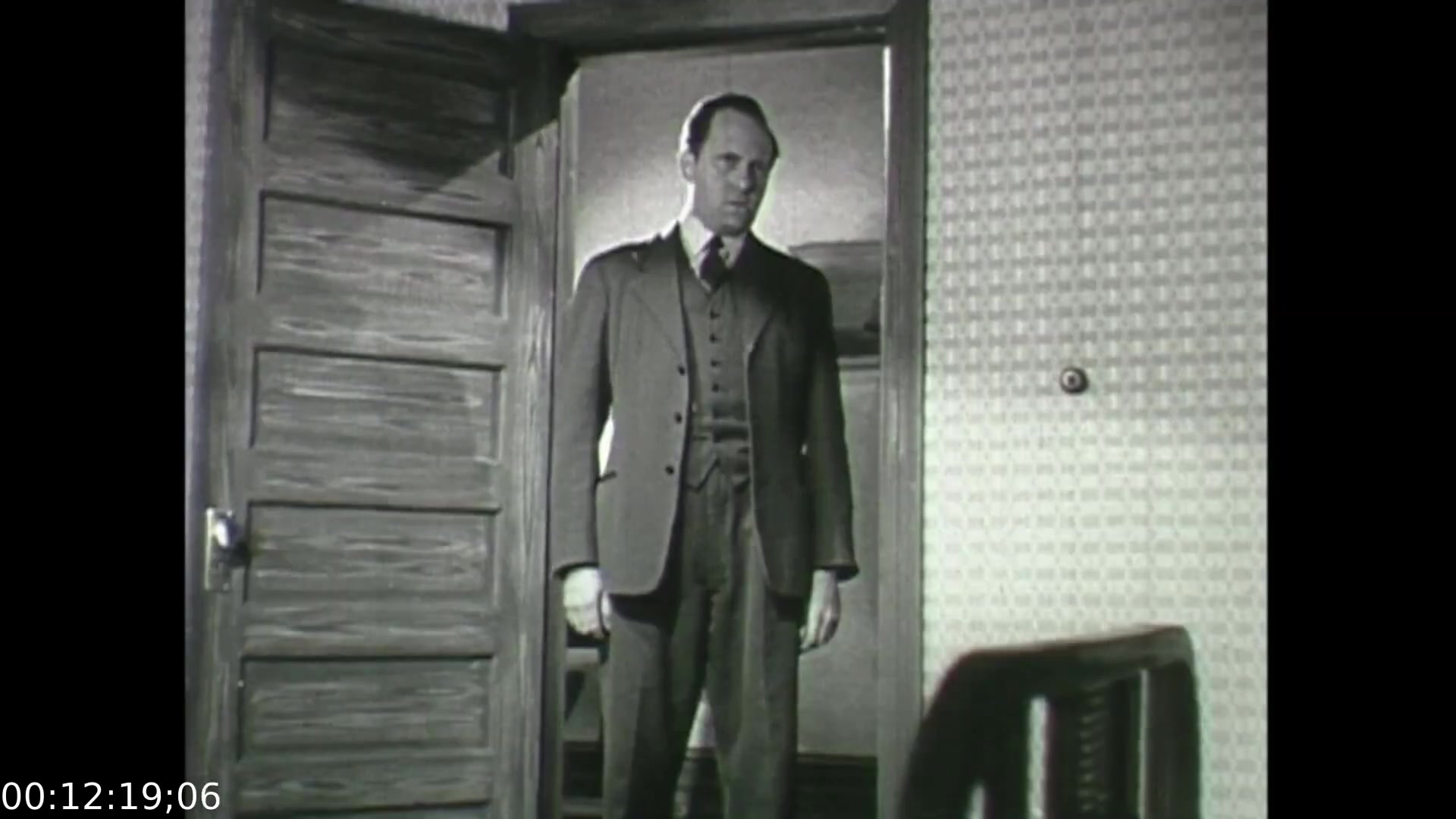
00:12:22.342 — The still from 'Feelings of Depression' (1950) captures a somber moment featuring John Murray, a businessman experiencing emotional turmoil. He stands in a doorway, possibly symbolizing a transition between his internal struggle and the external world. His formal attire reflects his role as a conscientious individual, while his expression hints at despondency and the weight of his psychological challenges. The setting, with its simple decor, underscores his isolation, a theme central to the film’s exploration of depression and mental health awareness.
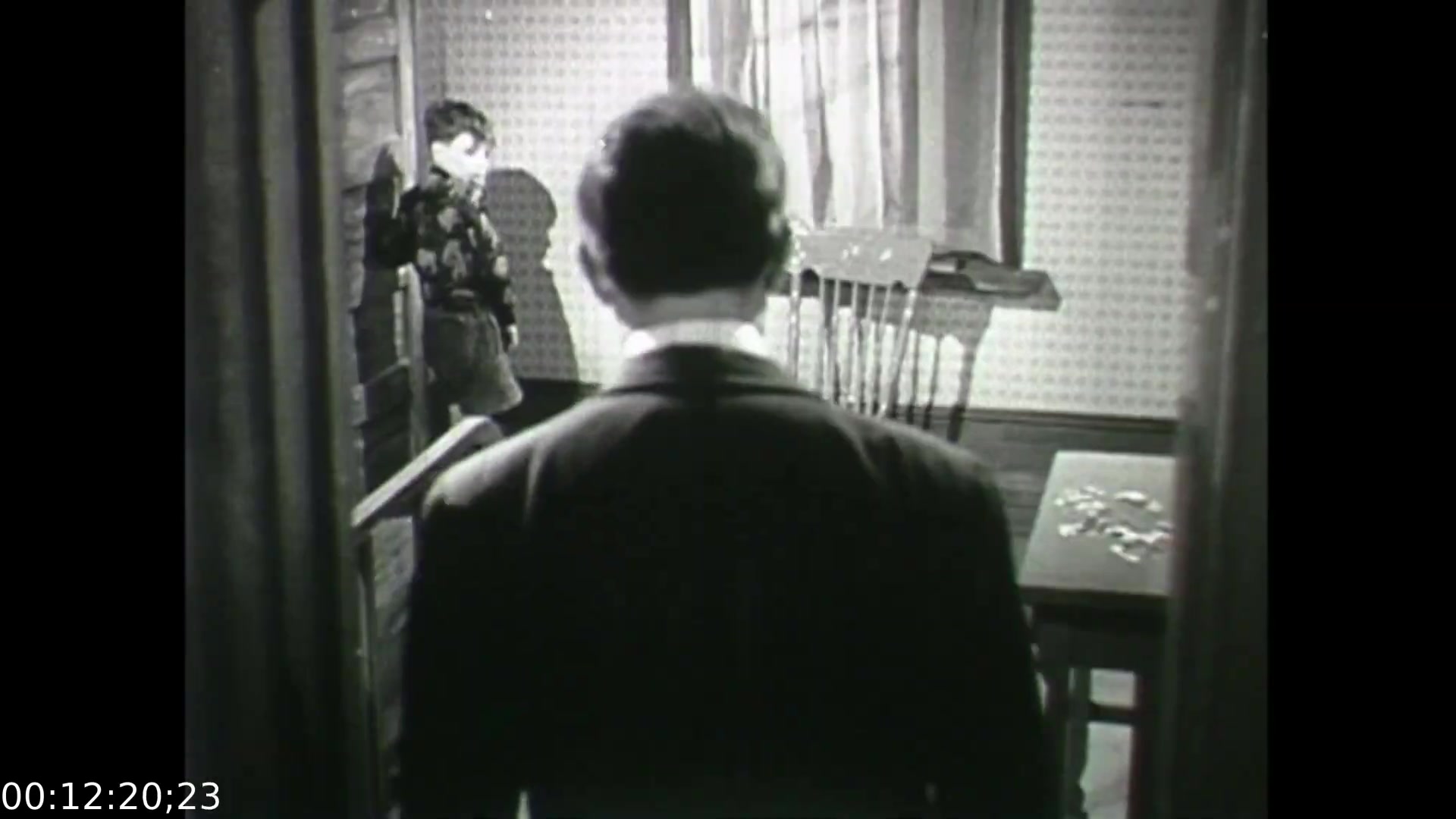
00:12:23.910 — The still from 'Feelings of Depression' depicts a poignant moment reflecting the emotional struggle of the protagonist, John Murray. In the image, a man in a suit stands with his back to the camera, suggesting distance or isolation as he faces a table with scattered items, possibly symbolizing disarray in his life. A child in a patterned sweater stands in the background, potentially representing innocence or the emotional ties that complicate the adult's despondency. The setting, characterized by a modest interior, underscores the personal and societal context of mental health issues in the 1950s. This educational dramatization aims to foster understanding of depression's impact on both the individual and their loved ones.
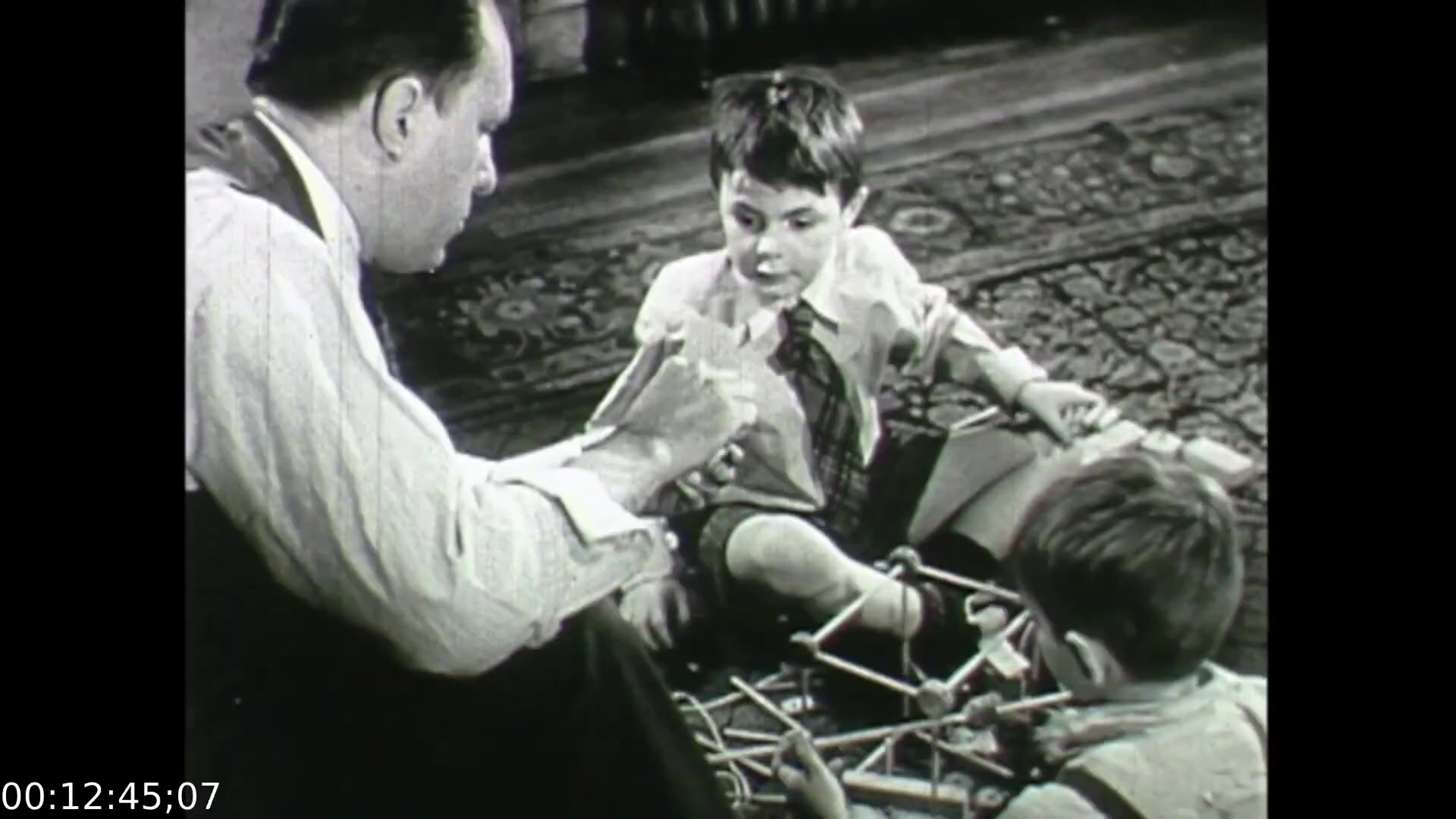
00:12:48.401 — The still from 'Feelings of Depression' (1950) shows a pivotal moment where an adult man engages with two young boys, fostering a moment of connection through play. The scene underscores themes of familial interaction and the importance of emotional support in childhood development. This educational film highlights the impact of depression not only on individuals but also on their relationships with loved ones, illustrating a holistic approach to mental health awareness in post-war Canada.
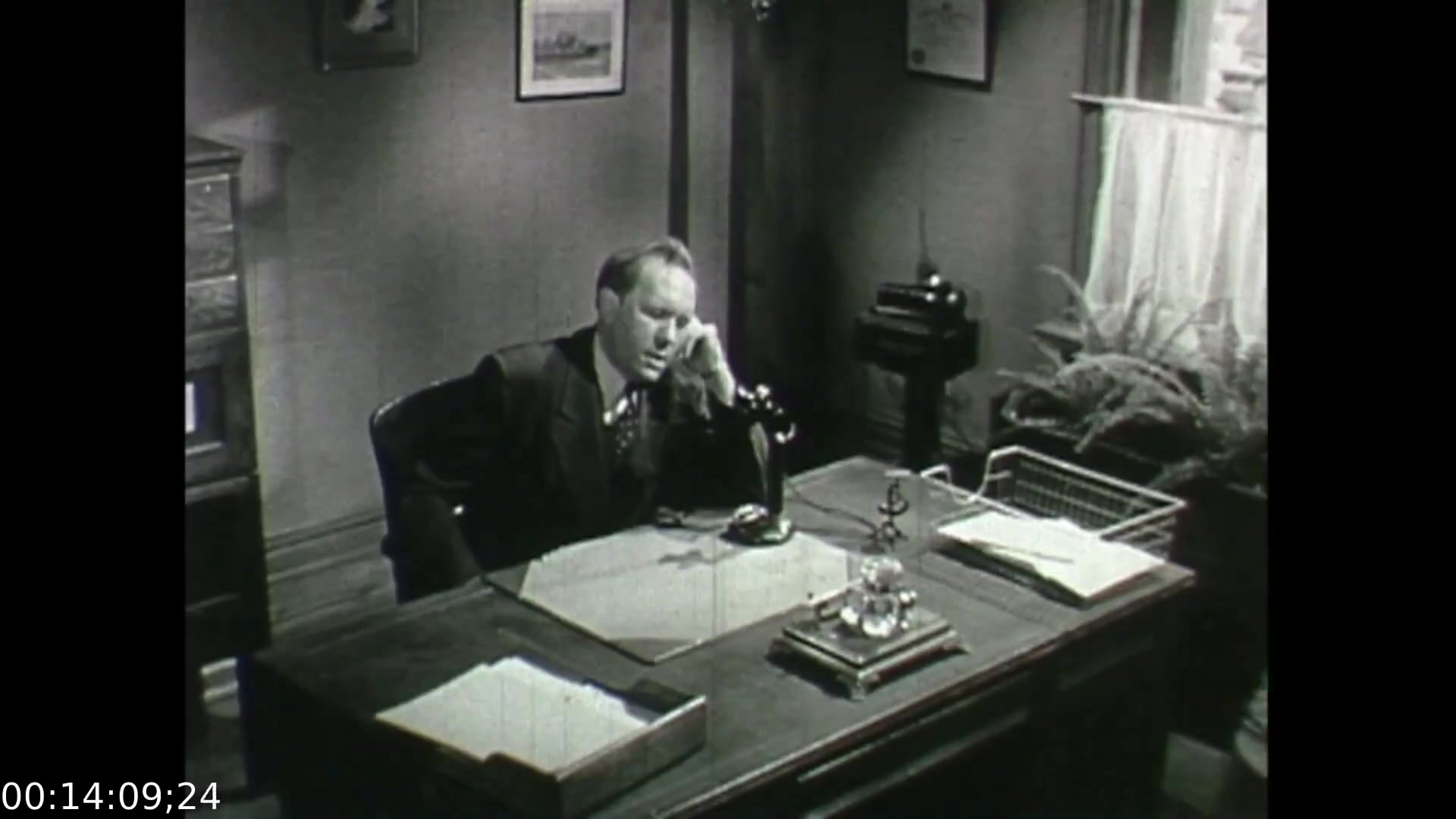
00:14:12.919 — The still from 'Feelings of Depression' (1950) shows a somber office scene featuring a man, presumably John Murray, seated at a desk. He appears to be deep in thought or distress, resting his face on one hand while holding a phone receiver in the other. The decor is simple, with documents and a glass of water on the desk, reflecting a typical mid-20th century office environment. The mood is heavy, capturing the essence of the film's focus on the emotional struggles associated with depression.
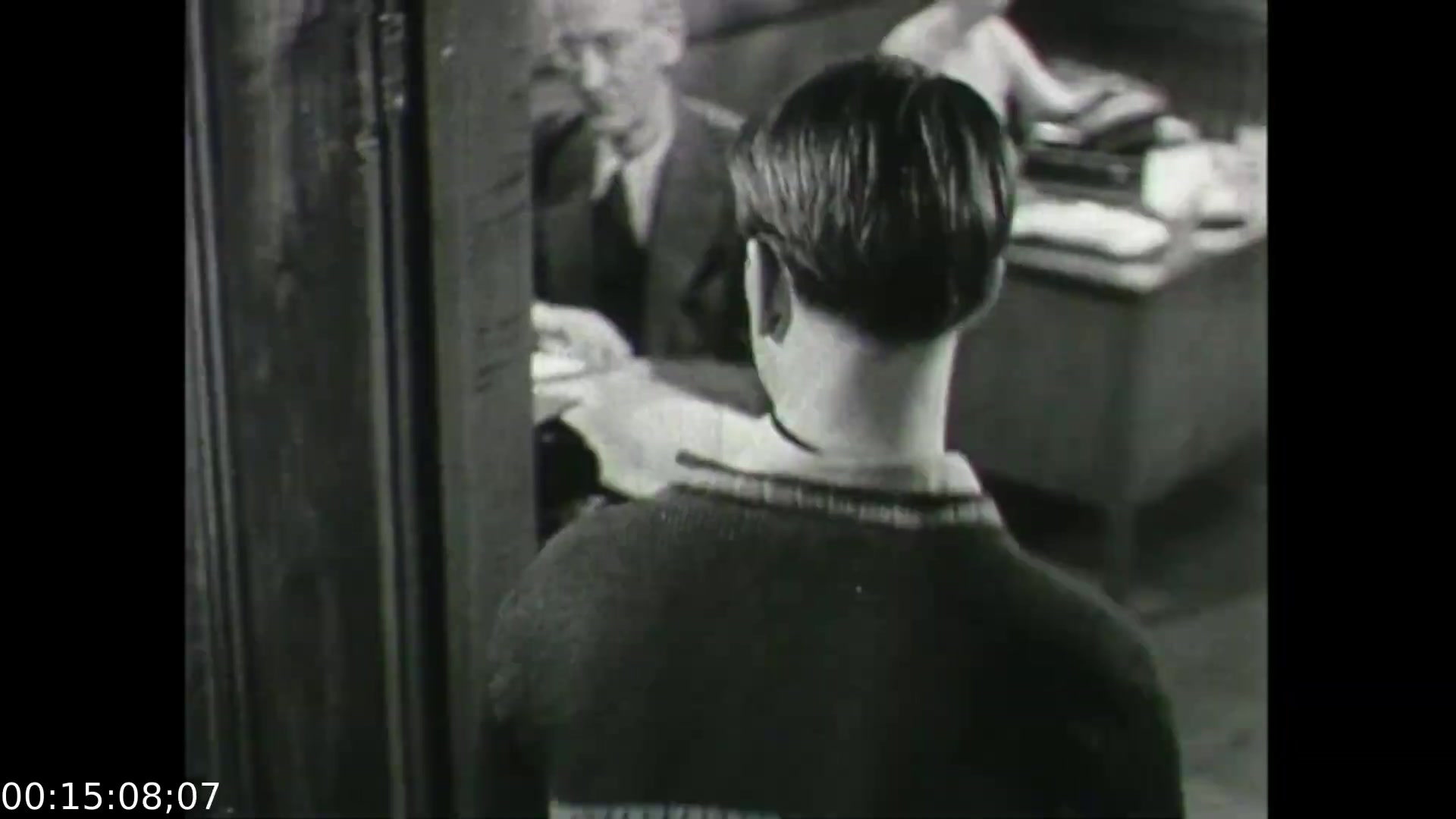
00:15:11.344 — The still from 'Feelings of Depression' (1950) captures a pivotal moment in the film, showcasing John Murray in a contemplative state as he interacts with a doctor or counselor. The camera angle emphasizes his vulnerability, focusing on the back of his head while the professional figure is partially visible, suggesting an intimate yet formal setting. This visual choice enhances the theme of personal struggle with mental health, reflecting the film's educational aim of shedding light on depression in a post-war context, emphasizing understanding and empathy toward mental health challenges.
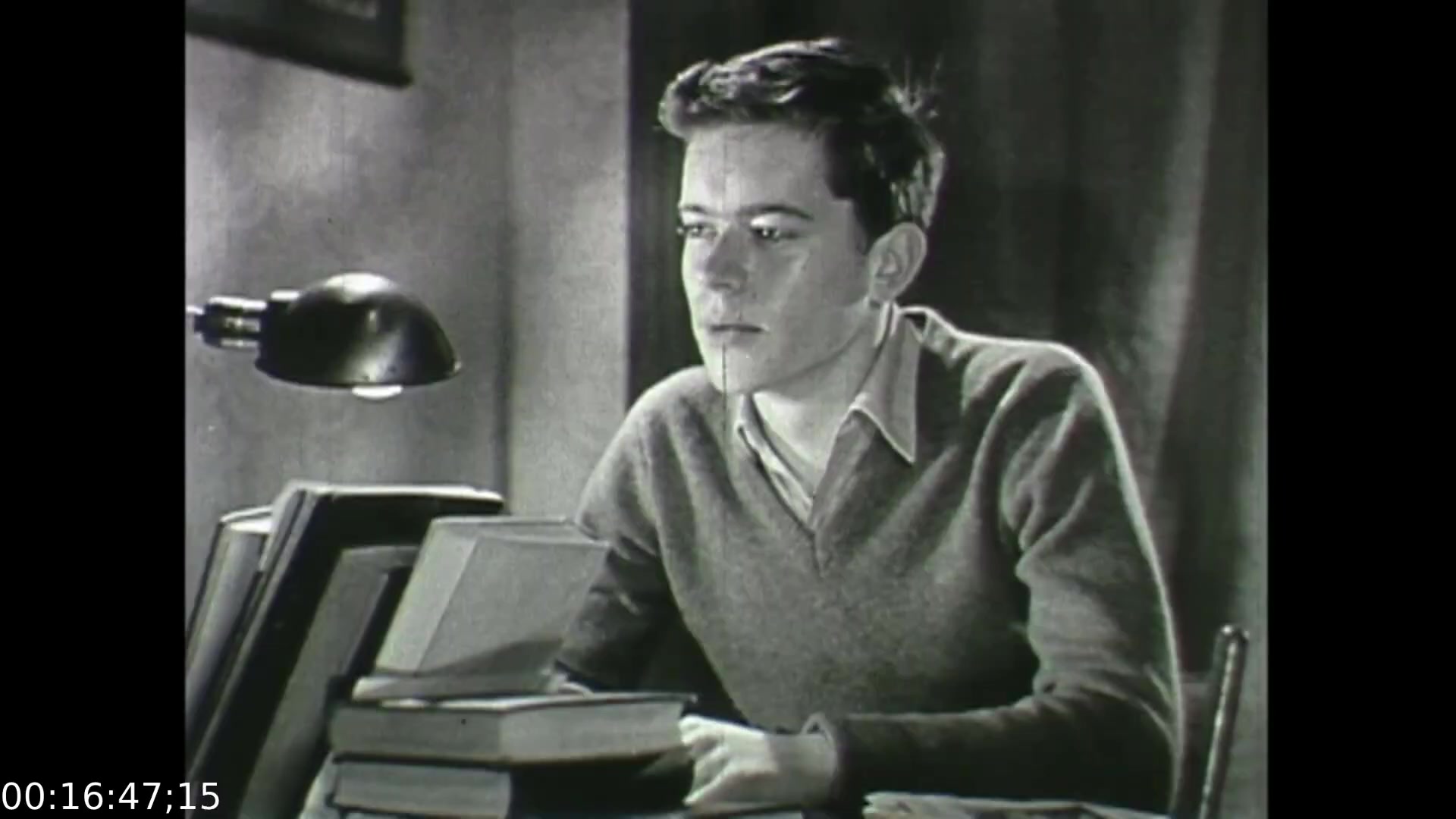
00:16:50.643 — The still from 'Feelings of Depression' (1950) features a young man, presumably depicting John Murray, deep in thought at a desk cluttered with books. A desk lamp casts a focused light, accentuating his contemplative expression. The setting conveys a somber tone, reflecting themes of introspection and emotional struggle, central to the film's exploration of depression and mental health awareness during that era. The grayscale aesthetic emphasizes the seriousness of the subject matter.
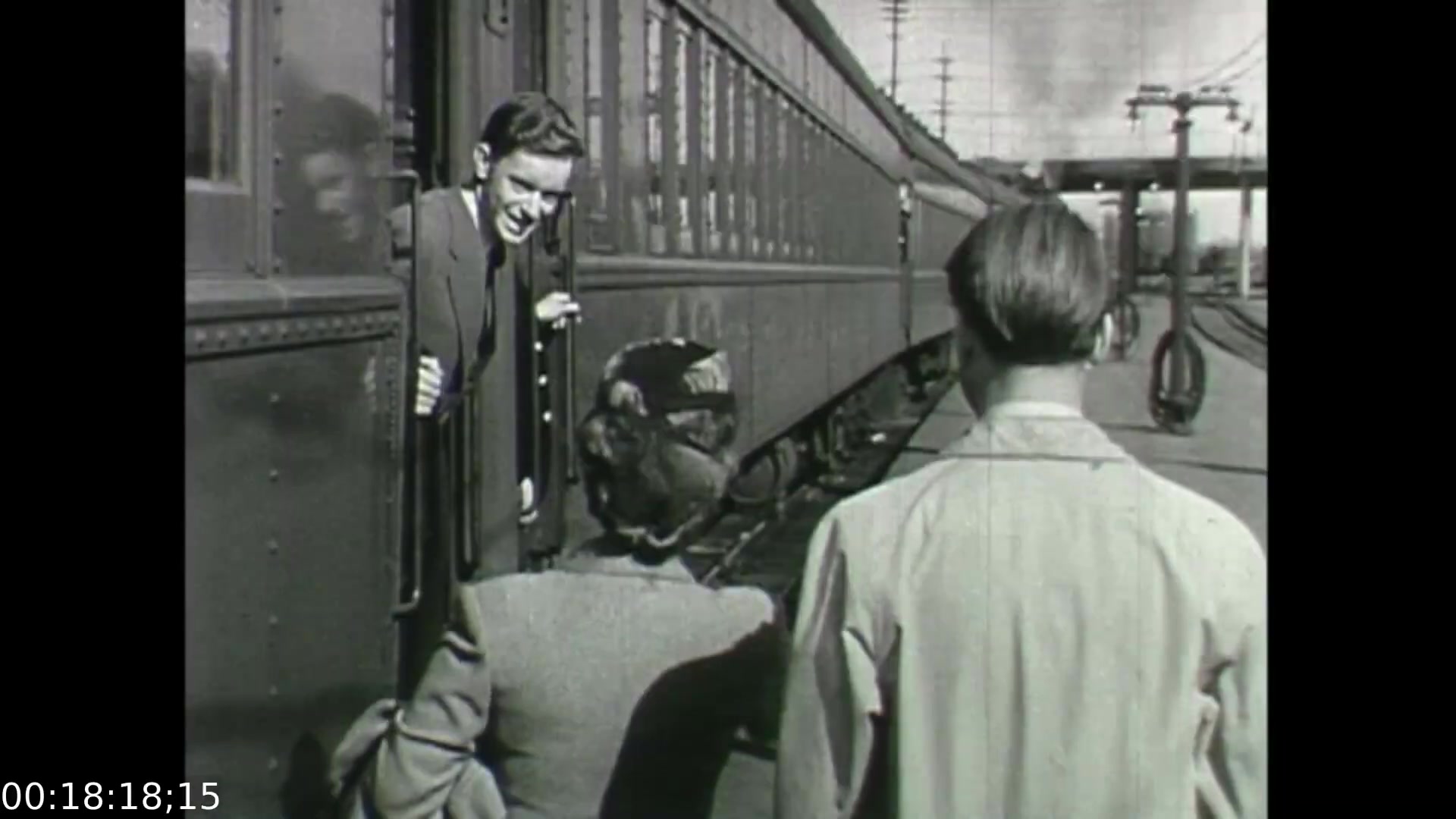
00:18:21.601 — The still from *Feelings of Depression* (1950) shows a train station scene, with a young man leaning out of a train door, smiling as he interacts with a woman in a hat and gloves. Two other figures, one facing away, seem to be engaged with her. The composition captures a moment of human connection and potential departure, subtly reflecting the emotional complexities explored in the film regarding mental health and depression. The black-and-white aesthetic emphasizes the historical context of the era.
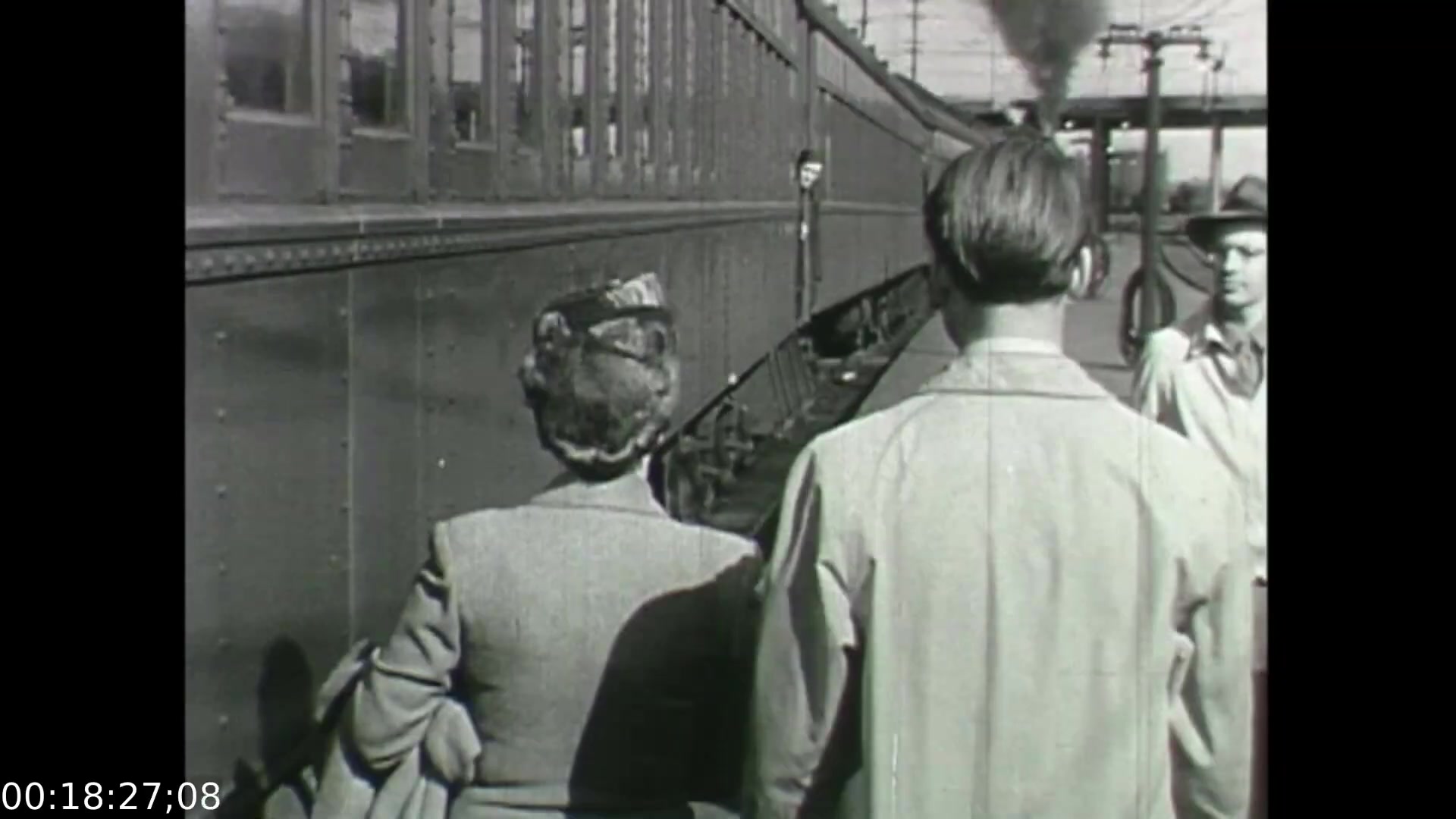
00:18:30.409 — The still from 'Feelings of Depression' (1950) captures a moment at a train station, showcasing two figures—a man and a woman—standing side by side, gazing at a train in the background. The woman, dressed in a vintage outfit with a decorative hat, appears to embody a mid-20th-century aesthetic, while the man is seen from behind, likely in a lighter coat. The scene reflects a time of travel and transition, paralleling the film's exploration of emotional struggles, particularly in the context of the protagonist John Murray's experiences with depression. The historical setting, characterized by the steam train, emphasizes the era's social dynamics and the significance of mental health awareness during the period.
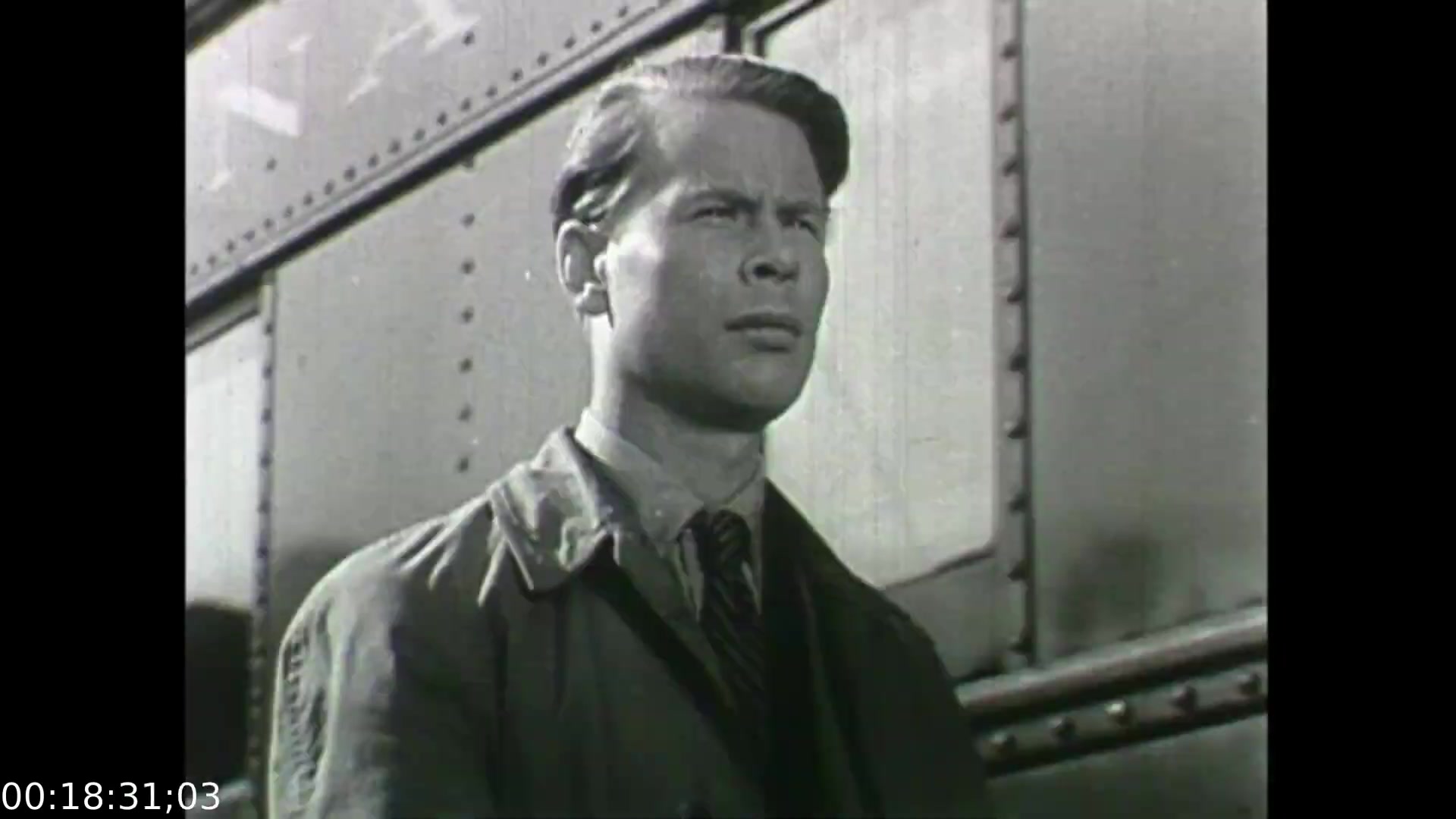
00:18:34.246 — The still from 'Feelings of Depression' depicts a solemn male character, likely John Murray, standing in front of an industrial backdrop, suggesting a narrative centered on his internal struggle. The black-and-white aesthetic, typical of the era, enhances the film's serious tone, reflecting the themes of despondency and mental health. His expression conveys a sense of contemplation or concern, aligning with the film's exploration of emotional challenges faced by individuals in a post-war society. This educational dramatization aims to raise awareness about depression and promote understanding of mental health issues.
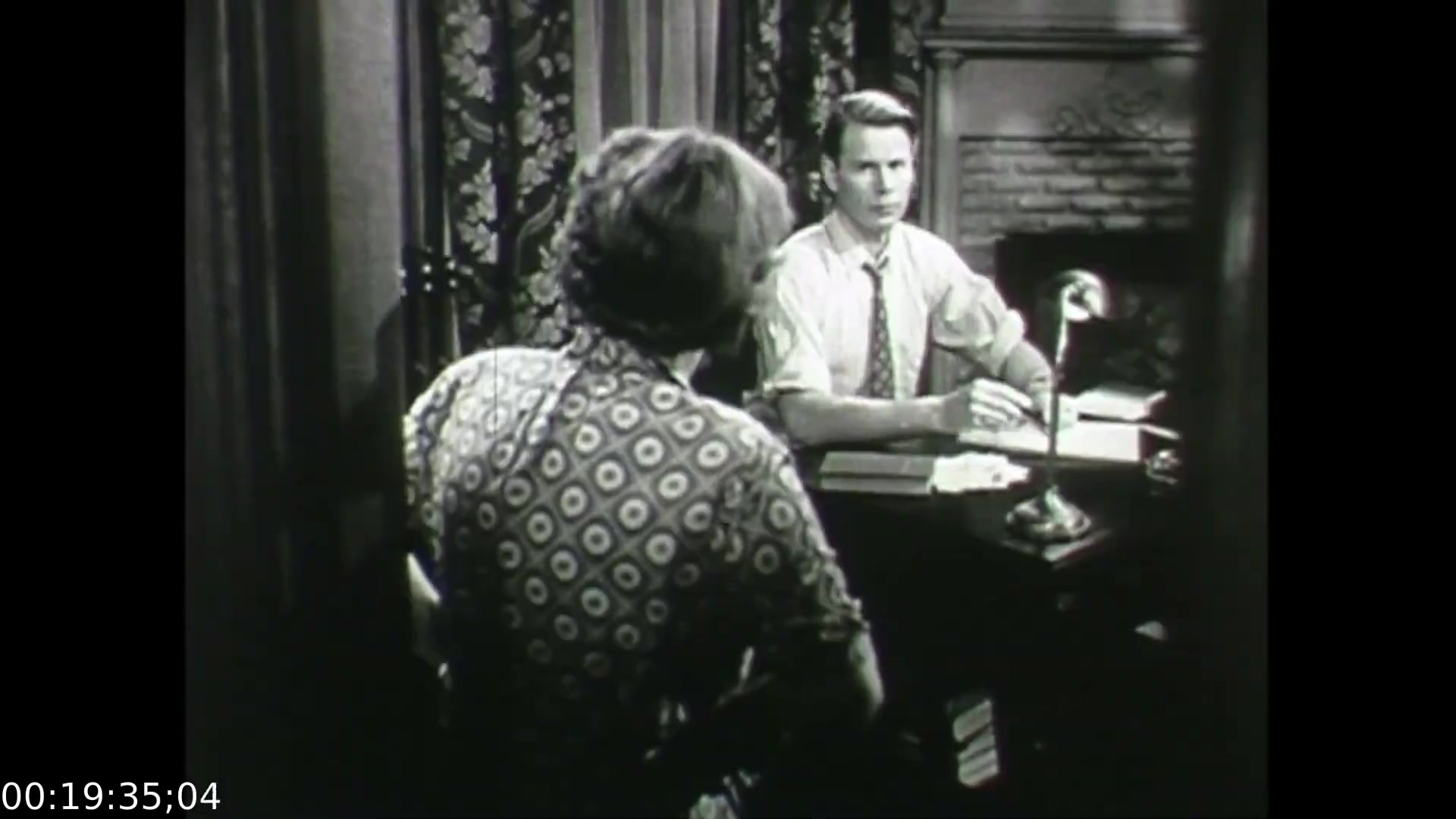
00:19:38.244 — The still from 'Feelings of Depression' (1950) depicts a pivotal moment in the film, featuring a tense conversation between two characters. One is seated at a desk, appearing engaged and serious, while the other, partially obscured from view, seems introspective. The setting suggests a formal environment, likely a consultation scene, characterized by period-appropriate decor and attire. This frame encapsulates the film's focus on mental health, illustrating the struggles of John Murray and the interpersonal dynamics of discussing depression.
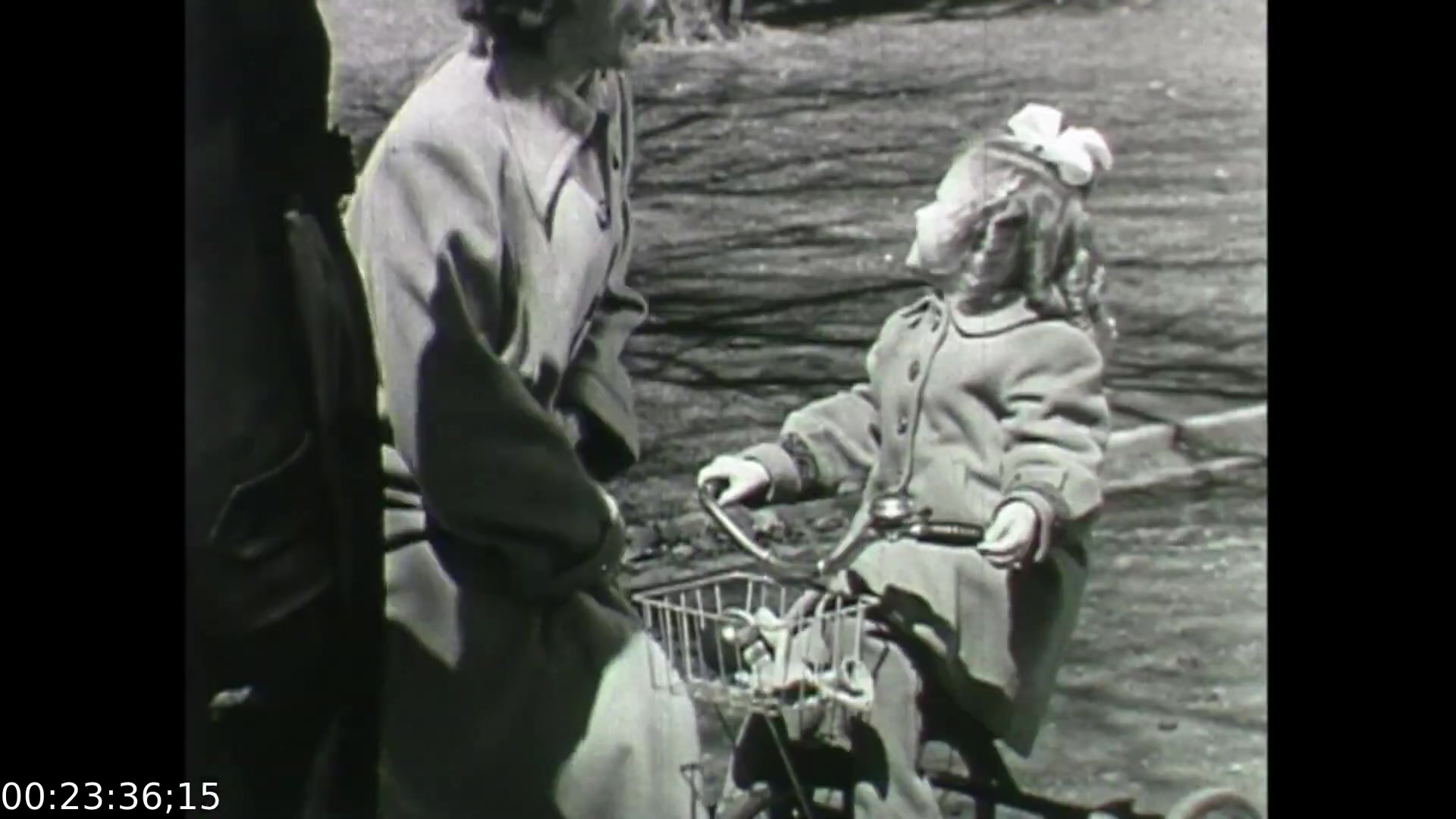
00:23:39.652 — The still from 'Feelings of Depression' shows a woman conversing with a young girl on a tricycle in a park. The woman appears to be engaged and attentive, while the girl, dressed warmly, is looking up, perhaps responding to the conversation. This scene emphasizes the supportive relationships and everyday life moments that can influence mental health, a key theme of the film which addresses the emotional struggles of the protagonist, John Murray. The film aims to raise awareness about depression and suggests the importance of social connections in coping with mental health issues.
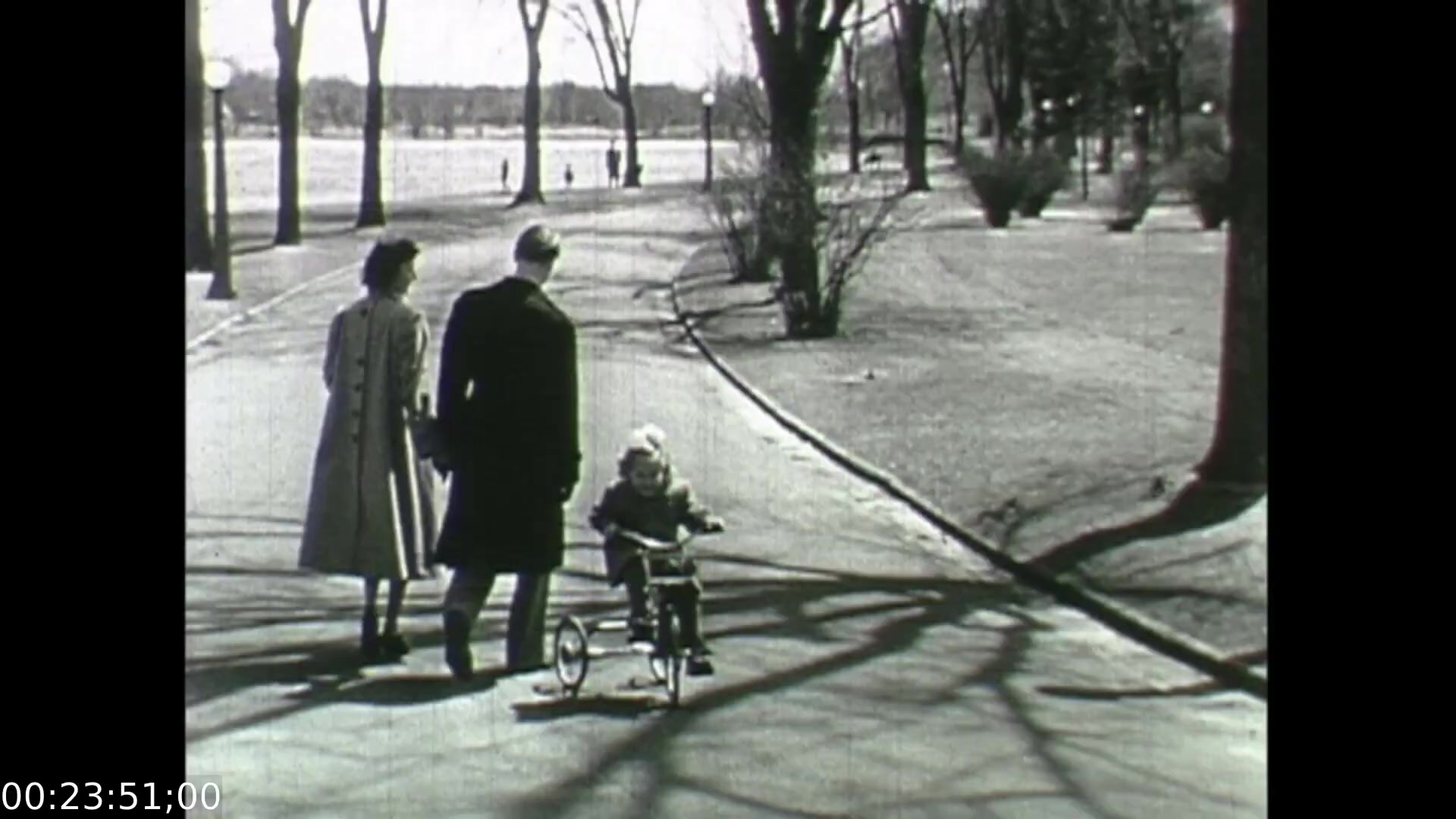
00:23:54.199 — The still from 'Feelings of Depression' (1950) depicts a serene park scene with three figures: a man and woman walking hand-in-hand while watching a child on a tricycle. Shadows from the trees stretch across the pathway, enhancing the tranquil yet somber atmosphere. This moment emphasizes familial connection and innocence, contrasting with the film's exploration of mental health struggles faced by the central character, John Murray. The stark black-and-white imagery reflects the film's post-war context and highlights societal attitudes towards depression during that era.
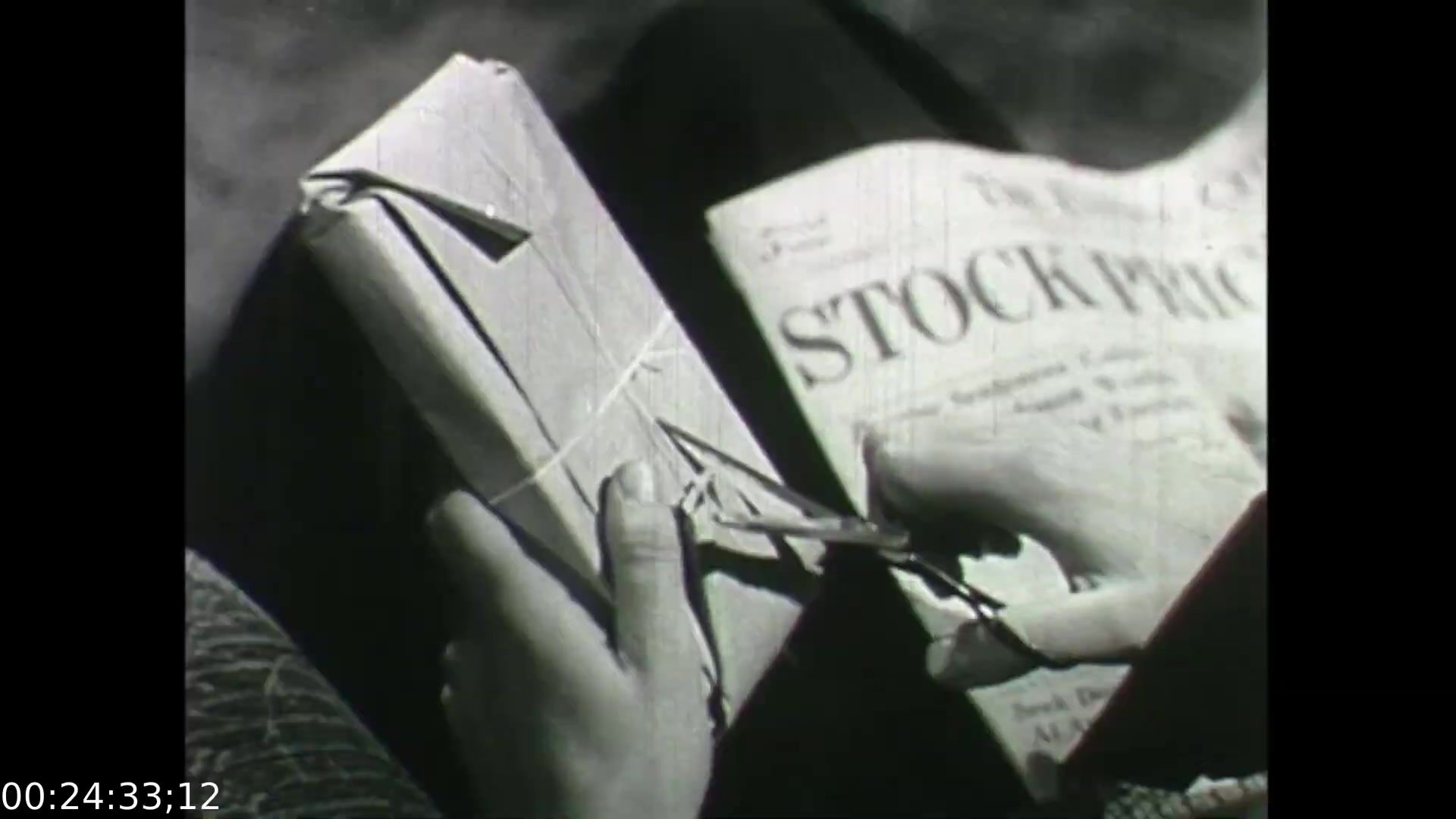
00:24:36.542 — The still from 'Feelings of Depression' (1950) depicts a close-up of hands engaged in the act of cutting twine on a wrapped package. The hands are focused and deliberate, reflecting the attentiveness of the character, John Murray, a businessman facing emotional struggles. In the background, a newspaper headline that reads 'STOCK PRICE' hints at themes of business and financial pressures. This moment may symbolize his connection to work and the stress that contributes to his despondency. The black-and-white imagery enhances the film's historical context and emotional tone.
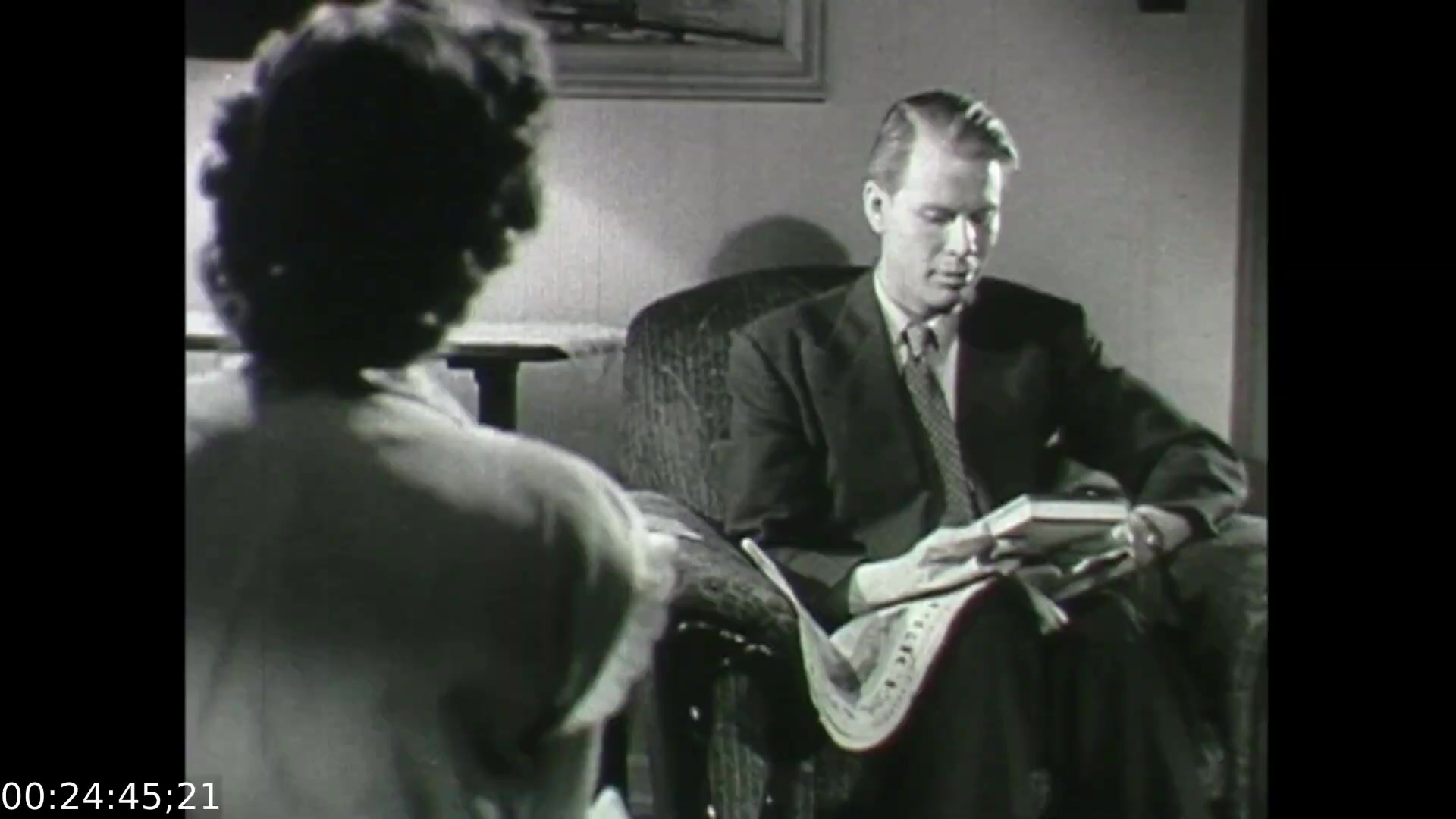
00:24:48.887 — The still from 'Feelings of Depression' (1950) depicts a tense moment in a counseling session. A businessman, John Murray, sits in a chair, visibly absorbed and possibly troubled as he looks at a book in his hands. His serious demeanor suggests he is grappling with emotional issues. In front of him, a woman, likely a therapist or confidante, is turned slightly away, her back facing the camera. This setup emphasizes the intimate yet difficult nature of their conversation, highlighting themes of despondency and the search for understanding in the postwar context of mental health.
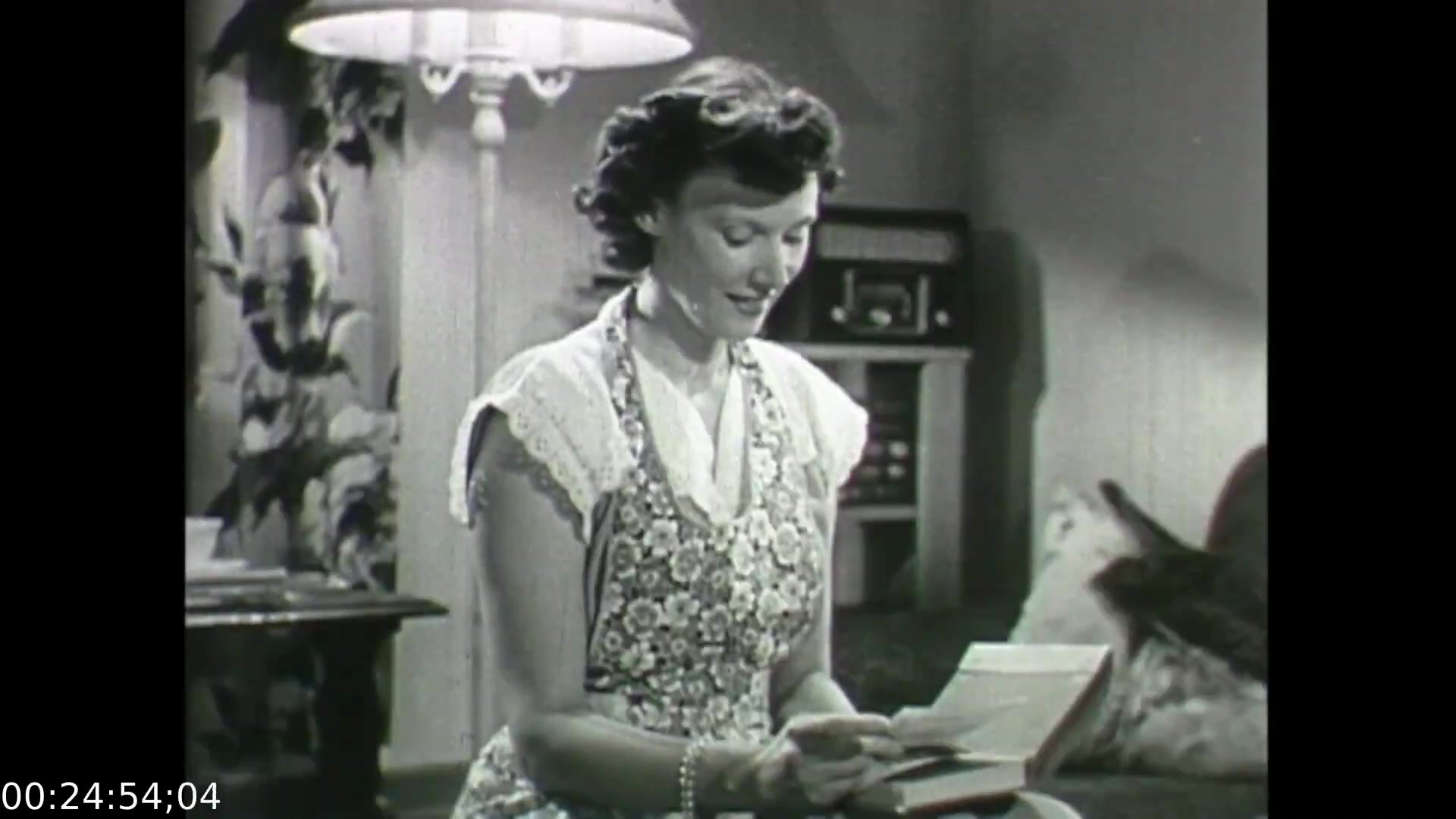
00:24:57.296 — The still from 'Feelings of Depression' depicts a young woman seated in a cozy, domestic setting, engaged in reading a letter. She wears a floral apron, suggesting a homemaker role, and her expression hints at a moment of contemplation or emotional significance in her reading. The background features a lamp and a radio, contributing to a warm, intimate atmosphere. This scene likely underscores the film's exploration of personal feelings and relationships in the context of depression, reflecting social dynamics of the era.