Great Moments in History - Thomas Edison - Army Recruiting

Shotlist & Visual Analysis
The still features text on a black background, reading 'OCTOBER 21, 1879' followed by 'EDISON.' This likely indicates a significant date related to Thomas Edison, possibly marking an important event in his career, such as the invention of the light bulb. The style suggests a historic commentary or educational focus typical of mid-20th century film.
00:00:06.640 — The still features text on a black background, reading 'OCTOBER 21, 1879' followed by 'EDISON.' This likely indicates a significant date related to Thomas Edison, possibly marking an important event in his career, such as the invention of the light bulb. The style suggests a historic commentary or educational focus typical of mid-20th century film.

The 16mm still features bold, pink lettering on a black background, stating 'EDISON WIZARD OF MENLO PARK.' The design suggests a focus on Thomas Edison's innovative contributions, likely within a historical context related to his work and influence. The print represents a promotion or dedication, possibly connecting Edison's inventions to themes of progress or recruitment, as indicated by the film's title.
00:00:07.640 — The 16mm still features bold, pink lettering on a black background, stating 'EDISON WIZARD OF MENLO PARK.' The design suggests a focus on Thomas Edison's innovative contributions, likely within a historical context related to his work and influence. The print represents a promotion or dedication, possibly connecting Edison's inventions to themes of progress or recruitment, as indicated by the film's title.

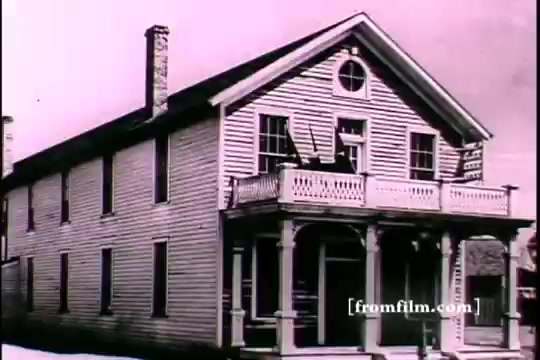
The still shows a historical wooden building, likely a house or small structure, with a distinct architectural style including a peaked roof and a wrap-around porch. The image appears to be in black and white, typical of 16mm prints, conveying a sense of nostalgia. The lack of modern elements enhances its historical context, which relates to Thomas Edison and possibly his connections to early 20th-century American society, including themes of innovation and recruitment.
00:00:09.640 — The still shows a historical wooden building, likely a house or small structure, with a distinct architectural style including a peaked roof and a wrap-around porch. The image appears to be in black and white, typical of 16mm prints, conveying a sense of nostalgia. The lack of modern elements enhances its historical context, which relates to Thomas Edison and possibly his connections to early 20th-century American society, including themes of innovation and recruitment.

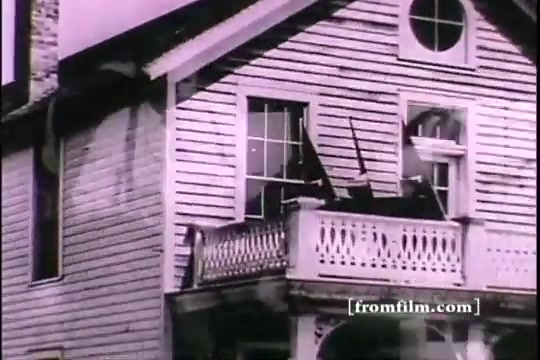
The still features the exterior of a wooden house with a balcony. A few firearms are propped against the balcony railing, suggesting a historical military or recruitment theme. The image appears to be from a vintage 16mm print, likely presenting a dramatization related to Thomas Edison and the context of army recruiting. The overall style reflects early 20th-century filmmaking aesthetics.
00:00:11.800 — The still features the exterior of a wooden house with a balcony. A few firearms are propped against the balcony railing, suggesting a historical military or recruitment theme. The image appears to be from a vintage 16mm print, likely presenting a dramatization related to Thomas Edison and the context of army recruiting. The overall style reflects early 20th-century filmmaking aesthetics.

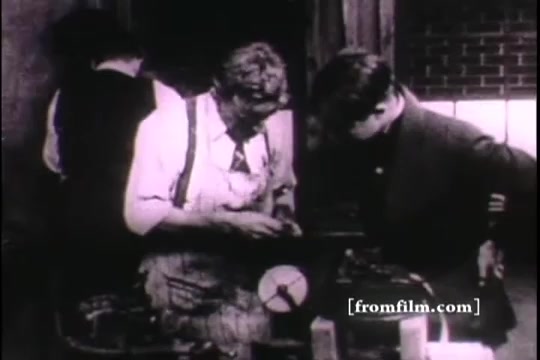
The still from 'Great Moments in History - Thomas Edison - Army Recruiting' depicts a historical scene featuring two individuals engaged in discussion over a piece of machinery, likely related to Edison's work. One person, dressed in work attire, appears to be instructing or demonstrating something to a younger individual. The setting includes industrial elements, indicative of Edison's era, with a backdrop likely representing a workshop or laboratory. The image captures a moment of learning and innovation, reflecting Edison's influence on technology and education.
00:00:15.360 — The still from 'Great Moments in History - Thomas Edison - Army Recruiting' depicts a historical scene featuring two individuals engaged in discussion over a piece of machinery, likely related to Edison's work. One person, dressed in work attire, appears to be instructing or demonstrating something to a younger individual. The setting includes industrial elements, indicative of Edison's era, with a backdrop likely representing a workshop or laboratory. The image captures a moment of learning and innovation, reflecting Edison's influence on technology and education.

The still from 'Great Moments in History - Thomas Edison - Army Recruiting' shows a close-up of two hands manipulating a bundle of thin, flexible materials, possibly wires or strings. The image is monochromatic, typical of early 16mm film, with a focus on the intricate motion of the hands as they engage with the materials. The context suggests a demonstration or instructional scene related to Edison's innovations or contributions.
00:00:23.680 — The still from 'Great Moments in History - Thomas Edison - Army Recruiting' shows a close-up of two hands manipulating a bundle of thin, flexible materials, possibly wires or strings. The image is monochromatic, typical of early 16mm film, with a focus on the intricate motion of the hands as they engage with the materials. The context suggests a demonstration or instructional scene related to Edison's innovations or contributions.

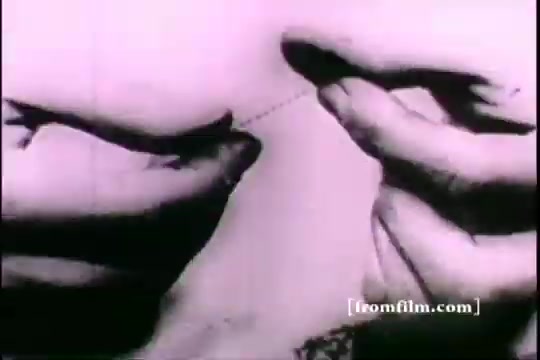
The still from 'Great Moments in History - Thomas Edison - Army Recruiting' shows a close-up of hands holding a thin wire or thread, possibly illustrating a moment of invention or experimentation. The image is in black and white, typical of 16mm prints, with a focus on the dexterity involved in handling the material, conveying a sense of precision and ingenuity.
00:00:25.360 — The still from 'Great Moments in History - Thomas Edison - Army Recruiting' shows a close-up of hands holding a thin wire or thread, possibly illustrating a moment of invention or experimentation. The image is in black and white, typical of 16mm prints, with a focus on the dexterity involved in handling the material, conveying a sense of precision and ingenuity.

The still from 'Great Moments in History - Thomas Edison - Army Recruiting' appears to focus on two hands gracefully positioned, possibly in an expressive gesture. The overall tone is monochromatic, likely reflecting the aesthetic typical of 16mm prints from that era, which can evoke a sense of nostalgia. The image may symbolize themes of innovation or enlistment related to the historical context of Edison's influence or the military.
00:00:26.000 — The still from 'Great Moments in History - Thomas Edison - Army Recruiting' appears to focus on two hands gracefully positioned, possibly in an expressive gesture. The overall tone is monochromatic, likely reflecting the aesthetic typical of 16mm prints from that era, which can evoke a sense of nostalgia. The image may symbolize themes of innovation or enlistment related to the historical context of Edison's influence or the military.

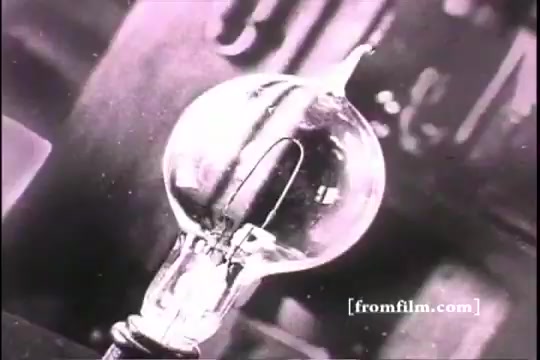
The still features a close-up of an incandescent light bulb, showcasing its clear glass envelope and glowing filament. The image reflects a vintage aesthetic typical of early 20th-century film, embodying the spirit of innovation associated with Thomas Edison. The background is slightly blurred, suggesting a workshop or laboratory setting, emphasizing the theme of invention and progress.
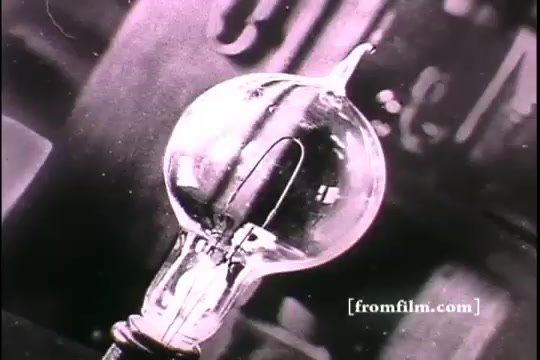
00:00:30.400 — The still features a close-up of an incandescent light bulb, showcasing its clear glass envelope and glowing filament. The image reflects a vintage aesthetic typical of early 20th-century film, embodying the spirit of innovation associated with Thomas Edison. The background is slightly blurred, suggesting a workshop or laboratory setting, emphasizing the theme of invention and progress.

The still features a close-up of an incandescent light bulb, capturing the intricate details of its glass envelope and filament. This image likely symbolizes innovation and progress, reflecting Thomas Edison's contributions to electrical lighting. The monochrome aesthetic is consistent with early 20th-century film, emphasizing the historical context.
00:00:32.800 — The still features a close-up of an incandescent light bulb, capturing the intricate details of its glass envelope and filament. This image likely symbolizes innovation and progress, reflecting Thomas Edison's contributions to electrical lighting. The monochrome aesthetic is consistent with early 20th-century film, emphasizing the historical context.

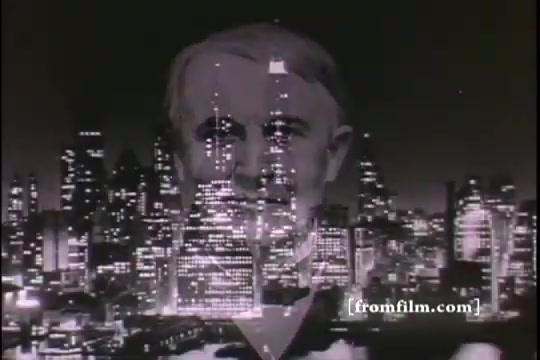
The still features a ghostly double exposure of Thomas Edison’s face merged with a city skyline at night. The urban landscape is illuminated, creating a dramatic backdrop that highlights Edison’s significance. The image evokes a sense of innovation and progress, reflecting the era's fascination with technology and industrial advancement.
00:00:40.840 — The still features a ghostly double exposure of Thomas Edison’s face merged with a city skyline at night. The urban landscape is illuminated, creating a dramatic backdrop that highlights Edison’s significance. The image evokes a sense of innovation and progress, reflecting the era's fascination with technology and industrial advancement.

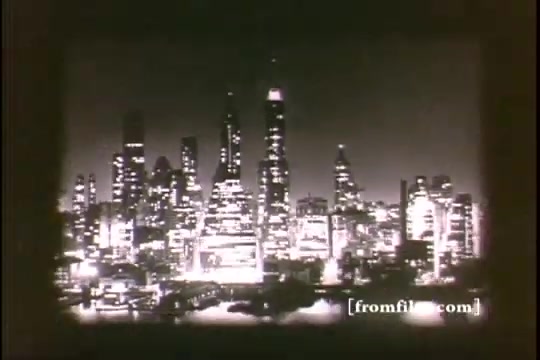
The still from 'Great Moments in History - Thomas Edison - Army Recruiting' features a black-and-white nighttime cityscape, showcasing a skyline filled with towering buildings illuminated by lights. The scene conveys a sense of urban grandeur and historical significance, reflecting an era of innovation associated with Thomas Edison. The focus is on the bustling city atmosphere, indicative of the time period. The image appears to be from a 16mm film print, capturing a nostalgic view of the past.
00:00:43.840 — The still from 'Great Moments in History - Thomas Edison - Army Recruiting' features a black-and-white nighttime cityscape, showcasing a skyline filled with towering buildings illuminated by lights. The scene conveys a sense of urban grandeur and historical significance, reflecting an era of innovation associated with Thomas Edison. The focus is on the bustling city atmosphere, indicative of the time period. The image appears to be from a 16mm film print, capturing a nostalgic view of the past.

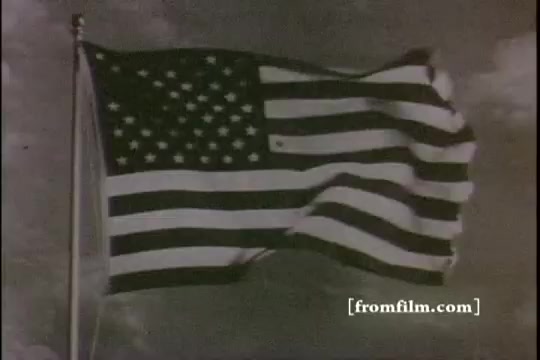
The still depicts the American flag waving in the wind against a cloudy sky. The image is in black and white, characteristic of 16mm film prints, conveying a nostalgic and historical feel, likely underscoring themes of patriotism and national identity in the context of the film 'Great Moments in History - Thomas Edison - Army Recruiting.'
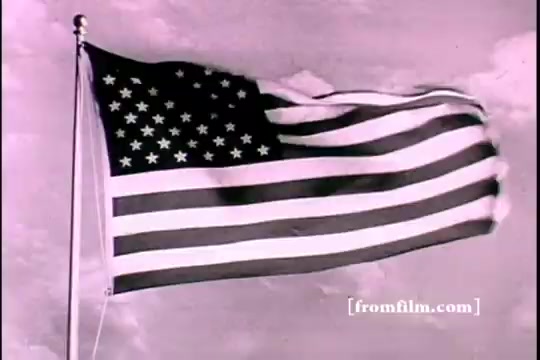
00:00:45.400 — The still depicts the American flag waving in the wind against a cloudy sky. The image is in black and white, characteristic of 16mm film prints, conveying a nostalgic and historical feel, likely underscoring themes of patriotism and national identity in the context of the film 'Great Moments in History - Thomas Edison - Army Recruiting.'

The still features a waving American flag against a cloudy backdrop, emphasizing patriotism. The visual quality reflects the characteristics of a 16mm print, likely capturing the historical context of Army recruiting during the time of Thomas Edison. The composition evokes a sense of national pride.

00:00:46.800 — The still features a waving American flag against a cloudy backdrop, emphasizing patriotism. The visual quality reflects the characteristics of a 16mm print, likely capturing the historical context of Army recruiting during the time of Thomas Edison. The composition evokes a sense of national pride.

Film Transcript / Subtitles

October 21st, 1879. Edison, Wizard of Menlo Park. In an isolated laboratory 25 miles from New York, Thomas Alva Edison, scientist, inventor, searches for a filament that will make the incandescent lamp practical. Three years and 1,600 tests have gone into the project with no success. But Edison won't give up. He tries again, this time carefully carbonizing a thin cotton thread. He attaches it to electric leads inside the glass bulb. Then he turns on the current. The lamp glows and continues to glow for 40 hours. Edison, inventor of the phonograph, perfecter of the movie camera, creates a new source of light for the 20th century. If you're searching for opportunities for leadership and responsibility, check out the many ways you can become a United States Army officer. If you're good enough to get in, a proud future can be yours in the new Action Army. If you are