News item: do you prefer auto-color or not
Shotlist & Visual Analysis
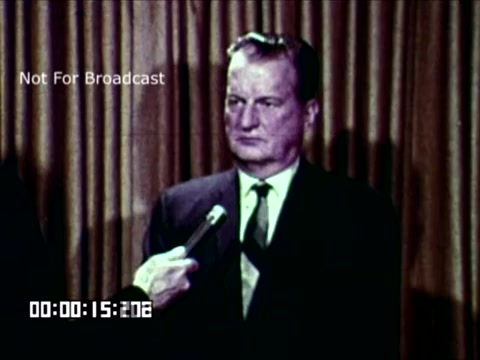
00:00:00.000 — The still depicts a man in a suit being interviewed, likely discussing preferences regarding auto-color in media. He appears serious and is holding a microphone, suggesting a formal context or news segment. The backdrop features draped curtains, adding to the professional setting. The screen also includes a 'Not For Broadcast' label. Overall, it captures a moment focused on a discussion around color usage in broadcasting.
00:00:53.253 — The still shows a middle-aged man in a suit, standing in front of a textured curtain, seemingly in a press interview. A microphone is directed towards him, indicating he is answering questions, likely about the topic of auto-color in film or broadcast. The muted color tones suggest it may be an older footage, possibly highlighting a discussion on the preferences of color correction technology in media.
Film Transcript / Subtitles
Our industry strongly supports federal legislation aimed at establishing responsibility for cleaning
up oil spills when they occur in spite of our best efforts to prevent them.
We are urging that several principles be embodied in the legislation now under consideration
by the Congress.
First, we believe that the party at fault and responsible for an oil spill should clean it up.
We also believe that there should be reasonable, equitable limits on cleanup liability.
When the party at fault does not clean up, we believe that the government should be authorized to do so and to collect its costs.
Nobody wants an oil spill.
Our industry strongly supports federal legislation aimed at establishing responsibility for cleaning
up oil spills when they occur in spite of our best efforts to prevent them.
We are urging that several principles be embodied in the legislation now under consideration by the Congress.
First, we believe that the party at fault and responsible for an oil spill should clean it up.
We also believe that there should be reasonable, equitable limits on cleanup liability.
When the party at fault does not clean up, we believe that the government should be authorized to do so and to collect its costs.
Nobody wants an oil spill.
We believe that the government should be authorized to deliver any odd of projects that bond Company545
are equally getting domesticated in the legislation that we have expected.