Prevent Blindness PSA - 1967?

Shotlist & Visual Analysis
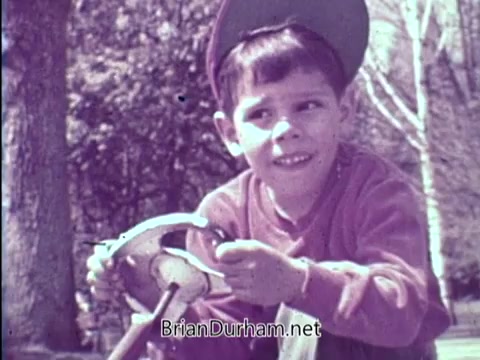
The still features a young boy wearing a cap, engaged with a toy steering wheel while outdoors. His expression conveys concentration and curiosity. The scene likely reflects the importance of vision in childhood activities, aligning with the PSA's message about amblyopia and the need for early detection of eye problems. The background hints at a natural setting, reinforcing the theme of active childhood.
00:00:00.000 — The still features a young boy wearing a cap, engaged with a toy steering wheel while outdoors. His expression conveys concentration and curiosity. The scene likely reflects the importance of vision in childhood activities, aligning with the PSA's message about amblyopia and the need for early detection of eye problems. The background hints at a natural setting, reinforcing the theme of active childhood.

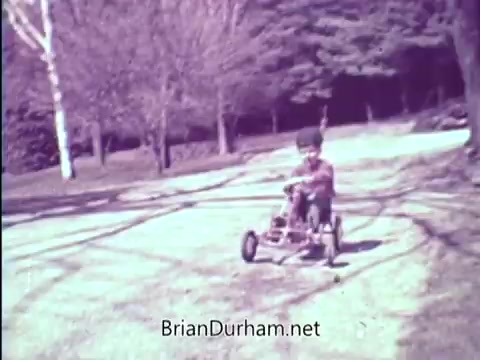
The still depicts a young child riding a small go-kart on a pathway, surrounded by trees. The setting appears to be a sunny day, evoking a sense of innocence and play. This image aligns with the voiceover's message about the importance of vision, particularly addressing the issue of Amblyopia (lazy eye) and the need for early detection and treatment to prevent blindness in children.
00:00:03.570 — The still depicts a young child riding a small go-kart on a pathway, surrounded by trees. The setting appears to be a sunny day, evoking a sense of innocence and play. This image aligns with the voiceover's message about the importance of vision, particularly addressing the issue of Amblyopia (lazy eye) and the need for early detection and treatment to prevent blindness in children.

The 16mm still from the 'Prevent Blindness PSA - 1967' likely features a visual representation related to amblyopia, or 'lazy eye.' The voiceover emphasizes the importance of vision for children, highlighting that one in twenty preschoolers may have eye problems. It points out that untreated amblyopia can lead to permanent vision issues and underscores the necessity for early detection and intervention to prevent blindness. The imagery probably supports the critical message about eye health and awareness.
00:00:06.073 — The 16mm still from the 'Prevent Blindness PSA - 1967' likely features a visual representation related to amblyopia, or 'lazy eye.' The voiceover emphasizes the importance of vision for children, highlighting that one in twenty preschoolers may have eye problems. It points out that untreated amblyopia can lead to permanent vision issues and underscores the necessity for early detection and intervention to prevent blindness. The imagery probably supports the critical message about eye health and awareness.

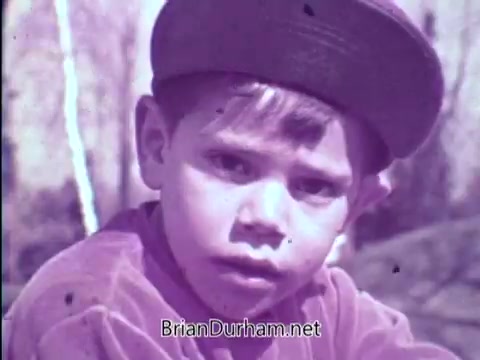
The still from the 1967 'Prevent Blindness PSA' features a young boy wearing a cap, looking directly at the camera with a serious expression. The image, likely faded and with a purple tint, conveys a sense of concern about vision health. The accompanying voiceover discusses the importance of detecting amblyopia (lazy eye) in children, emphasizing that early intervention can help prevent blindness. The ad aims to raise awareness about children's eye health, highlighting that one in twenty preschoolers have eye problems.
00:00:16.450 — The still from the 1967 'Prevent Blindness PSA' features a young boy wearing a cap, looking directly at the camera with a serious expression. The image, likely faded and with a purple tint, conveys a sense of concern about vision health. The accompanying voiceover discusses the importance of detecting amblyopia (lazy eye) in children, emphasizing that early intervention can help prevent blindness. The ad aims to raise awareness about children's eye health, highlighting that one in twenty preschoolers have eye problems.

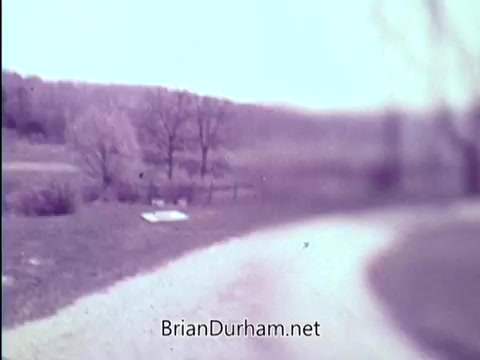
The still from the 'Prevent Blindness PSA - 1967' depicts a blurred landscape, emphasizing the theme of visual impairment associated with amblyopia, also known as lazy eye. The imagery likely represents how one might see with an affected eye, illustrating the key message that early detection and treatment are essential to prevent blindness in children. The PSA aims to raise awareness of the importance of good eyesight for children by highlighting that one in twenty preschoolers may experience eye problems.
00:00:18.952 — The still from the 'Prevent Blindness PSA - 1967' depicts a blurred landscape, emphasizing the theme of visual impairment associated with amblyopia, also known as lazy eye. The imagery likely represents how one might see with an affected eye, illustrating the key message that early detection and treatment are essential to prevent blindness in children. The PSA aims to raise awareness of the importance of good eyesight for children by highlighting that one in twenty preschoolers may experience eye problems.

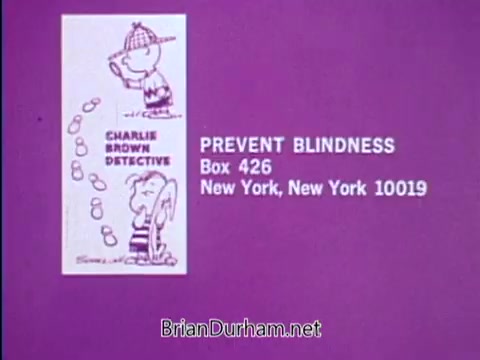
The still from the 'Prevent Blindness PSA - 1967' features a purple background with a promotional graphic that includes characters resembling Charlie Brown and a friend. The text highlights the organization 'Prevent Blindness' and provides a mailing address in New York City. The visual aims to raise awareness about amblyopia, or lazy eye, emphasizing the importance of early detection and treatment to maintain good vision in children.

00:00:23.090 — The still from the 'Prevent Blindness PSA - 1967' features a purple background with a promotional graphic that includes characters resembling Charlie Brown and a friend. The text highlights the organization 'Prevent Blindness' and provides a mailing address in New York City. The visual aims to raise awareness about amblyopia, or lazy eye, emphasizing the importance of early detection and treatment to maintain good vision in children.

Film Transcript / Subtitles

He needs two good eyes, good sight for a lifetime. But children with amblyopia see clearly with one eye. The other eye, the lazy eye sees an out-of-focus world. One out of 20 preschool children have eye problems. Early detection and treatment can prevent lazy eye blindness. Find out about amblyopia. For your free Charlie Brown pamphlet, write Prevent Blindness, Box 426, New York 10019.