The human cell and the cytologist

Shotlist & Visual Analysis
The 16mm still from 'The Human Cell and the Cytologist' features the word 'FOCUS' prominently displayed in a circular design against a textured, likely film-worn background. The visual elements suggest a classic education theme, possibly related to microscopy or cellular studies. The overall appearance indicates it is part of a larger sequence intended to engage viewers in biological concepts.
00:00:01.735 — The 16mm still from 'The Human Cell and the Cytologist' features the word 'FOCUS' prominently displayed in a circular design against a textured, likely film-worn background. The visual elements suggest a classic education theme, possibly related to microscopy or cellular studies. The overall appearance indicates it is part of a larger sequence intended to engage viewers in biological concepts.

The still from 'The Human Cell and the Cytologist' depicts a stylized representation of a human cell. The cell is centrally located, featuring a prominent nucleus with a reddish hue surrounded by a lighter cytoplasm. The background consists of abstract, colorful shapes that suggest various cellular structures or environments, emphasizing an educational focus on cellular biology. The visual style is likely simplified and artistic to aid viewers in understanding complex concepts.
00:00:14.781 — The still from 'The Human Cell and the Cytologist' depicts a stylized representation of a human cell. The cell is centrally located, featuring a prominent nucleus with a reddish hue surrounded by a lighter cytoplasm. The background consists of abstract, colorful shapes that suggest various cellular structures or environments, emphasizing an educational focus on cellular biology. The visual style is likely simplified and artistic to aid viewers in understanding complex concepts.

The still features a vibrant, stylized depiction of cellular structures against a rich, patterned backdrop. Central to the image is a large, abstract pink shape that likely represents a part of a cell, surrounded by various geometric forms in muted colors. The overall aesthetic conveys an educational and artistic interpretation of cellular biology, typical of mid-20th-century educational films.
00:00:19.920 — The still features a vibrant, stylized depiction of cellular structures against a rich, patterned backdrop. Central to the image is a large, abstract pink shape that likely represents a part of a cell, surrounded by various geometric forms in muted colors. The overall aesthetic conveys an educational and artistic interpretation of cellular biology, typical of mid-20th-century educational films.

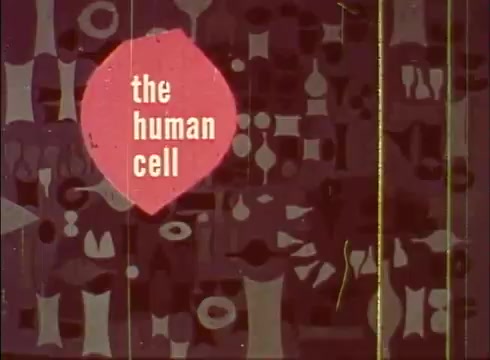
The still features a graphic design typical of mid-20th century educational films. It prominently showcases the phrase 'the human cell' in a bold, white font within a pink, organic shape. The background consists of a patterned collage of abstract shapes and forms, possibly representing cellular structures, all in muted colors. The overall composition emphasizes a scientific yet artistic approach, suitable for an educational context.
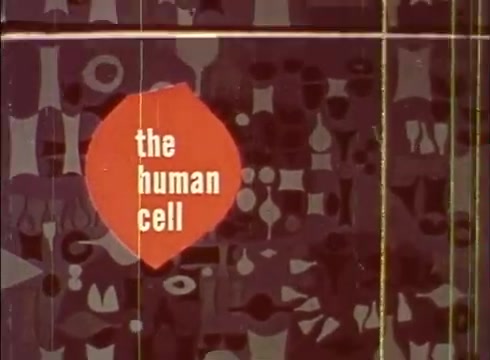
00:00:23.757 — The still features a graphic design typical of mid-20th century educational films. It prominently showcases the phrase 'the human cell' in a bold, white font within a pink, organic shape. The background consists of a patterned collage of abstract shapes and forms, possibly representing cellular structures, all in muted colors. The overall composition emphasizes a scientific yet artistic approach, suitable for an educational context.

The still features a vibrant title card for the educational film 'The Human Cell and the Cytologist,' set against a patterned background of abstract shapes and forms. The title is prominently displayed in a bold, modern font, with 'the human cell' highlighted in white against a red shape. The overall aesthetic reflects a mid-20th century design, combining scientific themes with artistic visuals.
00:00:25.392 — The still features a vibrant title card for the educational film 'The Human Cell and the Cytologist,' set against a patterned background of abstract shapes and forms. The title is prominently displayed in a bold, modern font, with 'the human cell' highlighted in white against a red shape. The overall aesthetic reflects a mid-20th century design, combining scientific themes with artistic visuals.

The still from 'The Human Cell and the Cytologist' likely features a blurred or abstract representation typical of 16mm film. The image may include color gradients and vertical lines, suggesting a focus on cellular structures or processes within an educational context. It captures the essence of scientific exploration while possibly emphasizing visual engagement rather than detailed clarity.
00:00:27.728 — The still from 'The Human Cell and the Cytologist' likely features a blurred or abstract representation typical of 16mm film. The image may include color gradients and vertical lines, suggesting a focus on cellular structures or processes within an educational context. It captures the essence of scientific exploration while possibly emphasizing visual engagement rather than detailed clarity.

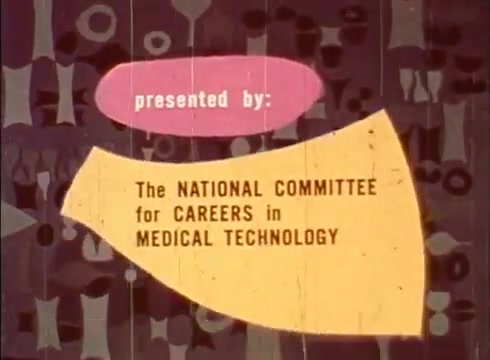
The still features colorful, abstract shapes and playful typography typical of mid-20th-century design. It displays the title 'presented by' in a pink bubble, followed by 'The NATIONAL COMMITTEE for CAREERS in MEDICAL TECHNOLOGY' highlighted in an orange/yellow banner. The background includes stylized, circular motifs, likely representing biological themes, fitting for an educational film about cells and cytology.
00:00:28.929 — The still features colorful, abstract shapes and playful typography typical of mid-20th-century design. It displays the title 'presented by' in a pink bubble, followed by 'The NATIONAL COMMITTEE for CAREERS in MEDICAL TECHNOLOGY' highlighted in an orange/yellow banner. The background includes stylized, circular motifs, likely representing biological themes, fitting for an educational film about cells and cytology.

The still features a stylized background with abstract shapes and patterns indicative of cellular structures. Prominent text highlights that the film is presented by 'The National Committee for Careers in Medical Technology.' The design evokes an educational atmosphere, suitable for a film focused on the human cell and cytology, utilizing vibrant colors to capture attention.
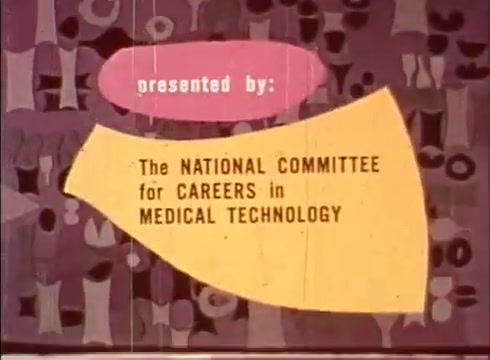
00:00:30.230 — The still features a stylized background with abstract shapes and patterns indicative of cellular structures. Prominent text highlights that the film is presented by 'The National Committee for Careers in Medical Technology.' The design evokes an educational atmosphere, suitable for a film focused on the human cell and cytology, utilizing vibrant colors to capture attention.

The still features a colorful graphic design typical of educational films from the mid-20th century. It prominently displays the title 'presented by:' in a playful font, followed by the text 'The NATIONAL COMMITTEE for CAREERS in MEDICAL TECHNOLOGY' on a yellow background. The design elements include abstract shapes and patterns in the background, contributing to its engaging visual style aimed at educating viewers about cytology and related career opportunities.
00:00:30.797 — The still features a colorful graphic design typical of educational films from the mid-20th century. It prominently displays the title 'presented by:' in a playful font, followed by the text 'The NATIONAL COMMITTEE for CAREERS in MEDICAL TECHNOLOGY' on a yellow background. The design elements include abstract shapes and patterns in the background, contributing to its engaging visual style aimed at educating viewers about cytology and related career opportunities.

The still from 'The Human Cell and the Cytologist' depicts a modern educational facility, showcasing two distinct buildings: a white, flat-roofed structure in the foreground and a taller red-brick building in the background. The scene is set in a landscaped area, suggesting an environment conducive to learning. The film's aesthetic is characteristic of educational content from the period, with a slightly faded color palette.
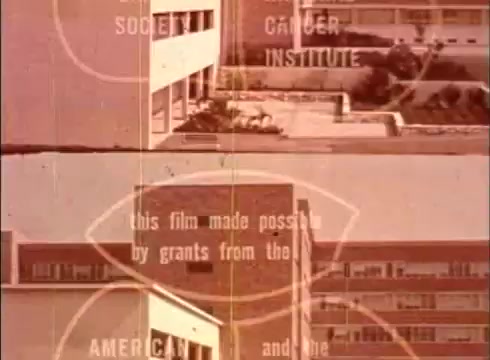
00:00:45.078 — The still from 'The Human Cell and the Cytologist' depicts a modern educational facility, showcasing two distinct buildings: a white, flat-roofed structure in the foreground and a taller red-brick building in the background. The scene is set in a landscaped area, suggesting an environment conducive to learning. The film's aesthetic is characteristic of educational content from the period, with a slightly faded color palette.

The still features a vintage educational film frame showcasing a caption highlighting funding sources, specifically mentioning the American Cancer Society and the Cancer Institute. The scene appears to depict an exterior view of a building, likely related to medical or scientific research. The overall aesthetic reflects a mid-20th century film style, typical of educational films of that era.
00:00:47.147 — The still features a vintage educational film frame showcasing a caption highlighting funding sources, specifically mentioning the American Cancer Society and the Cancer Institute. The scene appears to depict an exterior view of a building, likely related to medical or scientific research. The overall aesthetic reflects a mid-20th century film style, typical of educational films of that era.

The still features text overlaid on a building, indicating that the film 'The Human Cell and the Cytologist' was funded by grants from the American Cancer Society and the National Cancer Institute. The visual style reflects the educational nature of the film, with emphasis on the importance of cancer research. The background shows a plain institutional structure, typical of educational film aesthetics from that era.
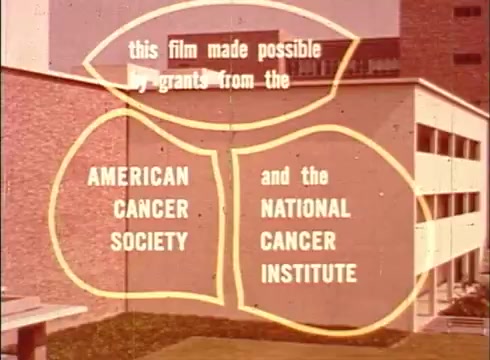
00:00:56.657 — The still features text overlaid on a building, indicating that the film 'The Human Cell and the Cytologist' was funded by grants from the American Cancer Society and the National Cancer Institute. The visual style reflects the educational nature of the film, with emphasis on the importance of cancer research. The background shows a plain institutional structure, typical of educational film aesthetics from that era.

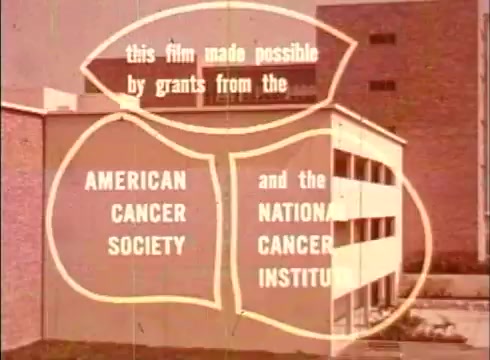
The still from 'The Human Cell and the Cytologist' features text within three overlapping circles. It credits the funding sources for the film, highlighting contributions from the American Cancer Society and the National Cancer Institute. The background shows a building, indicating an academic or research setting. The visual style is typical of educational films from that era, with bold, clear lettering on a muted background.
00:01:00.794 — The still from 'The Human Cell and the Cytologist' features text within three overlapping circles. It credits the funding sources for the film, highlighting contributions from the American Cancer Society and the National Cancer Institute. The background shows a building, indicating an academic or research setting. The visual style is typical of educational films from that era, with bold, clear lettering on a muted background.

The still captures a quiet outdoor scene, likely from an educational film focused on the human cell and cytology. The setting includes a landscaped area with a bench, where two individuals are seated, while a child walks by. The backdrop features a large brick building, suggesting a medical or educational environment. The overall tone is calm and conducive to a learning atmosphere.
00:01:09.303 — The still captures a quiet outdoor scene, likely from an educational film focused on the human cell and cytology. The setting includes a landscaped area with a bench, where two individuals are seated, while a child walks by. The backdrop features a large brick building, suggesting a medical or educational environment. The overall tone is calm and conducive to a learning atmosphere.

The still features a title card displaying the word 'CYTOLOGY' against a textured brown background. The text is prominently positioned, likely intended to introduce a segment of the educational film focused on the study of cells. The overall aesthetic reflects the vintage style typical of 16mm prints, with visible grain and slight imperfections.
00:01:30.891 — The still features a title card displaying the word 'CYTOLOGY' against a textured brown background. The text is prominently positioned, likely intended to introduce a segment of the educational film focused on the study of cells. The overall aesthetic reflects the vintage style typical of 16mm prints, with visible grain and slight imperfections.

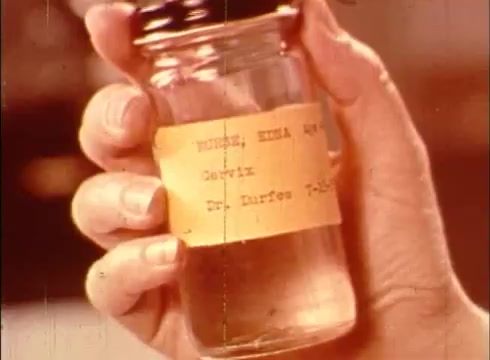
The still features a close-up of a hand holding a glass jar with a screw-top lid. The jar contains a clear liquid and has a yellow label that reads 'Tissue, human leg Seawix' along with the name 'Dr. Durfee' and a date. The film appears to be part of an educational segment discussing human cells and cytology, emphasizing the practical aspects of biological study. The overall image is characterized by a vintage aesthetic typical of 16mm prints.
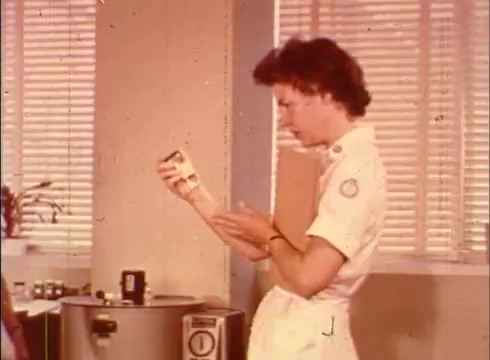
00:01:37.998 — The still features a close-up of a hand holding a glass jar with a screw-top lid. The jar contains a clear liquid and has a yellow label that reads 'Tissue, human leg Seawix' along with the name 'Dr. Durfee' and a date. The film appears to be part of an educational segment discussing human cells and cytology, emphasizing the practical aspects of biological study. The overall image is characterized by a vintage aesthetic typical of 16mm prints.

The still features a nurse in a crisp white uniform, examining a small container in her hands. She stands in a laboratory setting, with a countertop appliance visible behind her, likely a centrifuge or storage unit. Natural light filters through blinds, illuminating the scene, which conveys a focused and educational atmosphere typical of instructional films on cellular biology.
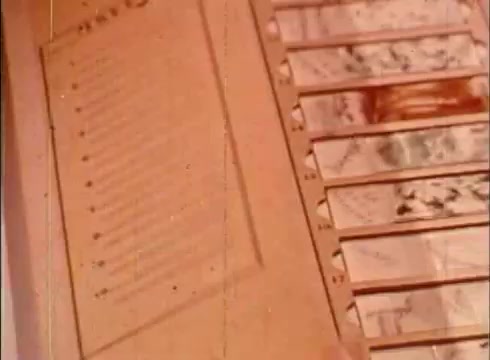
00:01:40.133 — The still features a nurse in a crisp white uniform, examining a small container in her hands. She stands in a laboratory setting, with a countertop appliance visible behind her, likely a centrifuge or storage unit. Natural light filters through blinds, illuminating the scene, which conveys a focused and educational atmosphere typical of instructional films on cellular biology.

The still depicts a page from an educational film featuring a list, likely outlining key points or findings related to cytology. Adjacent to the text are several filmstrips, showcasing various microscopic images or diagrams pertinent to the study of human cells. The overall color tone is warm and slightly faded, characteristic of a 16mm print, emphasizing its vintage quality. The scene serves to illustrate the educational focus on cellular structures and their examination.
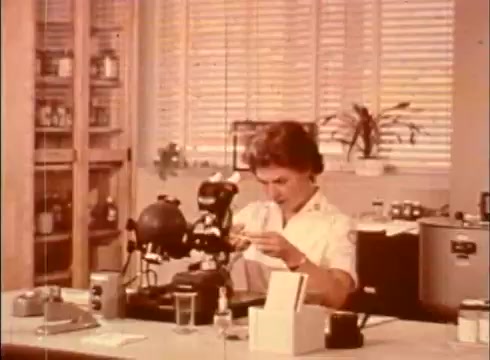
00:01:47.240 — The still depicts a page from an educational film featuring a list, likely outlining key points or findings related to cytology. Adjacent to the text are several filmstrips, showcasing various microscopic images or diagrams pertinent to the study of human cells. The overall color tone is warm and slightly faded, characteristic of a 16mm print, emphasizing its vintage quality. The scene serves to illustrate the educational focus on cellular structures and their examination.

The still features a female cytologist in a laboratory setting, intently examining a slide under a microscope. The background includes shelves with various lab equipment and containers, while natural light streams through the windows, suggesting a bright and organized workspace. The overall atmosphere is focused on scientific inquiry and education regarding cellular biology.

00:01:53.246 — The still features a female cytologist in a laboratory setting, intently examining a slide under a microscope. The background includes shelves with various lab equipment and containers, while natural light streams through the windows, suggesting a bright and organized workspace. The overall atmosphere is focused on scientific inquiry and education regarding cellular biology.

The still appears to be a somewhat blurred or distorted image, likely a result of the aging or projection quality of a 16mm print. It may depict a visual associated with the educational themes of 'The Human Cell and the Cytologist,' potentially conveying cellular structures or processes. The colors may have a warm tone, suggesting a focus on the biological aspects of human cells.
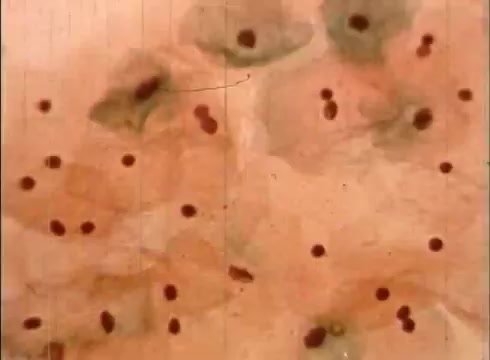
00:02:00.220 — The still appears to be a somewhat blurred or distorted image, likely a result of the aging or projection quality of a 16mm print. It may depict a visual associated with the educational themes of 'The Human Cell and the Cytologist,' potentially conveying cellular structures or processes. The colors may have a warm tone, suggesting a focus on the biological aspects of human cells.

The still features a close-up view of cells, presented in a soft, muted color palette with shades of brown, green, and red. The cells are visible with distinct nuclei, showcasing their structure in a microscopic format. This educational film likely aims to illustrate cellular biology and the role of cytologists in studying cell anatomy and function. The overall aesthetic reflects the vintage nature of a 16mm film, with slight graininess and a historical context.
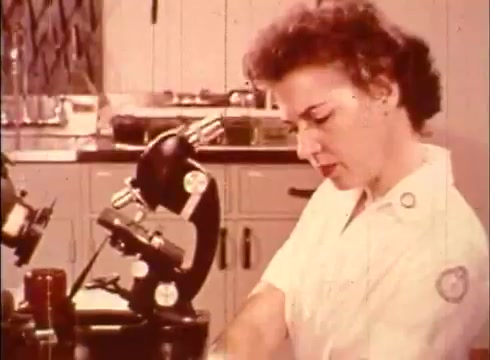
00:02:04.057 — The still features a close-up view of cells, presented in a soft, muted color palette with shades of brown, green, and red. The cells are visible with distinct nuclei, showcasing their structure in a microscopic format. This educational film likely aims to illustrate cellular biology and the role of cytologists in studying cell anatomy and function. The overall aesthetic reflects the vintage nature of a 16mm film, with slight graininess and a historical context.

The still features a female cytologist working in a laboratory setting. She is focused on her tasks, likely preparing or analyzing specimens under a microscope. The background includes laboratory equipment and organizational elements typical of a scientific workspace. This scene is likely intended to illustrate the role of a cytologist in studying human cells, emphasizing the hands-on work involved in cytology.

00:02:15.402 — The still features a female cytologist working in a laboratory setting. She is focused on her tasks, likely preparing or analyzing specimens under a microscope. The background includes laboratory equipment and organizational elements typical of a scientific workspace. This scene is likely intended to illustrate the role of a cytologist in studying human cells, emphasizing the hands-on work involved in cytology.

The still from 'The Human Cell and the Cytologist' appears to be a blurred or distorted image, likely due to the characteristics of the 16mm print. It may depict cell structures or cytological details, consistent with the film's educational focus on cellular biology. The overall aesthetic reflects the film medium's age, showcasing the historical context of educational cinema.
00:02:16.003 — The still from 'The Human Cell and the Cytologist' appears to be a blurred or distorted image, likely due to the characteristics of the 16mm print. It may depict cell structures or cytological details, consistent with the film's educational focus on cellular biology. The overall aesthetic reflects the film medium's age, showcasing the historical context of educational cinema.

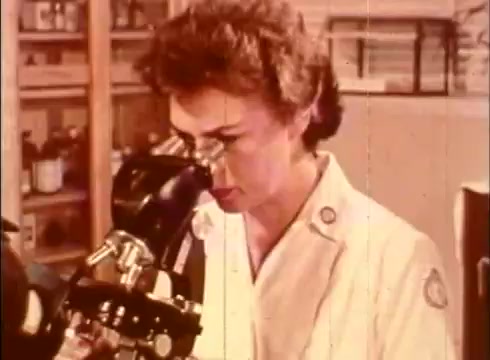
The still from 'The Human Cell and the Cytologist' depicts a female scientist peering through a microscope in a laboratory setting. She is dressed in a lab coat, highlighting her role in scientific research. The background suggests a well-equipped lab, likely with various scientific tools and materials, serving as a context for educational purposes about cellular biology. The image conveys a focus on microscopic study and the investigative nature of cytology.

00:02:29.616 — The still from 'The Human Cell and the Cytologist' depicts a female scientist peering through a microscope in a laboratory setting. She is dressed in a lab coat, highlighting her role in scientific research. The background suggests a well-equipped lab, likely with various scientific tools and materials, serving as a context for educational purposes about cellular biology. The image conveys a focus on microscopic study and the investigative nature of cytology.

The still from 'The Human Cell and the Cytologist' appears to be abstract and blurred, likely due to the passage of time on the 16mm film. The colors are warm, with a mixture of reds, browns, and soft highlights, suggesting a biological or cellular theme. The image may represent a close-up view of a cell or tissue, aimed at illustrating concepts in cytology within an educational context.

00:02:30.617 — The still from 'The Human Cell and the Cytologist' appears to be abstract and blurred, likely due to the passage of time on the 16mm film. The colors are warm, with a mixture of reds, browns, and soft highlights, suggesting a biological or cellular theme. The image may represent a close-up view of a cell or tissue, aimed at illustrating concepts in cytology within an educational context.

The still from 'The Human Cell and the Cytologist' likely depicts a magnified view of human cells, possibly showing various cellular structures. The image has a soft focus with a warm color palette, characteristic of 16mm film, which may lend a vintage aesthetic. Educational in nature, it appears to aim at illustrating cellular anatomy and function in a manner accessible to viewers.
00:02:35.889 — The still from 'The Human Cell and the Cytologist' likely depicts a magnified view of human cells, possibly showing various cellular structures. The image has a soft focus with a warm color palette, characteristic of 16mm film, which may lend a vintage aesthetic. Educational in nature, it appears to aim at illustrating cellular anatomy and function in a manner accessible to viewers.

The still depicts a scene from an educational film, showcasing a cytologist in a laboratory setting. The individual is focused on a microscope, likely conducting research or analysis related to human cells. The background reveals a domestic kitchen environment, suggesting a casual or accessible approach to scientific inquiry. This image captures the intersection of science and everyday life, emphasizing the importance of cellular biology in education.
00:02:38.592 — The still depicts a scene from an educational film, showcasing a cytologist in a laboratory setting. The individual is focused on a microscope, likely conducting research or analysis related to human cells. The background reveals a domestic kitchen environment, suggesting a casual or accessible approach to scientific inquiry. This image captures the intersection of science and everyday life, emphasizing the importance of cellular biology in education.

The still features a microscopic view of various cellular structures, likely highlighting different cell types or microscopic organisms. These structures are depicted against a light background, revealing intricate details and variations in shape. The image aims to educate viewers about cellular biology, likely illustrating the diversity and complexity of life at a microscopic scale.
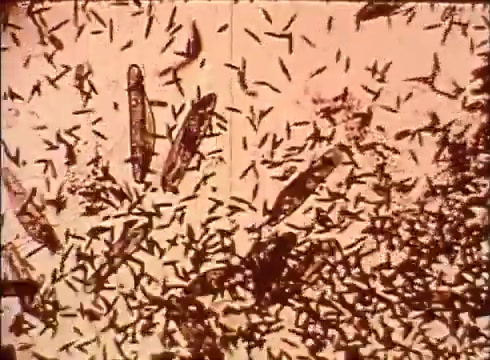
00:02:47.034 — The still features a microscopic view of various cellular structures, likely highlighting different cell types or microscopic organisms. These structures are depicted against a light background, revealing intricate details and variations in shape. The image aims to educate viewers about cellular biology, likely illustrating the diversity and complexity of life at a microscopic scale.

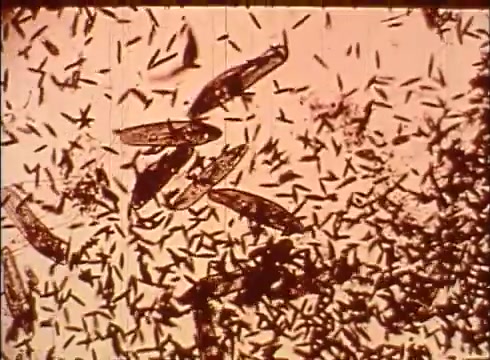
The still from 'The Human Cell and the Cytologist' depicts a microscopic view of cellular structures. The image shows a multitude of elongated shapes, likely representing various cellular components or microorganisms, set against a lighter background. This educational film aims to illustrate the complexity and abundance of life at the microscopic level, highlighting the interactions and environments within cellular biology.
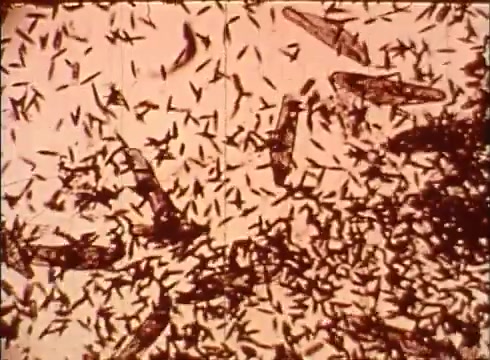
00:02:47.768 — The still from 'The Human Cell and the Cytologist' depicts a microscopic view of cellular structures. The image shows a multitude of elongated shapes, likely representing various cellular components or microorganisms, set against a lighter background. This educational film aims to illustrate the complexity and abundance of life at the microscopic level, highlighting the interactions and environments within cellular biology.

The still from 'The Human Cell and the Cytologist' features a close-up view of a dense field of microscopic organisms or cellular structures. The image is composed of numerous elongated and thin shapes that appear to be moving or floating, likely representing various cells or microorganisms. The overall tone is muted and sepia-like, characteristic of vintage 16mm film, emphasizing the educational aspect of cytology in the context of biological study.
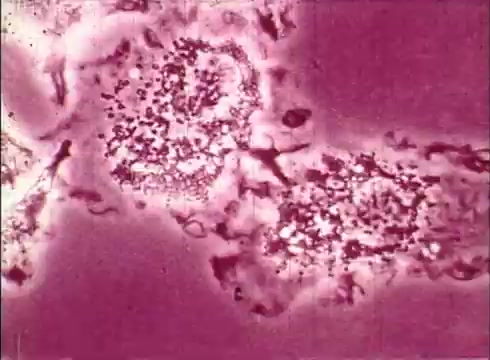
00:02:52.239 — The still from 'The Human Cell and the Cytologist' features a close-up view of a dense field of microscopic organisms or cellular structures. The image is composed of numerous elongated and thin shapes that appear to be moving or floating, likely representing various cells or microorganisms. The overall tone is muted and sepia-like, characteristic of vintage 16mm film, emphasizing the educational aspect of cytology in the context of biological study.

The still presents a microscopic view of human cells, showcasing cellular structures in a pink-tinted hue. The image is likely meant for educational purposes, illustrating key features such as organelles and cell membranes. The clarity suggests a focus on cellular biology and cytology, typical of an instructional film aimed at enhancing understanding of human cellular functions.
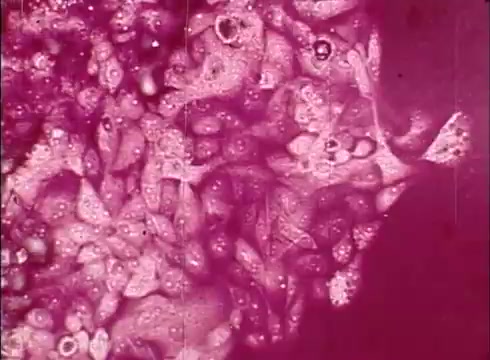
00:03:05.585 — The still presents a microscopic view of human cells, showcasing cellular structures in a pink-tinted hue. The image is likely meant for educational purposes, illustrating key features such as organelles and cell membranes. The clarity suggests a focus on cellular biology and cytology, typical of an instructional film aimed at enhancing understanding of human cellular functions.

The still from 'The Human Cell and the Cytologist' features a magnified view of cells, shown in various shapes and sizes against a vibrant pink background. This educational film likely aims to illustrate cellular structure and function, highlighting the complexity and variety of cells as observed through microscopy. The details depict cellular components, possibly including nuclei and cytoplasm, emphasizing the intricate nature of microscopic life.
00:03:22.402 — The still from 'The Human Cell and the Cytologist' features a magnified view of cells, shown in various shapes and sizes against a vibrant pink background. This educational film likely aims to illustrate cellular structure and function, highlighting the complexity and variety of cells as observed through microscopy. The details depict cellular components, possibly including nuclei and cytoplasm, emphasizing the intricate nature of microscopic life.

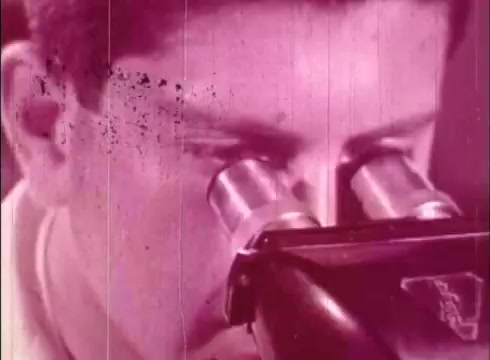
The still features a young man intently looking through the eyepiece of a microscope. The image has a vintage aesthetic, characterized by a pinkish tint and visible grain, typical of 16mm film prints. The focus is on the man's face and the microscope, emphasizing the act of observation. This scene likely illustrates a moment of scientific inquiry in the context of studying human cells.
00:03:41.354 — The still features a young man intently looking through the eyepiece of a microscope. The image has a vintage aesthetic, characterized by a pinkish tint and visible grain, typical of 16mm film prints. The focus is on the man's face and the microscope, emphasizing the act of observation. This scene likely illustrates a moment of scientific inquiry in the context of studying human cells.

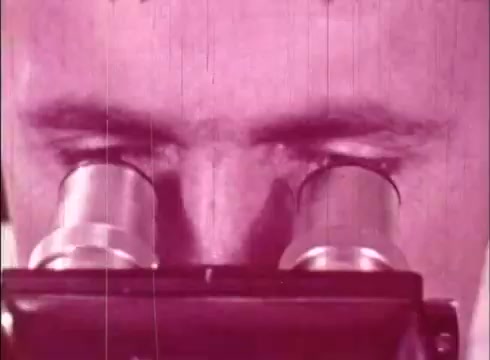
The still likely depicts a cytologist focused on a microscope, illustrating the study of human cells. The close-up emphasizes the intensity of the observation, typical for educational films aimed at highlighting scientific exploration and the intricacies of cellular biology. The color tone may suggest an older film print, contributing to the vintage educational aesthetic.
00:03:43.023 — The still likely depicts a cytologist focused on a microscope, illustrating the study of human cells. The close-up emphasizes the intensity of the observation, typical for educational films aimed at highlighting scientific exploration and the intricacies of cellular biology. The color tone may suggest an older film print, contributing to the vintage educational aesthetic.

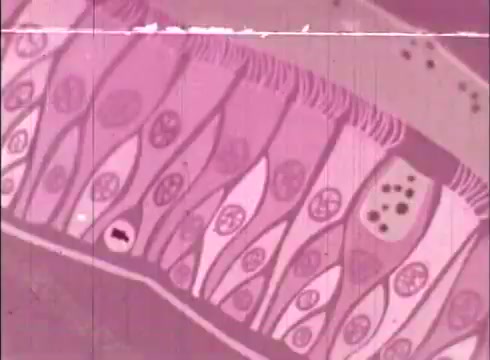
The still from 'The Human Cell and the Cytologist' depicts a microscopic view of cells, showcasing various cell types with distinct shapes and nuclei. The color palette is predominantly pink, emphasizing the cellular structures. This visual serves an educational purpose, illustrating the intricate details of cellular anatomy and organization, likely aimed at teaching fundamental concepts in biology and cytology.
00:07:05.058 — The still from 'The Human Cell and the Cytologist' depicts a microscopic view of cells, showcasing various cell types with distinct shapes and nuclei. The color palette is predominantly pink, emphasizing the cellular structures. This visual serves an educational purpose, illustrating the intricate details of cellular anatomy and organization, likely aimed at teaching fundamental concepts in biology and cytology.

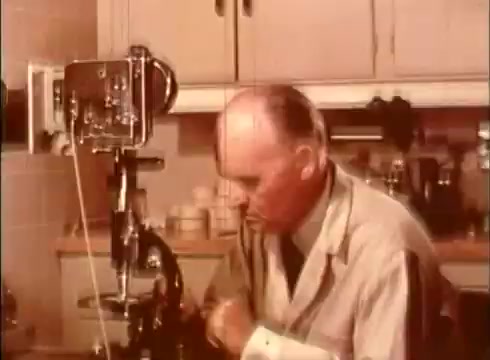
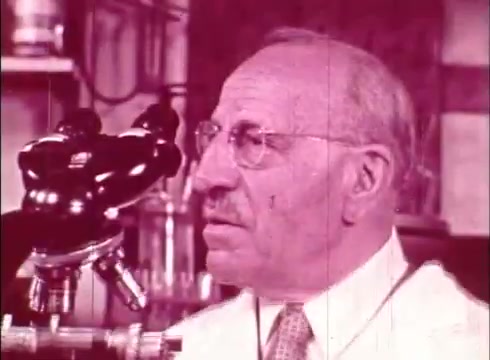
The still features a distinguished man, likely a scientist or cytologist, attentively observing through a microscope. He wears glasses and a white lab coat, suggesting a professional setting. The background appears to contain laboratory equipment, emphasizing the educational nature of the film 'The Human Cell and the Cytologist.' The color tone leans towards a vintage, faded quality typical of 16mm prints, adding to the classic educational film aesthetic.
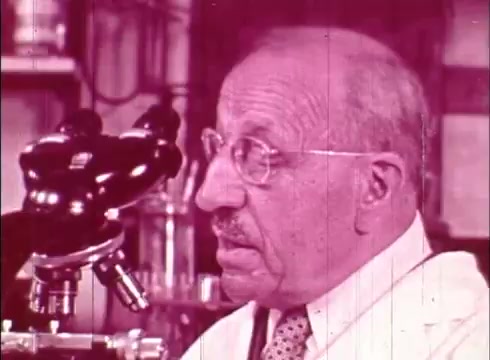
00:08:41.121 — The still features a distinguished man, likely a scientist or cytologist, attentively observing through a microscope. He wears glasses and a white lab coat, suggesting a professional setting. The background appears to contain laboratory equipment, emphasizing the educational nature of the film 'The Human Cell and the Cytologist.' The color tone leans towards a vintage, faded quality typical of 16mm prints, adding to the classic educational film aesthetic.

The still shows a bespectacled man focusing on a microscope, indicative of a cytologist at work. He appears engaged in his research, demonstrating the hands-on nature of studying human cells. The film likely serves an educational purpose, highlighting the significance of microscopy in biological studies. The image has a vintage quality typical of 16mm prints, with a slightly faded look.
00:08:54.934 — The still shows a bespectacled man focusing on a microscope, indicative of a cytologist at work. He appears engaged in his research, demonstrating the hands-on nature of studying human cells. The film likely serves an educational purpose, highlighting the significance of microscopy in biological studies. The image has a vintage quality typical of 16mm prints, with a slightly faded look.

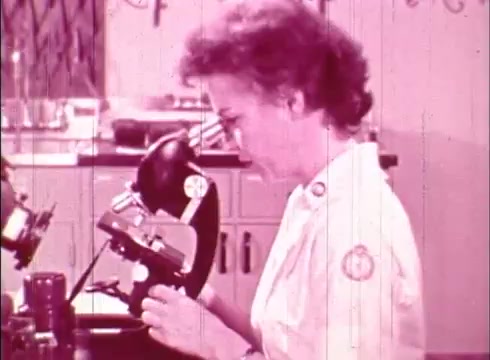
The still features a woman in a lab coat observing a microscope in a laboratory setting. The image is characterized by a vintage aesthetic typical of 16mm film, with a slight pink hue. Laboratory equipment and a cluttered workspace can be seen in the background, emphasizing the educational context of cytology.
00:09:02.275 — The still features a woman in a lab coat observing a microscope in a laboratory setting. The image is characterized by a vintage aesthetic typical of 16mm film, with a slight pink hue. Laboratory equipment and a cluttered workspace can be seen in the background, emphasizing the educational context of cytology.

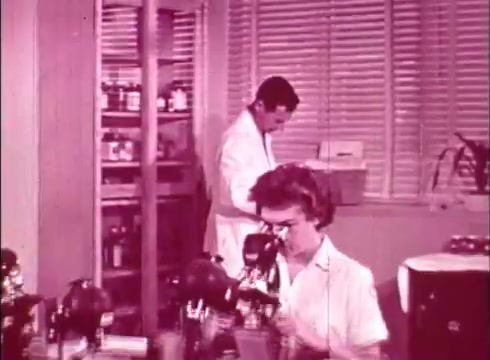
The still features a laboratory setting from the educational film 'The Human Cell and the Cytologist.' In the foreground, a woman in a white blouse peer through a microscope, indicating a focus on cellular study. In the background, a man in a white lab coat is engaged with laboratory equipment, likely involved in research tasks. The scene is illuminated with soft lighting, and the aesthetics reflect a mid-20th century educational vibe.
00:09:04.978 — The still features a laboratory setting from the educational film 'The Human Cell and the Cytologist.' In the foreground, a woman in a white blouse peer through a microscope, indicating a focus on cellular study. In the background, a man in a white lab coat is engaged with laboratory equipment, likely involved in research tasks. The scene is illuminated with soft lighting, and the aesthetics reflect a mid-20th century educational vibe.

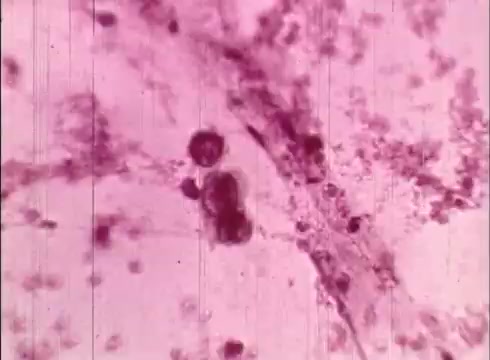
The still features a magnified view of biological cells under a microscope, showing various cell structures in shades of pink. The image likely highlights cellular components, illustrating concepts related to cytology in an educational context. The focus is on the intricate details of cell morphology, typical of a scientific film aimed at teaching about human cells and their functions.
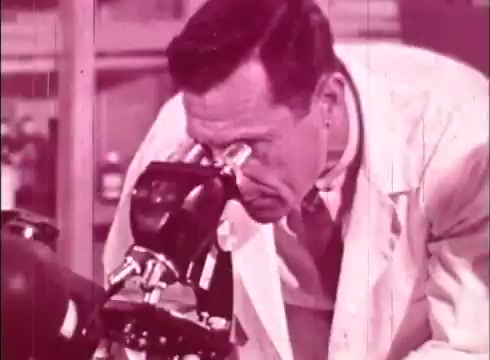
00:09:14.954 — The still features a magnified view of biological cells under a microscope, showing various cell structures in shades of pink. The image likely highlights cellular components, illustrating concepts related to cytology in an educational context. The focus is on the intricate details of cell morphology, typical of a scientific film aimed at teaching about human cells and their functions.

The still shows a male cytologist closely examining a microscope in a laboratory setting. He is dressed in a white lab coat and appears focused on his work. The scene is tinted in shades of pink, characteristic of many early educational films shot on 16mm. The background suggests a typical laboratory environment with shelves and equipment, reinforcing the educational context of studying cells.
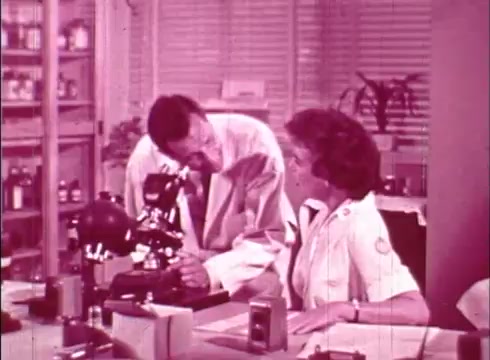
00:09:20.693 — The still shows a male cytologist closely examining a microscope in a laboratory setting. He is dressed in a white lab coat and appears focused on his work. The scene is tinted in shades of pink, characteristic of many early educational films shot on 16mm. The background suggests a typical laboratory environment with shelves and equipment, reinforcing the educational context of studying cells.

The still depicts a scene from an educational film focused on cell biology. It shows two individuals, a man and a woman, in a laboratory setting. The man, dressed in a lab coat, leans toward a microscope, appearing to discuss or demonstrate something to the woman, who is seated and wearing a nurse's uniform. The environment is filled with lab equipment and supplies, reflecting a scientific atmosphere. The overall color tone of the image is a soft pink, typical of 16mm prints from that era.
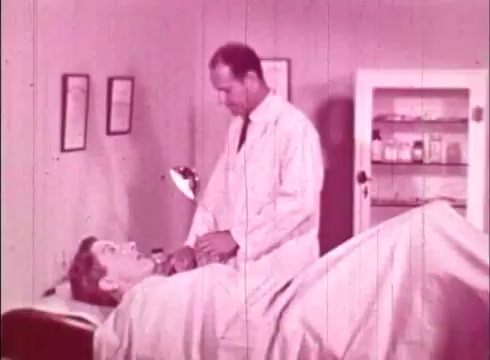
00:10:04.637 — The still depicts a scene from an educational film focused on cell biology. It shows two individuals, a man and a woman, in a laboratory setting. The man, dressed in a lab coat, leans toward a microscope, appearing to discuss or demonstrate something to the woman, who is seated and wearing a nurse's uniform. The environment is filled with lab equipment and supplies, reflecting a scientific atmosphere. The overall color tone of the image is a soft pink, typical of 16mm prints from that era.

The still from the educational film 'The Human Cell and the Cytologist' depicts a medical examination setting. A man, presumably a patient, is lying on an examination table covered with a sheet, looking up at a healthcare professional. The professional, dressed in a white lab coat, appears to be preparing to conduct a procedure or examination. The background features medical charts on the wall and a cabinet filled with medical supplies, emphasizing the clinical environment. The overall color tone is a faded pink, characteristic of 16mm prints.
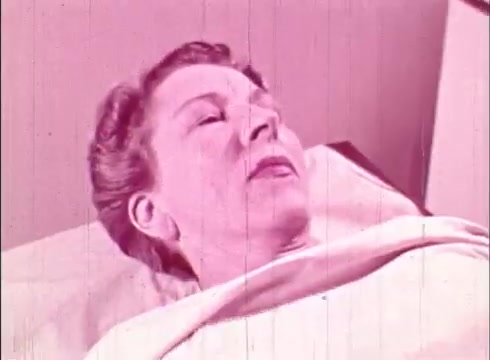
00:11:14.807 — The still from the educational film 'The Human Cell and the Cytologist' depicts a medical examination setting. A man, presumably a patient, is lying on an examination table covered with a sheet, looking up at a healthcare professional. The professional, dressed in a white lab coat, appears to be preparing to conduct a procedure or examination. The background features medical charts on the wall and a cabinet filled with medical supplies, emphasizing the clinical environment. The overall color tone is a faded pink, characteristic of 16mm prints.

The still from 'The Human Cell and the Cytologist' depicts a woman lying in a sterile medical environment, possibly in a hospital or laboratory setting. The image has a pink tint, characteristic of some 16mm film prints. Her expression suggests a state of contemplation or focus, likely related to a scientific examination or discussion about cytology. The overall aesthetic conveys an educational context, emphasizing the human connection to cellular study.
00:11:22.215 — The still from 'The Human Cell and the Cytologist' depicts a woman lying in a sterile medical environment, possibly in a hospital or laboratory setting. The image has a pink tint, characteristic of some 16mm film prints. Her expression suggests a state of contemplation or focus, likely related to a scientific examination or discussion about cytology. The overall aesthetic conveys an educational context, emphasizing the human connection to cellular study.

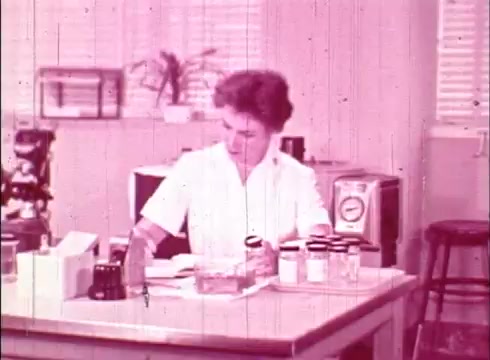
The still depicts a woman in a laboratory setting, engaged in her work with various glass containers and equipment on a table. She is focused on a task, possibly analyzing samples. The environment is typical of a cytology lab, with scientific instruments and a plant visible in the background. The color tone is pinkish, characteristic of older 16mm film prints, which often exhibit color fading. This image likely serves an educational purpose, showcasing the work of a cytologist.
00:12:10.129 — The still depicts a woman in a laboratory setting, engaged in her work with various glass containers and equipment on a table. She is focused on a task, possibly analyzing samples. The environment is typical of a cytology lab, with scientific instruments and a plant visible in the background. The color tone is pinkish, characteristic of older 16mm film prints, which often exhibit color fading. This image likely serves an educational purpose, showcasing the work of a cytologist.

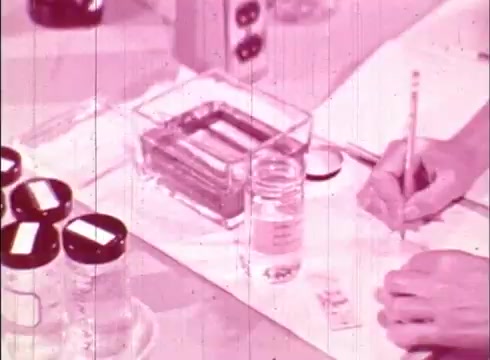
The still depicts a laboratory setting from the educational film 'The Human Cell and the Cytologist.' It features a desk with various glass containers, including jars with labels and a petri dish. A hand is seen holding a pencil, likely taking notes or recording observations. The overall tone is pinkish, indicative of the film’s age, reflecting a focus on scientific exploration and the study of cells.
00:12:37.156 — The still depicts a laboratory setting from the educational film 'The Human Cell and the Cytologist.' It features a desk with various glass containers, including jars with labels and a petri dish. A hand is seen holding a pencil, likely taking notes or recording observations. The overall tone is pinkish, indicative of the film’s age, reflecting a focus on scientific exploration and the study of cells.

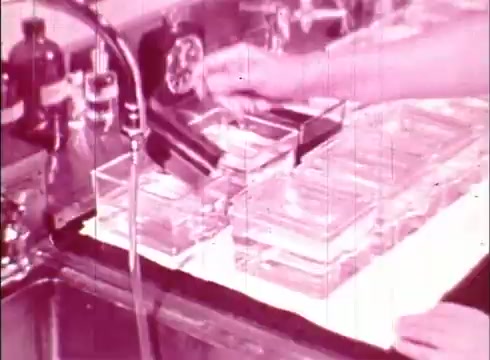
The still from 'The Human Cell and the Cytologist' depicts a laboratory setting with a hand adjusting a faucet, pouring water over a series of clear glass containers or petri dishes placed on a counter. The environment emphasizes sterilization and preparation, typical of a cytology lab. The image has a pinkish hue, indicative of the film's age and aesthetic.
00:12:54.507 — The still from 'The Human Cell and the Cytologist' depicts a laboratory setting with a hand adjusting a faucet, pouring water over a series of clear glass containers or petri dishes placed on a counter. The environment emphasizes sterilization and preparation, typical of a cytology lab. The image has a pinkish hue, indicative of the film's age and aesthetic.

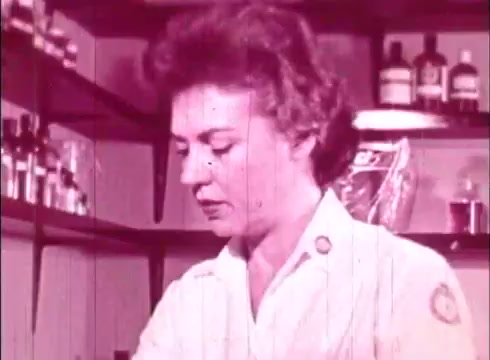
The still from 'The Human Cell and the Cytologist' depicts a woman in a lab setting, wearing a white lab coat. She appears focused on her work, with shelves filled with various bottles and lab supplies in the background. The image has a vintage aesthetic typical of 16mm film, with a soft pink hue and visible film grain, emphasizing its educational context.
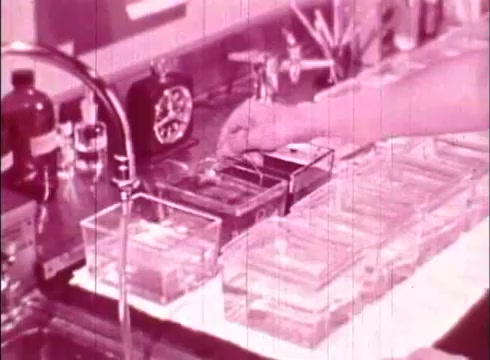
00:13:00.413 — The still from 'The Human Cell and the Cytologist' depicts a woman in a lab setting, wearing a white lab coat. She appears focused on her work, with shelves filled with various bottles and lab supplies in the background. The image has a vintage aesthetic typical of 16mm film, with a soft pink hue and visible film grain, emphasizing its educational context.

The still from 'The Human Cell and the Cytologist' portrays a laboratory setting, likely focused on cellular study. In the image, a hand is seen reaching towards a series of transparent tanks containing liquids, possibly for microscopy or experimentation. The environment is equipped with laboratory tools, including flasks and a clock in the background, emphasizing a scientific atmosphere. The overall color tone is a pinkish hue, typical of many older 16mm prints.
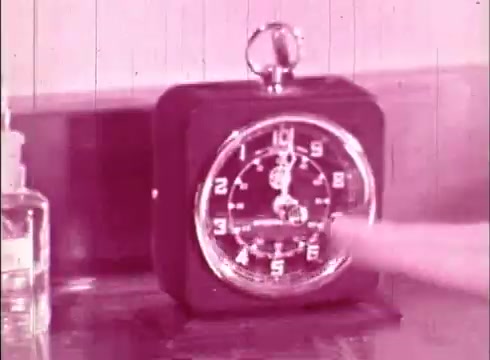
00:13:04.751 — The still from 'The Human Cell and the Cytologist' portrays a laboratory setting, likely focused on cellular study. In the image, a hand is seen reaching towards a series of transparent tanks containing liquids, possibly for microscopy or experimentation. The environment is equipped with laboratory tools, including flasks and a clock in the background, emphasizing a scientific atmosphere. The overall color tone is a pinkish hue, typical of many older 16mm prints.

The still features a vintage alarm clock on a table, with a finger pointing towards the clock's face. The image has a pinkish hue typical of older 16mm prints. The setting suggests a moment of emphasis or timing that may relate to a lesson or demonstration in the educational film 'The Human Cell and the Cytologist.'
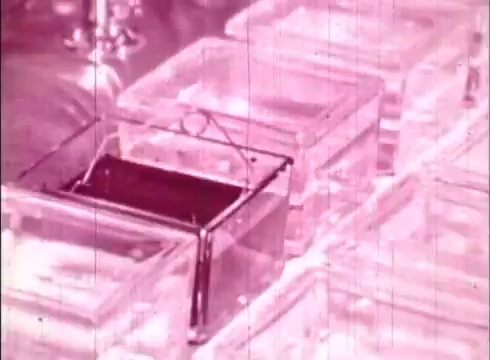
00:13:14.494 — The still features a vintage alarm clock on a table, with a finger pointing towards the clock's face. The image has a pinkish hue typical of older 16mm prints. The setting suggests a moment of emphasis or timing that may relate to a lesson or demonstration in the educational film 'The Human Cell and the Cytologist.'

The still from 'The Human Cell and the Cytologist' features a close-up of several transparent containers, likely used for biological samples or experiments related to cell observation. The image is tinted with a pink hue, typical of older films, and highlights the focus on laboratory techniques or procedures. The format suggests it is part of an educational presentation demonstrating concepts in cytology.
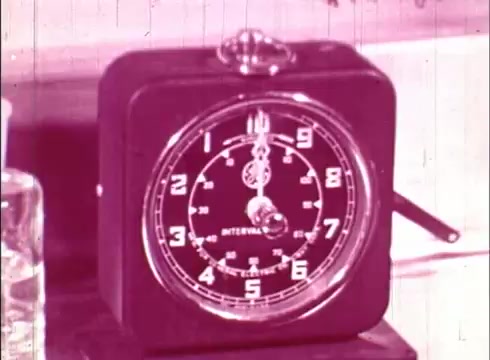
00:13:20.266 — The still from 'The Human Cell and the Cytologist' features a close-up of several transparent containers, likely used for biological samples or experiments related to cell observation. The image is tinted with a pink hue, typical of older films, and highlights the focus on laboratory techniques or procedures. The format suggests it is part of an educational presentation demonstrating concepts in cytology.

The still features a vintage black clock with a prominent face, marked with bold numbers and an adjustable hand. The clock appears to be a timer, indicated by the word 'INTERVAL' on its display. It is set against a simple background, likely in a laboratory or educational setting, alongside a container, hinting at a scientific context related to cellular studies. The image is tinted in a pinkish hue, typical of older film prints.
00:13:40.019 — The still features a vintage black clock with a prominent face, marked with bold numbers and an adjustable hand. The clock appears to be a timer, indicated by the word 'INTERVAL' on its display. It is set against a simple background, likely in a laboratory or educational setting, alongside a container, hinting at a scientific context related to cellular studies. The image is tinted in a pinkish hue, typical of older film prints.

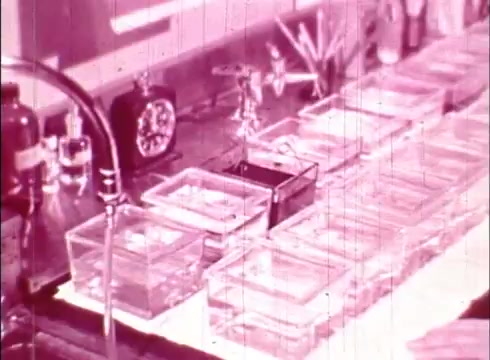
The still depicts a laboratory scene from the educational film 'The Human Cell and the Cytologist.' It shows a countertop filled with multiple transparent containers, likely used for cell studies or experiments. Behind the containers, there are various lab tools, a clock, and bottles, emphasizing a scientific environment. The image is tinted in shades of pink, typical for 16mm prints of the era.
00:13:43.389 — The still depicts a laboratory scene from the educational film 'The Human Cell and the Cytologist.' It shows a countertop filled with multiple transparent containers, likely used for cell studies or experiments. Behind the containers, there are various lab tools, a clock, and bottles, emphasizing a scientific environment. The image is tinted in shades of pink, typical for 16mm prints of the era.

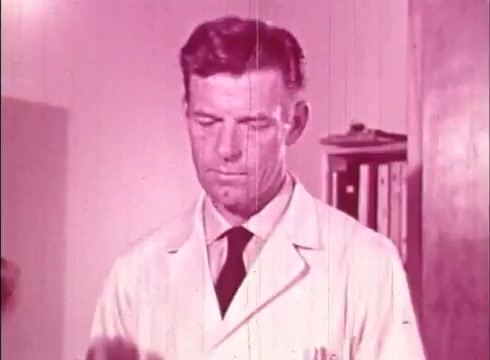
The still from 'The Human Cell and the Cytologist' features a male scientist in a lab coat, focused on an object in his hands. The image has a vintage quality, characteristic of 16mm film, with a pinkish tint and visible scratches or wear. The background suggests a laboratory setting, enhancing the educational context of the film, which likely explores aspects of cell biology and cytology.
00:14:17.390 — The still from 'The Human Cell and the Cytologist' features a male scientist in a lab coat, focused on an object in his hands. The image has a vintage quality, characteristic of 16mm film, with a pinkish tint and visible scratches or wear. The background suggests a laboratory setting, enhancing the educational context of the film, which likely explores aspects of cell biology and cytology.

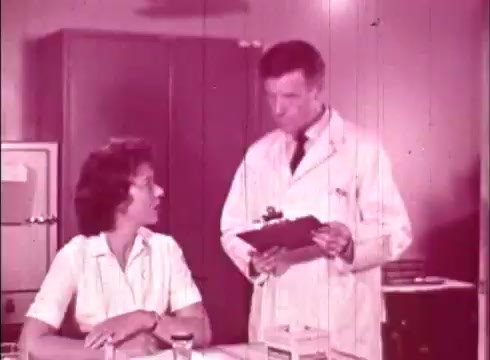
The still depicts a scene from the educational film 'The Human Cell and the Cytologist.' It features a male cytologist in a lab coat, standing and holding a clipboard, while a female subject sits at a table, attentively looking at him. The setting appears to be a laboratory, indicated by the visible equipment and cabinets in the background. The overall tone is informative, likely focusing on a discussion related to cellular biology. The image shows the characteristic graininess and color palette typical of 16mm film.
00:14:29.969 — The still depicts a scene from the educational film 'The Human Cell and the Cytologist.' It features a male cytologist in a lab coat, standing and holding a clipboard, while a female subject sits at a table, attentively looking at him. The setting appears to be a laboratory, indicated by the visible equipment and cabinets in the background. The overall tone is informative, likely focusing on a discussion related to cellular biology. The image shows the characteristic graininess and color palette typical of 16mm film.

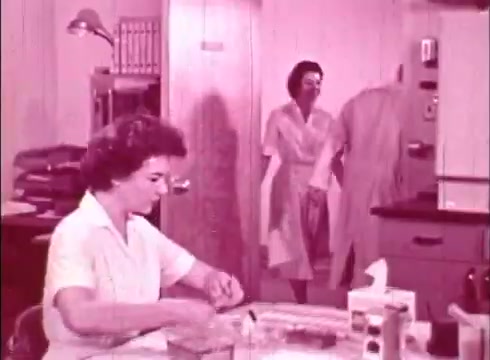
The still from 'The Human Cell and the Cytologist' features a laboratory setting with a woman in a white lab coat seated at a table, engaged in scientific work. She appears to be handling materials, possibly preparing samples. In the background, another woman dressed in a light-colored dress enters the frame, while a third figure in a lab coat is partially visible. The overall tone of the image is pinkish, indicative of the film's vintage aesthetic. The scene exemplifies an educational environment focused on cytology.
00:14:34.474 — The still from 'The Human Cell and the Cytologist' features a laboratory setting with a woman in a white lab coat seated at a table, engaged in scientific work. She appears to be handling materials, possibly preparing samples. In the background, another woman dressed in a light-colored dress enters the frame, while a third figure in a lab coat is partially visible. The overall tone of the image is pinkish, indicative of the film's vintage aesthetic. The scene exemplifies an educational environment focused on cytology.

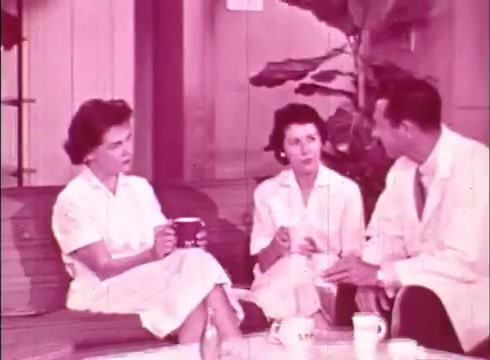
The still from 'The Human Cell and the Cytologist' depicts three individuals engaged in conversation. Two women in white attire sit together, one holding a cup, while a man in a lab coat sits across from them. The background suggests a relaxed environment with greenery, likely part of a casual educational setting. The color tone is predominantly pinkish, typical of certain 16mm films. Their conversation likely pertains to cytology and human cells, contributing to the film's educational theme.
00:14:56.429 — The still from 'The Human Cell and the Cytologist' depicts three individuals engaged in conversation. Two women in white attire sit together, one holding a cup, while a man in a lab coat sits across from them. The background suggests a relaxed environment with greenery, likely part of a casual educational setting. The color tone is predominantly pinkish, typical of certain 16mm films. Their conversation likely pertains to cytology and human cells, contributing to the film's educational theme.

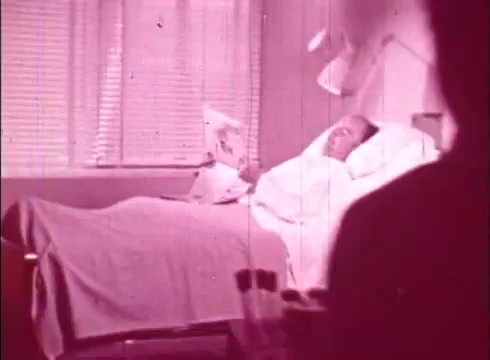
The still from 'The Human Cell and the Cytologist' shows a patient lying in a hospital bed, reading a newspaper. The scene is bathed in a reddish hue typical of older 16mm prints. Sunlight filters through blinds, creating a serene atmosphere, while the presence of medical equipment suggests a focus on health and treatment. This educational film likely illustrates the relationship between human cells and medical environments.
00:15:20.052 — The still from 'The Human Cell and the Cytologist' shows a patient lying in a hospital bed, reading a newspaper. The scene is bathed in a reddish hue typical of older 16mm prints. Sunlight filters through blinds, creating a serene atmosphere, while the presence of medical equipment suggests a focus on health and treatment. This educational film likely illustrates the relationship between human cells and medical environments.

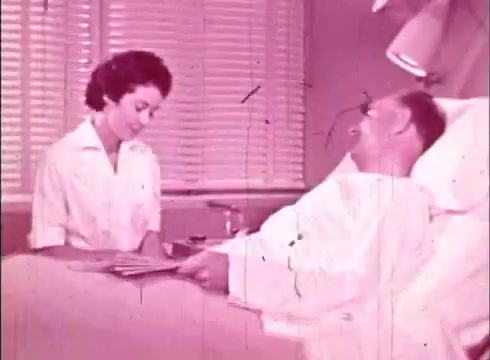
The still features a man in a hospital bed, smiling as he interacts with a female nurse who is seated beside him. The setting appears to be a medical facility, with blinds in the background creating a soft light. The soft pink tint suggests the film's vintage aesthetic, typical of educational films from that era. The nurse is dressed in a classic uniform, and they seem to be engaged in a conversation, possibly discussing health or treatment, aligning with the film's educational theme.
00:15:28.361 — The still features a man in a hospital bed, smiling as he interacts with a female nurse who is seated beside him. The setting appears to be a medical facility, with blinds in the background creating a soft light. The soft pink tint suggests the film's vintage aesthetic, typical of educational films from that era. The nurse is dressed in a classic uniform, and they seem to be engaged in a conversation, possibly discussing health or treatment, aligning with the film's educational theme.

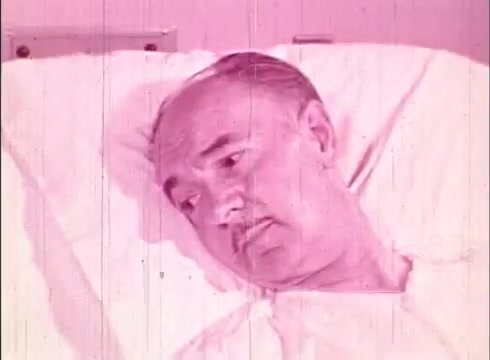
The still features a middle-aged man lying in a hospital bed, appearing contemplative. The scene is marked by a pink tint typical of older 16mm films, suggesting a warm, educational tone. The context indicates it is part of an informational film focused on human biology, likely discussing cellular processes or health-related themes. The man's expression may convey a sense of inquiry or reflection relevant to the film's educational purpose.
00:15:34.000 — The still features a middle-aged man lying in a hospital bed, appearing contemplative. The scene is marked by a pink tint typical of older 16mm films, suggesting a warm, educational tone. The context indicates it is part of an informational film focused on human biology, likely discussing cellular processes or health-related themes. The man's expression may convey a sense of inquiry or reflection relevant to the film's educational purpose.

The still features a close-up of multiple hands, appearing to touch or grasp one another. The image is tinted in shades of pink, creating a soft, educational atmosphere. This scene likely emphasizes collaboration or connection within a scientific context, appropriate for the film's focus on human cells and cytology. The visual suggests themes of unity and the intricacies of biological study.
00:15:36.636 — The still features a close-up of multiple hands, appearing to touch or grasp one another. The image is tinted in shades of pink, creating a soft, educational atmosphere. This scene likely emphasizes collaboration or connection within a scientific context, appropriate for the film's focus on human cells and cytology. The visual suggests themes of unity and the intricacies of biological study.

The still features close-up hands engaging with each other, likely illustrating a concept related to biology or cellular interaction. The visual tone is predominantly pink, characteristic of the film's era and possibly representing a specific theme or educational focus. The context suggests an emphasis on the human cell and its cellular processes, aiming to inform viewers about the intricacies of cellular function and structure in a tactile manner.
00:15:44.811 — The still features close-up hands engaging with each other, likely illustrating a concept related to biology or cellular interaction. The visual tone is predominantly pink, characteristic of the film's era and possibly representing a specific theme or educational focus. The context suggests an emphasis on the human cell and its cellular processes, aiming to inform viewers about the intricacies of cellular function and structure in a tactile manner.

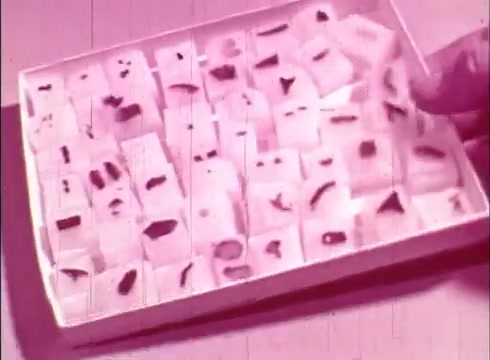
The still depicts a collection of small, rectangular sample slides arranged in a box. Each slide contains various cellular structures, which are likely stained to enhance visibility. The overall aesthetic is pinkish, characteristic of older film prints. The scene emphasizes the study of human cells, aiming to educate viewers about cytology and the microscopic examination of these samples.
00:16:05.031 — The still depicts a collection of small, rectangular sample slides arranged in a box. Each slide contains various cellular structures, which are likely stained to enhance visibility. The overall aesthetic is pinkish, characteristic of older film prints. The scene emphasizes the study of human cells, aiming to educate viewers about cytology and the microscopic examination of these samples.

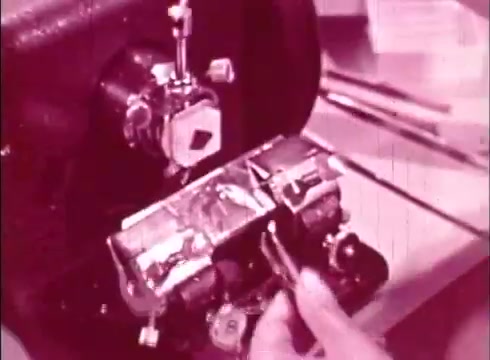
The still shows a close-up of a scientific device or apparatus, likely a cytological instrument, being handled by an individual. The scene is in a muted pink tone, characteristic of older 16mm prints, emphasizing a laboratory setting. The focus is on the precision and detail involved in studying cells, reflecting the educational purpose of the film.
00:16:15.241 — The still shows a close-up of a scientific device or apparatus, likely a cytological instrument, being handled by an individual. The scene is in a muted pink tone, characteristic of older 16mm prints, emphasizing a laboratory setting. The focus is on the precision and detail involved in studying cells, reflecting the educational purpose of the film.

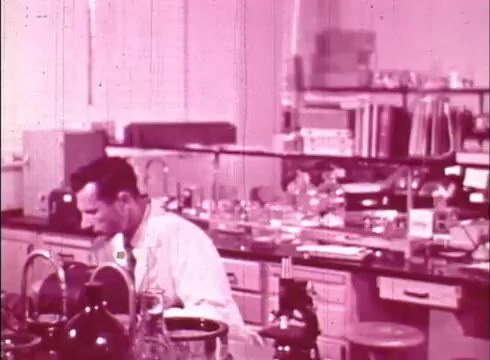
The still features a laboratory setting with a male scientist focused on work at a lab bench. He is surrounded by various scientific equipment, including beakers and a microscope, indicative of cytological research. The color tone is a retro pink, typical of 16mm film, enhancing its educational documentary aesthetic related to human cell studies. Books and lab materials in the background suggest a well-equipped environment for scientific exploration.
00:16:45.204 — The still features a laboratory setting with a male scientist focused on work at a lab bench. He is surrounded by various scientific equipment, including beakers and a microscope, indicative of cytological research. The color tone is a retro pink, typical of 16mm film, enhancing its educational documentary aesthetic related to human cell studies. Books and lab materials in the background suggest a well-equipped environment for scientific exploration.

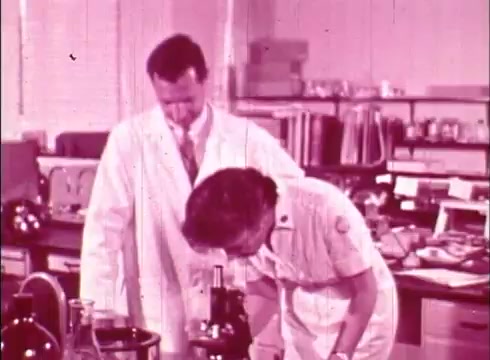
The still shows two figures in a laboratory setting, engaged in a scientific activity. One person, in a white lab coat, stands closely beside another, who is looking through a microscope. The environment is filled with various lab equipment and glassware, typical of a cytology or biological research setting. The overall tone is educational, likely focusing on cellular studies and cytology processes. The film is characterized by a vintage look due to the 16mm format.
00:17:35.421 — The still shows two figures in a laboratory setting, engaged in a scientific activity. One person, in a white lab coat, stands closely beside another, who is looking through a microscope. The environment is filled with various lab equipment and glassware, typical of a cytology or biological research setting. The overall tone is educational, likely focusing on cellular studies and cytology processes. The film is characterized by a vintage look due to the 16mm format.

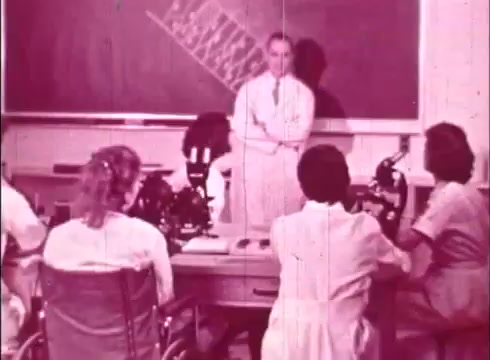
The still from the educational film 'The Human Cell and the Cytologist' features a classroom setting. A female instructor stands in front of a chalkboard, engaging with students. The students, seated at lab tables with microscopes, appear focused on the lesson. The image has a vintage quality, typical of 16mm prints, and emphasizes a scientific learning environment.
00:18:08.220 — The still from the educational film 'The Human Cell and the Cytologist' features a classroom setting. A female instructor stands in front of a chalkboard, engaging with students. The students, seated at lab tables with microscopes, appear focused on the lesson. The image has a vintage quality, typical of 16mm prints, and emphasizes a scientific learning environment.

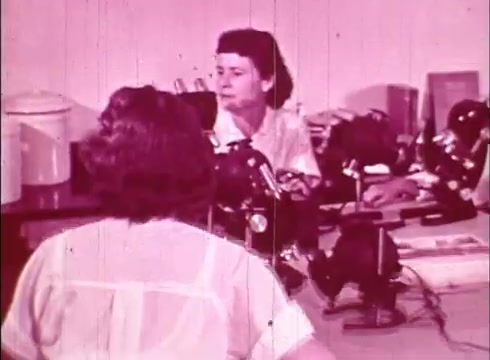
The still from 'The Human Cell and the Cytologist,' likely an educational film, features two women in a laboratory setting. One woman is seated at a desk with microscopes, appearing focused and engaged, while the other, partially visible in the foreground, has her back to the camera. The environment is well-lit, with a background filled with scientific equipment and books, emphasizing an academic atmosphere. The color tone suggests a vintage style characteristic of 16mm film.
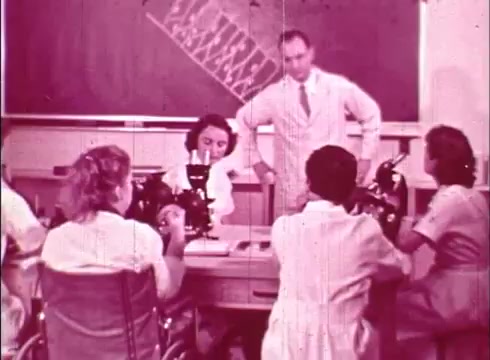
00:18:19.966 — The still from 'The Human Cell and the Cytologist,' likely an educational film, features two women in a laboratory setting. One woman is seated at a desk with microscopes, appearing focused and engaged, while the other, partially visible in the foreground, has her back to the camera. The environment is well-lit, with a background filled with scientific equipment and books, emphasizing an academic atmosphere. The color tone suggests a vintage style characteristic of 16mm film.

The still from 'The Human Cell and the Cytologist' depicts a classroom scene focused on cytology. Central to the composition is a male instructor standing, engaged in discussion with four students seated around a table, each using microscopes to examine specimens. The environment suggests an educational setting, with a chalkboard in the background, likely featuring diagrams or notes related to cellular study. The film's vintage quality is evident, reflecting the era of 16mm educational films.
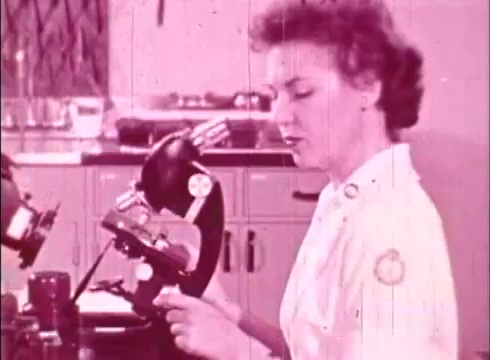
00:18:37.149 — The still from 'The Human Cell and the Cytologist' depicts a classroom scene focused on cytology. Central to the composition is a male instructor standing, engaged in discussion with four students seated around a table, each using microscopes to examine specimens. The environment suggests an educational setting, with a chalkboard in the background, likely featuring diagrams or notes related to cellular study. The film's vintage quality is evident, reflecting the era of 16mm educational films.

The still from 'The Human Cell and the Cytologist' features a woman in a lab coat, engaged in microscopy work. She appears focused as she examines a specimen under a microscope. The image has a vintage quality typical of 16mm prints, with a pinkish tint, suggesting it's part of an educational film aimed at discussing cellular biology and cytology. The lab environment includes various laboratory equipment visible in the background.

00:18:47.760 — The still from 'The Human Cell and the Cytologist' features a woman in a lab coat, engaged in microscopy work. She appears focused as she examines a specimen under a microscope. The image has a vintage quality typical of 16mm prints, with a pinkish tint, suggesting it's part of an educational film aimed at discussing cellular biology and cytology. The lab environment includes various laboratory equipment visible in the background.

The still features a close-up of a handwritten list on lined paper, likely comprised of patient names and possibly identifiers, presented in a pinkish hue. This educational film segment appears to focus on cytology, indicating a detailed examination or record-keeping related to human cells. The context suggests an emphasis on scientific documentation within a medical or biological study.
00:18:57.269 — The still features a close-up of a handwritten list on lined paper, likely comprised of patient names and possibly identifiers, presented in a pinkish hue. This educational film segment appears to focus on cytology, indicating a detailed examination or record-keeping related to human cells. The context suggests an emphasis on scientific documentation within a medical or biological study.

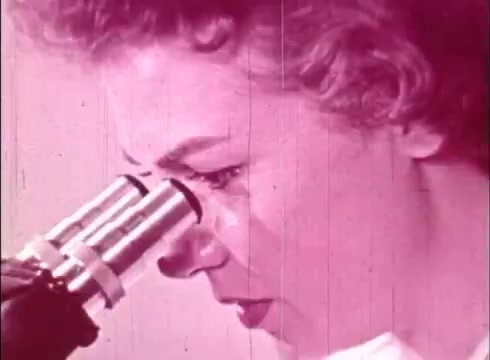
The still features a woman closely examining a microscope. The image has a pink tint typical of older educational films, and there are visible scratches and grain typical of 16mm prints. This scene likely illustrates the process of scientific observation, focusing on the human cell and the role of the cytologist in research.
00:19:05.277 — The still features a woman closely examining a microscope. The image has a pink tint typical of older educational films, and there are visible scratches and grain typical of 16mm prints. This scene likely illustrates the process of scientific observation, focusing on the human cell and the role of the cytologist in research.

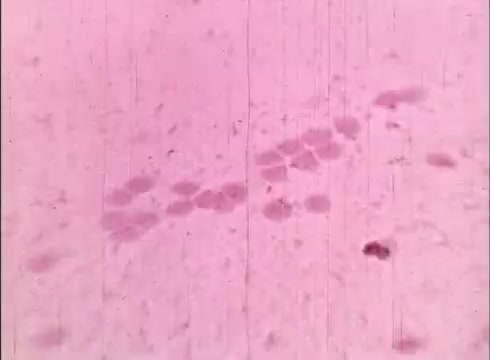
The still appears to be a microscopic view of human cells, presented in shades of pink. It shows a series of cells arranged in a pattern, likely illustrating cellular structure or division. The graininess and visual characteristics suggest it is from an educational 16mm film, used to teach concepts related to cytology and cell biology.
00:19:08.047 — The still appears to be a microscopic view of human cells, presented in shades of pink. It shows a series of cells arranged in a pattern, likely illustrating cellular structure or division. The graininess and visual characteristics suggest it is from an educational 16mm film, used to teach concepts related to cytology and cell biology.

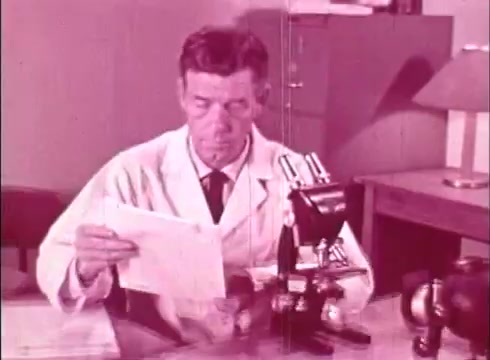
The still from 'The Human Cell and the Cytologist' depicts a man in a white lab coat sitting at a table, examining documents while looking thoughtfully at a piece of paper. In front of him is a microscope, suggesting a focus on scientific study, likely related to cytology. The background includes a lamp and filing cabinet, indicating a laboratory setting. The overall color tone is pinkish, characteristic of vintage educational films.
00:19:33.439 — The still from 'The Human Cell and the Cytologist' depicts a man in a white lab coat sitting at a table, examining documents while looking thoughtfully at a piece of paper. In front of him is a microscope, suggesting a focus on scientific study, likely related to cytology. The background includes a lamp and filing cabinet, indicating a laboratory setting. The overall color tone is pinkish, characteristic of vintage educational films.

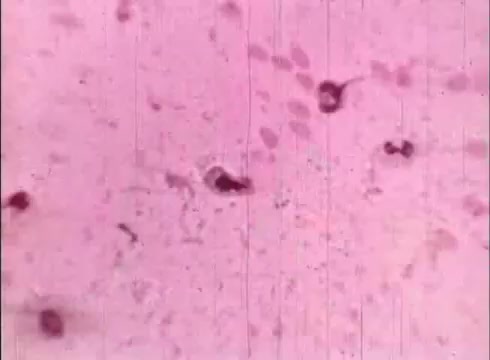
The still features a microscopic view of human cells, characterized by a pinkish background with various cellular structures visible. Some cells appear round and distinct, while others are smaller and more irregular, reflecting the complexity of biological material. The film captures intricate details typically studied in cytology, highlighting the educational focus on human cellular biology.
00:19:47.119 — The still features a microscopic view of human cells, characterized by a pinkish background with various cellular structures visible. Some cells appear round and distinct, while others are smaller and more irregular, reflecting the complexity of biological material. The film captures intricate details typically studied in cytology, highlighting the educational focus on human cellular biology.

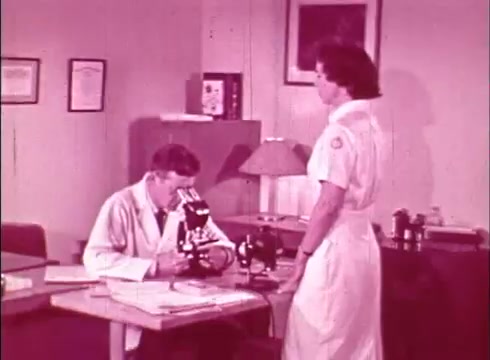
The still depicts a scene from an educational film titled 'The Human Cell and the Cytologist.' In a laboratory setting, a male scientist dressed in a white lab coat is focused on a microscope, likely examining a specimen. Standing nearby is a female nurse or assistant in a white uniform, attentively engaged in conversation with him. The environment is clinical, with certificates and scientific equipment visible in the background, creating a context conducive to educational discourse about cellular biology.
00:19:59.732 — The still depicts a scene from an educational film titled 'The Human Cell and the Cytologist.' In a laboratory setting, a male scientist dressed in a white lab coat is focused on a microscope, likely examining a specimen. Standing nearby is a female nurse or assistant in a white uniform, attentively engaged in conversation with him. The environment is clinical, with certificates and scientific equipment visible in the background, creating a context conducive to educational discourse about cellular biology.

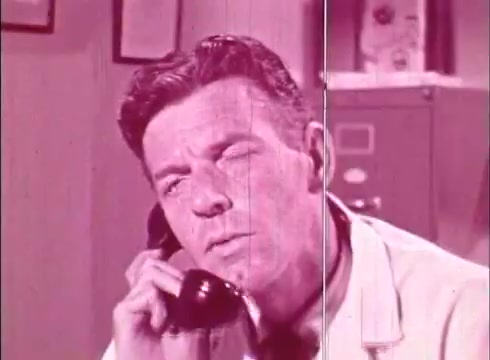
The still from 'The Human Cell and the Cytologist' depicts a man in a lab coat intently listening while on the phone. The image has a pinkish hue typical of 16mm film prints, and the background suggests a laboratory setting with filing cabinets. The expression on his face indicates concentration, likely engaged in a discussion related to cytology or cellular biology.
00:20:33.499 — The still from 'The Human Cell and the Cytologist' depicts a man in a lab coat intently listening while on the phone. The image has a pinkish hue typical of 16mm film prints, and the background suggests a laboratory setting with filing cabinets. The expression on his face indicates concentration, likely engaged in a discussion related to cytology or cellular biology.

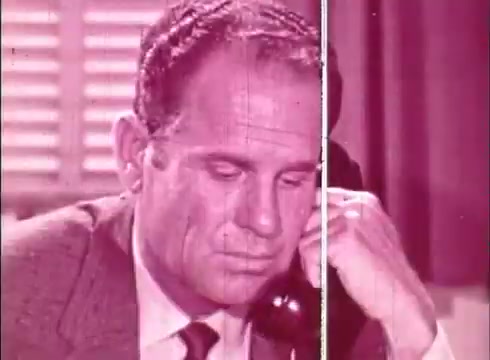
The still features a man looking intently down while holding a telephone receiver to his ear. His expression suggests concentration or concern. The color scheme is predominately pinkish, likely reflecting the aesthetic of the educational film. The background shows a light-colored window blind, indicating an indoor setting. This shot may illustrate a moment of communication or information exchange relevant to the topic of human cells and cytology.
00:20:38.504 — The still features a man looking intently down while holding a telephone receiver to his ear. His expression suggests concentration or concern. The color scheme is predominately pinkish, likely reflecting the aesthetic of the educational film. The background shows a light-colored window blind, indicating an indoor setting. This shot may illustrate a moment of communication or information exchange relevant to the topic of human cells and cytology.

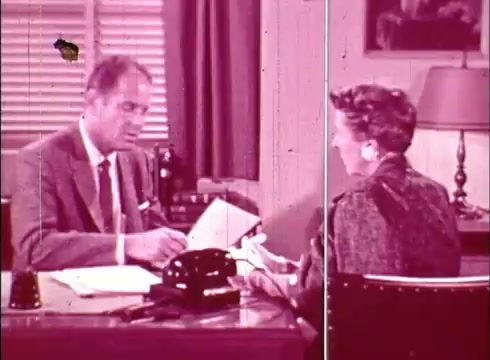
The still shows a mid-century office setting with two individuals engaged in a discussion. A man, dressed in a suit, is seated at a desk, examining documents, while a woman, wearing a stylish jacket, listens attentively. The room features a lamp, a typewriter, and partially closed blinds, indicating a professional environment typical of educational films from that era. The color tones are slightly faded, characteristic of 16mm film prints.
00:20:52.284 — The still shows a mid-century office setting with two individuals engaged in a discussion. A man, dressed in a suit, is seated at a desk, examining documents, while a woman, wearing a stylish jacket, listens attentively. The room features a lamp, a typewriter, and partially closed blinds, indicating a professional environment typical of educational films from that era. The color tones are slightly faded, characteristic of 16mm film prints.

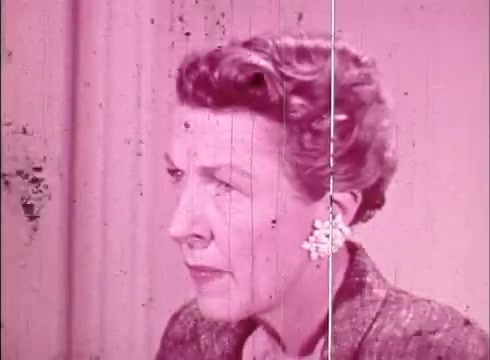
The still features a woman in profile, likely a presenter or educator, engaged in a discussion related to cytology. She has neat, styled hair and wears a formal outfit, complete with a decorative earring. The image has a pinkish hue, indicative of the film's age, with visible wear evident through scratches and lines on the print. The overall composition reflects a mid-20th century educational film aesthetic.
00:21:02.495 — The still features a woman in profile, likely a presenter or educator, engaged in a discussion related to cytology. She has neat, styled hair and wears a formal outfit, complete with a decorative earring. The image has a pinkish hue, indicative of the film's age, with visible wear evident through scratches and lines on the print. The overall composition reflects a mid-20th century educational film aesthetic.

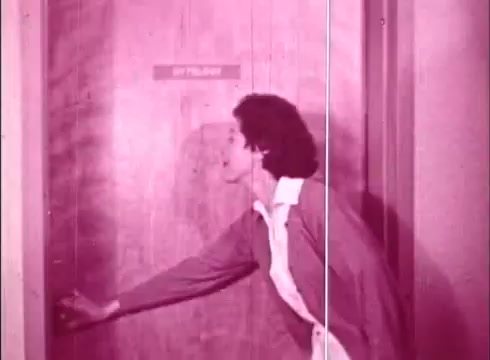
The still shows a woman approaching a door, likely in a laboratory or educational setting. She appears engaged, possibly knocking or about to enter. The image is presented in a pink hue, typical of the period's film stock, and suggests an instructional context related to cytology. The door is labeled, which adds to the educational theme of the film.
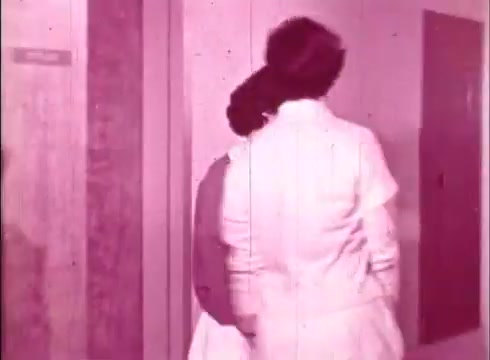
00:21:12.404 — The still shows a woman approaching a door, likely in a laboratory or educational setting. She appears engaged, possibly knocking or about to enter. The image is presented in a pink hue, typical of the period's film stock, and suggests an instructional context related to cytology. The door is labeled, which adds to the educational theme of the film.

The still from 'The Human Cell and the Cytologist' depicts two individuals walking in a corridor, likely within a laboratory or educational setting. The image is presented in a pink hue, characteristic of older 16mm prints, suggesting a focus on the subjects rather than vibrant color. The ambiance hints at an instructional purpose, possibly leading to a demonstration or discussion about cytology. The presence of lab coats indicates a scientific context, emphasizing professionalism.
00:21:24.216 — The still from 'The Human Cell and the Cytologist' depicts two individuals walking in a corridor, likely within a laboratory or educational setting. The image is presented in a pink hue, characteristic of older 16mm prints, suggesting a focus on the subjects rather than vibrant color. The ambiance hints at an instructional purpose, possibly leading to a demonstration or discussion about cytology. The presence of lab coats indicates a scientific context, emphasizing professionalism.

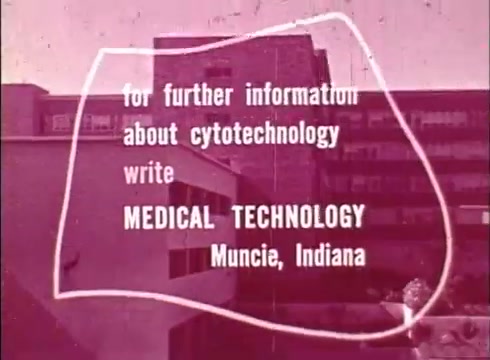
The still features text promoting further information about cytotechnology, inviting viewers to contact 'Medical Technology' in Muncie, Indiana. The background suggests a medical or educational institution, typical for a 16mm educational film focused on cellular biology. The overall design utilizes a simple, handwritten outline around the text, giving it a clear yet informal appearance.
00:21:43.369 — The still features text promoting further information about cytotechnology, inviting viewers to contact 'Medical Technology' in Muncie, Indiana. The background suggests a medical or educational institution, typical for a 16mm educational film focused on cellular biology. The overall design utilizes a simple, handwritten outline around the text, giving it a clear yet informal appearance.

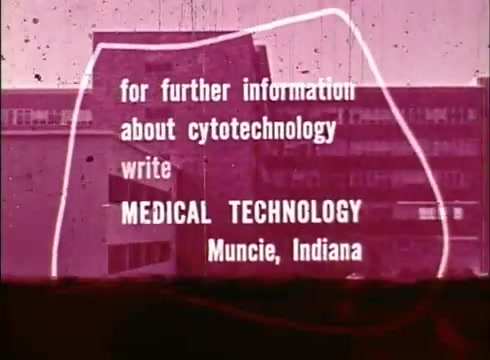
The still features a text overlay promoting educational resources about cytotechnology. The message provides contact information for 'Medical Technology' in Muncie, Indiana. The background suggests a building, likely related to medical education, with a vintage aesthetic typical of 16mm film. The overall appearance includes some film grain and color fading, reflecting its age.

00:21:45.671 — The still features a text overlay promoting educational resources about cytotechnology. The message provides contact information for 'Medical Technology' in Muncie, Indiana. The background suggests a building, likely related to medical education, with a vintage aesthetic typical of 16mm film. The overall appearance includes some film grain and color fading, reflecting its age.

Film Transcript / Subtitles

This leader, the volume voice are of the same intensity and quality as the soundtrack which follows. Thank you. Hi, Betty. Morning, Dave. Looking at something? Just picked up some slides at the delivery desk for you. They're on your table. Nice of you, thanks. Cytology, the science of cells. The science of cells, those minute living parts of which we are all made. How many cells in the body of Betty Robbins? Ten million? A billion? A hundred billion? Even more? Trillions? What can they tell us, these fixed, brightly stained particles that were only a few hours ago living cells in a living body? To the knowing eye? To the knowing eye, they tell a story. A story of health. And what meaning is there in these distorted cells? To the knowing eye, they signify disease. So many answers these minute cells hold for us, so many questions they raise, and that of disease is only one of the questions. Working quietly in our research centers are the scientists who are slowly, carefully sorting out the unanswered questions. One studies the behavior of the primitive one-celled animal. Another man watches as one cell becomes two, using photography to speed up the growth hundreds of times. Edges wave in response to what stimulus? Another studies cells from the retina of the human eye kept alive and growing outside the body. Why? What is the cause? How do they differ from the normal? How can we stop them? For each question, a hundred eyes peering down the barrels of a hundred microscopes, watching, searching, prying into the mysteries of the cell. Here is a human cell, the fundamental unit of all life. The dark spot is the nucleus, and surrounding it the complex substance called cytoplasm. The thin outer membrane allows food, fluids, and waste to pass in and out. In the one-celled animal, the single cell performs all the functions necessary for life. It moves, it takes in food, digests it, and eliminates it. It has a rudimentary sense that allows it to find food or withdraw from danger. It reproduces by division. Efficient, but simple. In the highly organized, trillion-celled human body, however, cells have many specialized functions, and often specialized shapes to accomplish the function. The long muscle cell has the power to contract and relax. A nerve cell in a finger, pricked by a needle, flashes its warning message along a special fiber at the speed of a bullet. The monocyte floating in the bloodstream can change its shape, squeeze through narrow spaces to devour bacteria and other harmful substances. Cells in the glands manufacture substances that regulate a person's growth, digest his food, prepare his body to do battle. Goblet cells of the mucous membrane manufacture fluids, for instance, to protect the delicate air passages leading to the lungs. Other cells are equipped with hair-like cilia that constantly work to brush out dust breathed in with the air. The whole, a trillion-celled mechanism, wonderful and incredible. And how do cells grow? That, too, we know something about. Consider, for instance, the cells lining a bronchial tube leading to a lung. It is the cells down at the deeper levels that have the ability to divide and become two cells. This orderly division occurs only as new cells are needed. The cells of the surface layer finally are dislodged, and the lower cells shift up to fill the gap. We call this dislodging exfoliation. After the cells exfoliate, they are carried away in the mucus by the cilia. And down where growth occurs, a cell divides to make another cell which in its turn will grow to the surface and perform its function. For years, the millions of cells lining the bronchial tubes and cells in other parts of the body grow in this regular pattern. And then, for reasons that we do not yet understand, this pattern of cell growth changes in some people. Cell division becomes rapid, chaotic, growing out of normal bounds. These disorganized cells fail to perform the function of normal cells. This is cancer. One of the dangers in cancer is metastasis, in which cells from the first diseased area may find their way to other parts of the body. The two most frequent pathways by which cancer can spread are the blood vessels and the lymphatic system. Malignant cells may actually enter either of these channels and be carried along in the fluid. They lodge in some other place or even a number of places in the body. Wherever one of these unruly cells can get a foothold, the cancer can start in a new location. As we have not yet learned how to check this growth, our defense is to discover it before it grows out of bounds. How to do this? Therein lies the rest of our story. The cancer cells at the surface exfoliate just as normal cells do. One of the ways of discovering whether there is cancer is to take a sample of fluid in which cells are found and look for abnormal cells under a microscope. The pioneer in this method of detecting cancer is another one of our leading American scientists who is working on some of the unanswered questions, Dr. Papanicolo. It's little more than ten years ago that he and his associates introduced the new technique to the medical profession. Today this search for cancer cells is a standard laboratory procedure. And this is the person who searches, a cytotechnologist. Hi, Dave. Come take a look. What is it, from the cervix? No, it's bronchial. See those cells with the large nuclei? Uh-huh. Cancer? Certainly looks like it to me. I'll be surprised if Dr. Baker doesn't think so, too. Here's another one. This one's from the cervix. So many different shapes to recognize. Normal. Normal. Normal. And this. Abnormal. And on another slide, among the normal cells, a dark clump. Abnormal. It's a challenging job that the cytotechnologist has. A challenge to the skill of the eye and to an understanding of different kinds of cells. The problem is so great because the shapes of cells in different parts of the body are so buried. It's not only cells of the bronchial tubes and of the cervix that the cytotechnologist must be able to identify. There are a number of other places in the body where fluids containing exfoliated cells can be taken for examination. Among other places, specimens can be taken from the lungs, the stomach, the bladder, the body cavities, the breast. Examination of material from the female reproductive organs, however, has been the most useful by far. For one thing, it is one of the locations in which cancer most frequently has its beginnings. For another, a specimen can be taken easily, which is not true of many of the other areas. Well, no, it isn't, Mrs. Morris. You seem to be in fine shape. This is just a cell examination for cancer. Something I like to do as part of a periodic health examination for women of your age. Just a precaution? That's right. We'll get a report from the pathologists on this and the other laboratory examinations, and we'll make an appointment to see you towards the end of the week. One woman, one examination. And what if we could process thousands, tens of thousands of slides? Large-scale experiments have shown that perhaps as many as five out of every thousand examinations will expose an unsuspected cancer of the cervix. Each year, doctors over the country request this examination for more and more persons, more cytotechnologists. Edna Morse. The slides are recorded and identified. Betty will process many dozens, even hundreds of slides before finding one doubtful one. But that one slide is more than just a number on a chart. It represents a person's life that may be in danger. Before the cells on these slides can be studied under the microscope, they must be stained in order to define the various parts more clearly. When Betty receives the slides, they have been fixed and dehydrated in a solution of alcohol and ether. To accept the stain, their water content must be restored by a short series of baths and rinses. They are then ready for the first dye, a purplish chemical called hematoxilin. This stains only the nuclei. After the first dye, more rinses, then into an orange dye that stains the cytoplasm of certain kinds of cells. Other kinds of cells take up the greenish dye at the end. The rest of the jars are for rinsing the slides between dyes. The process isn't particularly complicated, it just has to be done in the right order and with precise timing, so the cells won't take up too little or too much stain. After staining, a drop of mounting fluid is put on each slide and a cover glass put over the cells. Good morning. Good morning, Dr. Baker. Are you processing slides for Dr. Wexler today? Yes, there are two requests that came through this morning. May I see it, please? The pathologist. This is the man who directs the cytotechnologist's work, the doctor in charge of the laboratory. Will you be getting these out this afternoon? Yes, I will. Good. Hey, don't you know what time it is? What time? Time for coffee, come on. Okay, I'll be right with you. This world in which the cytotechnologist works isn't a small world all by itself. Usually, it's part of a larger laboratory where the shop talk is shared with other laboratory people. Medical technologists, they're called. Have you seen Alice since she got back? Yes, she looks wonderful, doesn't she? I think she had a great time. Excuse me, Helen, you have an emergency blood count in 201. Okay, I'll be right there. Sometimes the laboratory is in a hospital. Sometimes the private office of a pathologist. Often in smaller laboratories, the cytotechnologist will do other things, such as Helen's work in blood analysis. Good morning. Good morning. You're Mr. Elliott, are you? Yes, I am. Thank you. Thank you. Dr. Miller has asked us to take a little blood for the story yet. Now, I'm just going to prick your finger. Another one of the laboratory activities that a cytotechnologist may share is that of making tissue sections of a biopsy. This is another way that the pathologist examines cells. A small piece tissue that the doctor wants to have examined is removed from a patient. It is embedded in a cube of paraffin so that it can be put in this machine and sliced into extremely thin sections. The fragile wisps of tissue are floated in a bath of warm water which flattens them out so that one can be caught on a slide. Like exfoliated cells, these are stained so they can be studied. Say, Dave, do you have the tissue sections from a Gertrude Willoughby yet? Willoughby? Yeah. That was one I did yesterday. Do you have the pathologist's report? I was pretty sure there were cancer cells in the slide we had from her, and I'm curious to see if I was right. Hmm, cancer. You were right. Can I take a look at it? Here are normal cells. And next to them, cancer. Cells in a tissue section can give even more information than exfoliated cells. So whenever a possible cancer is found in a slide prepared by a cytotechnologist, a section of tissue is taken from the patient to make sure of the diagnosis. Though Betty Robbins specializes in cytotechnology, there are still other jobs that a cytotechnologist may do besides blood analysis and work with tissue sections. It will depend on the laboratory and on the person's training. Classes in cytotechnology are held in qualified hospitals. ...normal variant. First of all, there are several sites from which exfoliated cells can come. Some of these sites include the trachea, the peripheral bronchi, and the alveoli. Can you suggest any other places from which these exfoliated cells could come? The mouth? Yes. The nose? Sure. The esophagus? A person may train for medical technology or cytotechnology or both. In any case, this is work for those who are interested in science and have gotten a good scientific background at college. For people like Betty who have learned the fascination of the world of science, this is a satisfying occupation. Helen Tine, normal. Helen Tine, normal. Oscar Dufo, normal. D.L. Richardson, normal. Edna Morse. Edna Morse. C. C. C. E. C. Madison 훨씬URE är. One of Derpy's patients. These are hers right here. I've checked the ones I thought were abnormal. All right. Let's have a look. You were right. They are abnormal. I would say almost certainly cancer. Is there anything else, Doctor? No, thanks. I'll get a report to Derpy. Another day. Perhaps another life saved. Edna Morris, whoever you are. Dr. Baker on the phone. Hello, Al. Edna Morris, really? It just wasn't a sign of anything. From the appearance of the cells, I'd say there's a good possibility you've turned up an early case here. Well, that's something. All right. Many thanks for the call. We'll get a biopsy right away to confirm it. Now, do you understand? I want to make that absolutely clear. Though it is cancer, we caught it at the beginning. You're sure. You're one of the fortunate ones, Mrs. Morris. At this stage, we can be reasonably sure that we can cure it completely. Ready to go? All ready. Have a good day today? Mm-hmm. Good day. Good day. Good day. Good day. Good day. Good day. Good day. Good day. Thank you.